
Her på Skagen Fuglestations blog bringes korte nyheder i dagbogsformat om hændelser på fuglestationen.
-
FORSIDE

- Blog
Wind and Sun (and Birds)
torsdag 26. marts 2026
Today was a windy day, too windy for ringing at Kabeltromlen. Therefore, Alix and Dylan went on a beach walk instead to report and collect dead birds, while János, Alvin and I carried out the migration count at Grenen, in a more sheltered spot than usual. It was a good start into the count with a lot of seabirds migrating. Especially the Gannet (Sule) migration was very impressive today with over 400 birds counted within the second hour and a total of 929. Despite that, we saw the Glaucous Gull (Gråmåge) again, that has been around for several days now, high numbers of migrating Kittiwakes (Ride) and Sandwich Terns (Splitterne), as well as three Caspian Gulls (Kaspisk Måge), one of them with a polish ring.
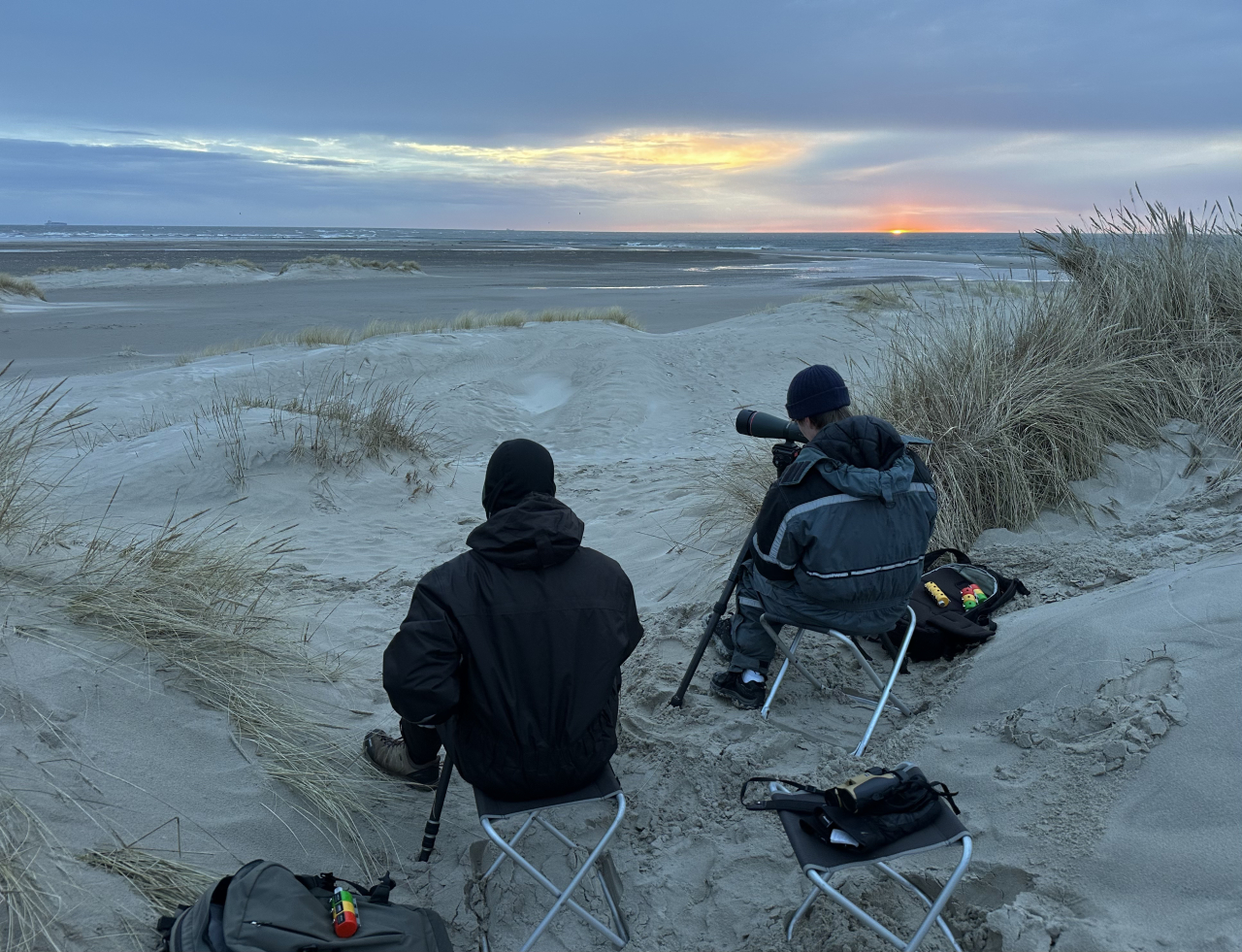
Sunrise at the migration count.
Meanwhile on the beach walk, which Alix and Dylan started from Gamle Skagen, many birds could be found and collected, even more than Alix and Dylan were prepared for. A lot of Common Guillemots (Lomvie) seemed to have died in the storms the previous days and washed up on the shore. This is of course nothing to be happy about, but for scientific research these birds can still be of high value.
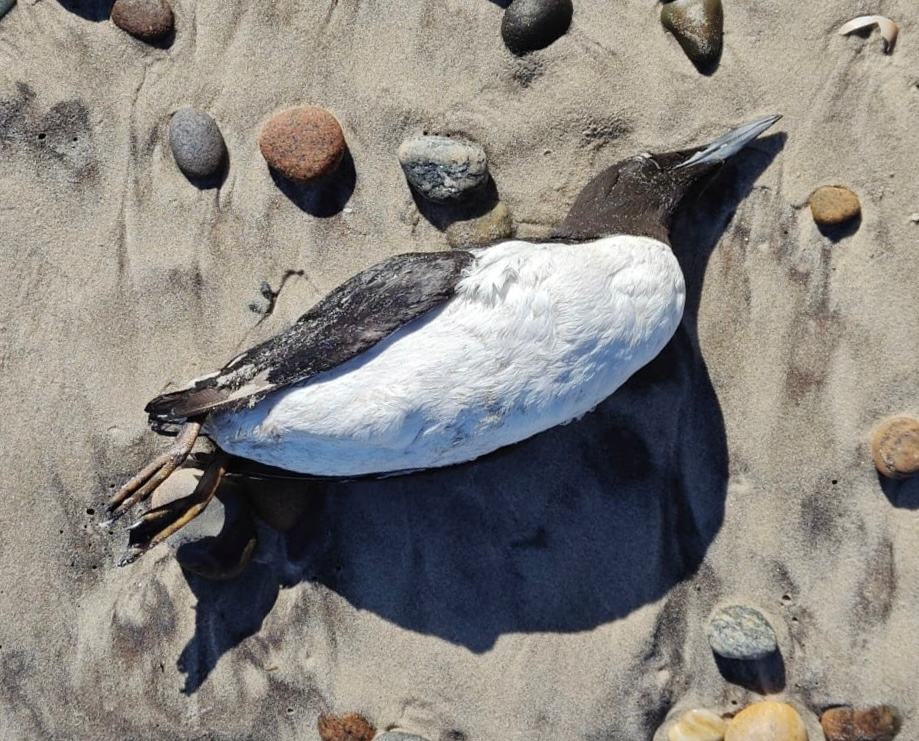
Common Guillemot (Lomvie) found dead on the beach today.
Right at the beginning, a wave hit Alix and she had to walk in wet shoes all along – poor Alix! Besides all the dead birds, there were also some great alive ones the two of them could observe very well: Common Ringed Plovers (Stor Præstekrave), Oystercatchers (Strandskade), Sanderlings (Sandløber) and Rock Pipits (Skærpiber) to name a few. They were even able to get as close as five metres to the Glaucous Gull (Gråmåge)!
In the afternoon, there weren’t as many tasks left to fulfil. We had a lunch and a little rest, entered the observation data, some went shopping. Around 3pm I realised upon looking out the window that there were large flocks of Eiders (Ederfugl) resting on the sea, and so I went out, equipped with the scope, to scan the flocks for Kingeiders (Kongeederfugl), which sometimes can be found amongst them. Today though, there weren’t any, but nevertheless I really enjoyed the good view on the more common birds, the wonderful sunlight and the fresh air. Towards the evening, János joined me out there and we continued the Eider-watching together until sunset. We used this opportunity to practise aging the female Eiders, which can be a bit tricky sometimes. You can always learn something new out in the field.
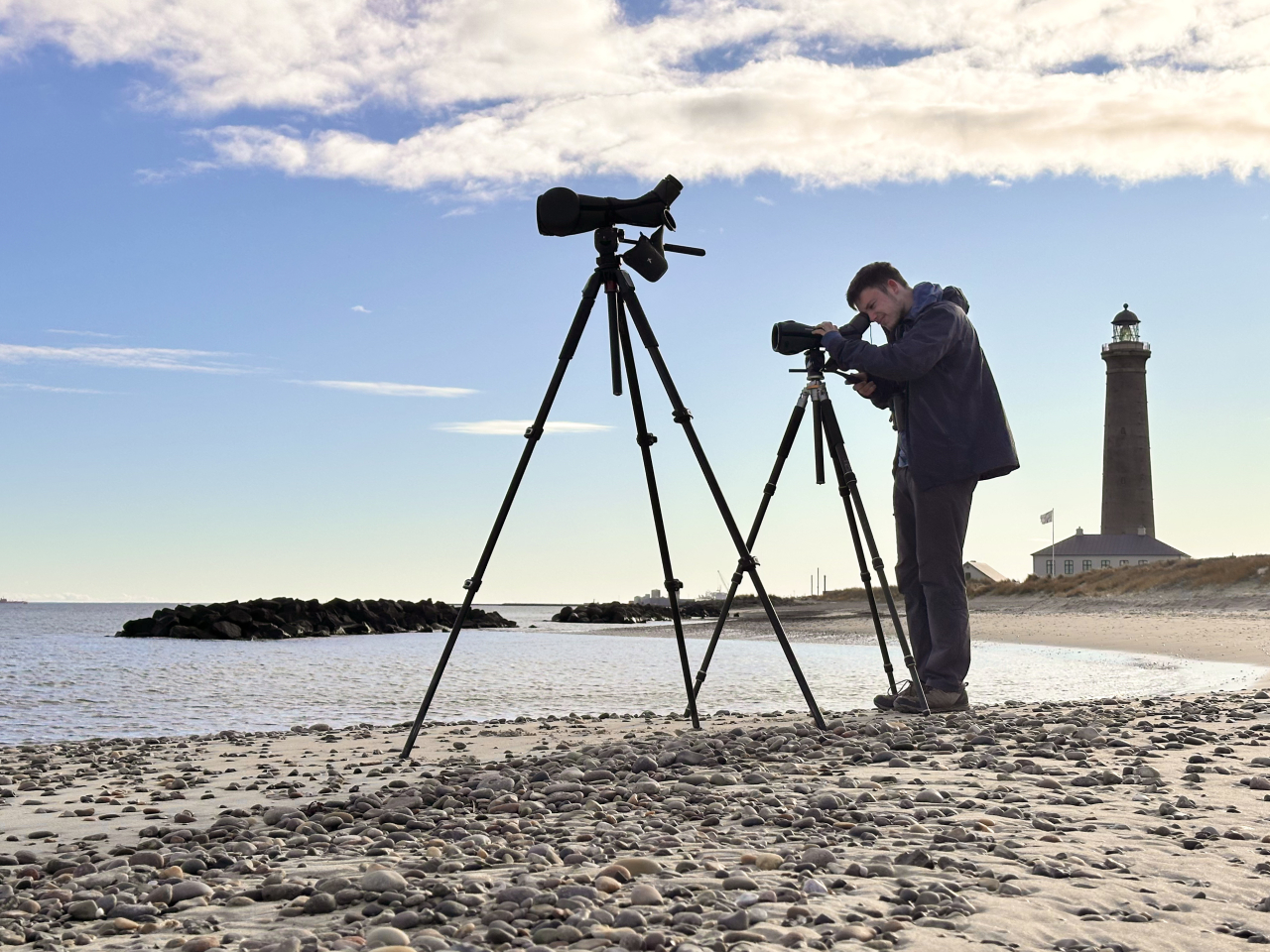
evening Eider-watching
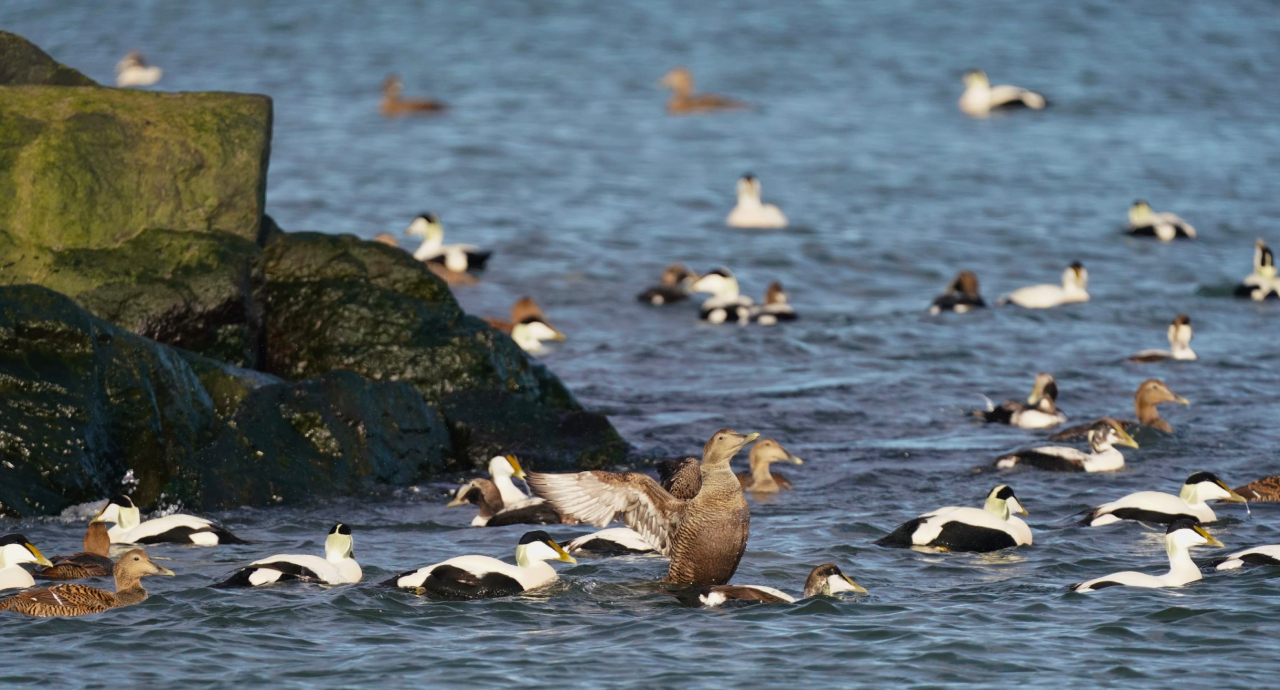
resting Eiders (Ederfugl)
Highlights from the observations:
Black Guillemot (Tejst) – 1
Gannet (Sule) – 929
Glaucous Gull (Gråmåge) – 1
Black-throated Diver (Sortstrubet Lom) – 3
Grey Plover (Strandhjejle) – 1
Black Guillemot (Tejst) – 1
Gannet (Sule) – 929
Glaucous Gull (Gråmåge) – 1
Black-throated Diver (Sortstrubet Lom) – 3
Grey Plover (Strandhjejle) – 1
Link to today's observations in the DOF base from observers in the area
Summary of today's raptor migration in DOFbasen
People: Alvin Johansson, János Schadl, Alix Bortolussi, Julian Helbig, Dylan Daunt, Lars Bo