
Her på Skagen Fuglestations blog bringes korte nyheder i dagbogsformat om hændelser på fuglestationen.
-
FORSIDE

- Blog
Magellan Goose
tirsdag 26. maj 2026
The forecast for today was not good and we went to sleep yesterday without knowing if we could ring in the morning.
Dylan got up very early, hoping to see different waders at the beach. First, he checked the wind at the nets and realized that it did not look that bad for opening them, so he called János. Some minutes later, János and I arrived at Kabeltromlen and started the job. Not all the nets could be open, and we had to rearrange them during the morning according to the wind, but between 160 and 180 m of net were operative and that allowed us to catch a nice number of birds. Among them, we got a beautiful male Bullfinch (Lille Dompap), a Spotted Flycatcher (Grå fluesnapper), a Reed Warbler (Rørsanger), some Black Caps (Munk) and Common Whitethroats (Tornsanger).
Ole and Annette, our guests during this week, joined the migration counting for a while and the ringing for another while, and we could show them the different feather generations in a Chaffinch (Bogfinke) and a Blackbird (Solstort), in which you could see the moult limit very clearly, comparing to more difficult species to see this like in a Chiffchaff (Gransanger).
In the end we were glad that the forecast did not stop us to have a nice day for birds.
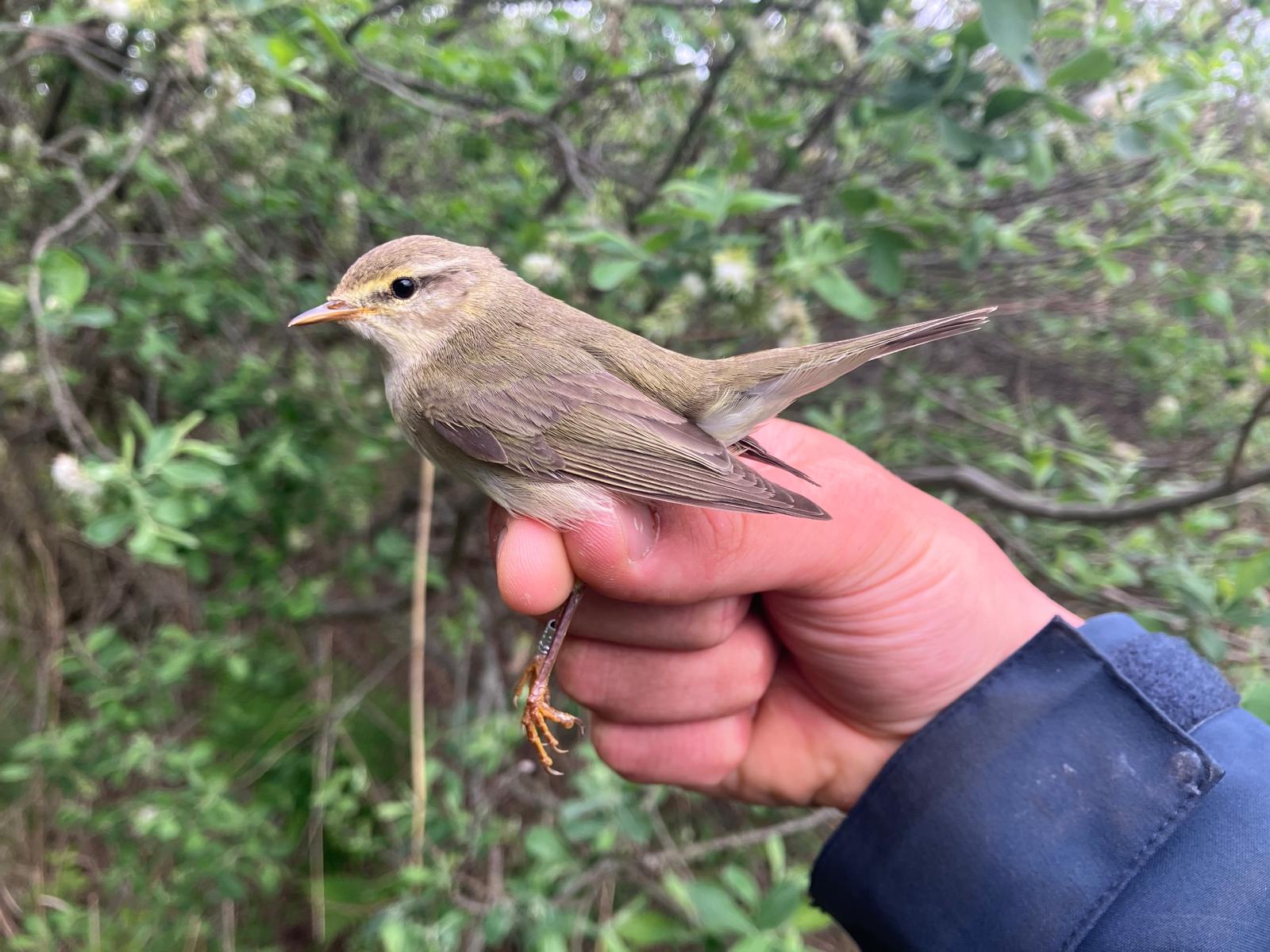
Willow Warbler (Løvsanger)
In the meantime, Dylan was at the migration counting and Julian joined him later. What looked like a common morning ended up being full of surprises. First of all, they were able to see several Arctic Skuas (Almindelig Kjove) and Great Northern Divers (Islom), which are always cool to see. Then, Dylan could hear a bird and he wasn’t sure about what it could be. He was excited about the possibility of being a Ticking bunting, but in the end he realized he was wrong. It was actually a robin (Rødhals)! He felt disappointed for such a common species, but on the other hand, it is very unusual to detect a robin in migration, which makes his observation very unique!
Finally, a very original goose was seen resting at the beach. It didn’t look like any of the goose species that can be found in Denmark, and that is because it wasn’t. It was a Magellan goose (Magellangås), a species that lives in South America! So, why was there a Magellan goose chilling at a beach in the North of Denmark? Well, the logic explanation is that it must have escaped from a zoo.
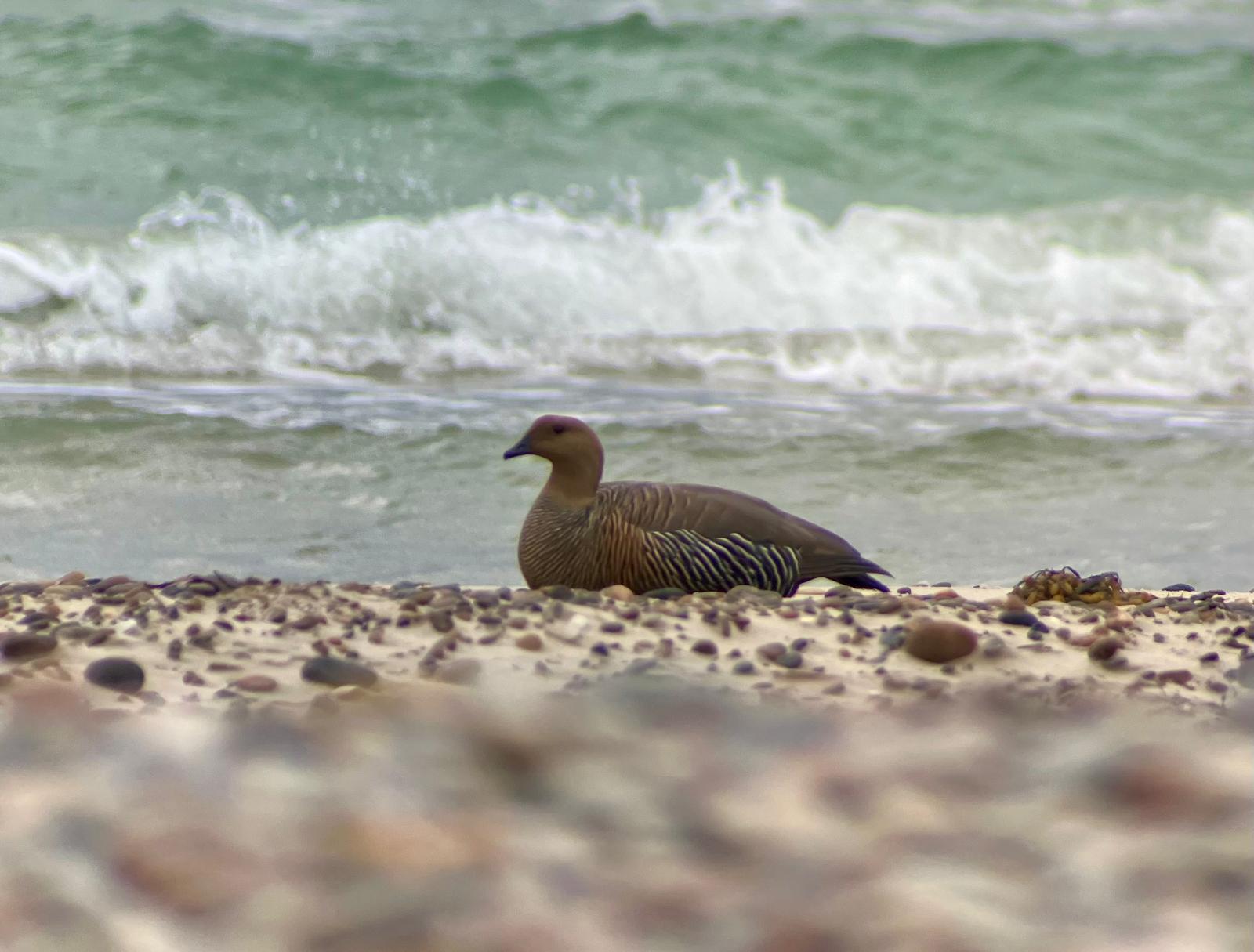
Magellan Goose (Magellangås)
In the afternoon, Julian did a guided tour for a lady and her son, who came from the US. They went for a walk and saw several species like a White-tailed Eagle (Havørn), a Reed Bunting (Rørspurv) and a Red-legged goose (Kortnæbbet Gås). They seemed to truly enjoy the tour and the bird species, very different from the ones they were used to in their country.
On his way back to the station, he found this beautiful Broad-bordered Bee Hawk-moth (Bredrandet humlebisværmer):
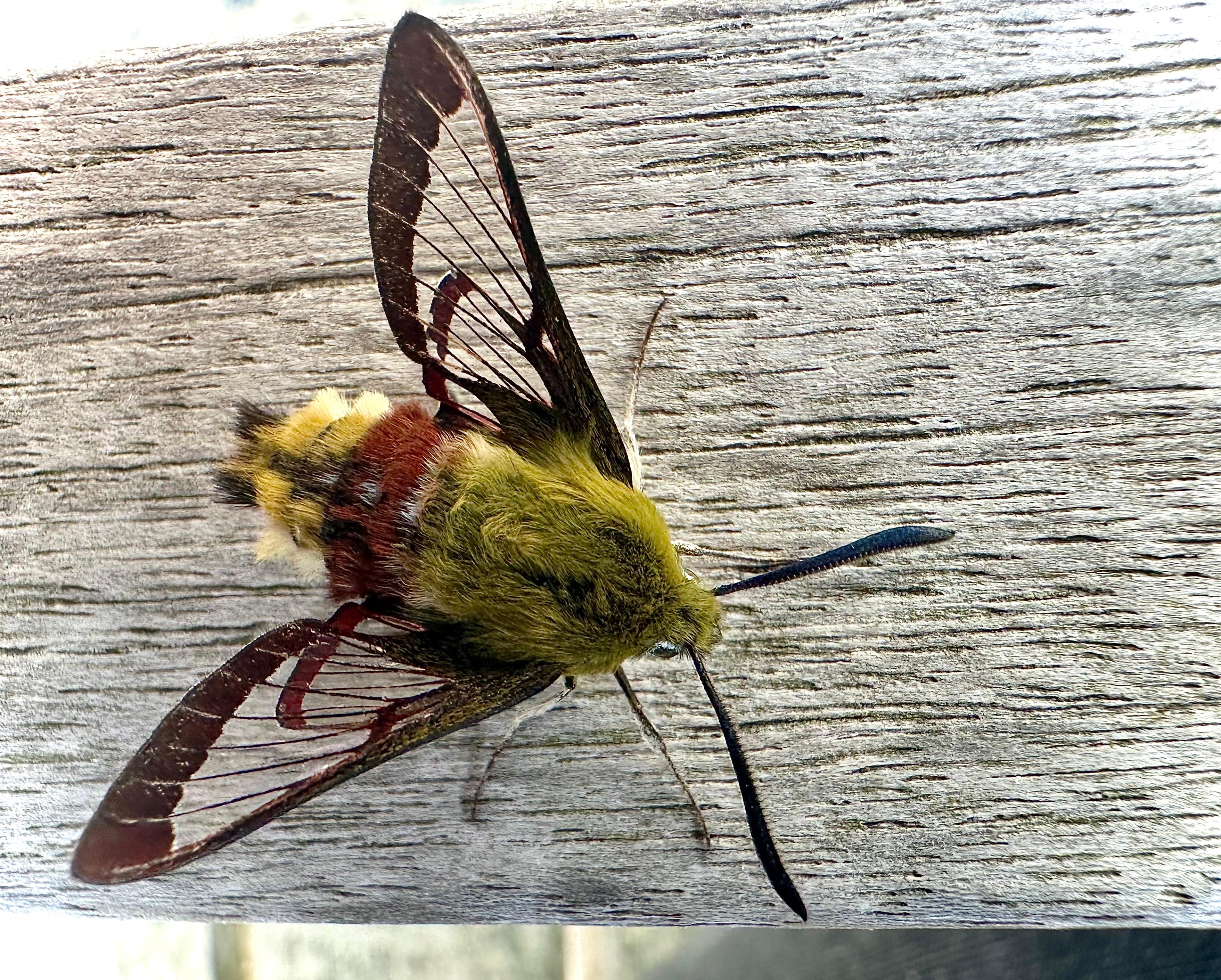 Broad-bordered Bee Hawk-moth (Bredrandet humlebisværmer)
Highlights from oberservations:
Great Northern Diver (Islom) - 6
Arctic Skua (Almindelig Kjove) - 7
Magellan goose (Magellangås) - 1
Ringing (Kabeltromlen)
Grå Fluesnapper - 1
Rørsanger - 1
Tornsanger - 2
Bogfinke - 1
Løvsanger - 1
Gransanger - 2
Munk - 3
Solstort - 1
Lille Dompap - 1
Link to today’s observations in DOFbasen from observers in the area
Summary of today's raptor migration in DOFbasen
People: János Schadl, Julian Helbig, Dylan Daunt, Olga Fernández Enríquez, Ole & Annette