
Her på Skagen Fuglestations blog bringes korte nyheder i dagbogsformat om hændelser på fuglestationen.
-
FORSIDE

- Blog
First Baby Bird!
tirsdag 16. juni 2026
We chose today for the next scheduled CES session, and since the spring period of standardised migration counts is over now, we could easily split up to do simultaneous ringing at Kabeltromlen. Alvin and I needed to get up at 02:00 to be at Skarvsøen in time, but thankfully we had the opportunity to nap a bit in between checking the nets, since we only caught about two to four birds each round (including a lot of recaptures).
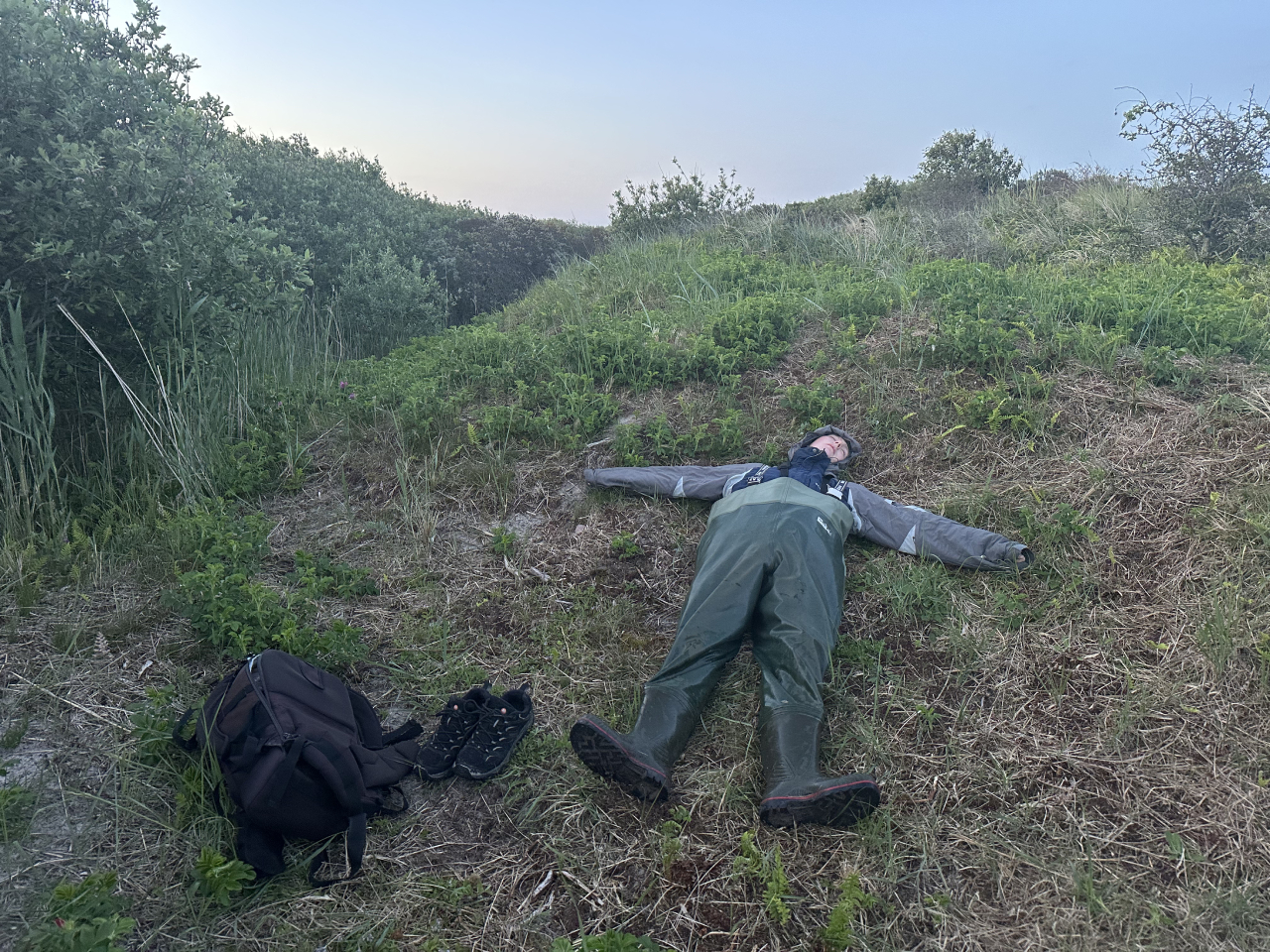
Tired Alvin.
János, Agnes, and Hannah at Kabetlromlen had a surprising first round of ten birds, but afterwards it slowed down for them as well. It was quite windy and chilly with overcast in the beginning, but later it got sunny and warmer. They caught a beautiful male Yellowhammer (Gulspurv). Our guests, Jesper and Anne, also visited Kabeltromlen for a while after listening to all the nice bird songs on their way out.
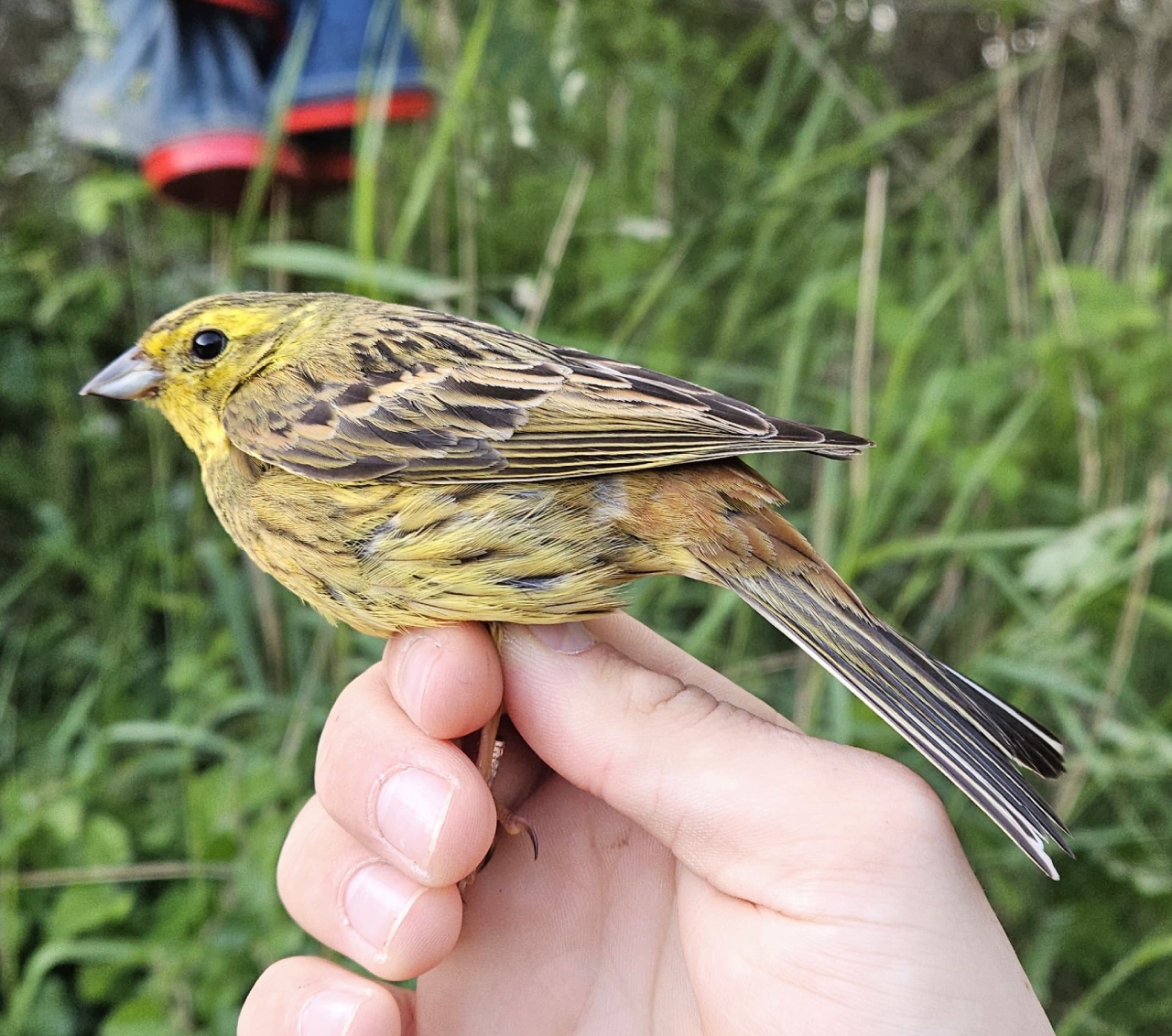
Yellowhammer (Gulspurv) at Kabeltromlen.
Alvin and I ringed the first baby bird of the season, a Dunnock (Jernspurv) fledgling with not yet fully grown wings. It’s nice to see that now also in Skagen the first young birds start to leave their nests.
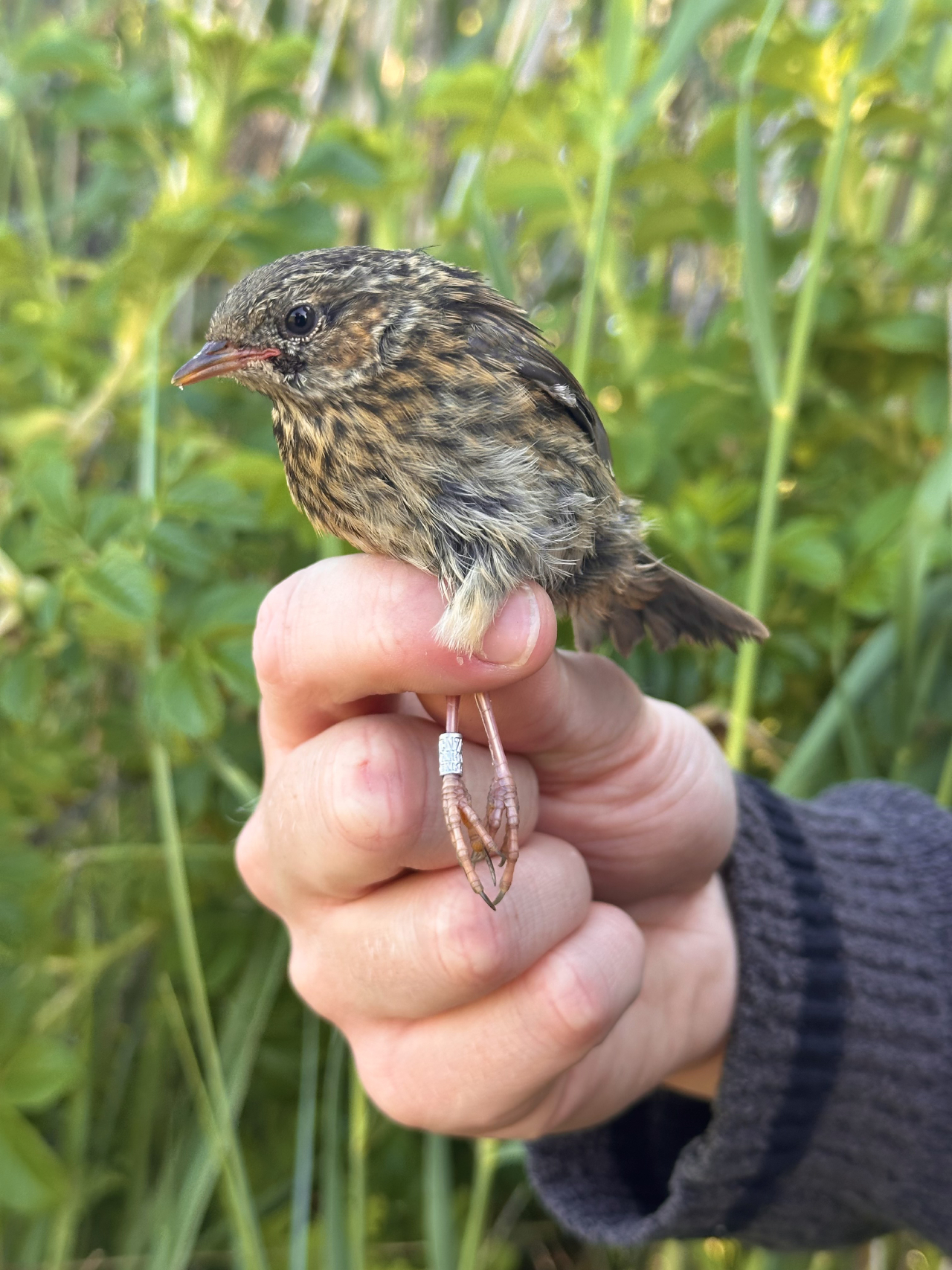
First calendar year Dunnock (Jernspurv) – first ringed baby bird of the season.
As always, the six hours of CES ringing were a bit more exhausting than our usual five hours standard, so when Alvin and I got back, we needed some relaxation first. Alvin went for a swim. In the meantime, Jesper and Anne got János and Hannah a lift to the shop, which we are always very thankful for. They also took Agnes to the train station, because, unfortunately, she had to leave us again already. Bye Agnes, we hope you still had some fun days here anyways! Later, Hannah explored the area a bit further, and Jesper and Anne also went for a walk through the town and its surroundings, before preparing a fantastic dinner for us – a delicious Vietnamese dish with sweet potato and spinach. Later during evening meeting, they mentioned an observation they had yesterday evening of what they thought was a Grey Shrike (Stor Tornskade). Hearing about this immediately caught our attention, because at this time of year, Grey Shrikes (Tornskade) are very unlikely to come here, however it’s the perfect time for their similar-looking but much rarer relative the Lesser Grey Shrike (Rosenbrystet Tornskade) that breeds in South and eastern Europe and western Asia. When our meeting was done, we rushed straight out to scan the area and check for the bird, although staying in the same spot for more than one day would also have been rather unusual for this species, but the possibility was still there. The only shrikes we saw however were several Red-backed Shrikes (Rødrygget Tornskade) perching on the rosebushes in the evening sun.
Ringing (Kabeltromlen)
Gransanger - 3
Rørsanger - 1
Havesanger - 1
Tornsanger - 1
Munk - 10
Gulspurv - 1
Total: 17
Gransanger - 3
Rørsanger - 1
Havesanger - 1
Tornsanger - 1
Munk - 10
Gulspurv - 1
Total: 17
Ringing (CES)
Gransanger - 1
Rørsanger - 3
Gærdesanger - 2
Jernspurv - 1
Munk - 1
Tornsanger - 1
Total: 9
Gransanger - 1
Rørsanger - 3
Gærdesanger - 2
Jernspurv - 1
Munk - 1
Tornsanger - 1
Total: 9
People: Alvin Johansson, János Schadl, Julian Helbig, Hannah Bangard, Jesper & Anne