Her på Skagen Fuglestations blog bringes korte nyheder i dagbogsformat om hændelser på fuglestationen.
-
FORSIDE

- Blog
Botany for Birders
mandag 6. juli 2026
Today the winds finally quieted down a bit, after it had mostly been stormy since Brian and I arrived. That meant much better conditions for observing passerines, so Brian went out early to check out the area at Batteriskoven. His trip was very successful and amongst the impressive number of 50 species he observed, there were some new lifers for him, like Garden Warbler (Havesanger), Bullfinch (Dompap) and Common Crane (Trane). He also saw some Tree pipits (Skovpiber) singing and displaying right on the other side of the road next to the lighthouse.
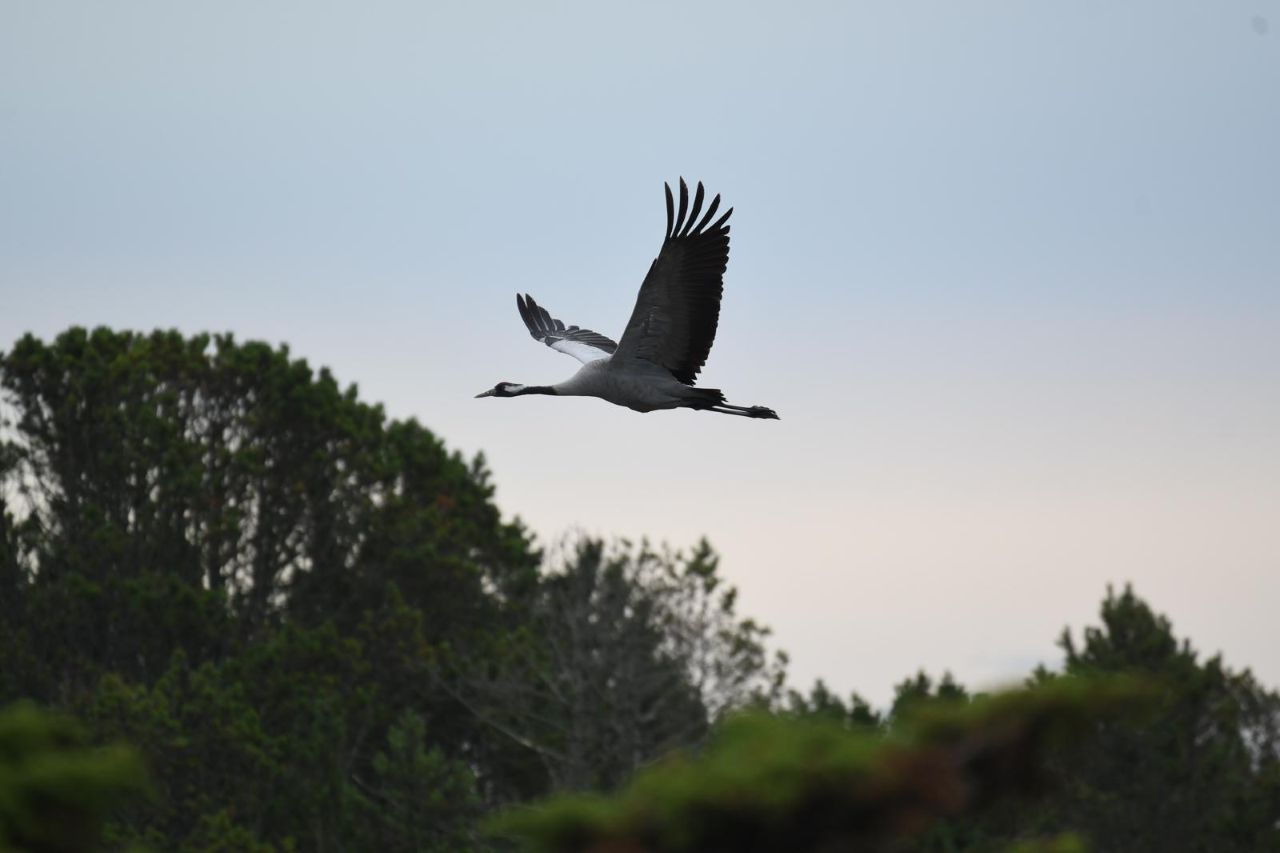
Common Crane (Trane) at Batteriskoven
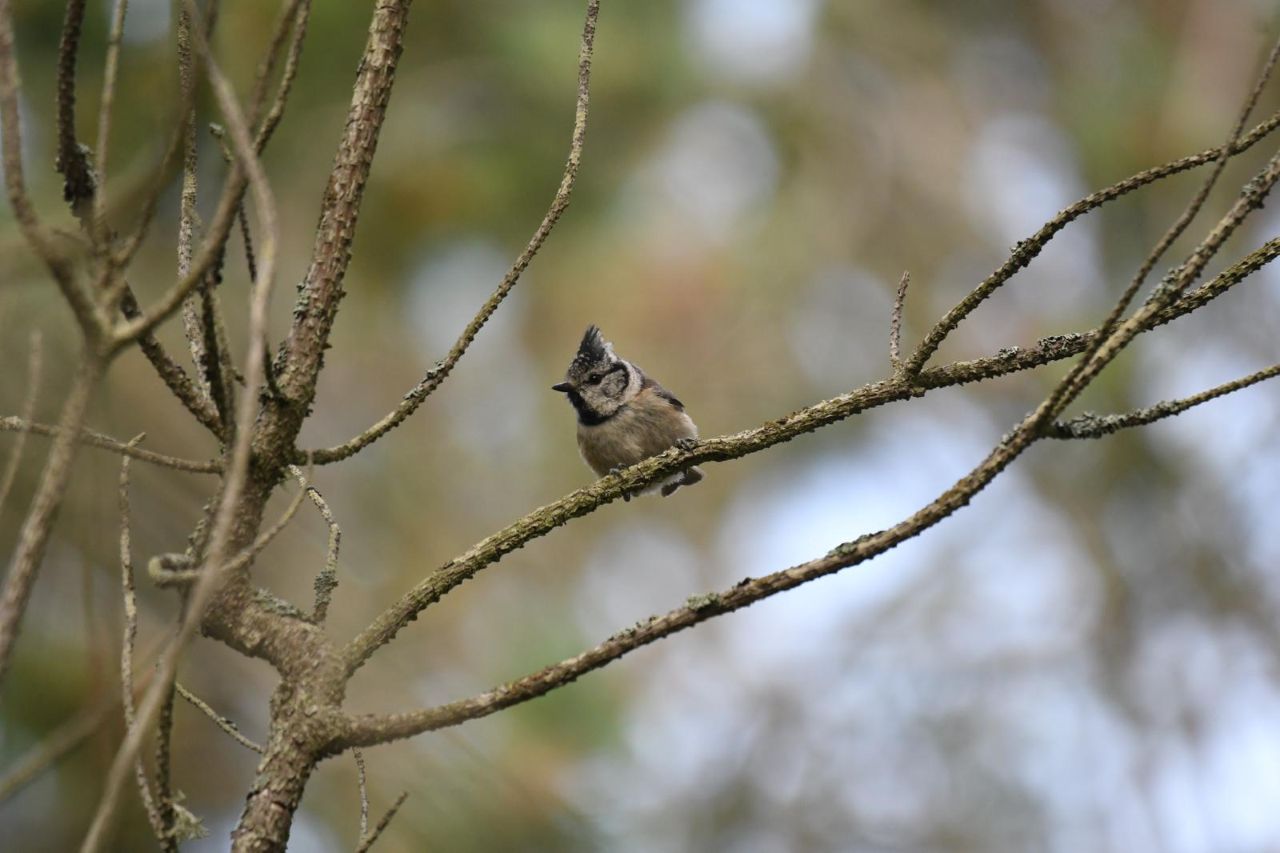
Crested Tit (Topmejse) at Batteriskoven
I woke up a bit too late to join Brian on his trip, so I went out on my own to check out the shores of Grenen, and I’m very glad I did so! Soon I was rewarded with seeing two Red-throated Loons (Rødstrubet Lom) very closely, with one being in fabulous breeding plumage, as well as two Arctic Skuas (Almindelig Kjove) trying to steal food from a Sandwich Tern (Splitterne). I already learnt so much about Gulls and Terns from Julian and Brian, so I was very happy when I could identify two Little Gulls (Dværgmåge) in a flock of Black-headed Gulls (Hættemåge). Soon another highlight appeared: I saw a group of cetaceans, which might supposedly have been Harbour Porpoise (Marswin), for the first time ever! Very happy I returned back to the station where I met Brian and a very diligent Julian, who had been doing computer work all morning.
In the afternoon, Knud picked us up to help with the annual orchid counts at Hulsig Hede. Some fields in this area are managed only for conservational purposes, meaning they are completely put out of agricultural use. In order to keep the grass short and the area free from trees and shrubs, cows are grazing the fields regularily. This kind of management started about 30 years ago, which allowed a valuable habitat to evolve, that is rarely found anymore in cultural landscapes these days. So it comes, that these habitats provide the special conditions needed for native orchid species to grow. On our fields today there were 3 species to be found: Lesser Butterfly Orchid (Bakke Gøgelilje), Heath Spotted Orchid (Plettet Gøgeurt) and Northern Marsh Orchid (Purpur-Gøgeurt).
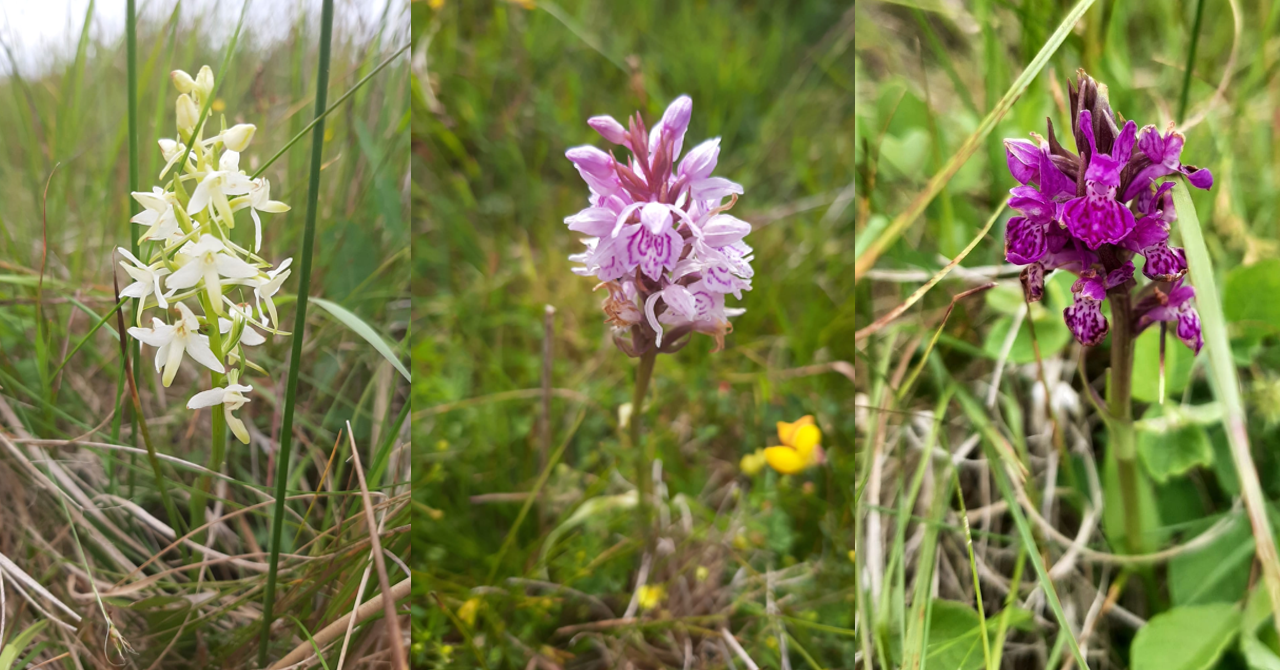
From left to right: Lesser Butterfly Orchid (Bakke Gøgelilje), Heath Spotted Orchid (Plettet Gøgeurt), Northern Marsh Orchid (Purpur-Gøgeurt)
Joined by John and Family Rasmussen, we arrived at the fields after a short drive from the Lighthouse. Luckily there were no cows on it today, so we were good to go! Knud showed us our position and then we started to walk over the field in a zigzag-pattern, while counting the total number of every species seperately. It was a very fun tasks, walking around the field with Meadow-Pipits (Engpiber) and Skylarks (Sanglærke) singing and displaying all around us. In the end, we counted over 5000 of the Lesser Butterfly Orchids and a few dozens of the other two species. Compared to last year, all of them had increased numbers, which is great news!
After our little session in botany, we headed home and held the first official evening meeting with our new guests. Martin and Kristine told us they saw a Little Tern (Dværgterne) at Grenen today, which is awesome! The rest of the day was rather quiet and cozy. Julian went for a walk, Brian took a much needed nap and I prepared some dinner. After all we went to bed early, preparing for seawatching at sunrise tomorrow.
Orchid Totals:
Bakke-Gøgelilje (Lesser Butterfly Orchid) - 5.364
Purpur-Gøgeurt (Northern Marsh Orchid) - 43
Plettet Gøgeurt (Heath Spotted-orchid) - 113
Highlights from the observations:
Little Gull (Dværgmåge) - 2
Arctic Skua (Almindelig Kjove) – 2
Little Tern (Dværgterne) - 1
Link to today’s observations in DOFbasen from observers in the area
People: Juliane Rößler, Brian Browne, Julian Helbig, Knud Pedersen, John Brask, Martin & Kristine Rasmussen