Her på Skagen Fuglestations blog bringes korte nyheder i dagbogsformat om hændelser på fuglestationen.
-
FORSIDE

- Blog
Field Trip: Hirsholm
lørdag 11. juli 2026
Today was our expedition to the island of Hirsholm! Páll picked us up at 7:30 (although he only had four seats so Julian took the train) and we drove down to Frederikshavn. There we boarded a small boat in the harbor that pushed off on the 30 minute journey to Hirsholm, a small island about 5km off the coast. The sea was impossibly smooth and glassy, and we enjoyed a beautiful smooth ride over as we watched Black Guillemots (Tejst) buzzing by the boat.
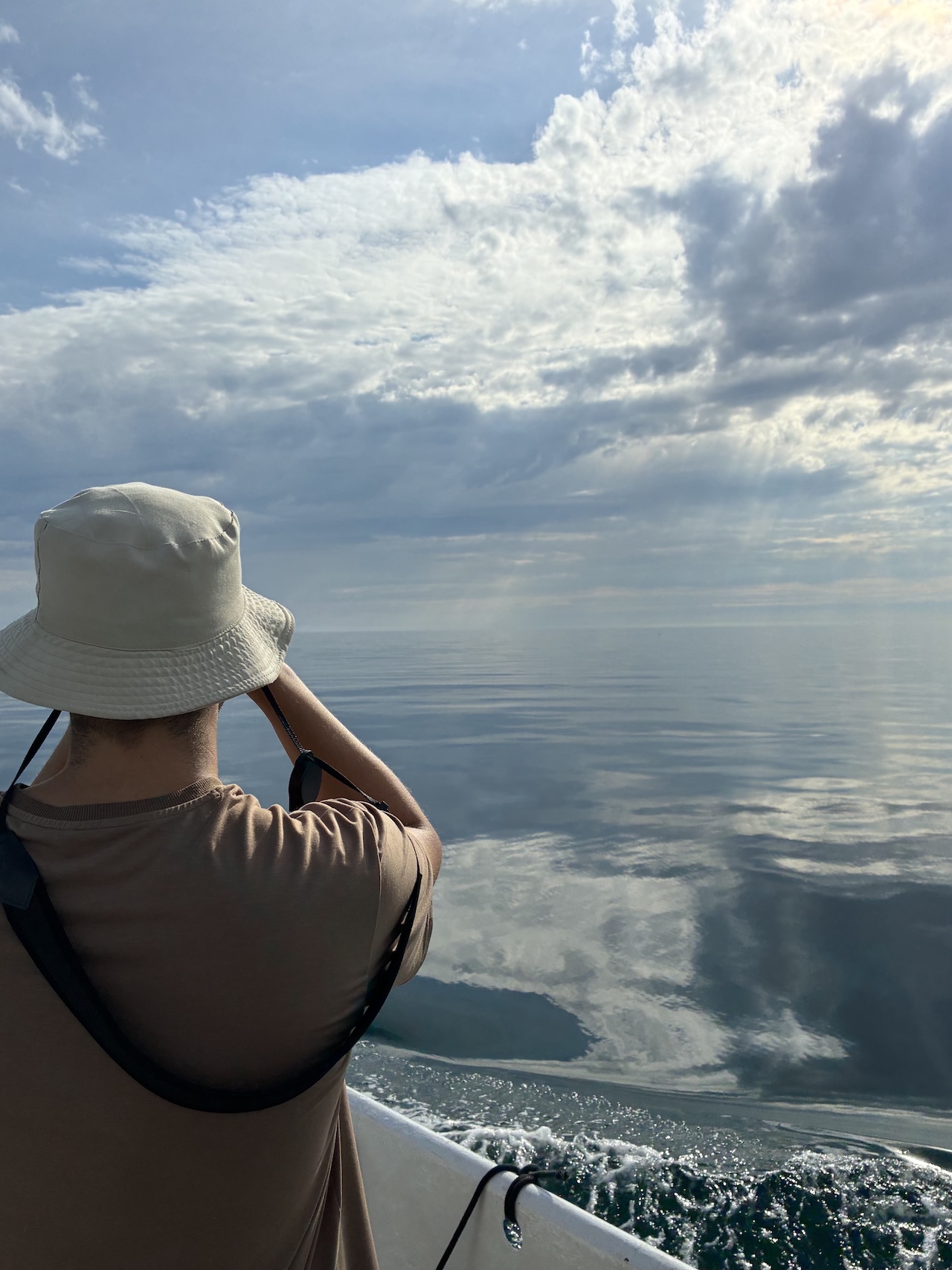 Páll looking out over the smooth seas from the boat
We soon docked in the small harbor on Hirsholm, where the water, docks, breakwaters, walls, and houses were coated in a thin layer of guillemots! Hirsholm is a nesting colony of not only Black Guillemots (Tejst), but also gulls such as Common (Stormmåge) and Black-headed (Hættemåge) and Sandwich Terns (Splittetern). There were nests everywhere, and adorable fledglings were waddling up and down all the paths! Looking briefly into one nest while the parent was away, I even got to watch a chick starting to hatch!
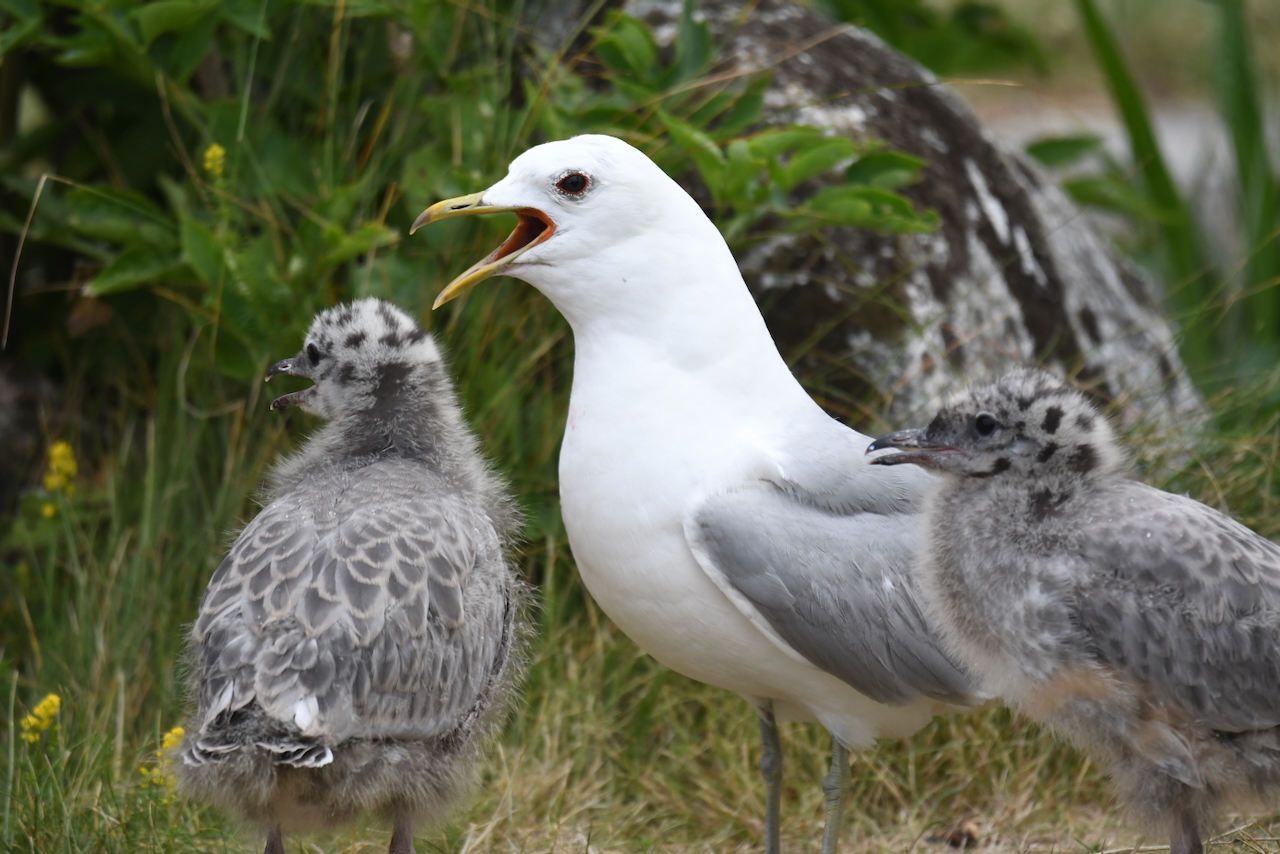 Vocal Common Gull (Stormmåge) family
The island is quite small, and although we only had 3 hours to explore, we were able to see the whole thing quickly. As we wandered around the grassy paths and beaches, we saw both Black and Common Redstart and many shorebirds, including a group of Ruddy Turnstones (Stenvender) on the rocks and several Common Sandpipers (Mudderklire). I discovered a pair of Rock Pipits (Skærpiber) that seemed to be visiting a nest and gave nice view to several of us. This is one of very few scattered breeding locations of this species in Denmark! The nesting guillemots are incredibly photogenic, and we spent some time taking photos as pairs visited burrows, brought food to each other, and performed courtship dances. Before we knew it the boat had returned and we were climbing back in. We had a great time and we all agreed we could’ve used a few more hours while Julian claimed he could spend four weeks.
On our way back the water was so calm that I could prop up a scope between my legs and scan the island of Kølpen, where there is a huge colony of Great Cormorants (Skarv), and in years past, the only nesting pair of European Shags (Topskarv) in the country! I was able to pick out a smaller slimmer cormorant on the rocks, and Bao got some photos to confirm it as a shag. Did not see its mate, but it looks like they’re back nesting another year!
Back in the harbor we met some people who told us they had seen a group of spoonbills (Skestork) just south of the harbor. We drove over to where they told us to go but unfortunately they were nowhere to be seen. However on our drive back our spirits were lifted by a majestic kettle of a dozen Red Kites (Rød Glente) and one Black Kite (Sort Glente) circling just over the road, giving us amazing views at these beautiful raptors. We arrived back at the lighthouse around 2:00 and dispersed to rest, take naps, and make lunch. Julian, having taken the train, was still on his way back, and he called me as he walked up past Batteriskoven that there was a White-tailed Eagle (Havørn) circling with the Cinereous Vulture (Munkegrib) over Storsig. What a duo! I stepped outside and was able to view both, but at that point they were separated and the vulture was fairly distant. It was a warm sunny afternoon and raptors were evidently taking advantage of the thermals as a steady procession of Honey-buzzards (Hvepsevåge), Common Buzzards (Musvåge), Red Kites (Rød Glente), and Kestrels (Tårnfalk) soared out past the lighthouse. I went out to watch them and take a nap on the beach in the sun before jumping in the sea. Julian went out to swim just after me and we both agreed it was the warmest and nicest it has felt.
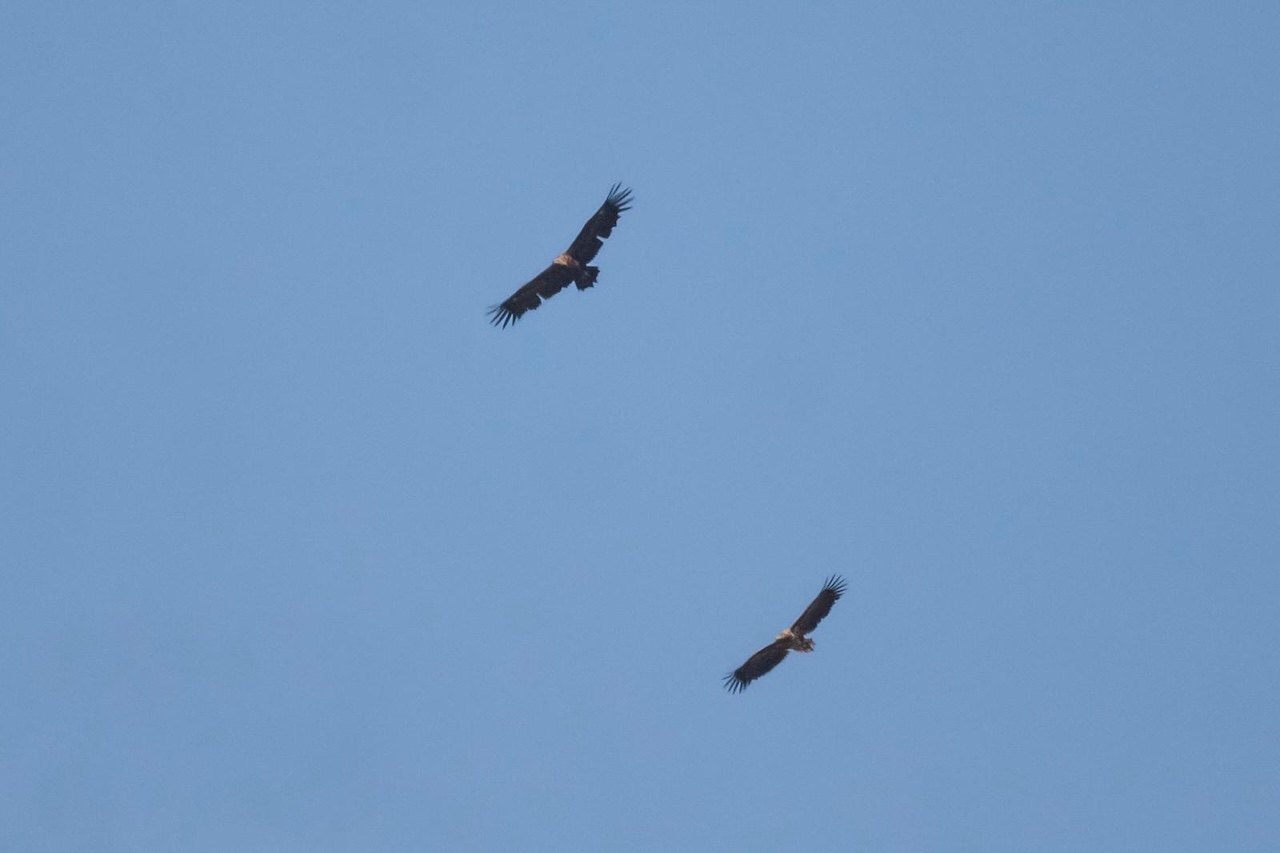 It's not easy to find a bird that makes a White-tailed Eagle (Havørn) (above) look small.
Meanwhile, as it was their last day (and Kristine’s birthday!), the Rasmussens were setting up a lovely dinner for us all outside. Martin made some delicious lasagna and Kristine decorated the picnic table in the garden. Simon and Lisa arrived with their 9 week old puppy, which made for an adorable scene as two year old Otto and four year old Karl Anker played with him. We sat down to eat around 6:30 with the perfectly glassy sea behind us and a buzzing cloud of Common Swifts (Mursejler) swirling around the lighthouse above. After dinner, Juliane brought out a lemon cake she made with a blueberry guillemot on top, and we sang the english and danish happy birthday songs for Kristine.
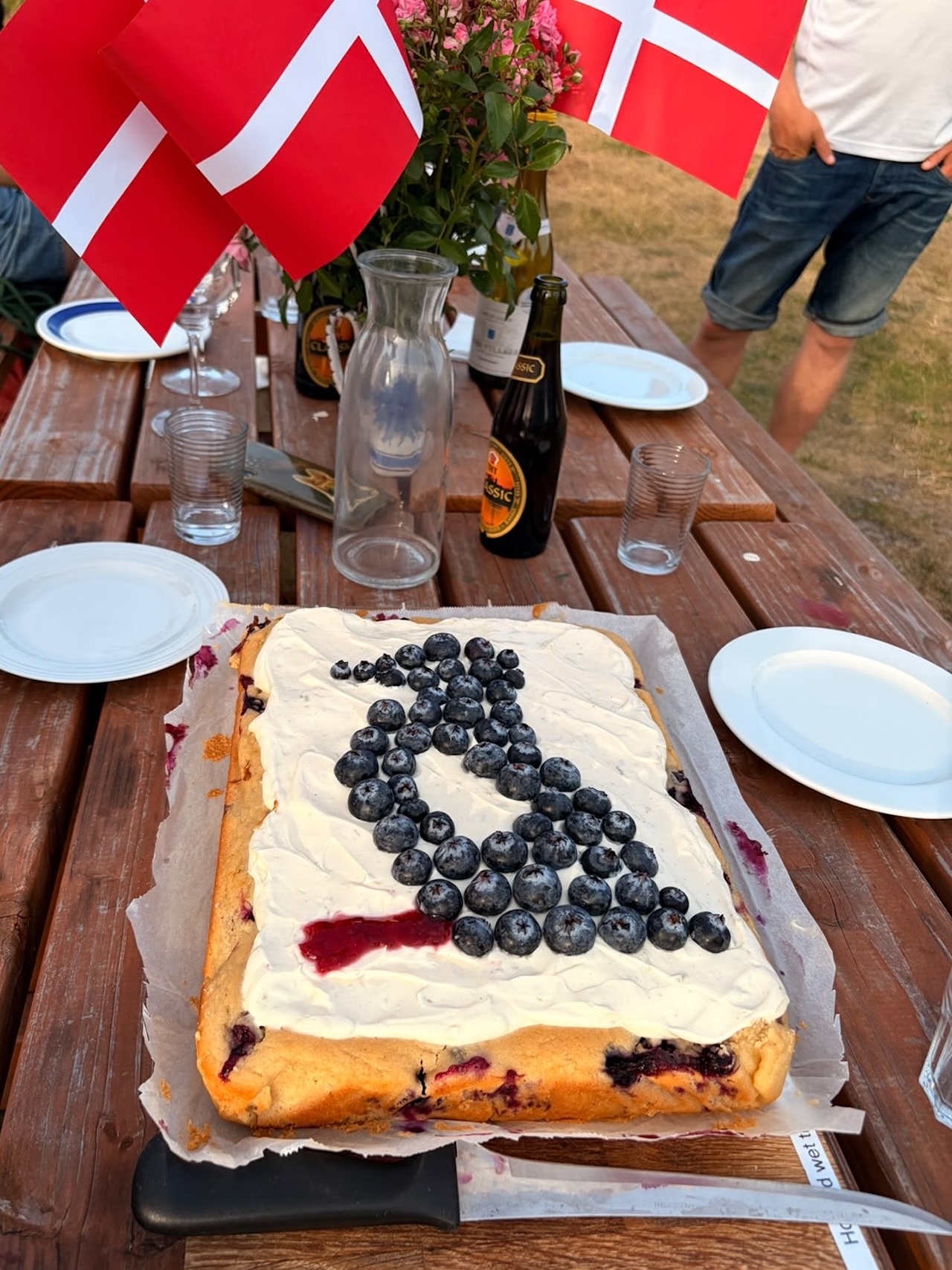 Guillemot cake!
Finally after everything was cleaned up, Julian, Juliane and I did some computer work and sat in the garden, while Bao walked to Skarvsøen, where he saw his lifer Red-necked Grebe (Gråstrubet Lappedykker) and Common Grasshopper Warbler (Græshoppesanger). I climbed up to the top of the lighthouse to watch the sunset and watched a low fog bank creep across Storsig as the sun went down, arriving to the lighthouse as it began to get dark. A beautiful end to a wonderful day!
Highlights from the observations:
Black Guillemots (Tejst) - 1100
Rock Pipits (Skærpiber) - 2
European Shag (Topskarv) - 1
Black Kite (Sort Glente) - 1
White-tailed Eagle (Havørn) - 1
Cinereous Vulture (Munkegrib) - 1
Link to today’s observations in DOFbasen from observers in the area
People: Brian Browne, Julian Helbig, Juliane Rößler, Bao Shen Yap, Páll, Martin Rasmussen, Kristine Rasmussen, Otto & Karl Anker, Simon Christiansen, Lisa Vergin