Her på Skagen Fuglestations blog bringes korte nyheder i dagbogsformat om hændelser på fuglestationen.
-
FORSIDE

- Blog
It is red!
mandag 20. juli 2026
Just like every morning at dawn, the station’s volunteers swarm out like a swarm of bees and seek out the best spots for the day. Their search leads them to the same destination every day: Grenen. The northernmost point of Denmark, which is monitored every morning through standardised counts and bird ringing. I was one of those busy little bees, and by 4 am I was kitted out in my waders, ready to open the nets for the first day of the standardised autumn season. Having stayed in Skagen before, it was a very familiar and lovely feeling to be back here, and I’m looking forward to witnessing the start of the autumn migration over the coming weeks together with the great team of volunteers.
Juliane, Brian and Páll were on hand as hard-working helpers during the ringing and all ringed birds themselves. Most of the birds were young Common Whitethroats (Tornsanger) or Lesser Whitethroats (Gærdesanger). We also recaptured one juvenile Common Redstart (Rødstjert) that had been ringed here earlier this year. Between the ringing sessions, we enjoyed some good views of the sea from Kabeltromlen. The Long-tailed Duck (Havlit) – an unusual sight in summer – and an Arctic Skua (Almindelig Kjove) were the highlights on the water, whilst the calls of Common Crossbills (Lille Korsnæb) rang out above us and the Steppe Grasshopper (Chortippus vagans) sang beside us. The best bird, however, came at the end and was a Common Reed Warbler (Rørsanger). The species is common enough at Grenen, but this bird was ringed in Belgium!
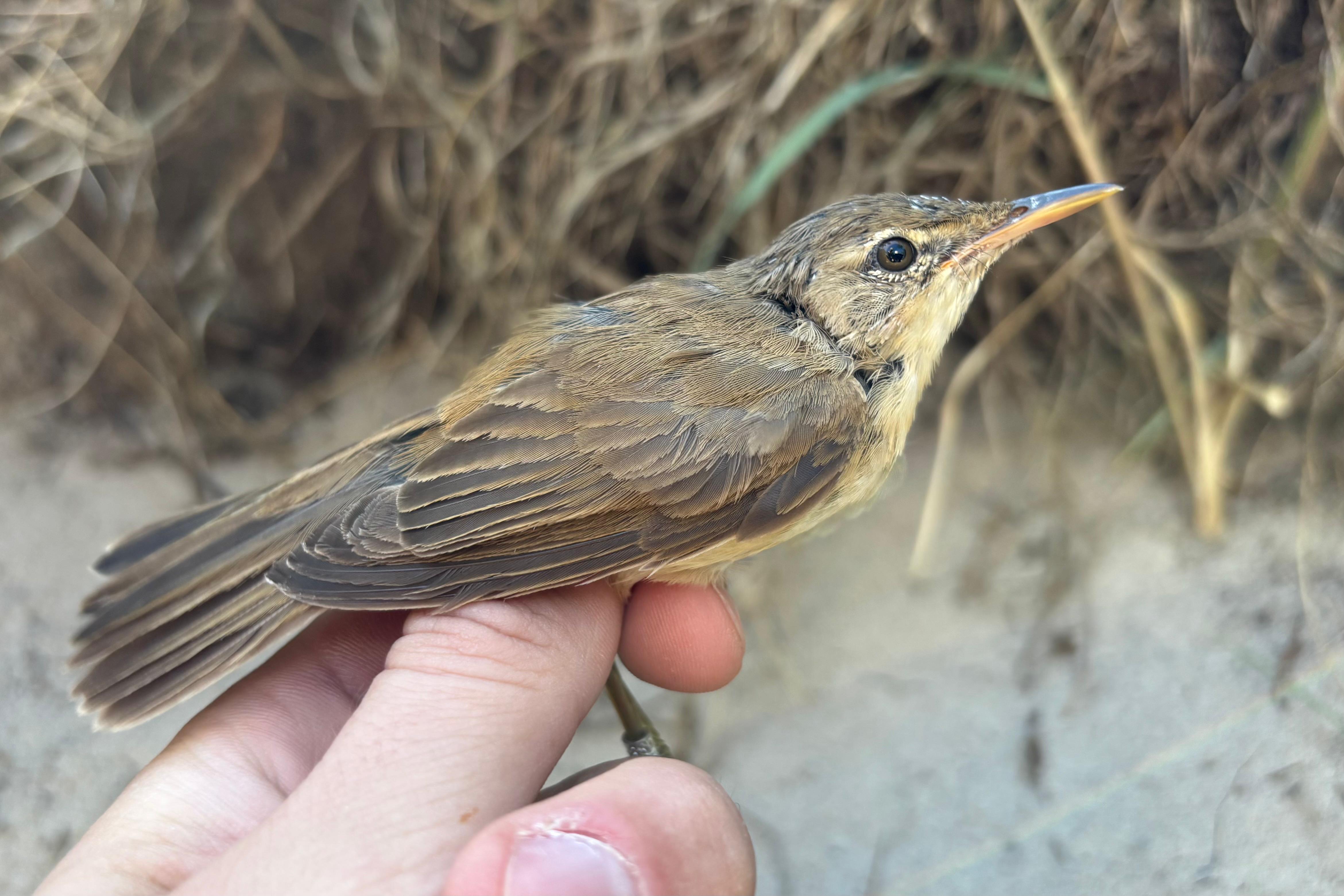 Reed Warbler (Rørsanger) with a Belguim ring!
Meanwhile, Jule held her ground at World’s End 3 to count the seabirds. The wind had brought in a few fulmars (Mallemuk), and there were lots of gulls (Måge sp.) and terns (Terne sp.) perched on the beach. Among them, Jule and Knud also spotted three Mediterranean gulls (Sorthovedet Måge). Suddenly, however, Knud became quite excited and began describing a small bird swimming on the choppy sea just off the tip.
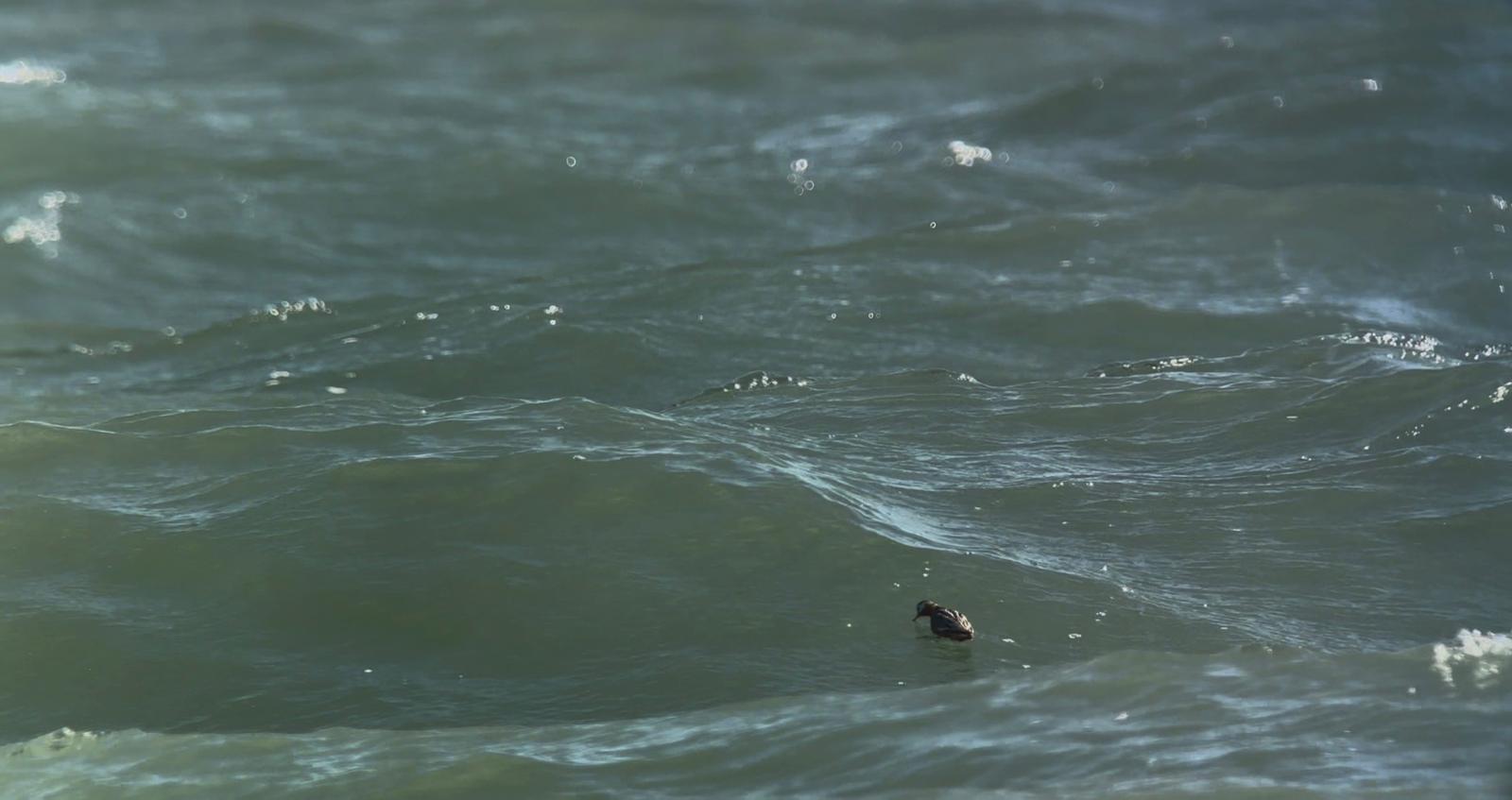 A small but special bird. Photographed through my scope.
A Red Phalarope (Thorshane)! And indeed, it was a RED Phalarope and not a Grey Phalarope, as we often call it here, since young birds and adults in particular often appear in their plain white plumage. This made it even more exciting to see this bird in its full breeding plumage.
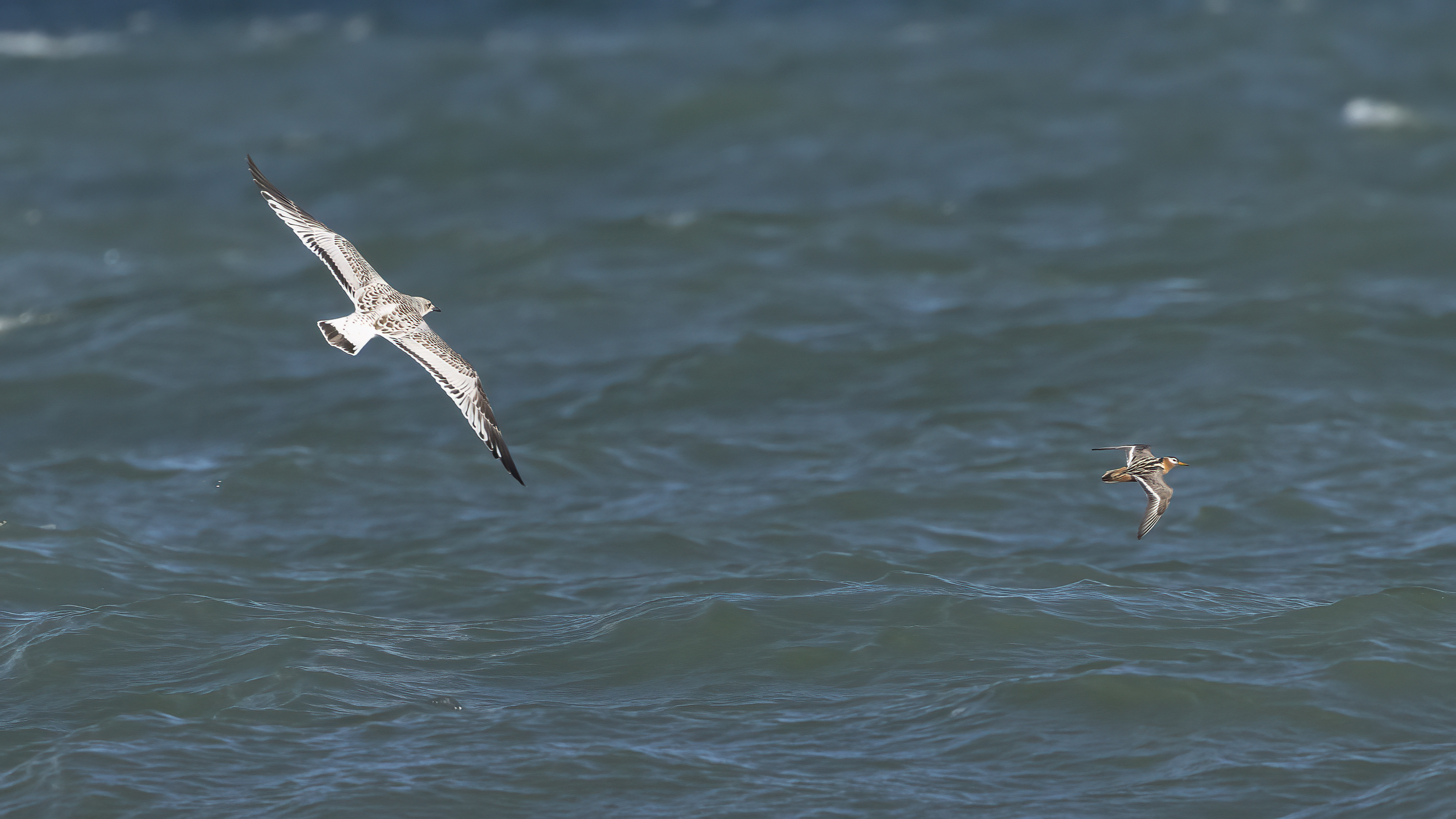 Red Phalarope (Thorshane) flying next to a young Mediterranean Gull (Sorthovedet Måge). Picture by Knud Pedersen.
All the volunteers quickly gathered and were able to spot the special bird. It was a female, which are significantly more strikingly coloured than the males, as in this species the gender roles – and thus the tasks during the courtship and breeding season – are reversed. The birds show us how it’s done!
There was also a Green Woodpecker (Grønspætte) attempting to migrate. I can really understand its decision to not fly out to the Sea, since it is really not its favorit habitat. In other words: they hate the Sea. So it's not a big surprise, that this species does not often show up at Grenen.
At midday, the well-known Cinerous Vulture (Munkegrib) flew over Skagen, much to the delight of the visiting birdwatchers. As it has been here for some time now, I was the only one watching the large bird of prey from the top of the lighthouse, whilst the others were already immersed in important tasks such as data entry. Busy little bees, as mentioned in the beginning.
Highlights from the observations:
Red Phalarope (Thorshane) - 1
Green Woodpecker (Grønspætte) - 1
Mediterranean Gull (Sorthovedet Måge) - 3
Arctic Skua (Almindelig Kjove) - 1
Ringing (KAB):
| Common Whitethroat | (Tornsanger) | 6 | ||||||||||||||
| Chiffchaff | (Gransanger) | 3 | ||||||||||||||
| Blackcap | (Munk) | 5 | ||||||||||||||
| Lesser Whitethroat | (Gærdesanger) | 4 | ||||||||||||||
| Great Tit | (Musvit) | 2 |
Link to today’s observations in DOFbasen from observers in the area.
People: Brian Browne, Juliane Rößler, Jule Tappe, Simon Kiesé, Páll Kærbo, Søren Røed, Knud Pedersen.