
Her på Skagen Fuglestations blog bringes korte nyheder i dagbogsformat om hændelser på fuglestationen.
-
FORSIDE

- Blog
Lesser Wind and Lesser Redpoll
mandag 3. august 2026
With the time, sunrise gets later and later, so our daily routine with ringing and migration counts gradually starts later as well. If you are at the station, you really feel this change, and it's cool to experience the natural day cycle. Today, the day cycle brought Simon and me to Kabeltromlen at around 04:30 to open the nets, which should be done about 30 minutes before sunrise. Alfred joined us later for the first round. During the first round, with an amazing sky above us, a Black Redstart (Husrødstjert) ended up in our nets: a species that we don't catch very often.
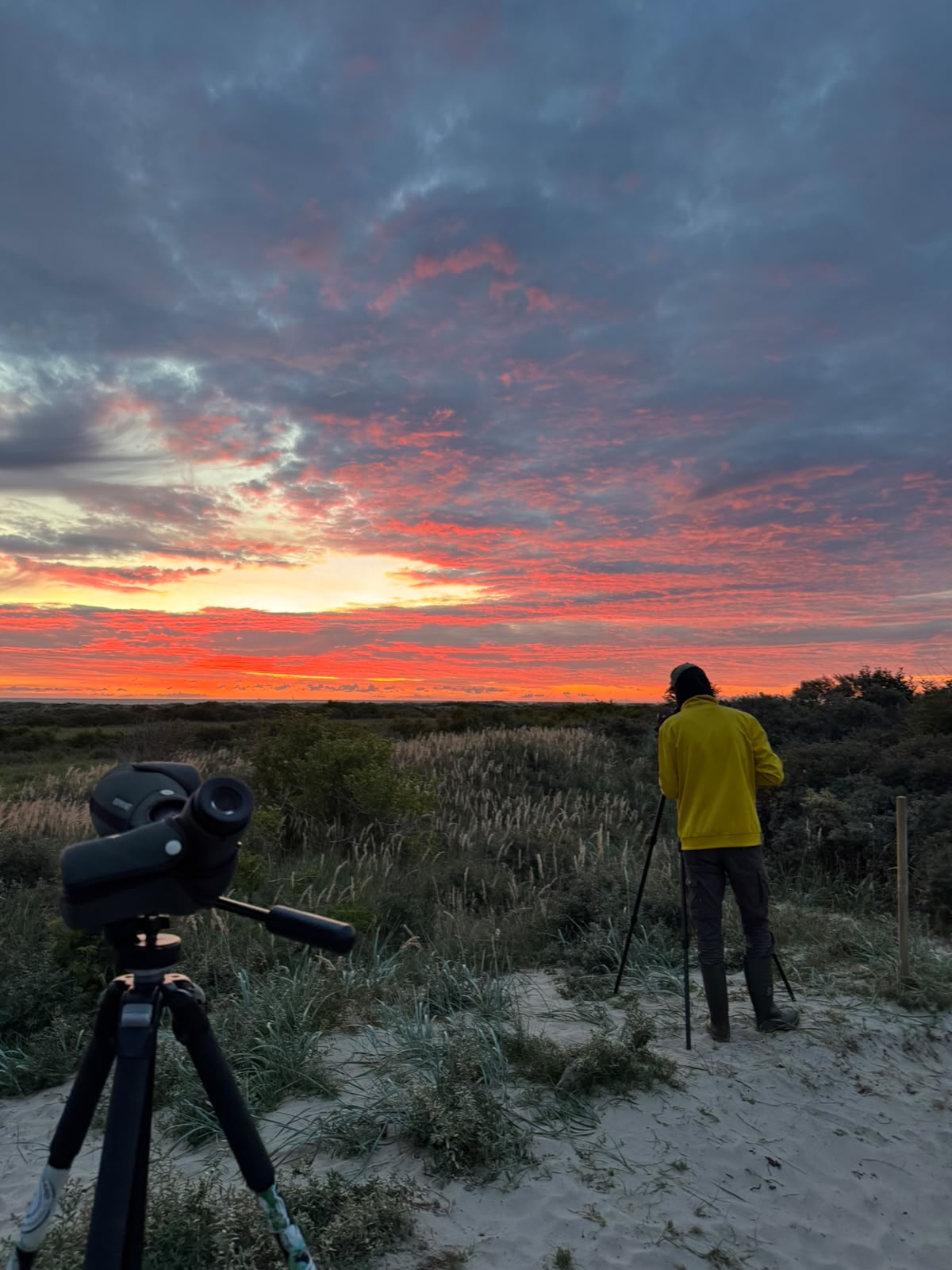 Morning sky over Kabeltromlen
Later, during the second round, the other highlight of this ringing morning showed up: two Lesser Redpolls (Lille Gråsisken), one adult male and one adult female were hanging in the same net at the same time. It was great to see them and to learn how the adults look before their complete moult. Although the moult has already started in many adults birds, it had not yet begun in these individuals.
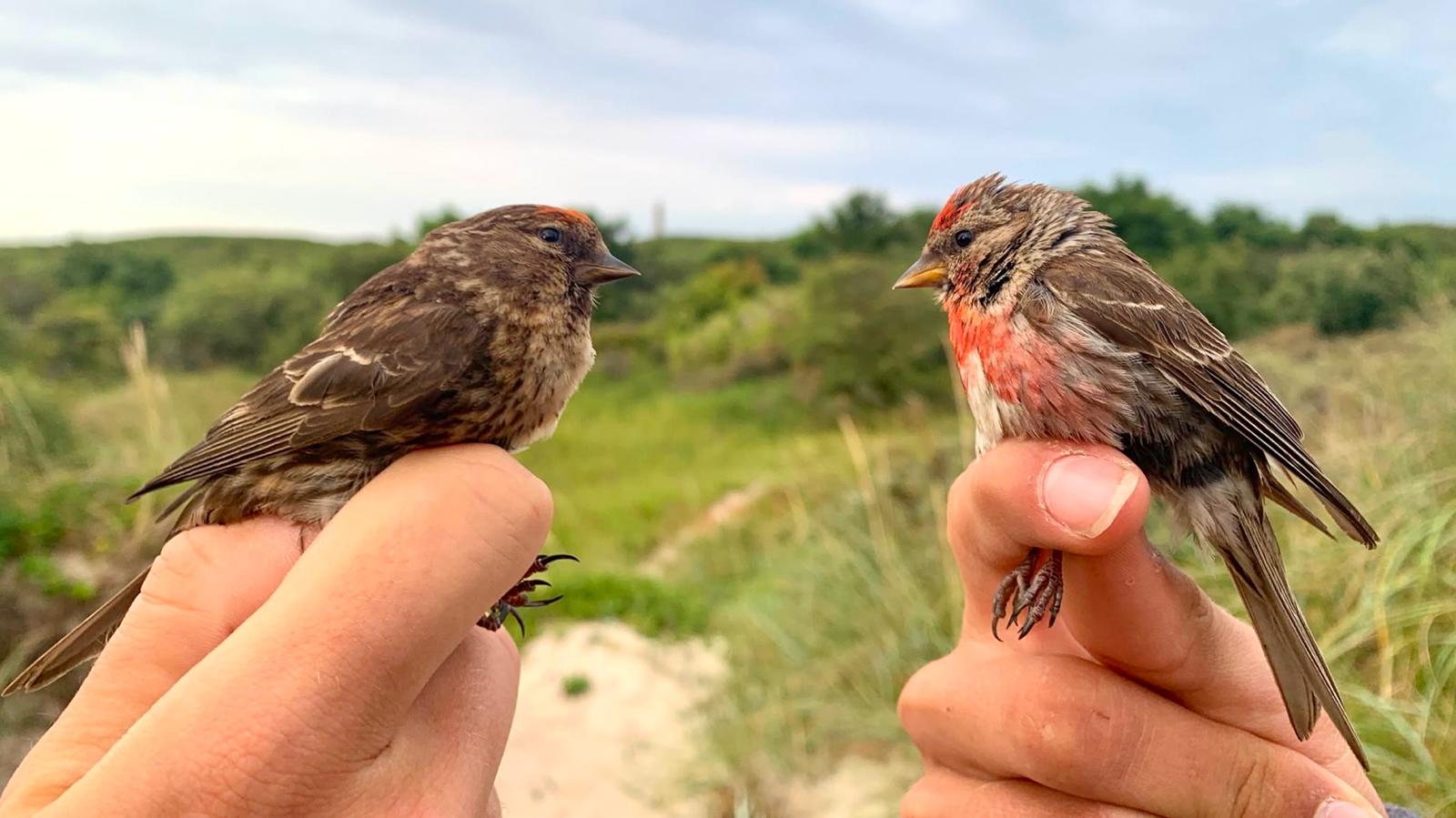 Adult female (left) and adult male (right) Lesser Redpoll (Lille Gråsisken)
The observation team, consisting of Jule and Alexander, also got to enjoy the amazing sky. However, the sky wasn't as impressive as their sightings of a total of six Arctic Skuas (Almindelig Kjove). As yesterday, the birds came close to the shoreline and even closer when they flew over the beach, showing their typical foraging behaviour: chasing gulls and terns until they dropped their food. All other skua species are also known for this behaviour, including the Great Skua (Storkjove), which was also seen today. It didn't come as close as the Arctic Skuas (Almindelig Kjove), but Jule and Alexander still got some great views.
After we all headed back to the station, we welcomed Moritz, who will stay here for one week. To show him the area, Moritz and I walked out to Grenen, where we did some colour-ring reading of terns and gulls along the beach. We read a total of 14 rings, so we were quite successful! While reading the rings, we also saw three Marsh Harriers (Rørhøg) arriving from the sea and continuing their migration south.
After Moritz and I headed back to the station, we had our evening meeting and enjoyed a nice dinner prepared by Jule. Just a few minutes before Simon arrived for dinner, he spotted a Merlin (Dværgfalk) coming in from the sea. First of the season!
While eating, we looked out of the station window and noticed how calm and flat the sea was, so we decided to head out again for some evening observations at the Seal Bunker. Almost immediately after we started scanning the sea, the first bird I found in my scope was a 2K Great Northern Diver (Islom)! It was a fantastic bird for all of us to enjoy in such perfect conditions. Thanks to the calm sea, we also recorded good numbers of Black Guillemots (Tejst) and Razorbills (Alk).
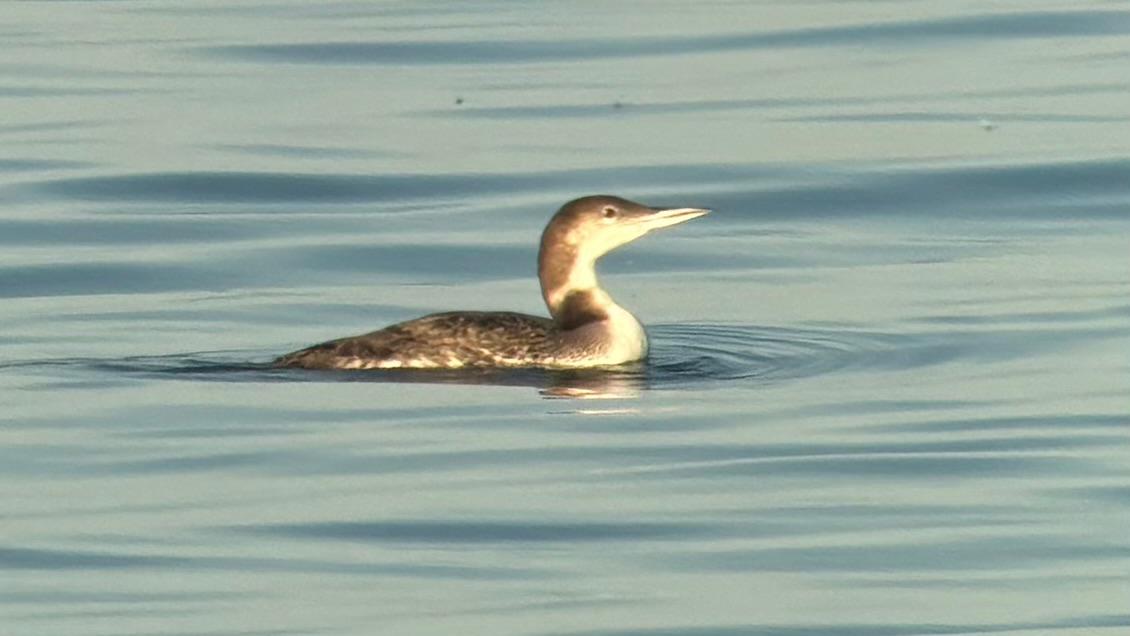 Great Northern Diver (Islom)
Now we are trying to catch stormpetrels (Stormsvale) and Nightjars (Natravn) again. We'll update you in the next blog if we catch something!
Ringing (Kabeltromlen):
Chiffchaf (Gransanger)-2
Blackcap (Munk)-2
Whitethroat (Tornsanger)-13
Willow Warbler (Løvsanger)-1
Lesser Redpoll (Lille Gråsisken)-2
Black Redstart (Husrødstjert)-1
Reed Warbler (Rørsanger)-2
Total:22
Highlights from the observations:
Great Northern Diver (Islom)-1
Great Skua (Storkjove)-2
Arctic Skua (Almindelig Kjove)-6
Rosefinch (Karmindompap)-1
Merlin (Dvægfalk)-1
Link to today’s observations in DOFbasen from observers in the area.
People: Jule Tappe, Mio Brix, Simon Kiesé, Moritz Morteani, Alfred Godsk Geckler, Alexander Nyholm, Simon S. Christiansen