
Her på Skagen Fuglestations blog bringes korte nyheder i dagbogsformat om hændelser på fuglestationen.
-
FORSIDE

- Blog
Fun birds have red tails
onsdag 26. august 2026
Everything good comes to an end. But the end is fun.
Today we went out for the last visit at our CES site Skarvsøen. CES stands for Constant Effort Site and is an international ringing project, which focuses on breeding birds. Therefore, it is great to recapture your own birds to be able to calculate the longevity and to get a demographic overview over the population.
The morning got off to a good start with a view of lots of Waders (Vadefugl) searching for food on the mudflats exposed by the receding water. Mentionable were 3 Temminck’s Stints (Temmincksryle) and one Little Stint (Dværgryle). Also 11 Common Ringed Plovers (Stor Præstrkrave) were exciting, since they belong to the subspecies tundrae, that only breeds in northern Scandinavia and eastwards towards Russia. This is a good sign, that migration is going on.
The first round already brought fun birds in the ringing. After catching several young Common Redstarts (Rødstjert) the past days, one adult female was very helpful to calibrate our ageing skills.
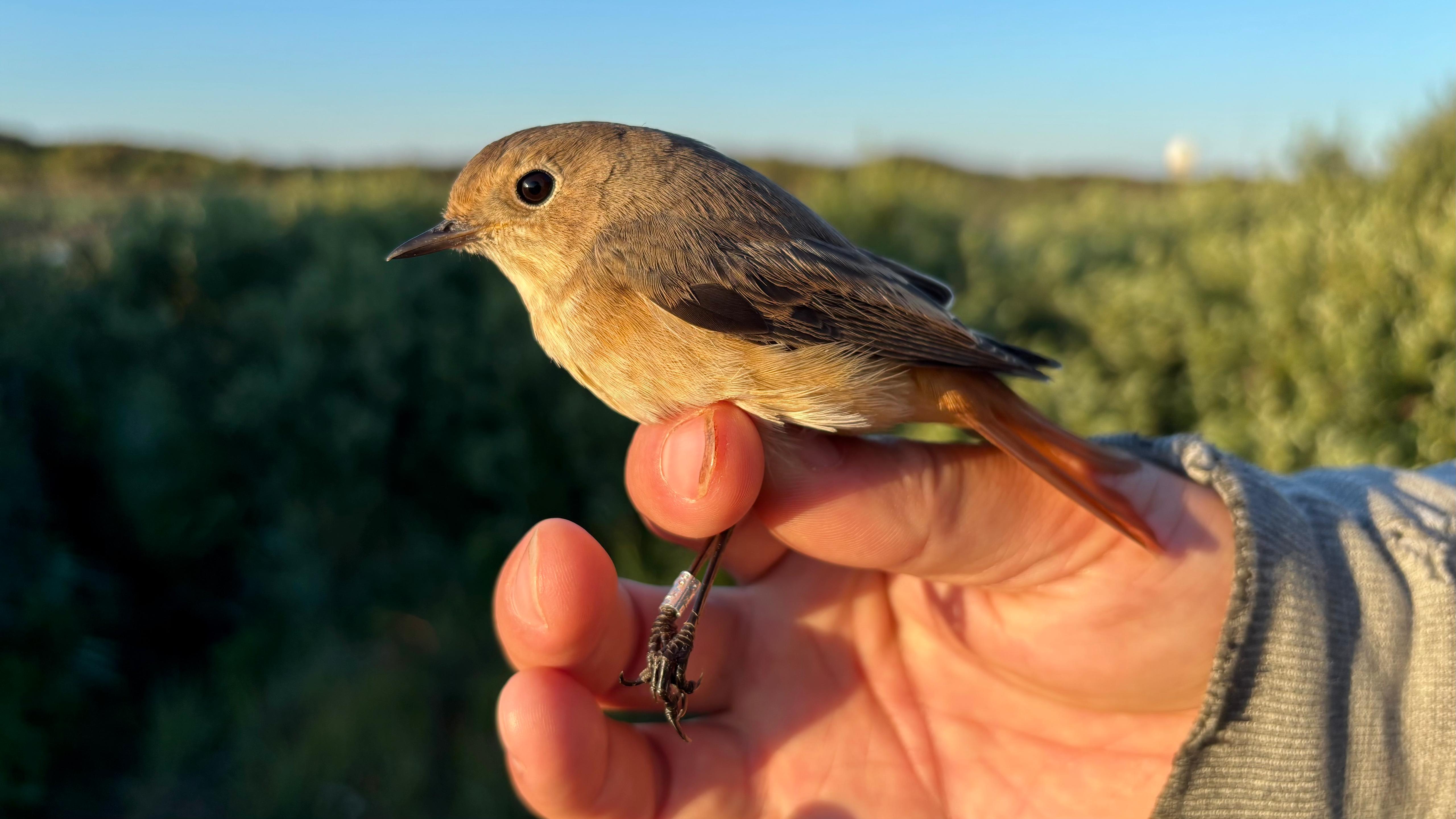 Look at this pretty old female Common Redstart (Rødstjert). Foto: Simon Kiesé
For all ageing and moult enthusiasts I want to share some more details of the bird with you.
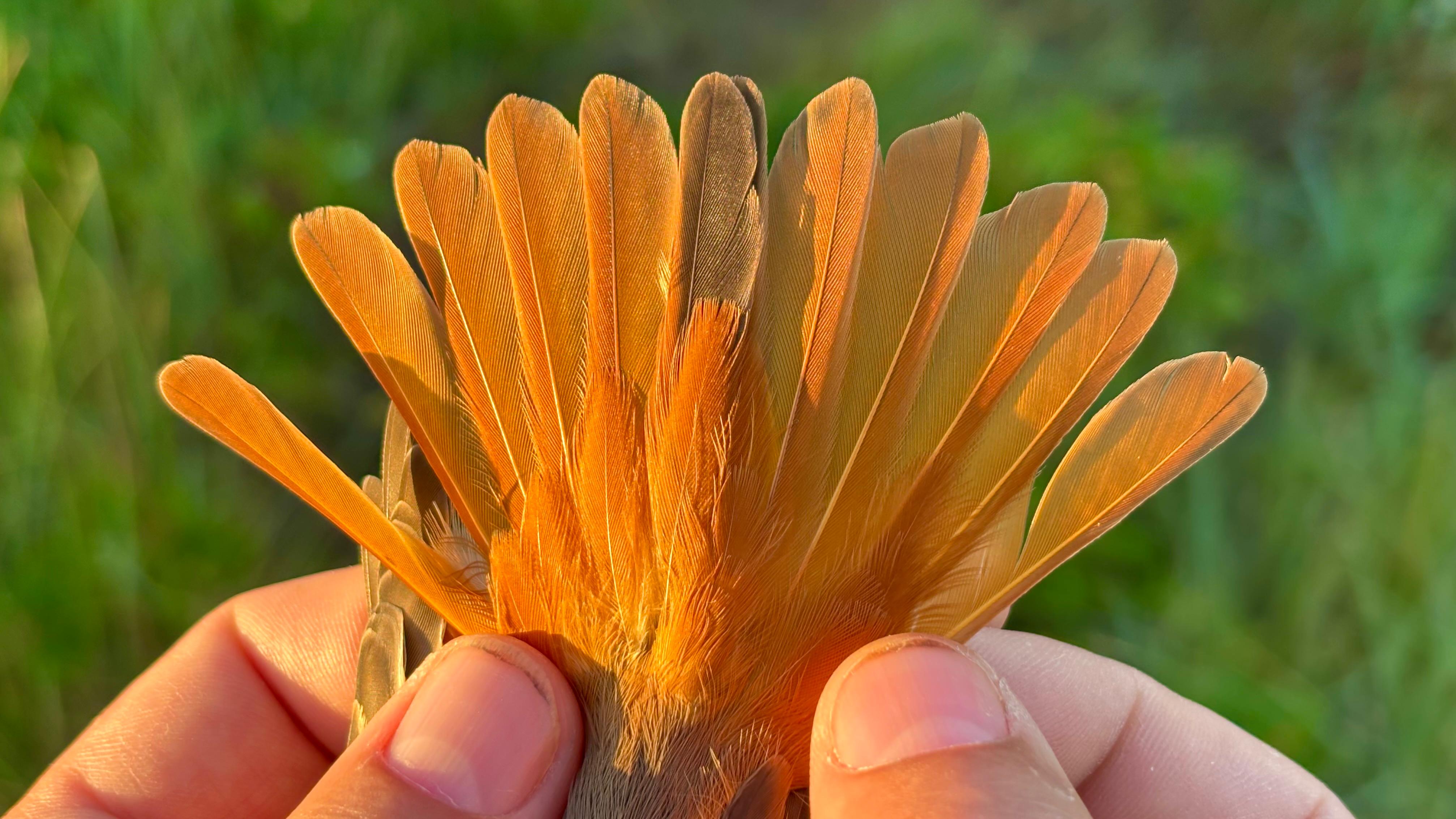 The broad tail with rounded tips shows, that these feathers are adult. Foto: Simon Kiesé
The next round brought the next surprise: a White Wagtail (Hvid Vipstjert). It is an adult male, which is nice to see, since it already completed its post-breeding moult into winter plumage. In this plumage the features for sexing are less straight forward, then what we know from spring.
I guess everyones favorite was the Bluethroat (Blåhals), that we ringed a bit later. It is very rare, that we get adult females like this one here. Unfortunately, this makes it harder (in this case kind of impossible) to identify the subspecies, since the only feature is the colour of the spot in the throat in males. Does anyone know more about them or wants to analyse our DNA sample? ;-)
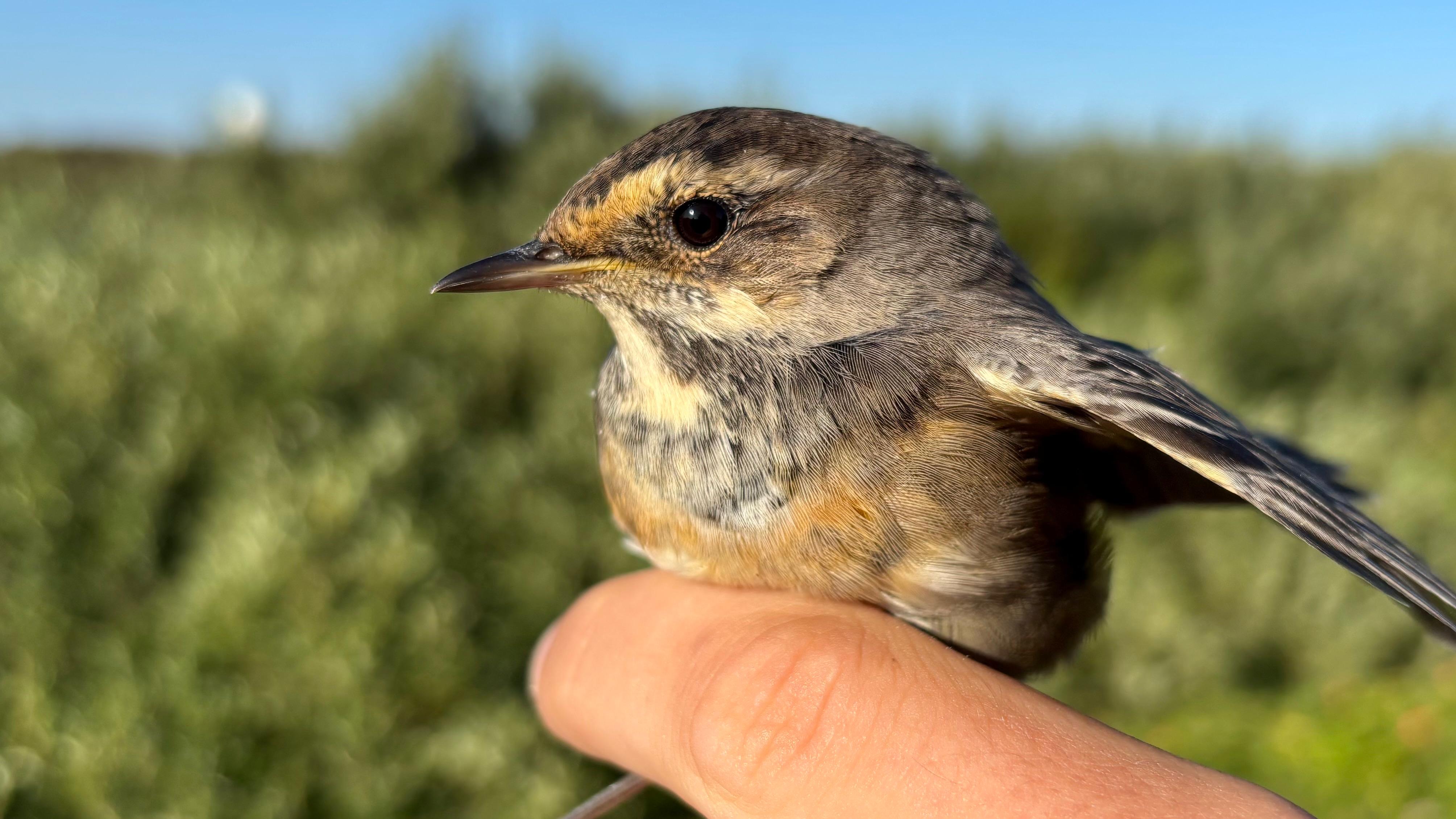 Bluethroat – adult female of unknown subspecies. Picture: Simon Kiesé
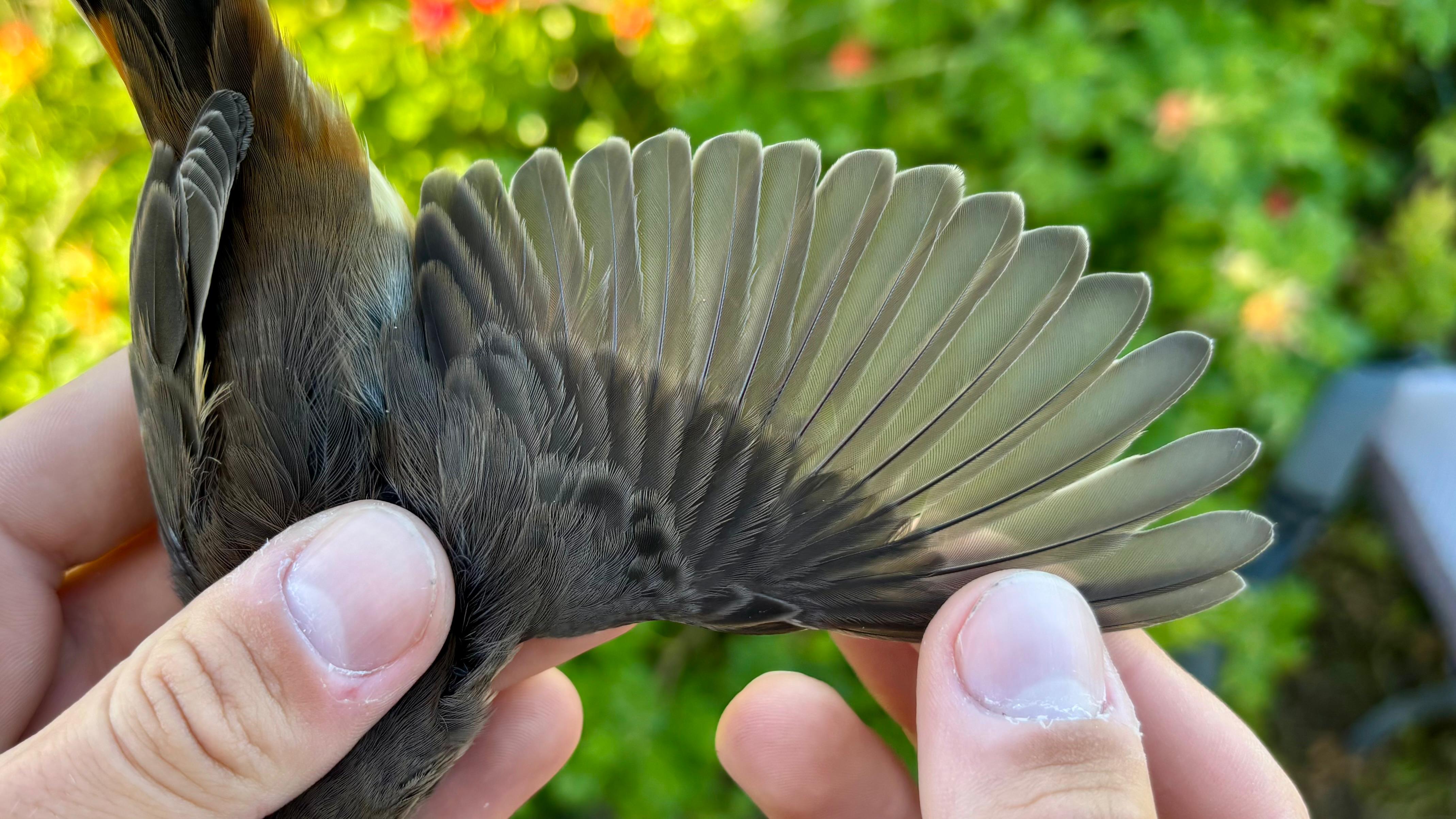 All feathers are uniform postjuvenile - including the Greater Coverts (GC), where a young bird would show a moult limit with less dense and paler tipped juvenile GCs. Foto: Simon Kiesé
A personal highlight was a recapture of an adult Reed Warbler (Rørsanger). It was ringed in 2023 and not recaught since then. So to see that it is still alive is already a highlight. When I looked up the ringer I was even more amazed: it was me! Super cool to have this bird in the hand again three years later! In the next picture it is the old one on the right side.
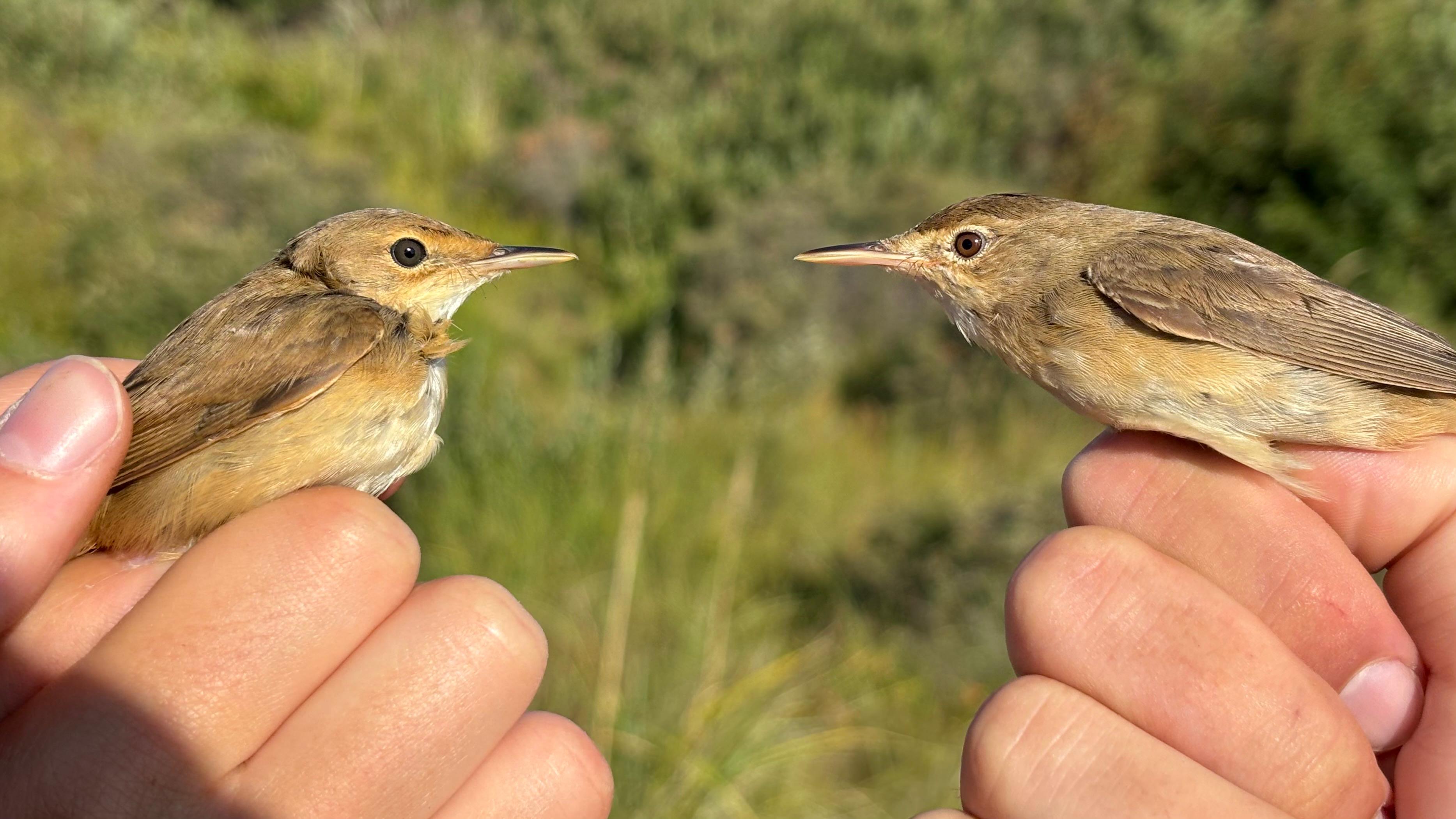 One helpful feature to age Reed Warblers (Rørsanger) in autumn is the eye colour. In young ones (left) it is more cold grey, while it is warmer brown in old ones (right). Foto: Simon Kiesé
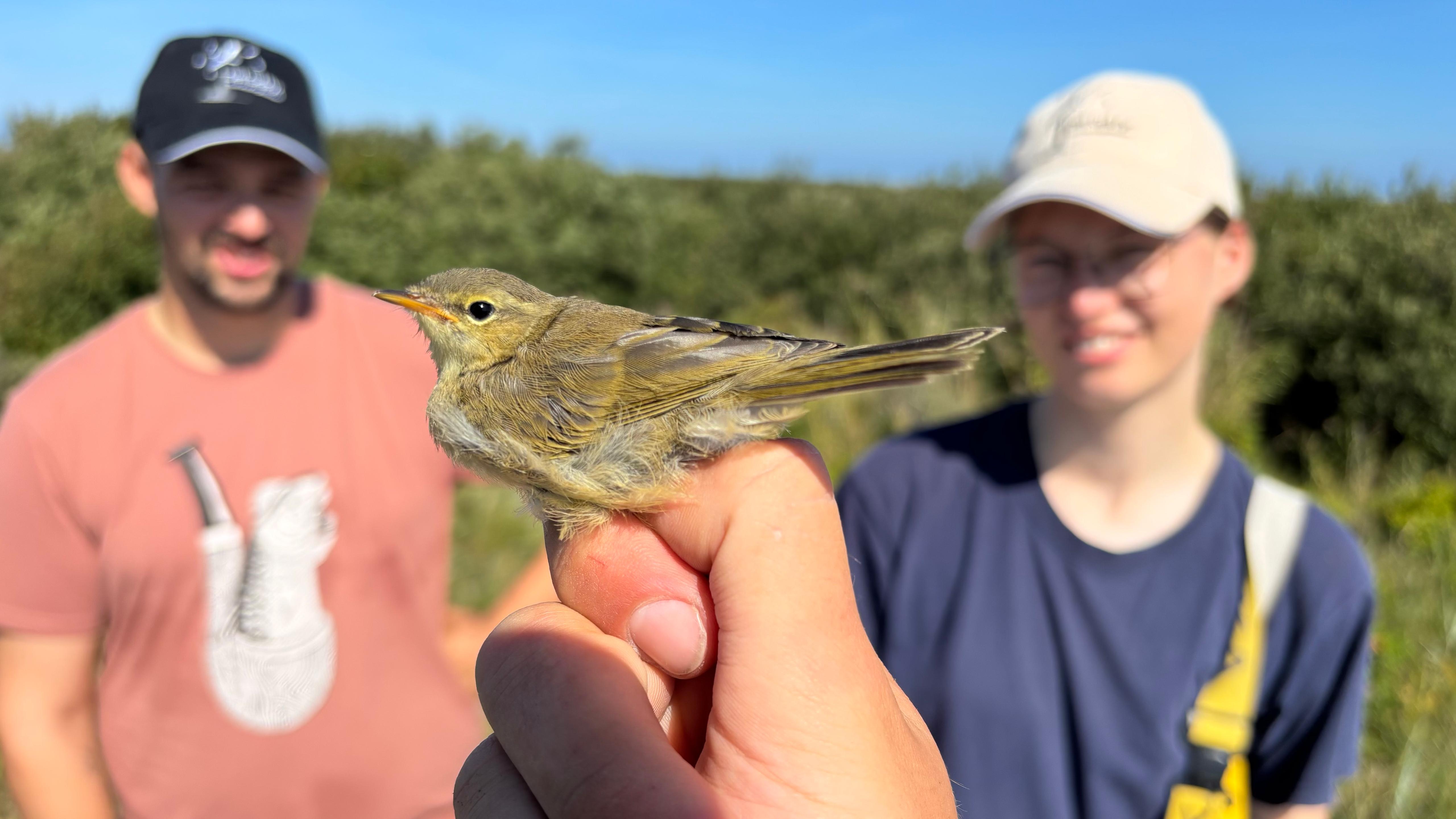 The last bird of CES 2026 was a young Chiffchaff (Gransanger) by the way. Do you think it will remember Páll and Jule? Foto: Simon Kiesé
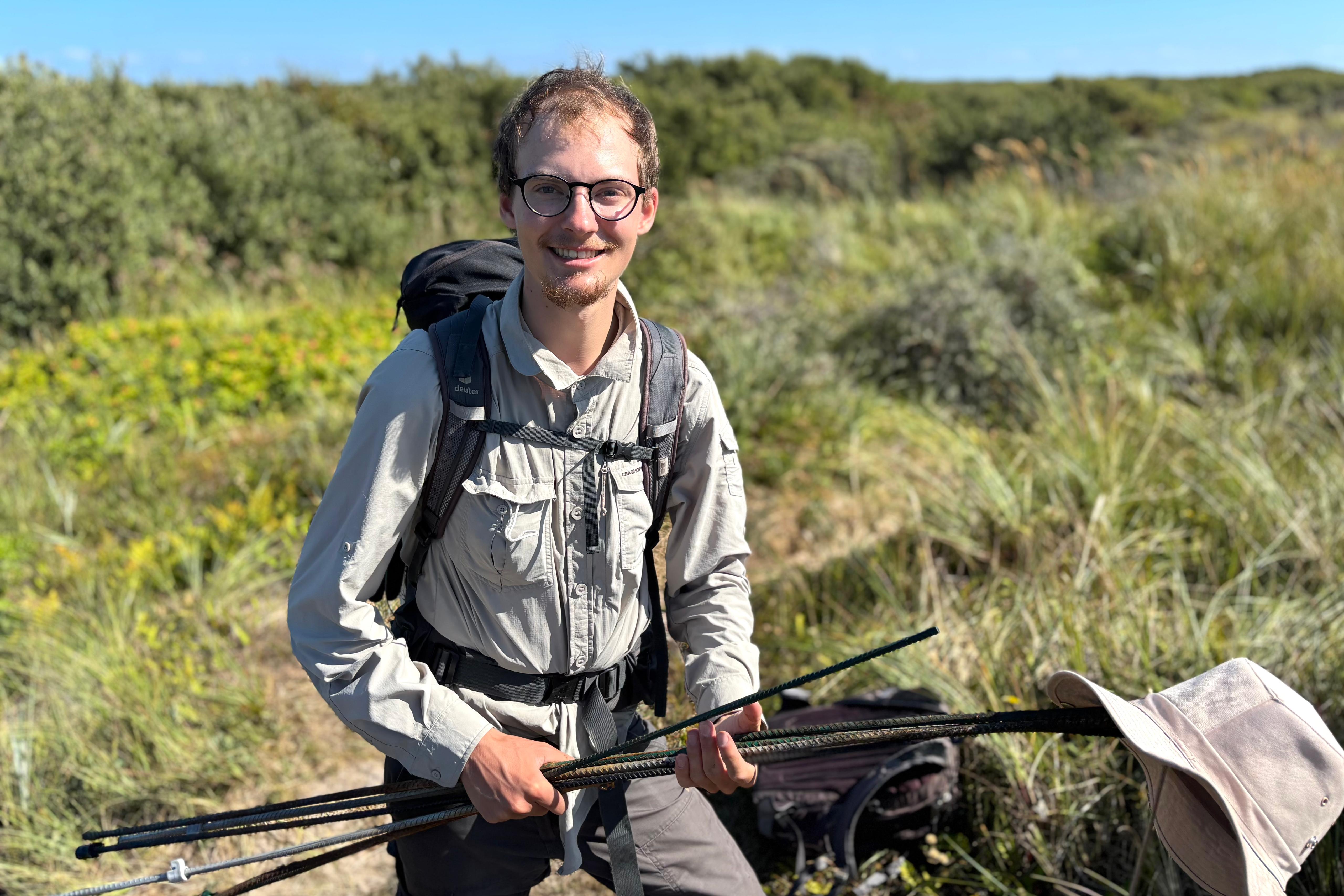 Everything has to be taken down and carried back to the station.
In the meanwhile, Mio and James were out at World’s End 3 and kept an eye on everything moving. The known old male Long-tailed Duck (Havlit) did its favourite thing and swam with Eiders (Ederfugl) on the sea. Yesterday’s young dark morph Arcitc Skua (Almindelig Kjove) was somewhat the most exciting bird in this slow morning, but as you know Skagen always offers some fun birds as Caspian Gull (Kaspisk Måge) or Mediterranean Gull (Sorthovedet Måge).
After labelling all the CES nets and putting the poles back to where they belong, we took a well-earned nap. Mio went for a walk and saw an adult Hobby (Lærkefalk). After the evening meeting James presented us a super delicious dinner. Since it would be hard to describe the taste in words, I can at least share a picture with you.
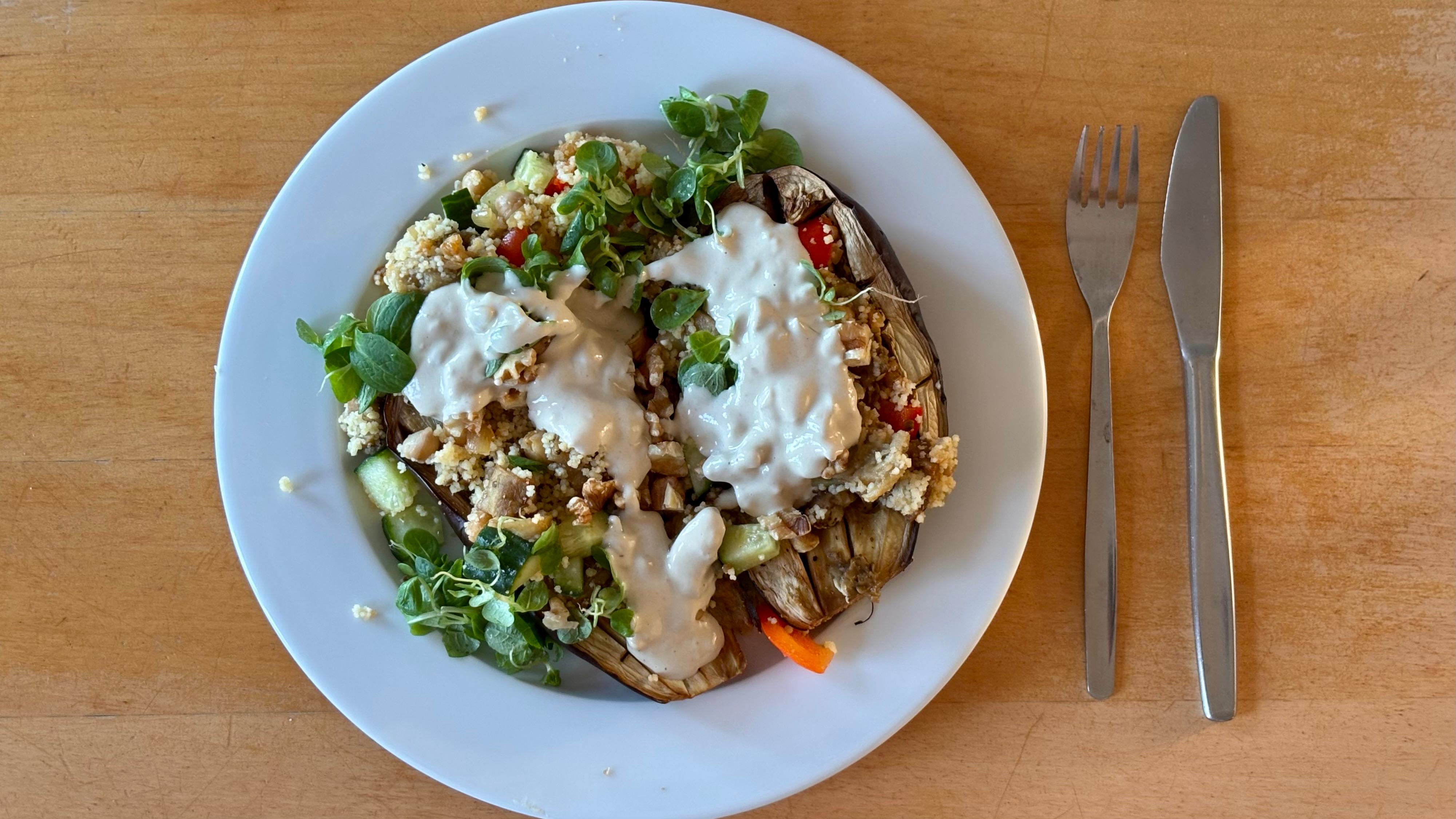 James cooked this delicous meal!
Even though we are just three people at the station right now, we don‘t hesitate to do as much bird-related extra tasks as possible. That’s why we just set up nets for Storm-Petrels (Stormsvale) again. We were already successful with two young Nightjars (Natravn) last round. Sophie and Páll released those two together and seemed very happy about it. I share their joy! Close before midnight Nightjar no. 3 and 4 - both young ones - got a ring aswell. It's the first time 4 Nightjars were caught in the lighthouse garden in just one evening.
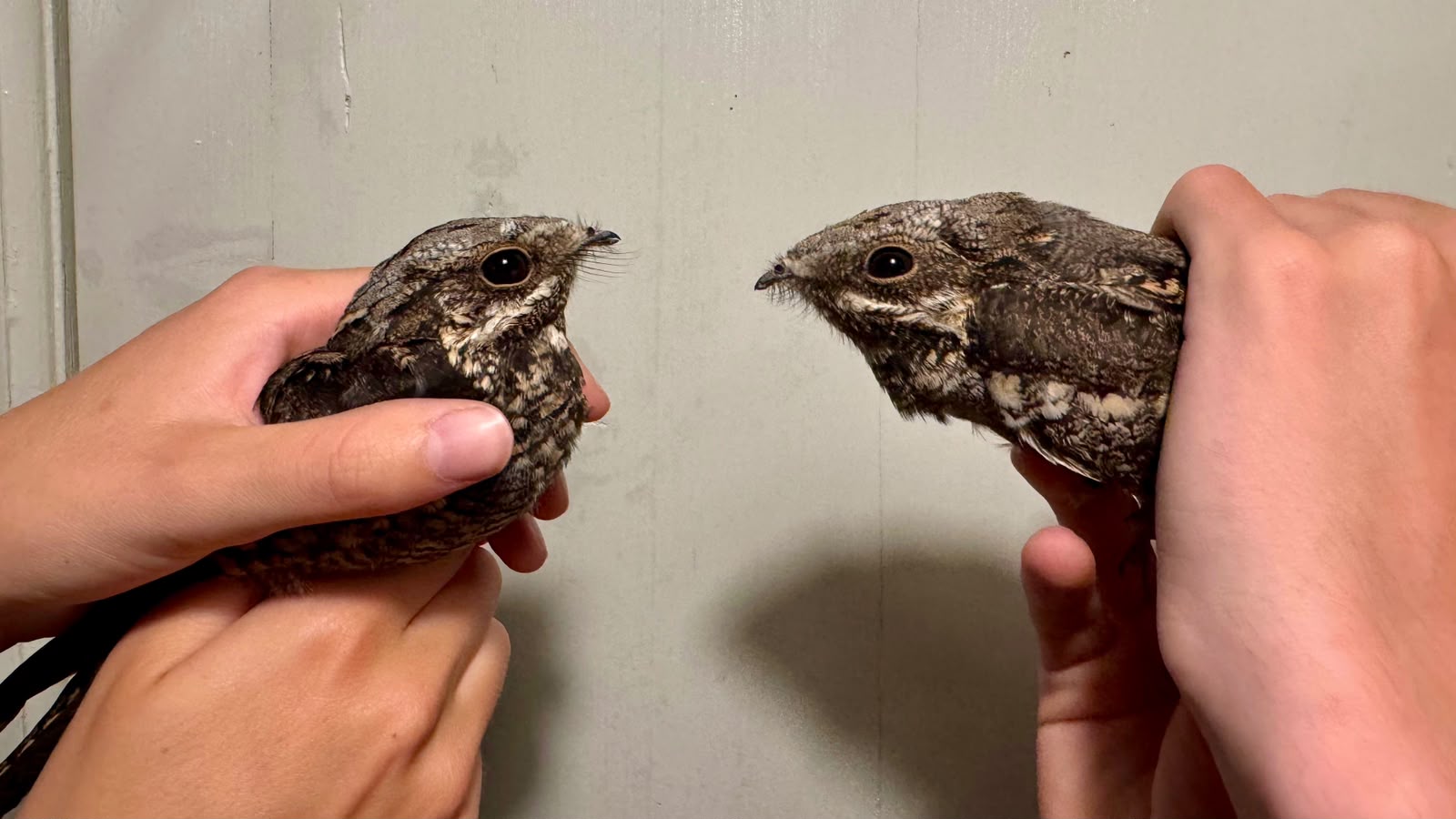 Two young Nightjars (Natravn) from this evening. Foto: Mio Brix
Highlights of the observations:
Temminck's Stint (Temmincksryle) - 3
Little Stint (Dværgrlye) - 1
Ringing (Skarvsøen):
Total: 20
Ringing (Det Grå Fyr):
Nightjar (Natravn) - 4
Link to today's observations in the Dofbasen from observers in the area.
People: Mio Brix, Jule Tappe, Simon Kiesé, James Wareing, Páll Vang Kjærbo, Sophie Booker, Simon S. Christiansen.