
Her på Skagen Fuglestations blog bringes korte nyheder i dagbogsformat om hændelser på fuglestationen.
-
FORSIDE

- Blog
Knot Knot! Who’s there?
onsdag 9. september 2026
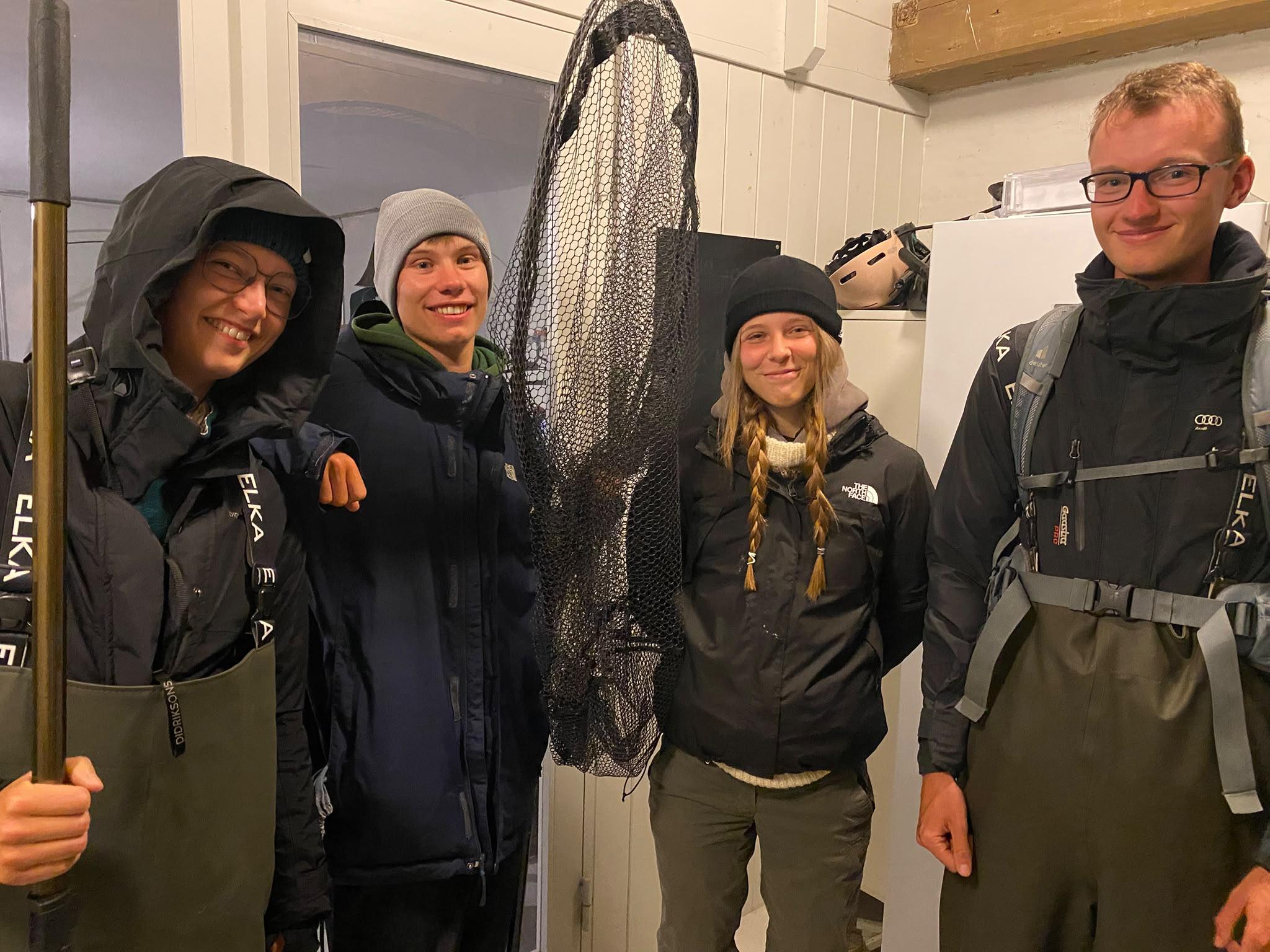 Happy volunteers on their way to the nightcatch
While Simon, Jule and I were walking through Ellekrattet yesterday evening searching for Jack Snipes (Enkeltbekkasin), only flushing two Nightjars (Natravne), Pauline and Mio made their way to the northernmost tip of the beach. They saw several different species of waders (Vadefugl), terns (Terner), and even some seals (Sæler) watching them from the water. When they came back, they carried a nice surprise. They had caught two Red Knots (Islandsk Ryle) on the beach. We ringed the birds, released them back onto the beach, and went to sleep feeling really satisfied after seeing such cool birds up close.
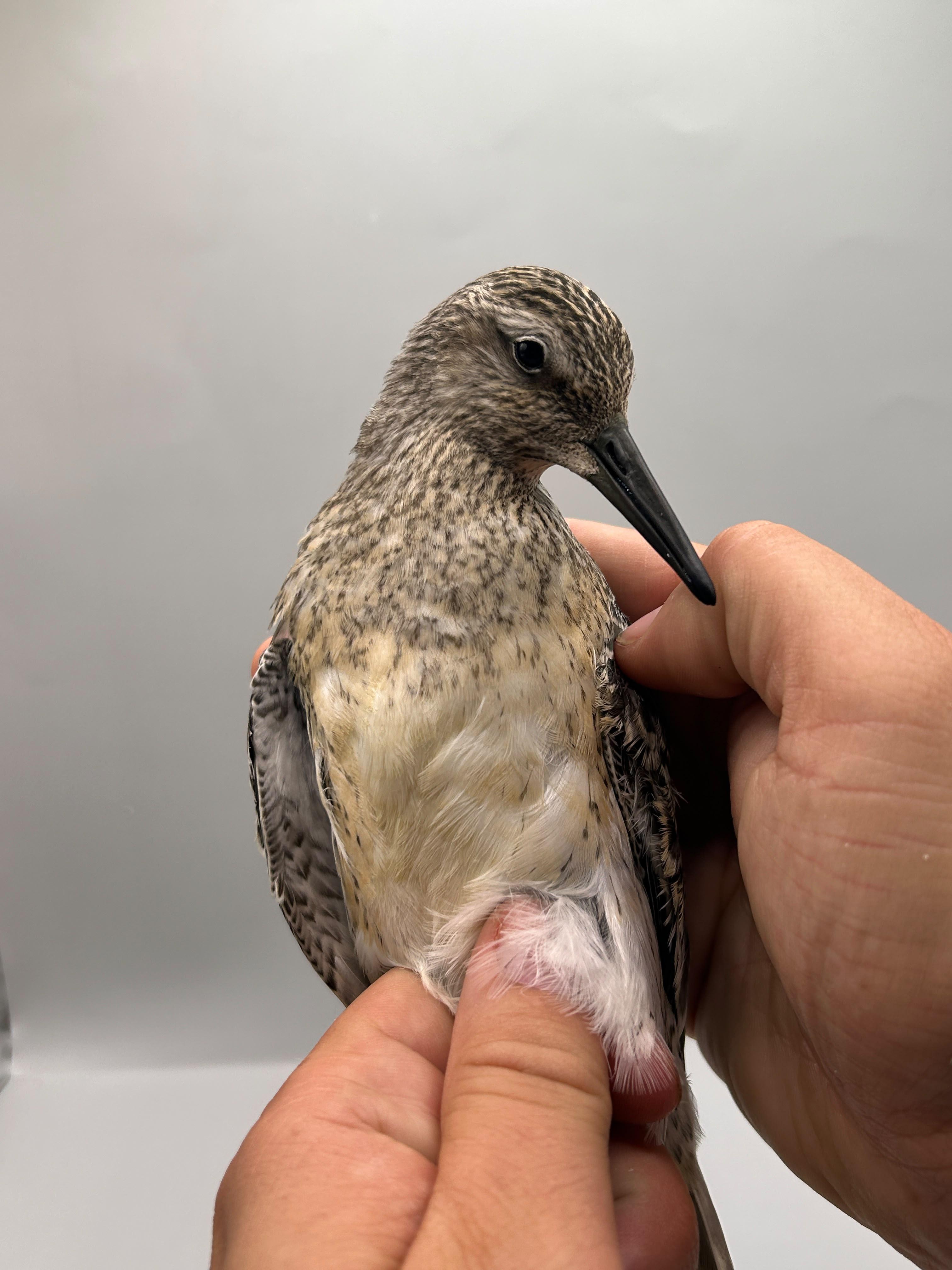 1k Red Knot
In the morning, Pauline, Jule and I made our way to Kabeltromlen to open the nets before the sun appeared on the horizon. We could already hear some Robins (Rødhals) and Dunnocks (Jernspurv) calling from the surrounding bushes. We were soon joined by Simon, our guests Kurt Håkonsson and Marianne Mølgaard, as well as the school class staying here in Skagen for a few days to collect data.
We caught 35 new birds in total, most of them being Chiffchaffs (Gransanger), Blackcaps (Munks), and Robins (Rødhals), but also one Marsh Warbler (Kærsanger), one Reed Bunting (Rørspurv), and two Eurasian Bullfinches (Lille Dompap), which made Pauline really happy. We also heard the first Bramblings (Kvækerfinke) of the autumn migrating south.
Mio and Knud were counting at Worlds End 3. They spotted a bunch of Arctic Skuas (Almindelig Kjove) and one Great Skua (Storkjove), but this time no Long-tailed Skua (Lille Kjove). Has the good run of Long-tailed Skua observations come to an end? We’ll see over the next few days. To make sure Mio still got to see some of those amazing skuas, Knud showed him some pictures he took ages ago of them roosting on the beach. Once again, there was also a Black Tern (Sortterne) around.
After the count ended, Mio came over to KAB, and together we made our way back to the lighthouse. We ate lunch, entered the data, and took a nap to be ready for our next night tour. In the afternoon, our new volunteer Laura arrived all the way from Estonia. Not long after her arrival, Simon came to the station to give a presentation on different moult strategies. That was really helpful for understanding what you have to look for when ageing a bird.
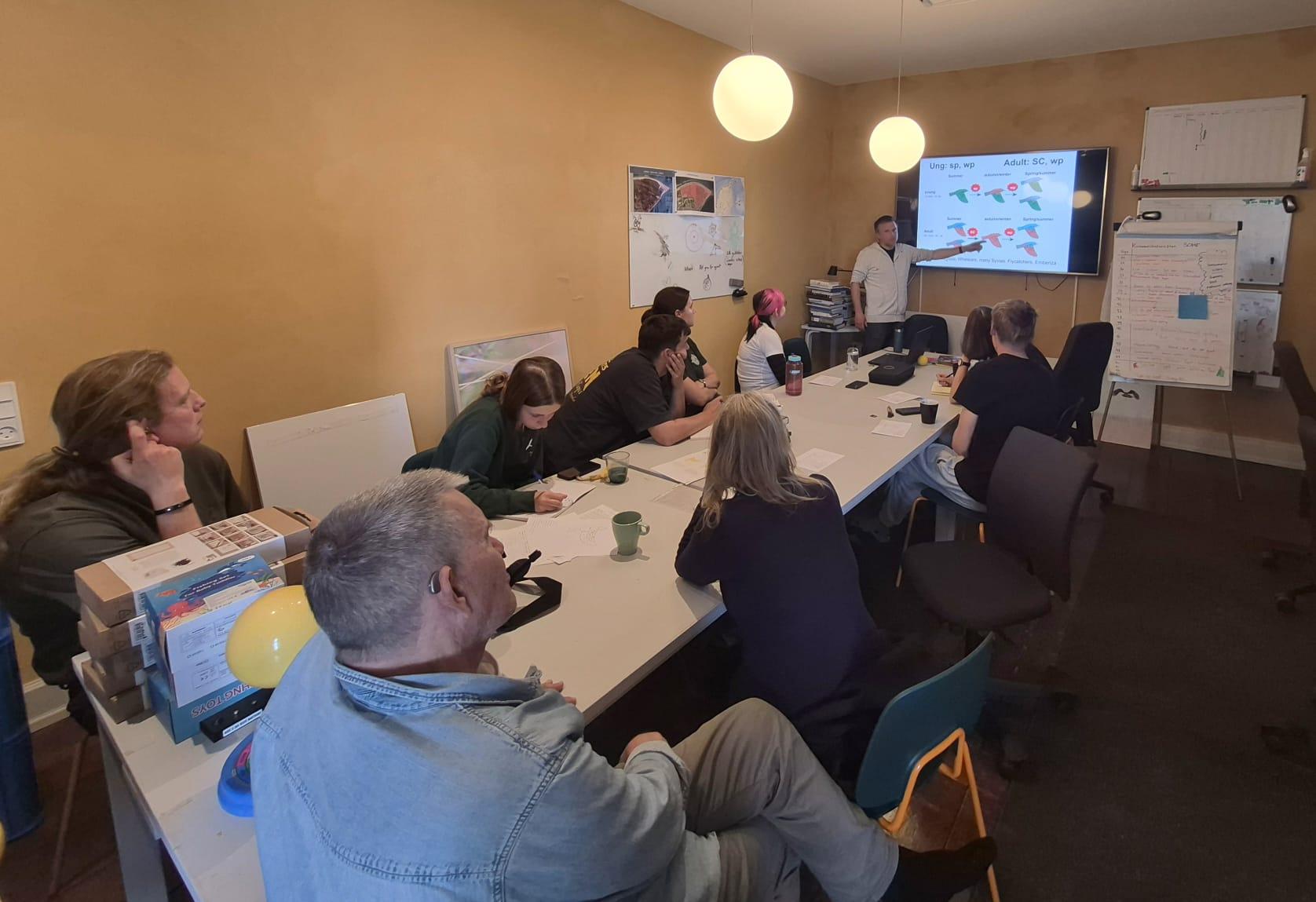 Simon making sure we understand how birds are moulting
Now Mio is preparing some wraps for dinner. We’re planning to head out to the beach again tonight to catch some waders. You can read tomorrow, if we were succesfull or not.
Ringing (Kabeltromlen):
| Blåmejse | 1 |
| Kærsanger | 1 |
| Rørsanger | 1 |
| Gransanger | 7 |
| Munk | 6 |
| Gærdesanger | 2 |
| Gærdesmutte | 1 |
| Rødhals | 6 |
| Rødstjert | 4 |
| Jernspurv | 3 |
| Dompap, Lille (ssp. europaea) | 2 |
| Rørspurv | 1 |
Total: 35 birds
Observation Highlites:
Storkjove (Great Skua) – 1
Sortterne (Black Tern) – 1
Krumnæbbet Ryle (Curlew Sandpiper) – 1
People:
Mio Brix, Hannes Schäfer, Knud Pedersen, Pauline Nähring, Jule Tappe, Simon S. Christiansen, Kurt Håkonsson and Marianne Mølgaard, Jørgen Kabel, Sophie Booker, Jeppe Madsen, Páll Vang Kjærbo, Laura Tamminen