Her på Skagen Fuglestations blog bringes korte nyheder i dagbogsformat om hændelser på fuglestationen.
-
FORSIDE

- Blog
Awesome birds as close as never before
søndag 13. september 2026
When I woke up this morning, it was light outside. That’s weird. At least, when you work at a bird observatory and go bird ringing almost every day. But today, we switched our usual order and Mio, Pauline and Anna opened the nets at Kabeltromlen while Laura, Knud and me did the migration count.
Unfortunately for the ringers, the most birds were on the sea today. The first couple of rounds were still quite good, the highlight being to 2k+ Blackcaps (Munk). Then, it slowed down a little. While watching with a scope, it was still possible to see what was flying on the sea.
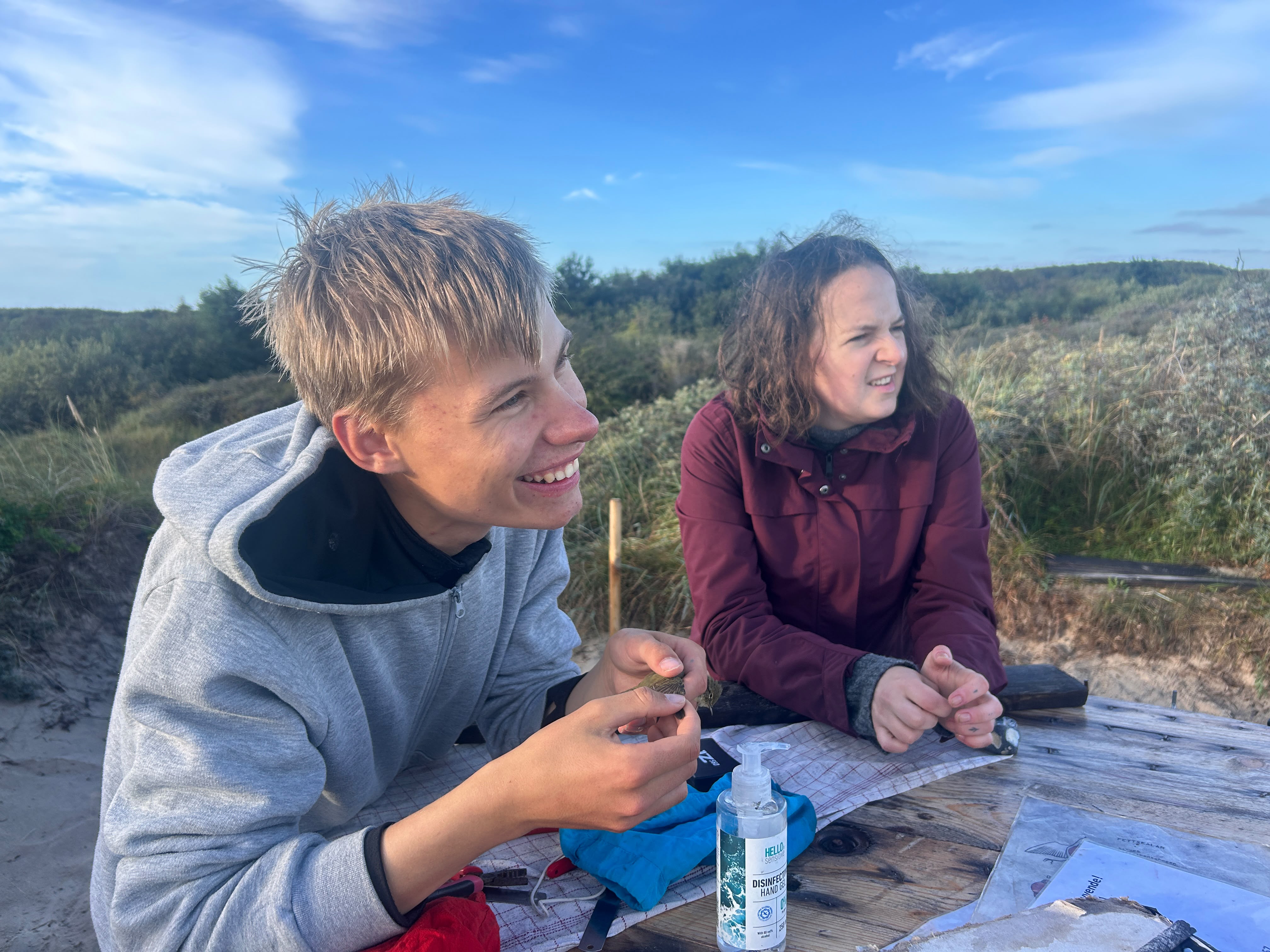 Mio and Anna having fun while ringing a Chiffchaff (Gransanger). Foto: Pauline Nähring.
The first thirty minutes of the migration count where quite busy: Once I had written down the nots on Long-tailed Skua (Lille Kjove), Knud and Anders Bojensen, who also joined us, called out to new ones. In total, we saw 15 Long-tailed (Lille), 8 Arctic (Almindelig) and 2 Great Skuas (Storkjove). There were even more Skuas far out that we couldn’t identify with certainty. While the sun was shining down on us, there were more exciting birds to come. The Black tern (Sortterne) from the day before was still resting around the beach, three Little Gulls (Dværgmåge) and many Gannets (Sule) feeding in Kattegat kept us company, when suddenly, the royalty of migration appeared: A Sooty Shearwater (Sodfarvet Skråpe). After it was first spotted pretty far out, it got closer until we got awesome looks. This was one of the best shearwater observations I ever had and it was really exciting. By the fourth hour of the migration count, activity had slowed down so once we were finished, we drove back to the station.
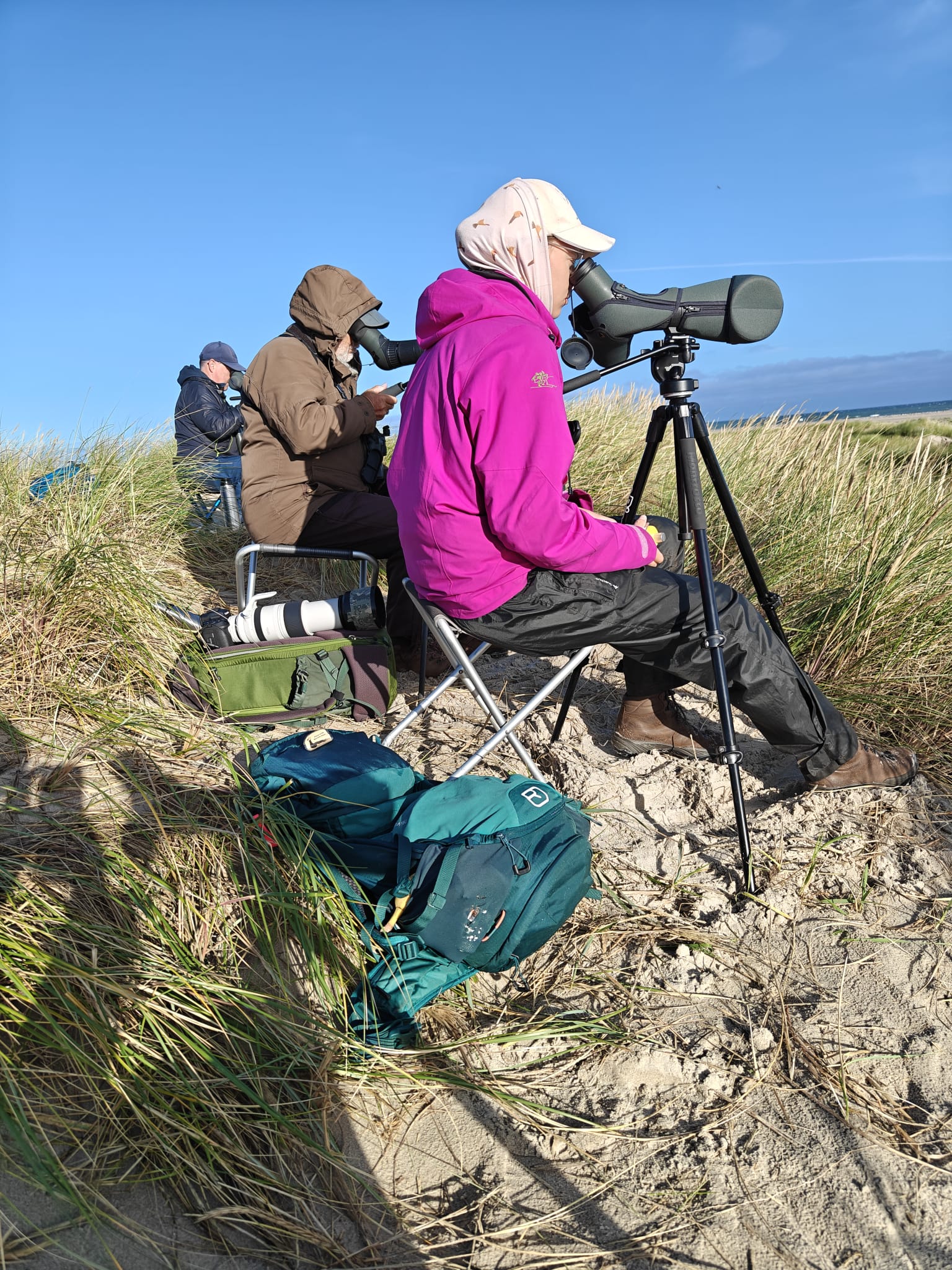 Jule, Knud and Anders watching Long-tailed Skuas (Lille Kjove) at World's End 3. Foto: Laura Tamminen.
There, our normal routines continued: Data entry, lunch and a nap. But this was not the end of the day! Around 4 pm, we drove down to the Rescure Centre in Jerup with Jørgen and Simon. The rescue had a Common Eider (Ederfugl) and a Honey Buzzard (Hvepsevåge) that were ringed by us before they will be released in the next couple of days. That was very exciting since they are two species which we don’t ring or see from up close often, especially the buzzard. While documenting the Buzzard with photos outside, Mio found a young Pallid Harrier (Steppehøg) in the distance. After landing in a field, it didn’t fly up again unfortunately. Still, it was a surprisingly nice observations. We also looked around the Rescue Centres were a number of different animals stay. This was very interesting to see, so thank you for the opportunity Henrik!
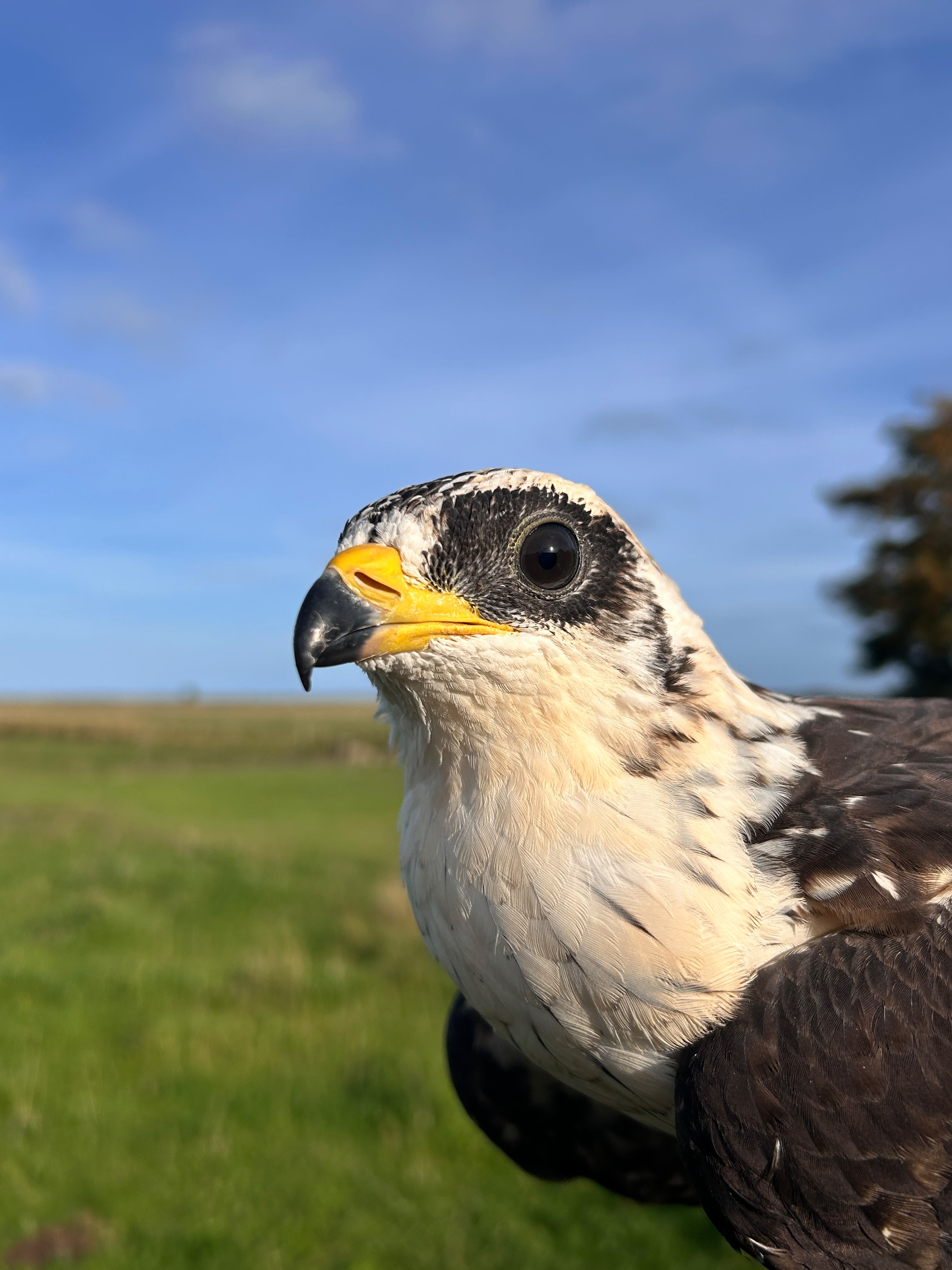 Honey Buzzard (Hvepsevåge). Foto: Pauline Nähring
Back at the station, we welcomed our new guest for the week, Kirsten. She has been here many times before, so welcome back! After our daily meeting and planning for the next week, I repaired Anna’s bike while she started cooking dinner.
Sitting in the living room, I can smell the dinner from the kitchen and I’m sure, it will taste very good. We might also have a Klask! (fun board game) tournament tonight. So if we will do this, we will be sure to tell you the results and winner tomorrow!
Highlights of the observations:
Little Gull (Dværgmåge) – 3
Black Tern (Sortterne) – 1
Long-tailed Skua (Lille Kjove) – 15
Arctic Skua (Almindelig Kjove) – 8
Great Skua (Storkjove) – 2
Sooty Shearwater (Sodfarvet Skråpe) – 1
Pallid Harrier (Steppehøg) – 1
Ringing (Jerup Rescue Centre)
Ederfugl – 1
Hvepsevåge – 1
Ringing (Michael Anker at Jennes Sø):
Stor Gråsisken – 1
Lille Gråsisken – 7
Rødhals – 2
Jernspurv – 1
Blåmejse – 4
Total: 15
Ringing (Kabeltromlen):
Gærdesmutte – 2
Jernspurv – 2
Rødstjert – 1
Munk – 2
Gransanger – 3
Blåmejse – 1
Rørspurv – 1
Total: 12
Link to today's observations in the Dofbasen from observers in the area.
People: Mio Brix, Anna Gorbunova, Pauline Nähring, Jule Tappe, Laura Tamminen, Simon S. Christiansen, Anders Bojesen, Kirsten Bregn, Henrik Christiansen, Jørgen Kabel