
Her på Skagen Fuglestations blog bringes korte nyheder i dagbogsformat om hændelser på fuglestationen.
-
FORSIDE

- Blog
Not-so Almindelig Skråpe
torsdag 24. september 2026
When I left the lighthouse this morning, it smelled like rain. And indeed, it had rained during the night, which means that opening the nets took a bit longer for Pauline and me than usual and really challenged our calmness.
Anja, Simon and our student intern Celine joined for the first round and with two scopes looking into Skagerak and a recorder, we were prepared for birds everywhere: in the nets, the air and on the sea. And the ringing day was quite nice with two Song Thrushes (Sangdrossel), a late Reed Warbler (Rørsanger) and also a late Willow Warbler (Løvsanger).
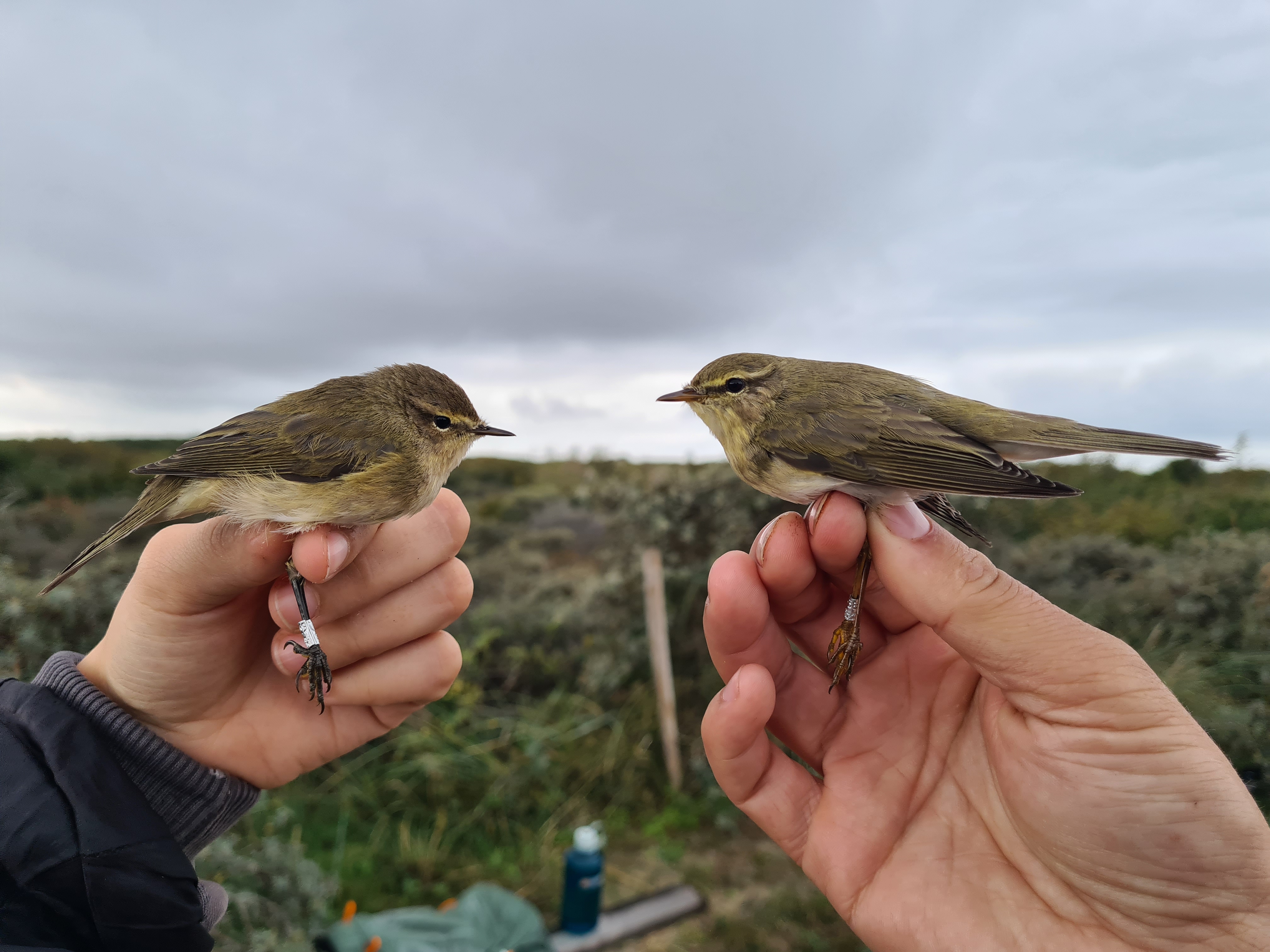 Chiffchaff (Gransanger) on the left and Willow Warbler (Løvsanger) on the right in comparison. Note the greenish colour to the Willow Warbler in comparison to the brown of the chiffchaff, the Willow Warbler's strong supercillium and long primary projection.
We also had a couple of old birds, which is very exciting since we most of the birds we catch are hatched this year. One of them was this nice Blue Tit (Blåmejse) whose wing you can admire here:
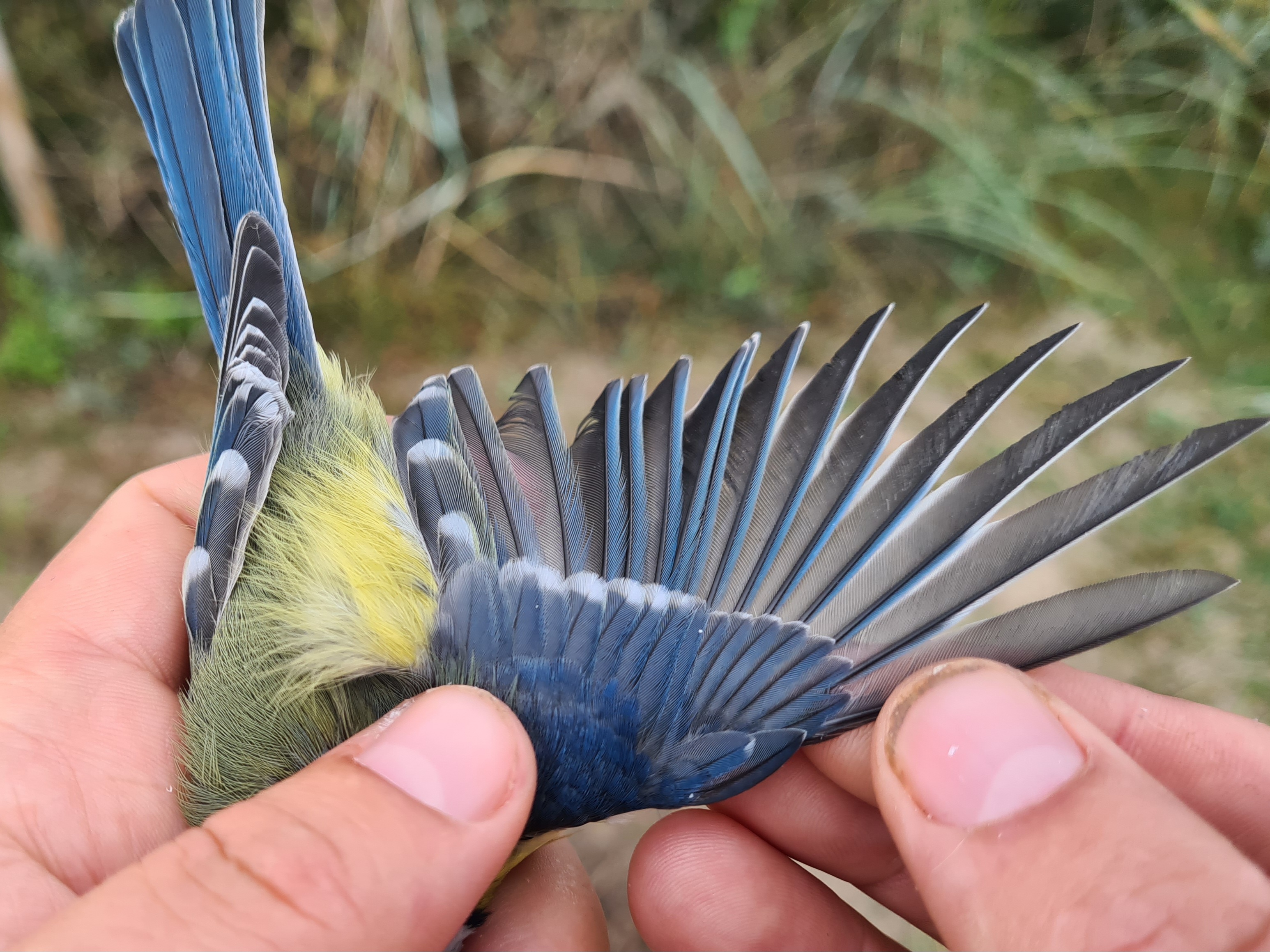 Adult male Blue Tit (Blåmejse). Note the dark blue indicating male and the blueish tinge to the primary coverts, indicating adult.
The real excitement went down at World’s End 3 though, where Mio and Laura did the migration count. Already in the first hour, they got really got views of a Manx Shearwater (Almindelig Skråpe) close by the tip. It then disappeared flying into Kattegat. An hour later, there was a different bird coming in from Kattegat that flew Northwest. From Kabeltromlen, I scanned the sea for a long time and was in close contact with Mio, but unfortunately, we did not see it. The Danish name, meaning „Common“ or „Ordinary“ Shearwater, is a little misleading since it is not a common bird at all and in general also less common that Sooty Shearwater (Sodfarvet Skråpe) in Denmark. So everyone was very happy about these amazing observations! The rest of the time, the counters where entertained by widgeon migration (Pibeand), three Long-tailed Skuas (Lille Kjove) and three Great Skuas (Storkjove).
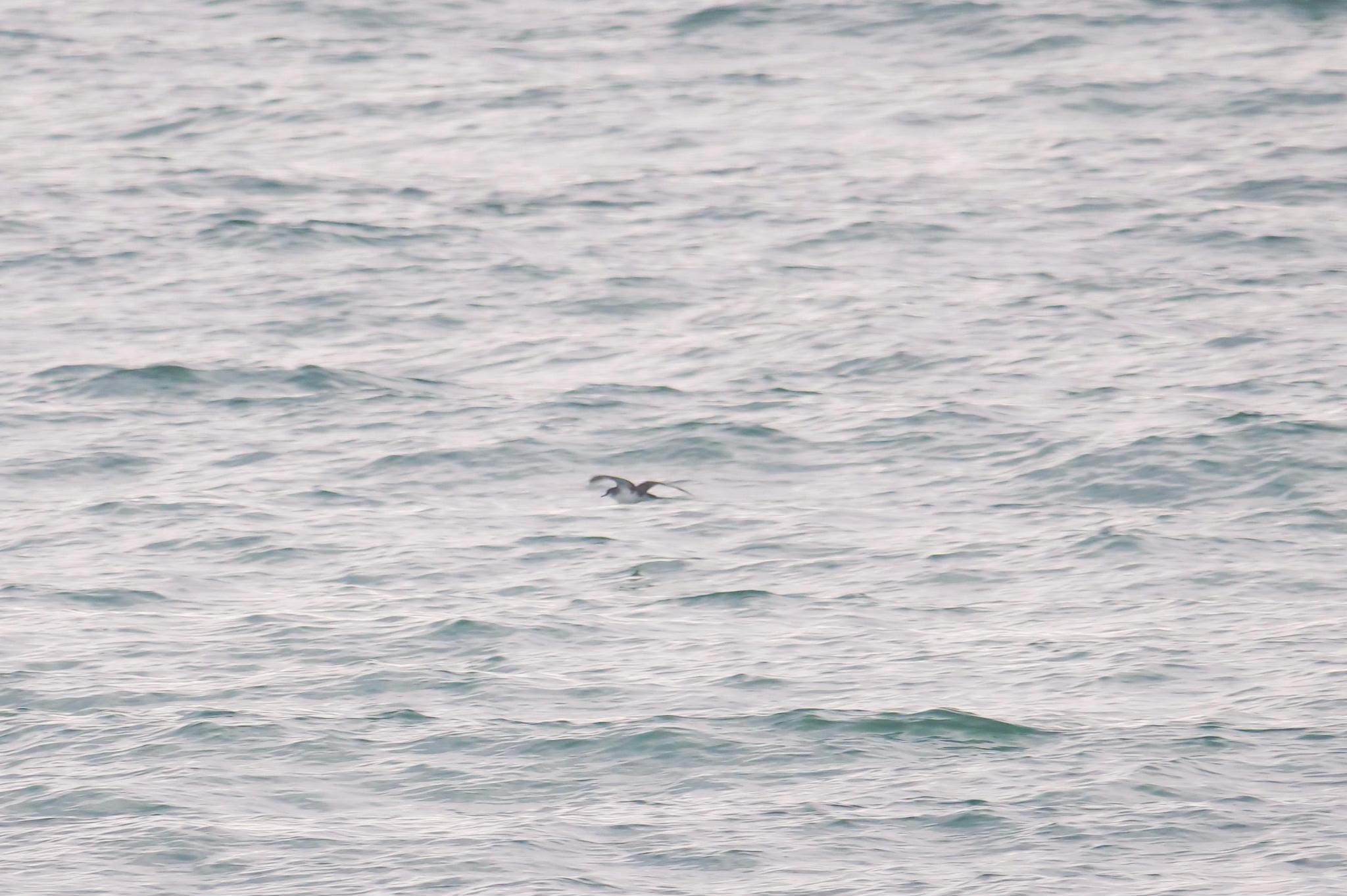 Manx Shearwater (Almindelig Skråpe) over the water. Foto: Mio Brix.
Around noon, we all got backed and entered data. I went on a walk to check the beach south of the lighthouse because or guests Michael and Birgit saw a dead Guillemot (Lomvie) there yesterday. We collect this species as part of a big monitoring project. Unfortunately, I think the bird was taken away either by another animal or the sea. However, I found an Edible Crab (Taskekrabbe) that was sadly dead, but big and impressive to see.
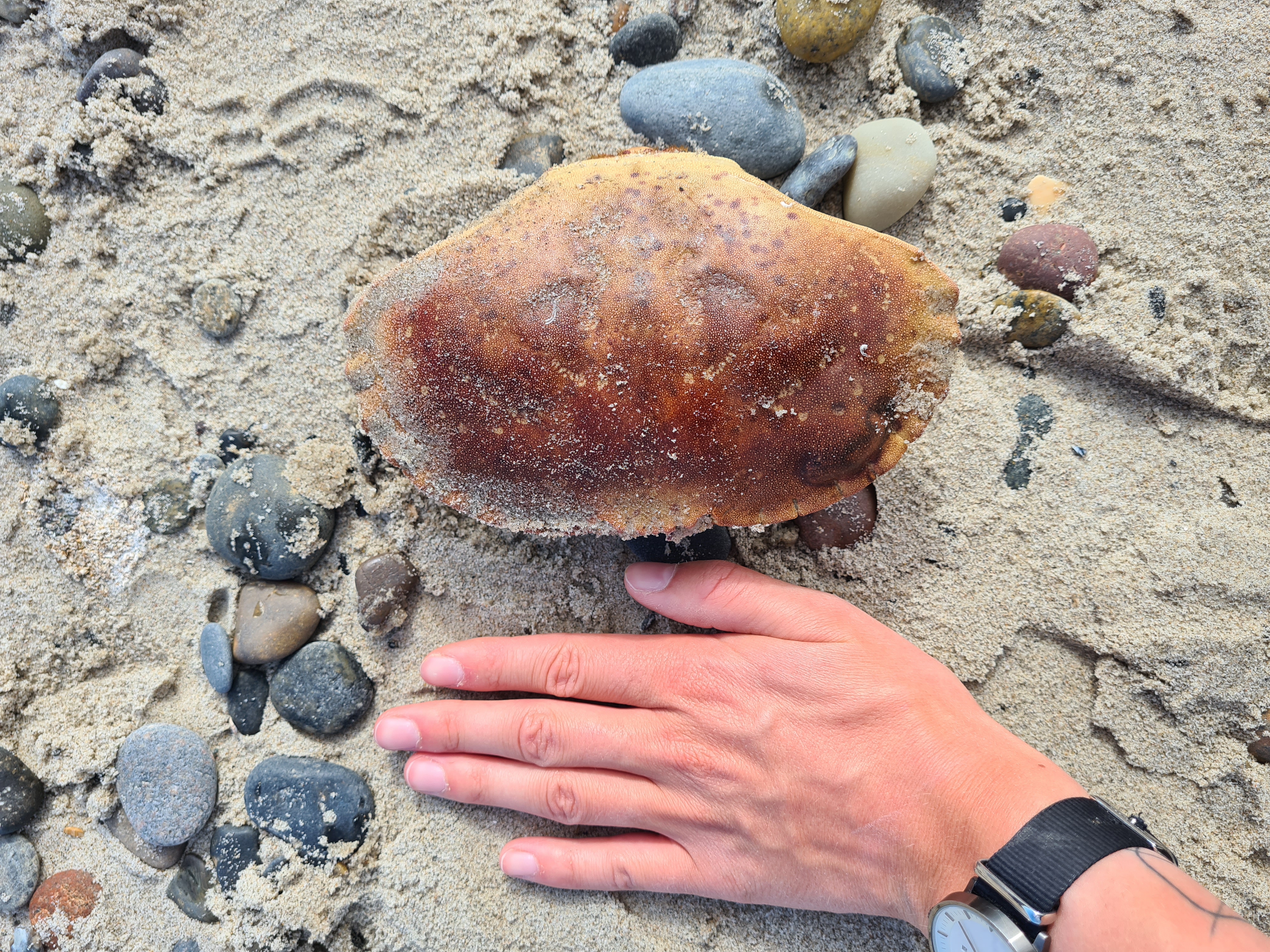 Edible Crab (Taskekrabbe). Size comparison to my hand (about 17 cm long).
In the afternoon, we had a lecture held by Simon. He explained scull ossification to us and how to use it to age birds in the field. We looked at photos and dead birds that we have collected over the past years so we now know what to look out for when ageing difficult species like Long-tailed Tits (Halemejse) or Goldcrests (Fuglekonge).
After our ususal meeting, we prepared everything for nightcatching. Tonight, we will go to Skarvsøen in the hope of catching Jacksnipes or other waders. As always, you have to wait until tomorrow to see if our quest is successul.
Highlights from the observations:
Long-tailed Skua (Lille Kjove) – 3
Great Skua (Storkjove) – 3
Manx Shearwater (Almindelig Skråpe) – 2
Ringing (Kabeltromlen):
Løvsanger – 1
Halemejse – 1
Gransanger – 7
Blåmejse – 3
Munk – 3
Rørspurv – 8
Gærdesmutte – 2
Rørsanger – 1
Jernspurv – 2
Rødhals – 5
Sangdrossel – 2
Total: 35
Ringing (Det Grå Fyr):
Musvit – 1
Blåmejse – 1
Total: 2
Total: 2
Link to today's observations in the Dofbasen from observers in the area.
People: Jule Tappe, Pauline Nähring, Mio Brix, Laura Tamminen, Anja Gorbunova, Simon S. Christiansen, Celine Giver, Birgit and Michael Andersen