
Her på Skagen Fuglestations blog bringes korte nyheder i dagbogsformat om hændelser på fuglestationen.
-
FORSIDE

- Blog
“I kind of had a good day actually”
tirsdag 6. oktober 2026
Good afternoon readers! This is my first blog of the season on my second day at the station. It is so nice to back here again with new people and always good people.
This morning I went to Kabeltromlen with Jule to open the nets, and then Laura joined us for the first round. It was quite windy so we only opened 11 of the 26 nets. Although there were few birds, there were some in every round, and different species in every round. This was good for me to remember the moult patterns of the common species. Simon also joined us for some of the morning, as did our guests. We also got to say hello to Jeppe, Jørgen, and Igor. Our highlights from the ringing were the Lille Gråsisken (Redpoll) and Grønsisken (siskin), the cutest of the bunch, and the very ugly looking teenage Dompap (bullfinch) who was ringed as a juvenile this autumn and is now starting to grow his adult feathers. Today was the one-year anniversary of our record-breaking 742 birds day (happy anniversary to my dear friends Amira, Miles, Gabriel, and Florian), although today was a bit less eventful, and no one got bird poop in the eyeballs.
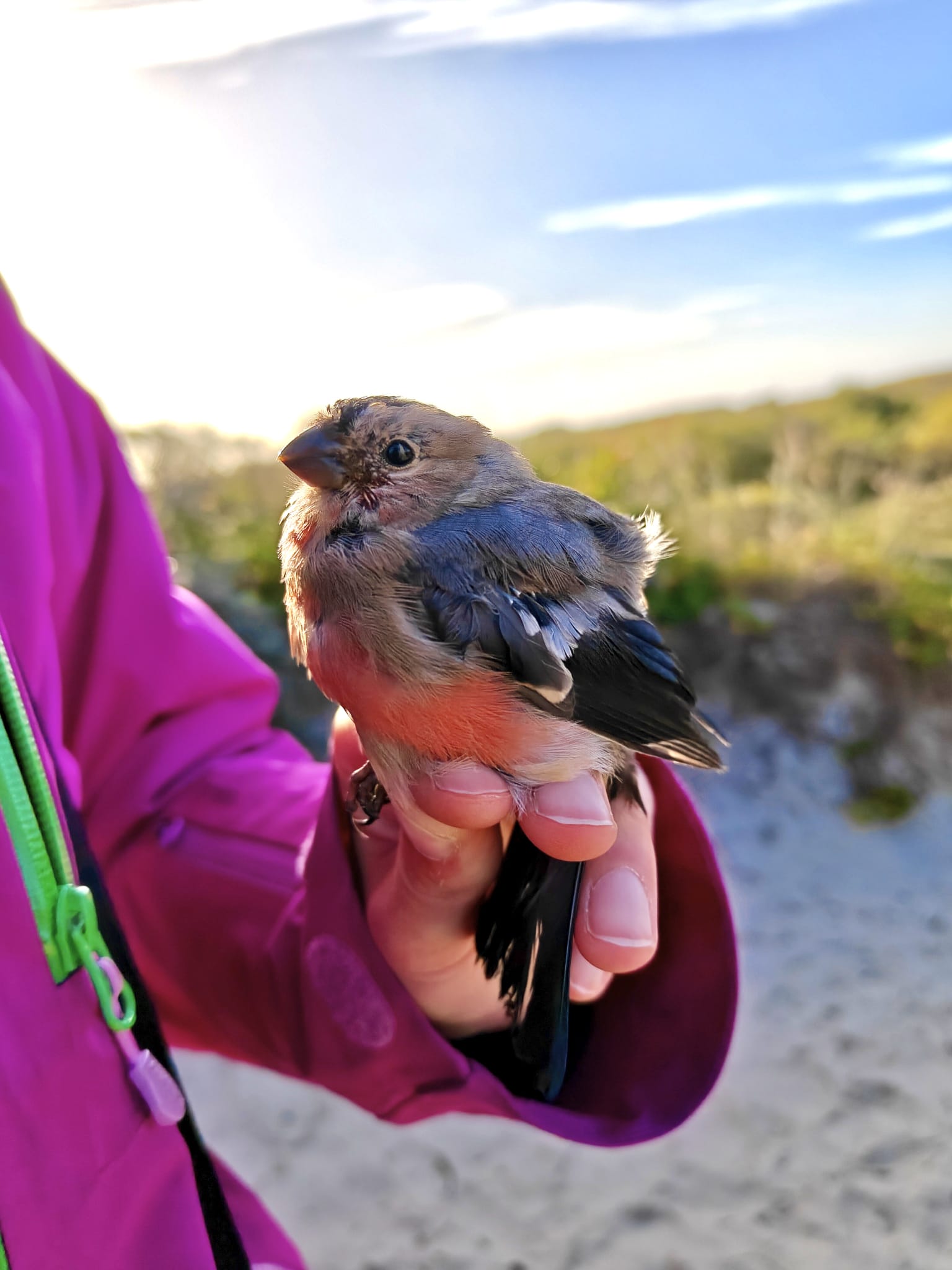
This scrappy looking teenage dompap made Laura very happy
Meanwhile, Luis, Mio and Manuel went to World’s End III for observations. There they saw a lille kjove (long-tailed skua) and two stor kjover (great skua/Bonxie), among many migrating auks (alkefugle) and kittiwakes (ride). They were also excited to see a “white-winged gull,” what turned out to be a very handsome adult Mediterranean gull (Sorthovedet Måge) with pure white wings. Later in the morning, when Simon was on a work call at World’s End III, he startled his colleagues by shouting “NØDDEKRIGE!!” He said where it was over Zello so I was able to see it through the scope from Kabeltromlen—my first Nutcracker! Although it was far away, there was no mistaking it because of their distinct shape, but I hope I can see one closer tomorrow. The observers were also very pleased to see a Lapland bunting (lapværling) and a purple sandpiper (sortgrå ryle) during the count.
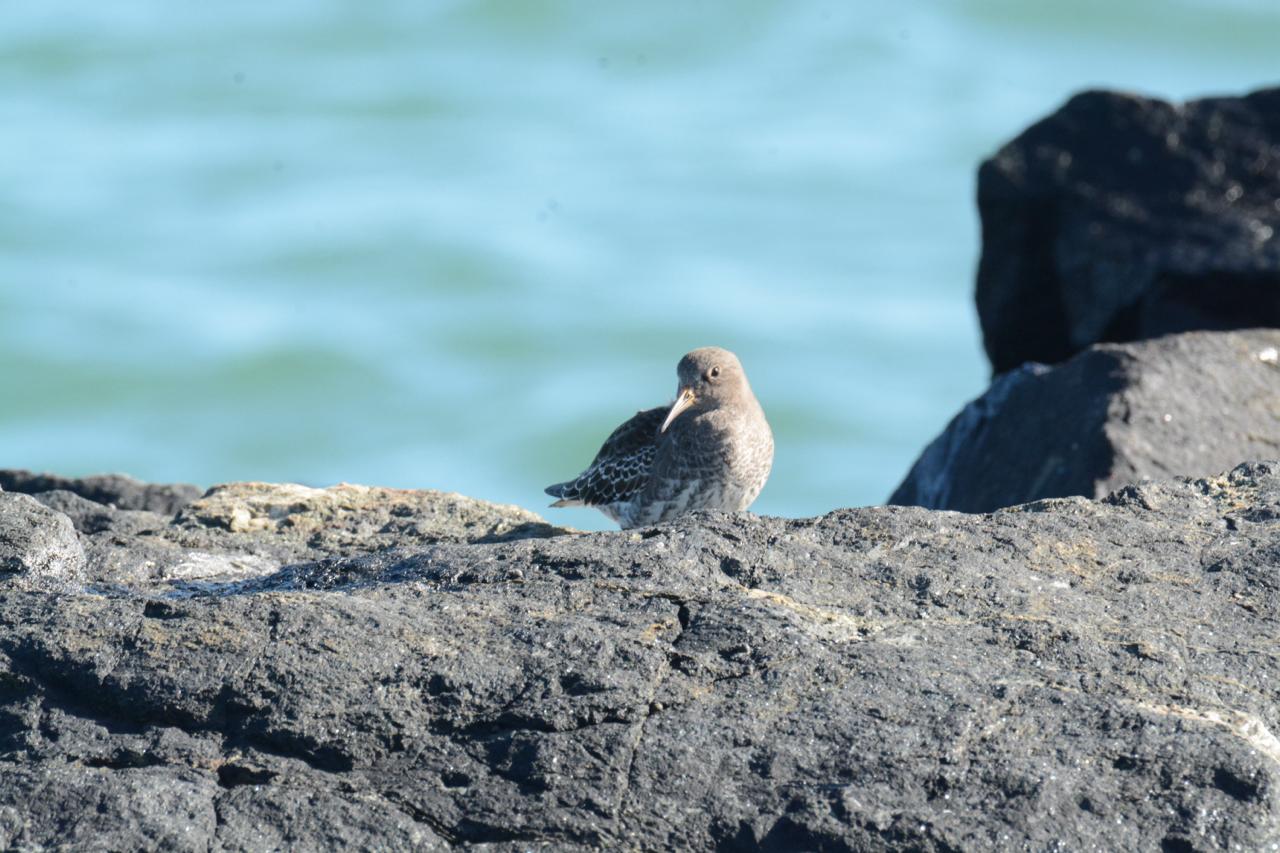
Sortgrå Ryle
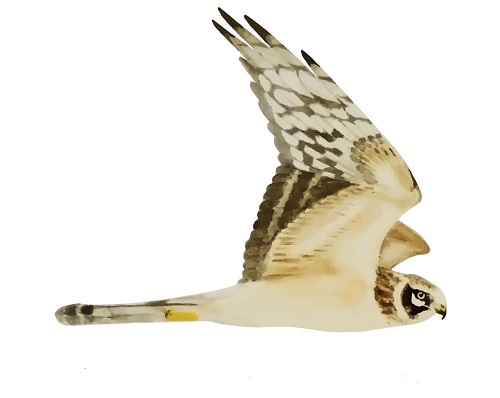
After that, we all had lunch together at the lighthouse and then scattered on our separate birdwatching paths. Lucky Luis, he spotted a Pallid harrier (steppehøg), only a few minutes after I separated from him in Ellekrattet. But, I did not see it and neither did the rest of us (yet). Luis was also very happy to see a guillemot (lomvie) fishing close to the shore, chasing shoals of fish so they would jump out of the water.
One of the deepest-diving birds in the world, Guillemots dive for fish by using their wings to swim underwater like penguins, typically diving 30-60m, but capable of reaching depths of 180m. Their comparatively small wings are ideal for swimming, but make them rather inefficient flyers. This is why auks have the unusual moult strategy of losing all the flight feathers at once during the winter, entering a short and stressful flightless period. Each feather on those tiny wings carries so much weight that they cannot afford to lose one at a time.
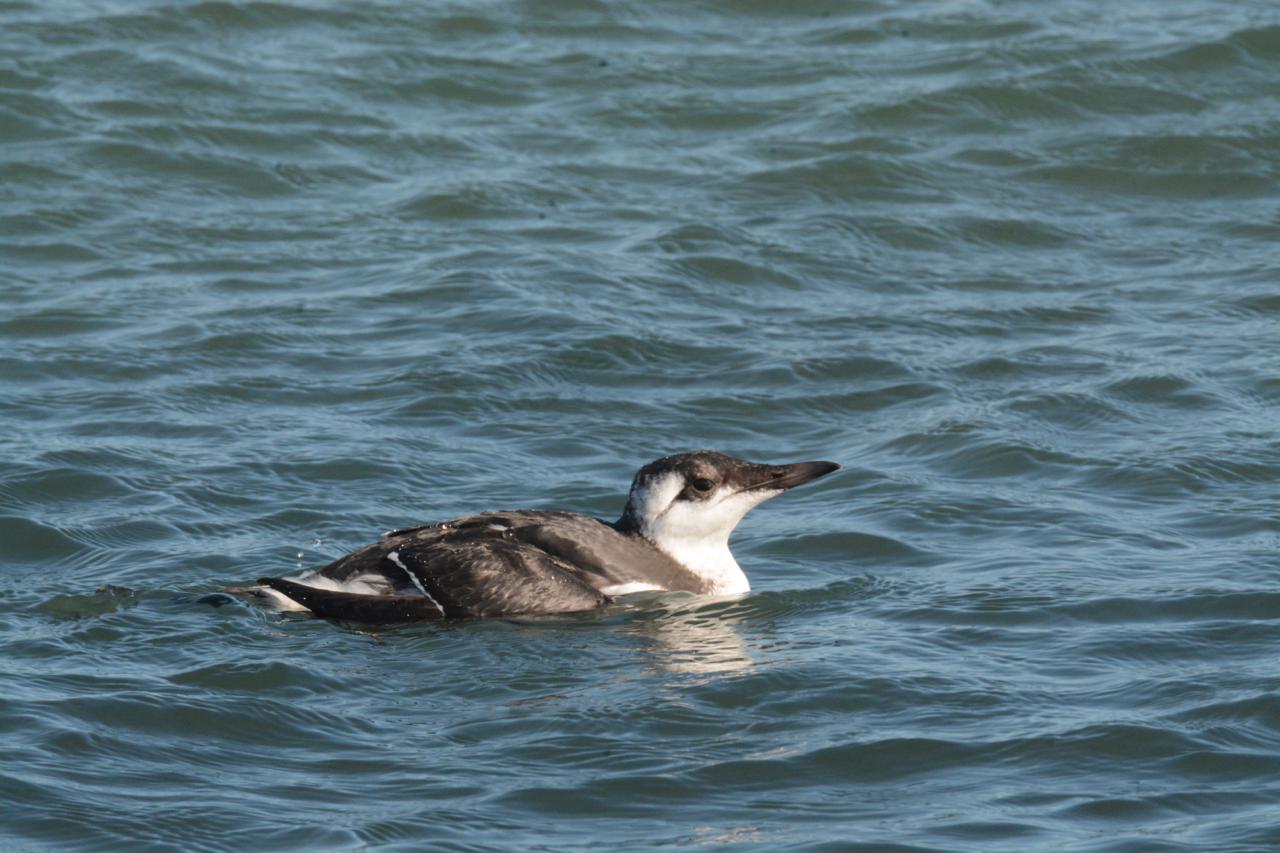
Luis's Lomvie swimming
After a pleasant afternoon of data entry and some Danish lessons from Simon, we enjoyed a tasty chilli sin carne for dinner cooked by Jule. How lovely to be back in the cozy grå fyr!
Note: All blog titles by Sarah are quotes from Simon
Ringing – Kabeltromlen
Musvit - 1
Gærdesmutte - 3
Rødhals - 1
Lille gråsisken - 1
Grønsisken - 1
Kvækerfinke – 2
Munk – 1
Bogfinke – 1
Blåmejse – 1
Gransanger – 1
Highlights from World’s End III
Nøddekrige
Lapværling
Lille Kjove
Stor Kjove
Sortovedet måge
Link to today’s observations in the Dofbasen from observers in the area.
People: Jule Tappe, Mio Brix, Laura Tamminen, Luis Q. Langfeld, Simon S. Christiansen, Sarah Partridge, Jesper and Karen Marie Olesen, Manuel Tacke