
Her på Skagen Fuglestations blog bringes korte nyheder i dagbogsformat om hændelser på fuglestationen.
-
FORSIDE

- Blog
The winner of evolution
søndag 11. oktober 2026
Good afternoon readers! Today was a very good day for us and now we are happy to be warming up in the lighthouse.
First, some excitement from last night after the blog was written. Mio and Jule went night catching at Grenen to try to catch the storflock of Bjerglærke (Shorelark/Horned lark), and they had success with four in two rounds! They brought their treasures back to the lab to ring them there, where Simon and Lisa also joined us. The Bjerglærker were extremely round and soft and cute.
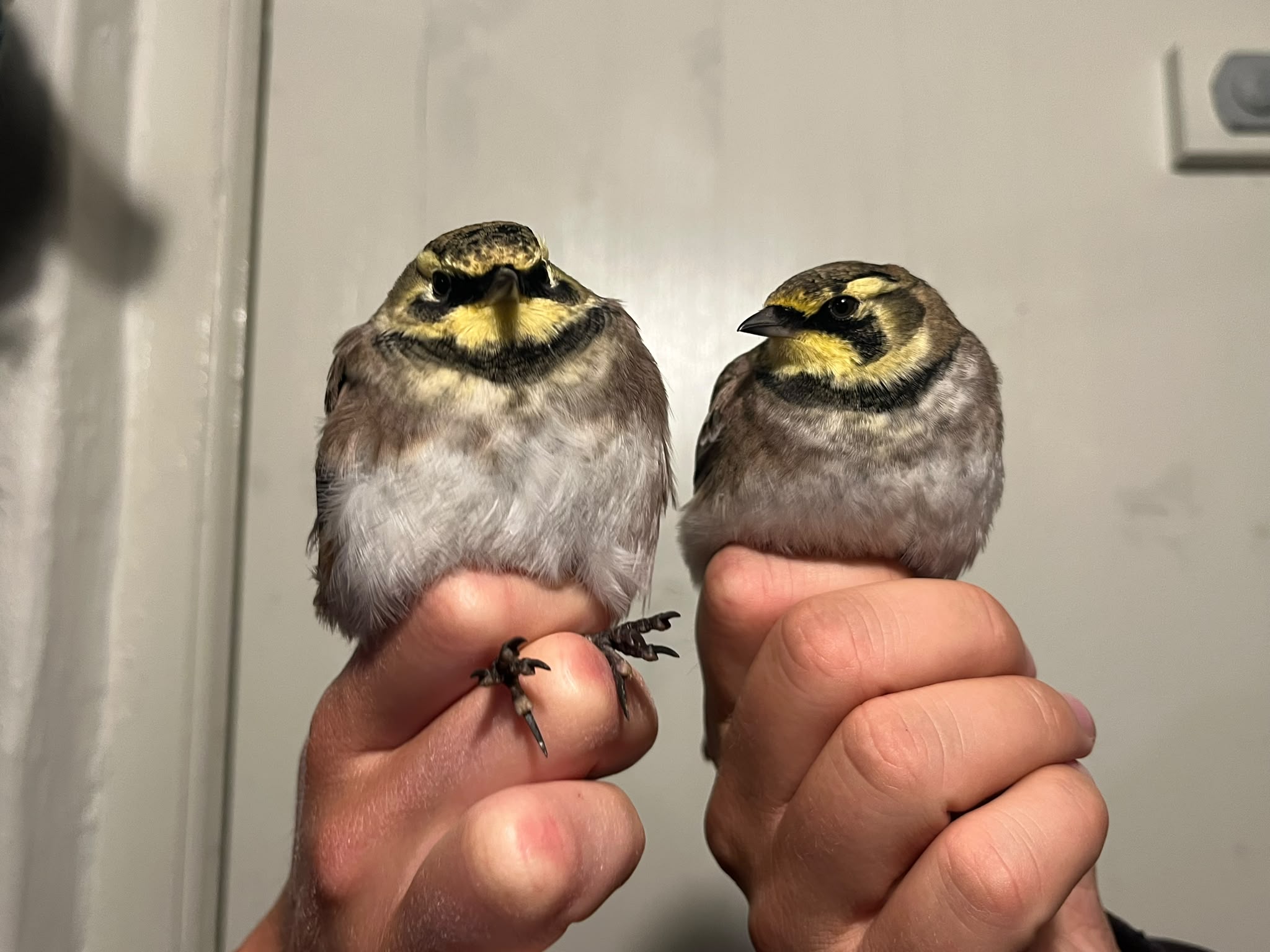
Two of the Bjerglærke from last night
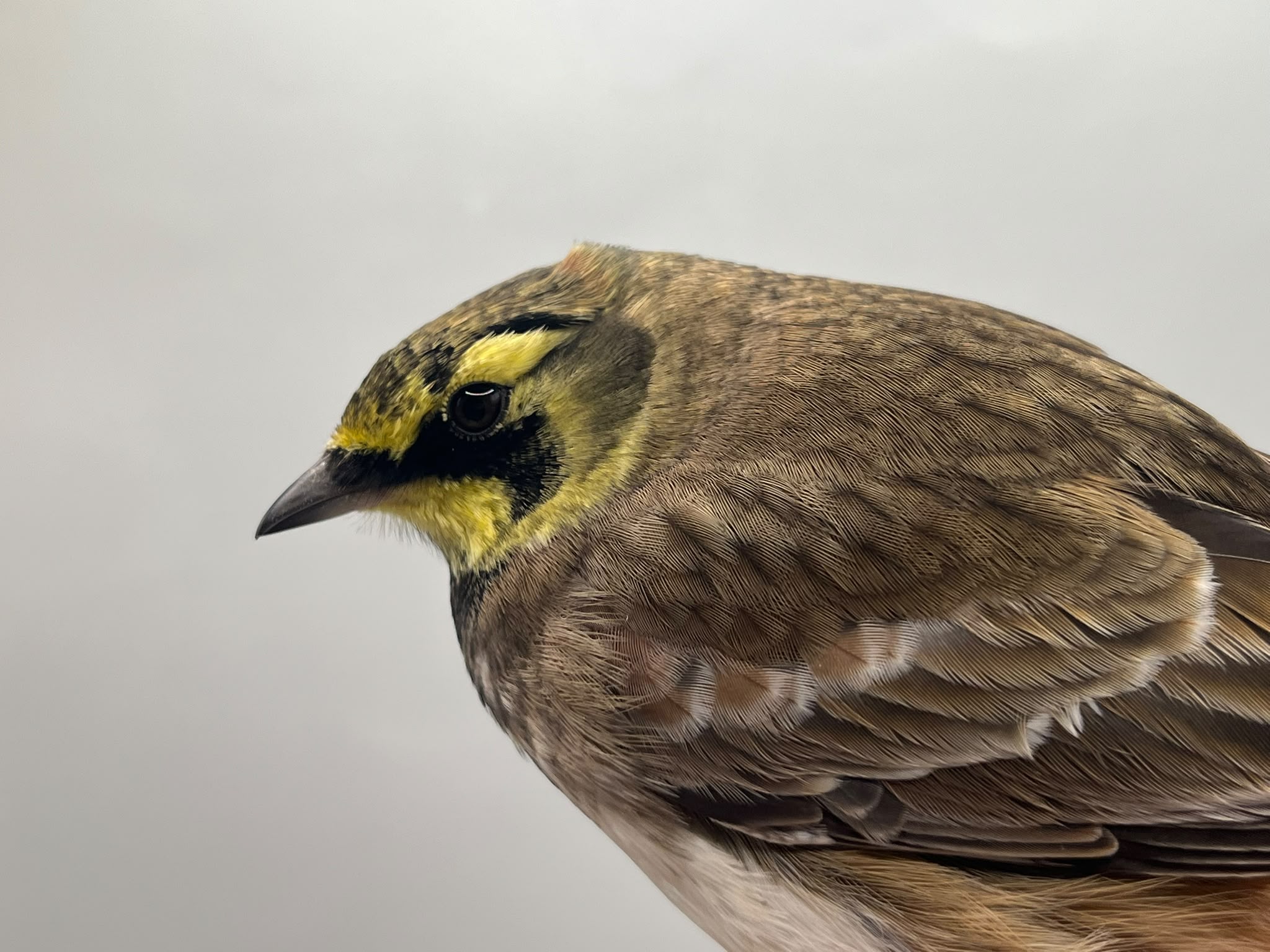
A handsome male in winter plumage
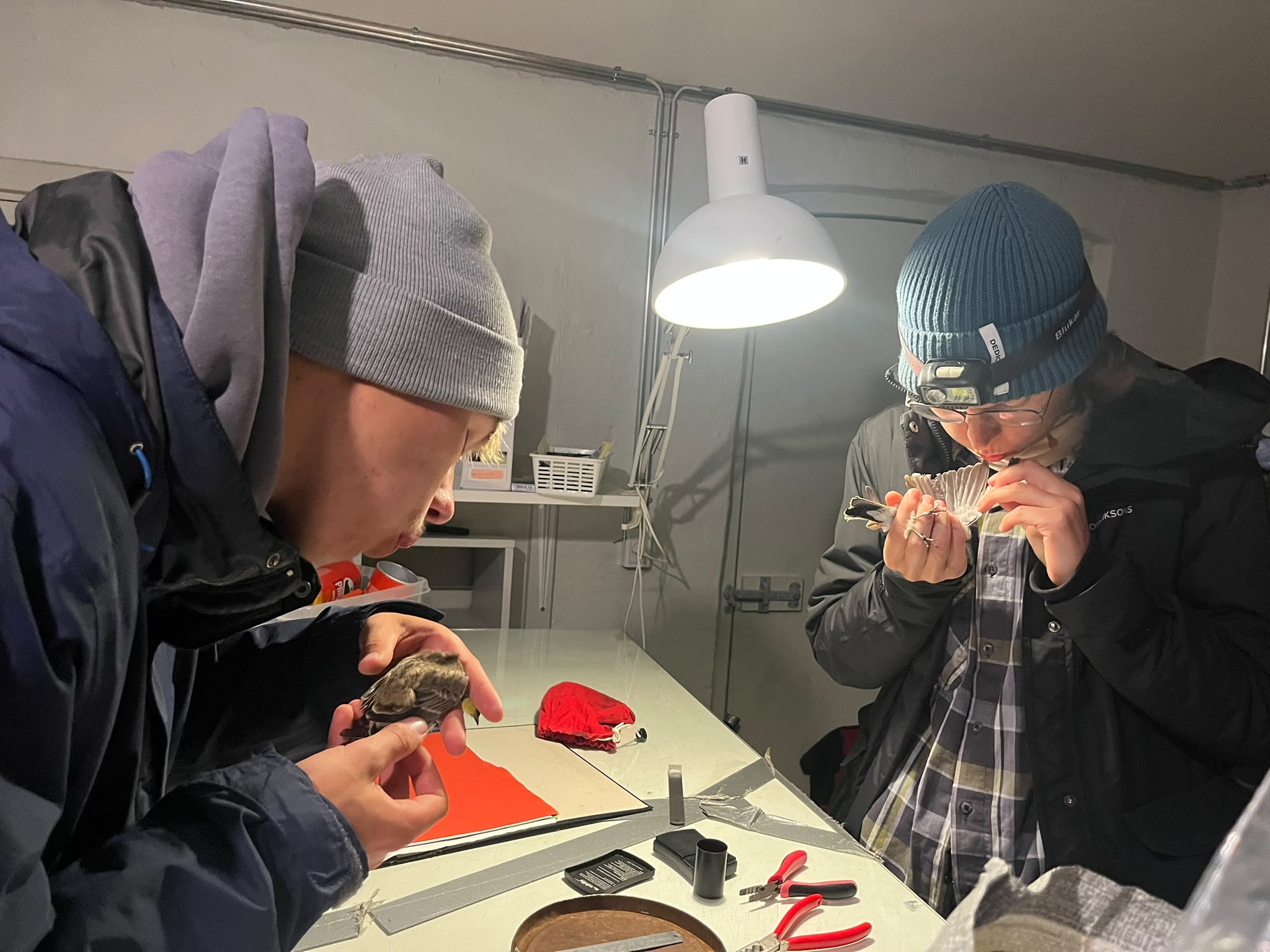
Jule and Mio checking their birds for active moulting
After a slightly shorter sleep, Mio and I went to open the nets at Kabeltromlen, and were then joined by Simon. We had a very busy first round, which was made busier by my forgetfulness so I had to bike back to the lighthouse twice while Mio was extracting birds. The day was very productive, with 52 birds ringed and five retraps.
The best bird of the day was our foreign visitor, a female Munk (Blackcap) ringed in Chzechia . She is a great representation of evolution in action. Historically, blackcaps always travelled south to Africa for winter, but a larger portion of the population is now skipping the migration and instead travelling north to Scandinavia and Britain. This is likely a response to changing climate, thought to be also influenced by the abundance of bird feeders in Britain (about half of British households feed birds). The reverse-migrating birds were found to have slightly increased survival, smaller fat reserves (making escape from predators easier), higher wintering site-fidelity, as well as longer beaks and rounder wings (showing adaptations suited for a more generalized diet). They also return to their breeding grounds ten days earlier (on average) than their southern-migrating counterparts; although, all blackcaps now leave later and return earlier, for an average breeding season 63 days longer than it was in the 1960s. This incredible flexibility allows blackcaps to adapt to changing environments, and will help the species survive in the face of rapidly changing climates. Therefore, this Munk from Chzechia who has come to winter in the north is the winner of evolution. Also, Blackcap was bird of the year in Chzechia in 2026.
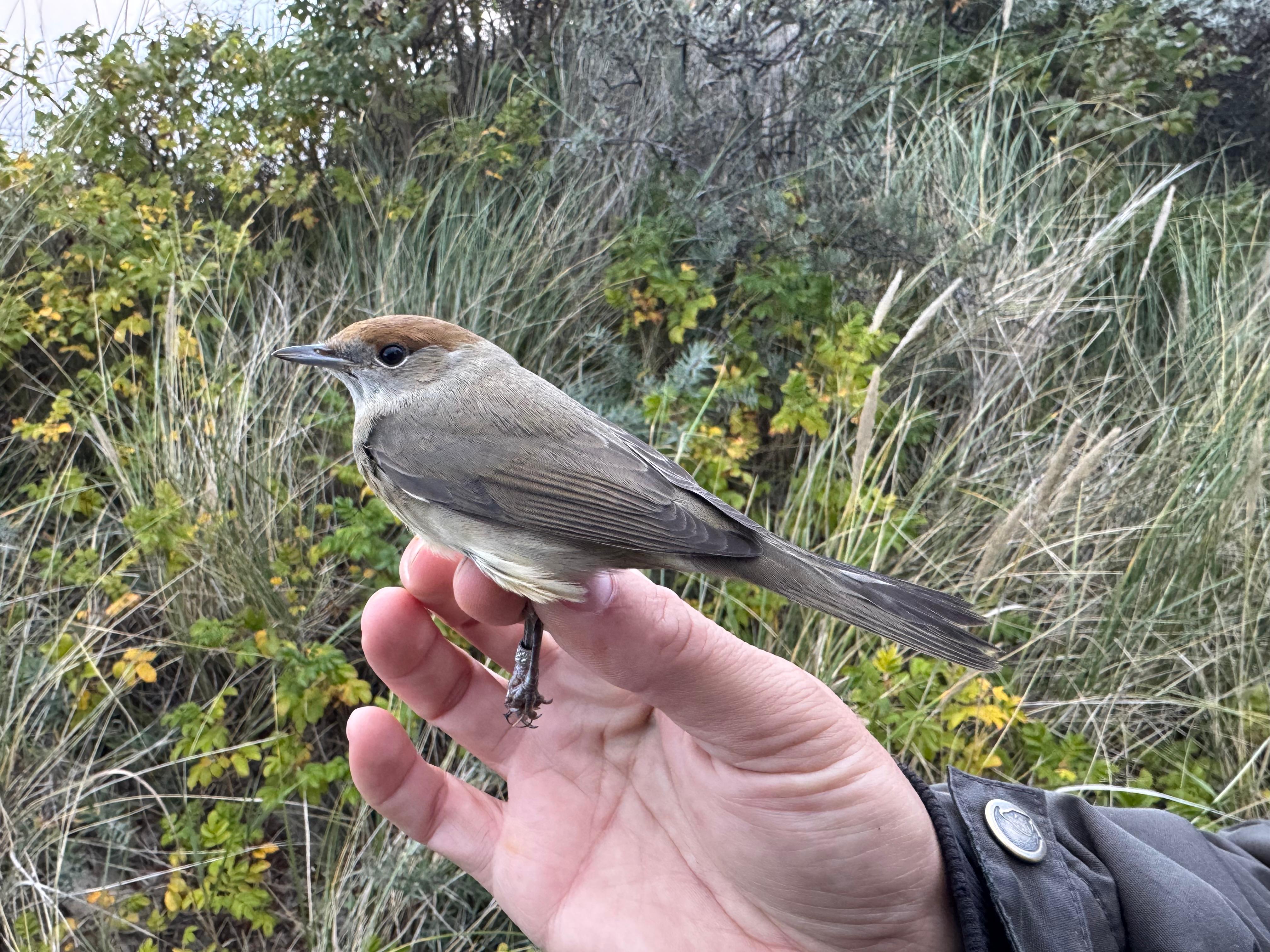
The winner of evolution
Some other highlights from the ringing included two Lille Gråsisken (Lesser Redpolls) together with one Stor Gråsisken (Mealy Redpoll), two male Kvækerfinker (Bramblings), an adult and a young one, and a few glorious Fuglekonge (Goldcrests).
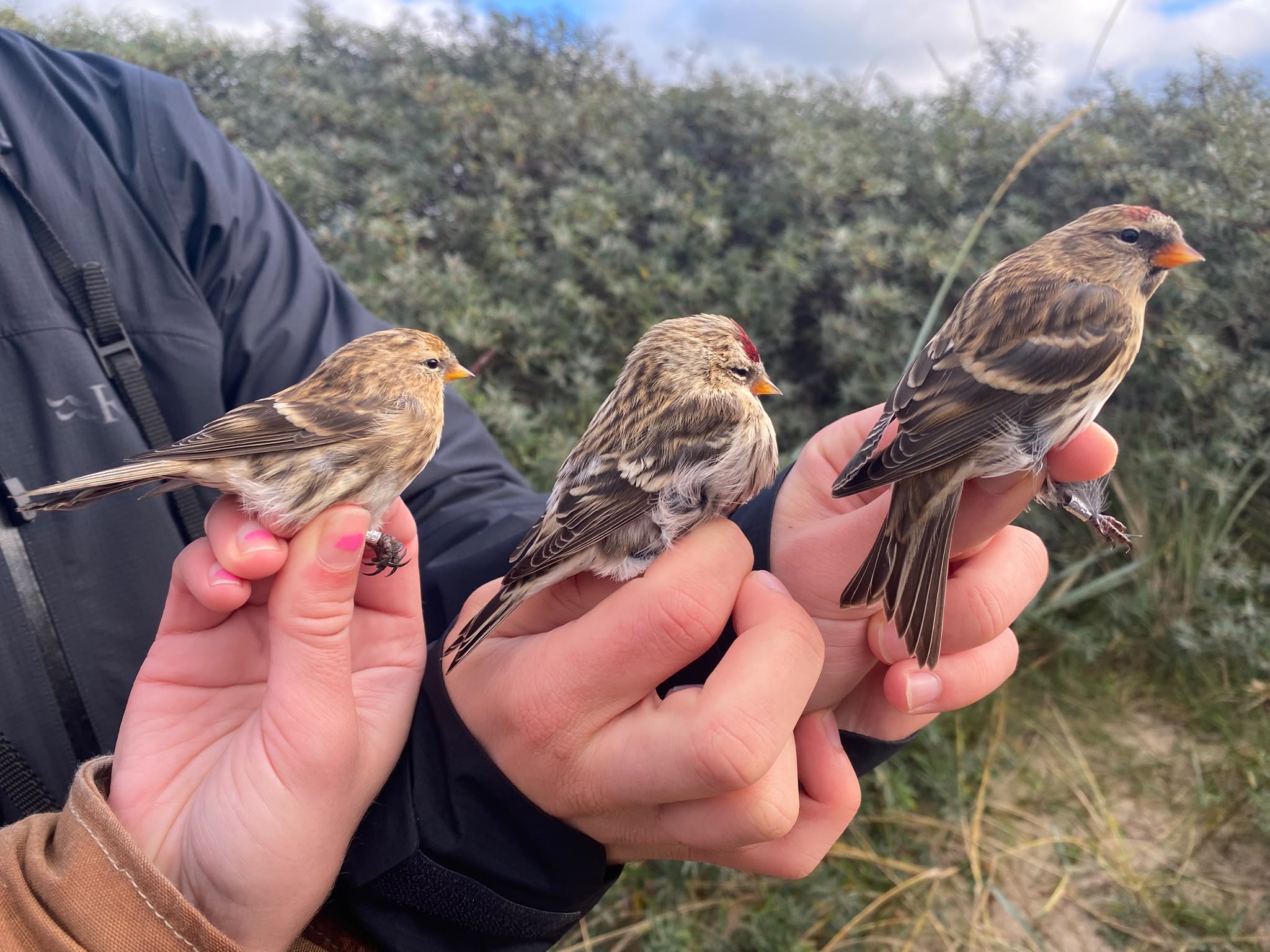
Two Lille and one Stor (middle) Gråsisken
Meanwhile, Jule, Laura, and Luis went observing at World’s End III. They were very cold but enjoyed seeing the migration today, with some highlights of 3 Lapværling (Lapland bunting), one Toppet Lappedykker (Great Crested Grebe), and at the very end, a snespruv (Snow bunting), and a Dobbeltbekkasin (Snipe).
After lunch, we completed the Novana count of resting waterbirds. Mio and Luis went to Skarvsøen and Nørdstrand, while Laura, Jule and I went to the top of the lighthouse to count Kattegat. We also welcomed our new guests to the apartment this afternoon.
Tonight we will try night catching again and see what we get.
Highlights from the observations:
Toppet Lappedykker – 1
Sodfarvet Skråpe – 1
Lapværling – 3
Snespurv – 1
Ringing (Kabeltromlen):
Vindrossel – 2
Gulspurv – 1
Musvit – 1
Gærdesmutte – 12
Rødhals – 4
Gråsisken (Lille) – 2
Gråsisken (Stor) – 1
Munk – 1
Dompap – 10
Kvækerfinke – 2
Rørspurv – 9
Bogfinke – 1
Fuglekonge – 3
Gransanger – 2
Total: 52
Link to todays observations in the Dofbasen from observers in the area.
People: Jule Tappe, Mio Brix, Laura Tamminen, Luis Q. Langfeld, Sarah Partridge, Simon S. Christiansen, Lisa Vergin.