
Her på Skagen Fuglestations blog bringes korte nyheder i dagbogsformat om hændelser på fuglestationen.
-
FORSIDE

- Blog
Scientific smiles
onsdag 21. oktober 2026
This morning was a bit of a slow start from the weather. Mio and I woke up early and then loitered around in the kitchen waiting for it to stop raining so we could go open the nets. We managed to get them open 45 minutes later than usual, and only about half of them because of the wind. Cora then joined us and it immediately began raining again. During the rain, we did fast rounds so birds wouldn’t have to wait in the nets, but very few birds were waiting for us. After the showers stopped, we opened a few more nets and stayed open for standard hours, with a whopping 14 birds ringed. Still, we had some nice birds to ring including two adult female blackbirds (solsort) and an adult musvit (great tit) which we don't see so many of. We also had some fun flyovers of skægmejse (bearded tits), silkehale (waxwings), and lille korsnæb (common crossbills).
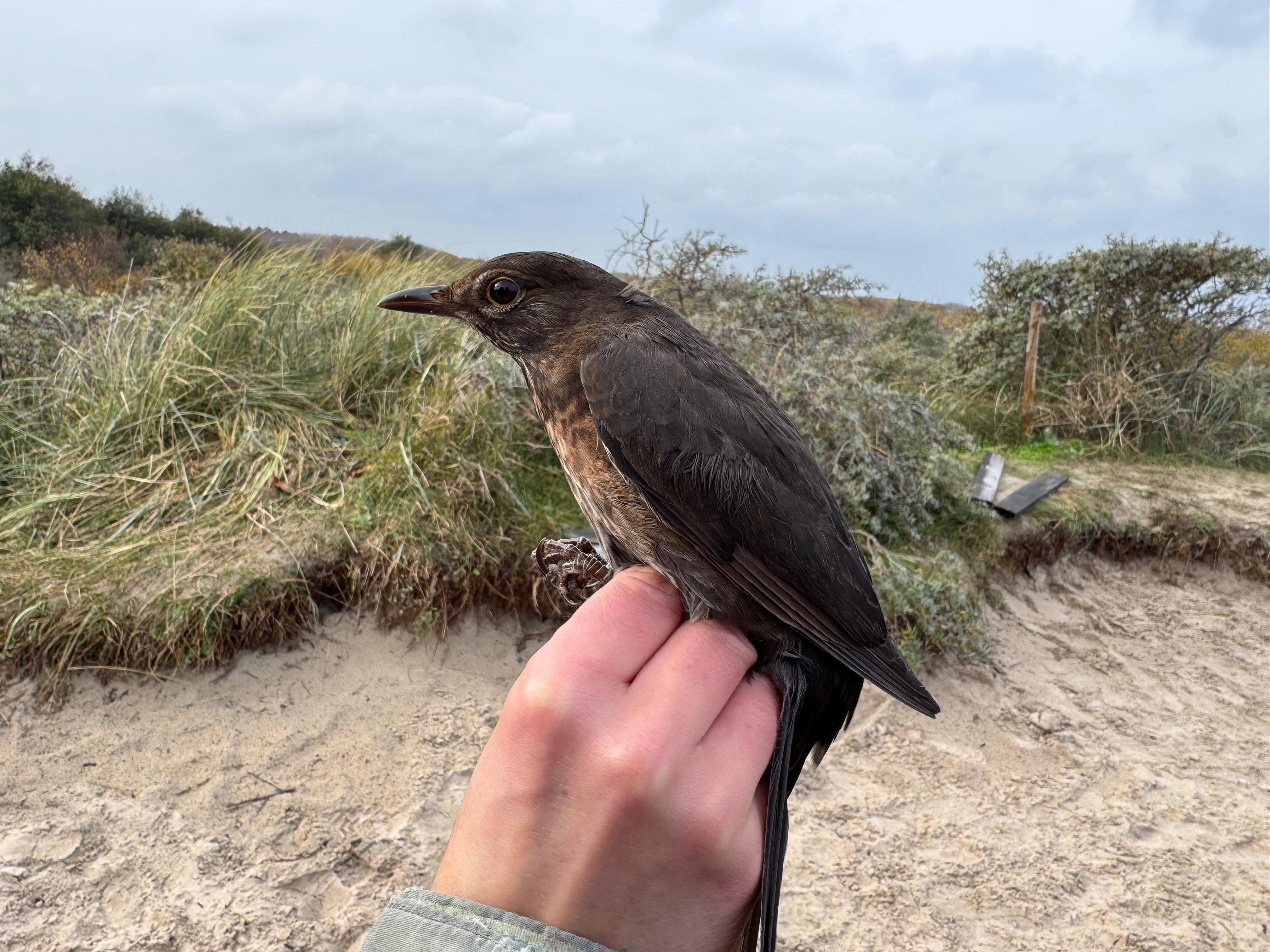
Very pretty adult female Solsort (blackbird)
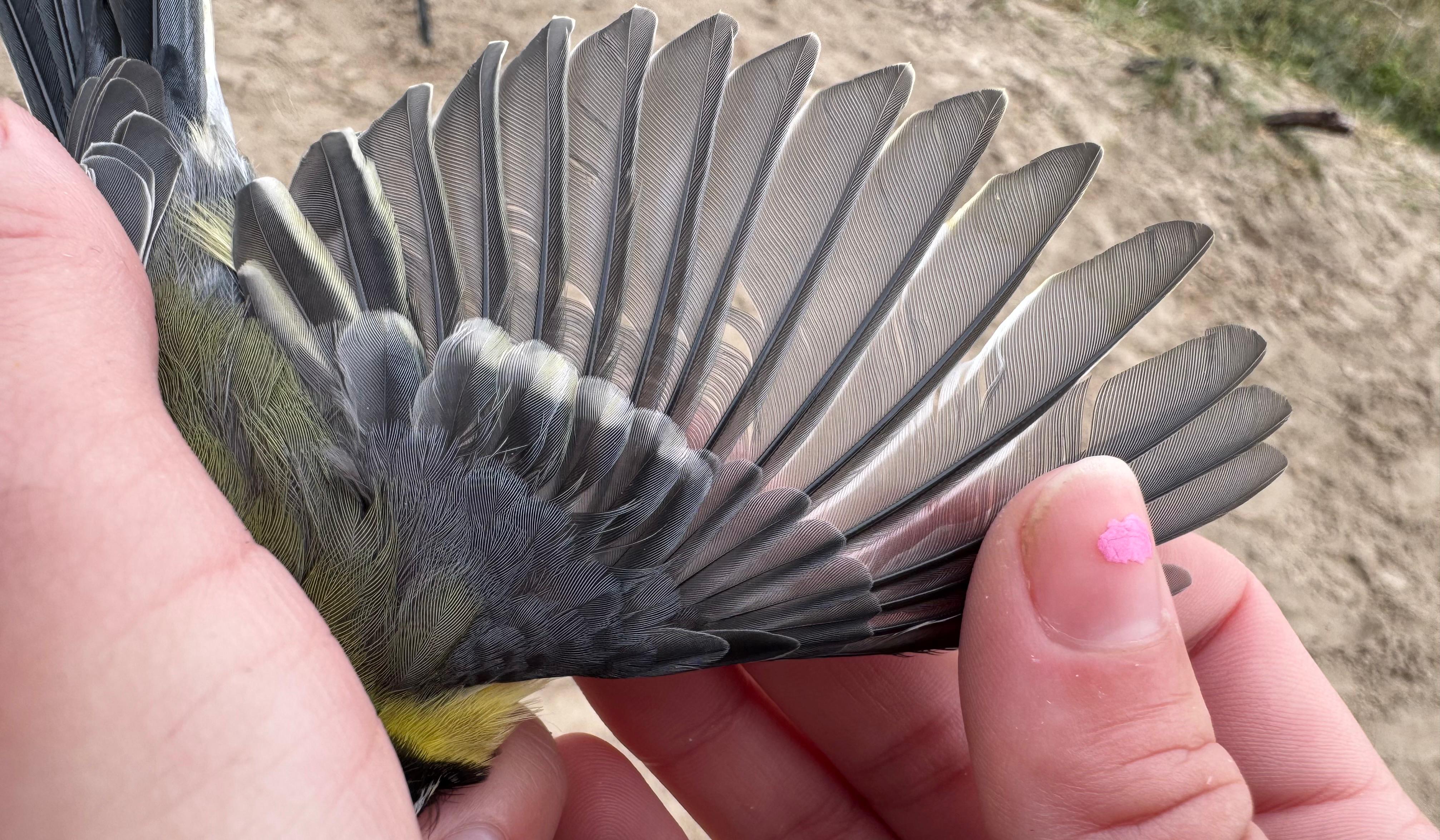
Adult Musvit (Great tit) wing with all refreshed feathers
Jule and Louis went migration counting at Nordstrand with Knud, which was also fairly slow. It was wet and cold, but at least they managed to stay warm inside their boiler suits in Knud’s corner. And they got to see a nice variety of ducks (ander), including Havlit (long-tailed duck), Hvinand (Goldeneye), Bjergand (Greater Scaup), and gråstrubet lappedykker (red-necked grebe).
Havlit are particularly fun ducks because they are extremely beautiful, and also because they have an interesting and highly complicated moult strategy. Adult long-tailed ducks undergo four partial moults, each which suspend and overlap with each other, creating three distinct plumages, which is unusual among duck species. Long-tailed ducks breed in the high arctic, and limited research has been done on population changes. The wintering populations, in cold to temperate waters around the northern hemisphere, have declined by about 30% since the 1990s. As these ducks gather in dense groups on the sea, they are particularly vulnerable to oil spills, marine pollution, and entanglements.
After entering data, we spent a rather desultory afternoon at the lighthouse because of the poor weather. Mio dedicated some time to practicing his scientific smile (science is serious), and Jule impressed us all with some excellent dance moves inspired by bird songs (which we then had to guess). We then welcomed back our guests Lorne and Lars, who have been at the station several times before and will stay with us for two weeks. Mio and Cora went out in the rain to try to catch some Jack snipes (enkeltbekkasin), unsuccessfully this time, and now we will snuggle up on the couch for a hygge family movie night!
Ringing KAB
Solsort – 2
Gærdesmutte – 2
Lille dompap – 3
Blåmejse – 3
Fuglekonge – 2
Rørspurv – 1
Total 14
Highlights from WE3
Havlit – 2
Hvinand – 5
Bjergand – 1
Spurvhøg – 1
Link to today's observations in the Dofbasen from observers in the area.
People: Mio Brix, Cora Köberle, Jule Tappe, Sarah Partridge, Louis-Marie Gourmelon, Simon S. Christiansen, Knud Pedersen