Her på Skagen Fuglestations blog bringes korte nyheder i dagbogsformat om hændelser på fuglestationen.
-
FORSIDE

- Blog
"How is that improving your birdwatching skills?"
mandag 26. oktober 2026
This morning we all got up for breakfast together to go to the migration count, because it was much too windy for ringing. Our journey to World’s End III was treacherous because the Sandormen track and the sand dunes were all flooded from the storm. The waves at the tip were very exciting! Good thing we all had our boiler suits because it was windy and the weather changed from rain to sun every few minutes. Even though we sadly don’t have enough telescopes for everyone (does any rich birdwatcher out there want to donate us a scope??), we had a great morning!
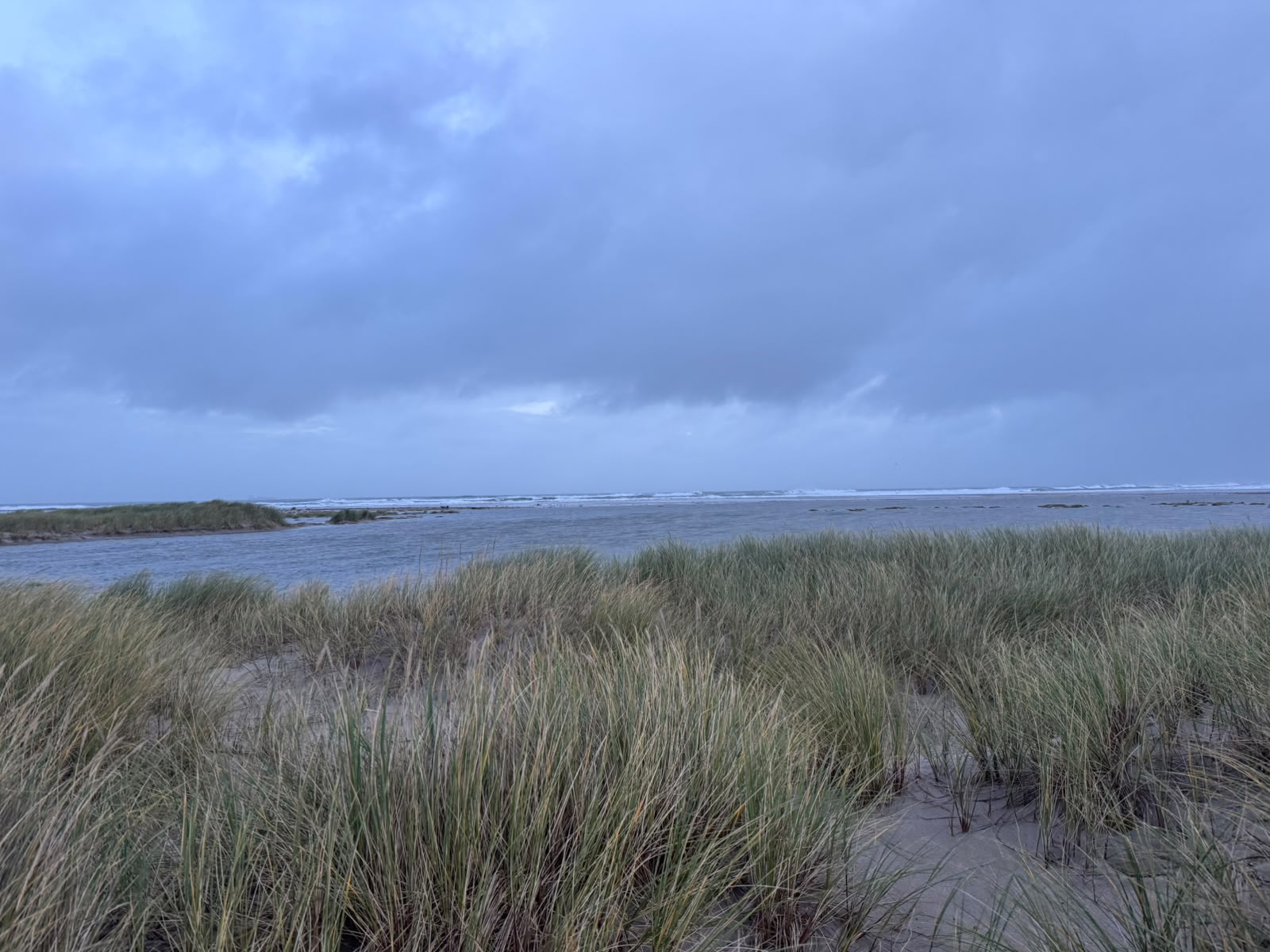
Flooded Sandormen tracks this morning
There was plenty to see between the crashing white waves. This was Christina’s first count, so at first I told her it would be good to practice counting migrating scoters, but when we looked at the sea we saw huge flocks with hundreds of scoters! Cora clicked those and counted over 9,000 during the count. What a sight! My favourite bird to see this morning was the little gulls (dværgmåge)—we saw 34 in total! They are so gorgeous, and the best was one who flew close over the beach, and rested in front of us together with some sanderlings (sandløber). They were pretty similar in size. So cute!
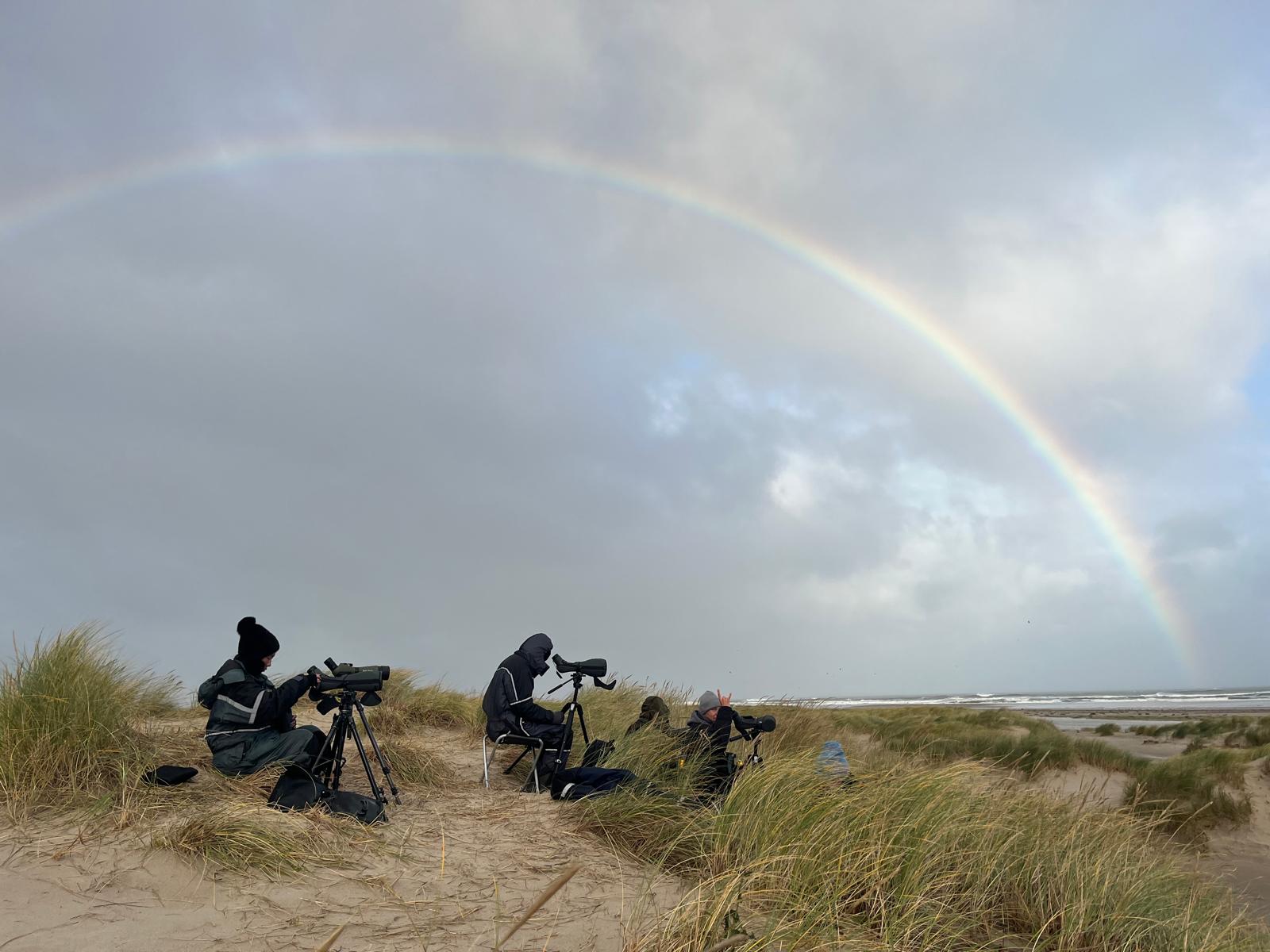
Rainbow over the team at World's End III
The smallest gulls in the world, dværgmåge weigh around the same as a sjagger (fieldfare), and less than some of our tern species. Not much is known about the movement and ecology of little gulls, although it is thought that the range is expanding. Little gulls breed in the northern palaearctic, across northern Scandinavia, Russia, and even some small populations in North America, although it is unknown how long they have been breeding there or how they got there. We see them here in Skagen passing through to their wintering grounds on coastlines across Europe, where they love to feed in sewage waste treatment sites.
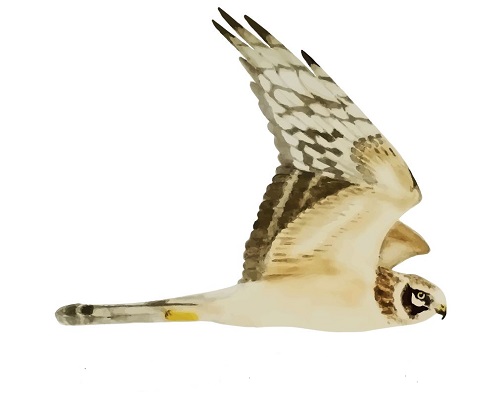
We were also lucky to see a short-eared owl (mosehornugle) flying very close with some gulls. On the beach, there were lapværling (Lapland buntings), snespurv (snow buntings) sandløber (sanderlings), strandhjejle (grey plover), sortgrå ryle (purple sandpiper), and rødben (redshank).
After the count we came back to the lighthouse for lunch, and we sharpened our minds by playing sudoku puzzles. This exercise can help us focus harder on birdwatching. Then we could all study some bird books with our laser-sharp minds. Mio, Cora, and Simon organized the attic and then gave the rest of us a nice tour of the organised attic.
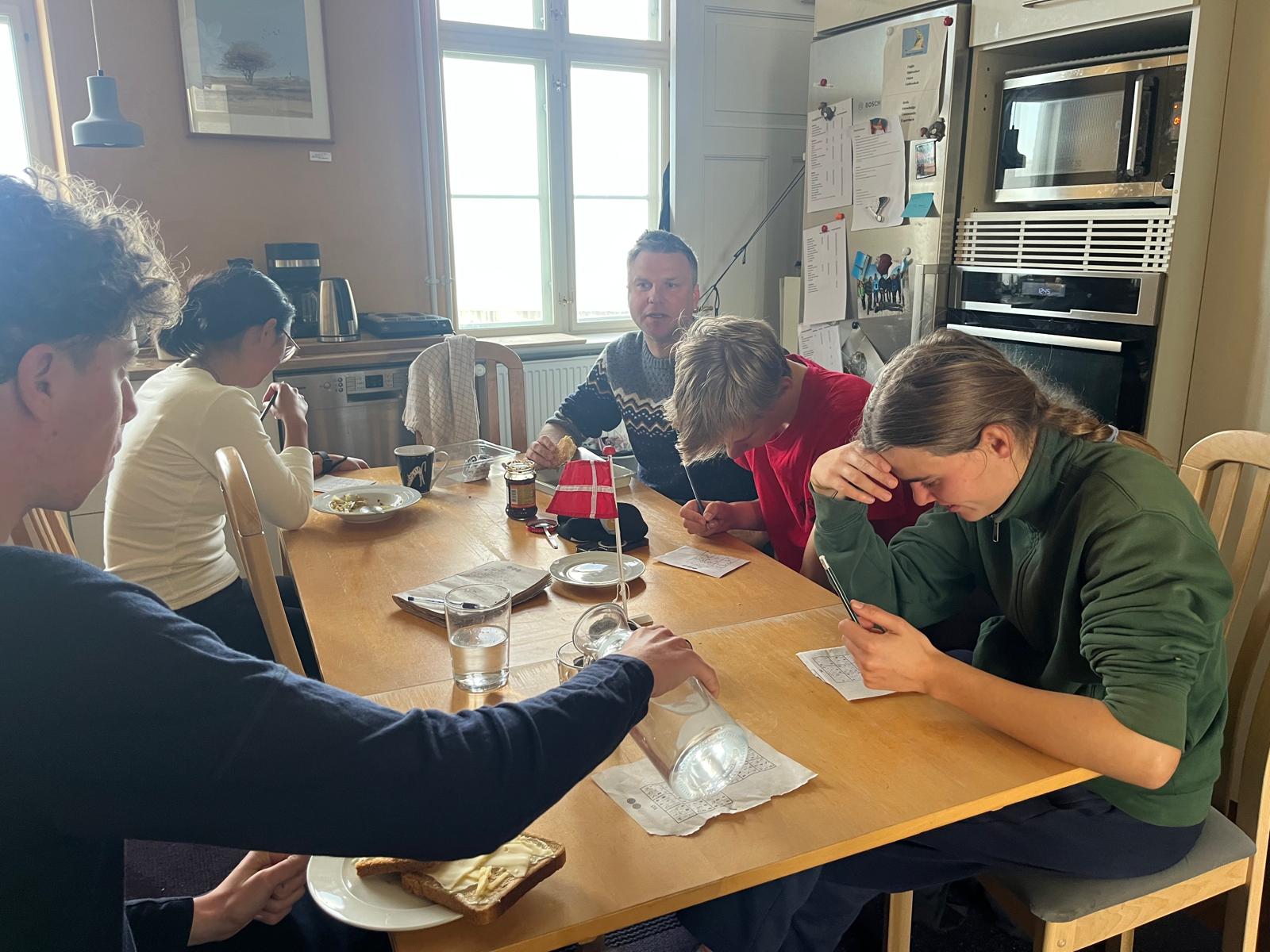
The dedicated birdwatchers sharpen their minds while Simon lets his idle mind wander
Mio and Cora went to try again for night catching, which can happen so early now after daylight savings. But there was too much moonlight tonight. Christina, Louis, and I walked up the lighthouse tower instead to enjoy the moonlight over Grenen, which was very beautiful.
Highlights from World's End III
Mosehornugle - 1
Dværgmåge - 34
Sortand - 9,662
Havterne - 1
Lapværling - 4
No ringing today due to high winds
Link to today's observations in the Dofbasen from observers in the area.
People: Mio Brix, Cora Köberle, Simon S. Christiansen, Sarah Partridge, Louis-Marie Gourmelon, Christina Liu, Knud Pederson, Lars og Lone