Her på Skagen Fuglestations blog bringes korte nyheder i dagbogsformat om hændelser på fuglestationen.
-
FORSIDE

- Blog
It's just a coincidence though
tirsdag 10. november 2026
Good evening readers!
This morning was raining lightly and a bit foggy, but us observers (myself, Christina, Rosie, Gustav and Saxe) went out to World’s End III to start the count at sunrise. It was a lovely pale grey day today and we had a nice time on the beach in our boiler suits. The first couple of hours had a steady stream of birds, including many kittiwakes (ride), a couple of goldeneyes (Hvinand), and some very rotund long-tailed ducks (havlit), some of my favourites. My main excitement for going to the count these days is to see little auks (søkonge), but despite being on high alert, I sadly missed the only one today! Only Saxe was quick enough to spot it flying briefly in Kattegat before disappearing. Although we don’t see so many of them down here, Little Auks are one of the most abundant seabird species in the North Atlantic. They breed in the high arctic in the millions—wouldn’t I love to see that!—and winter in the Greenland sea, where they experience a short flightless period during winter moult like the rest of the auk species.
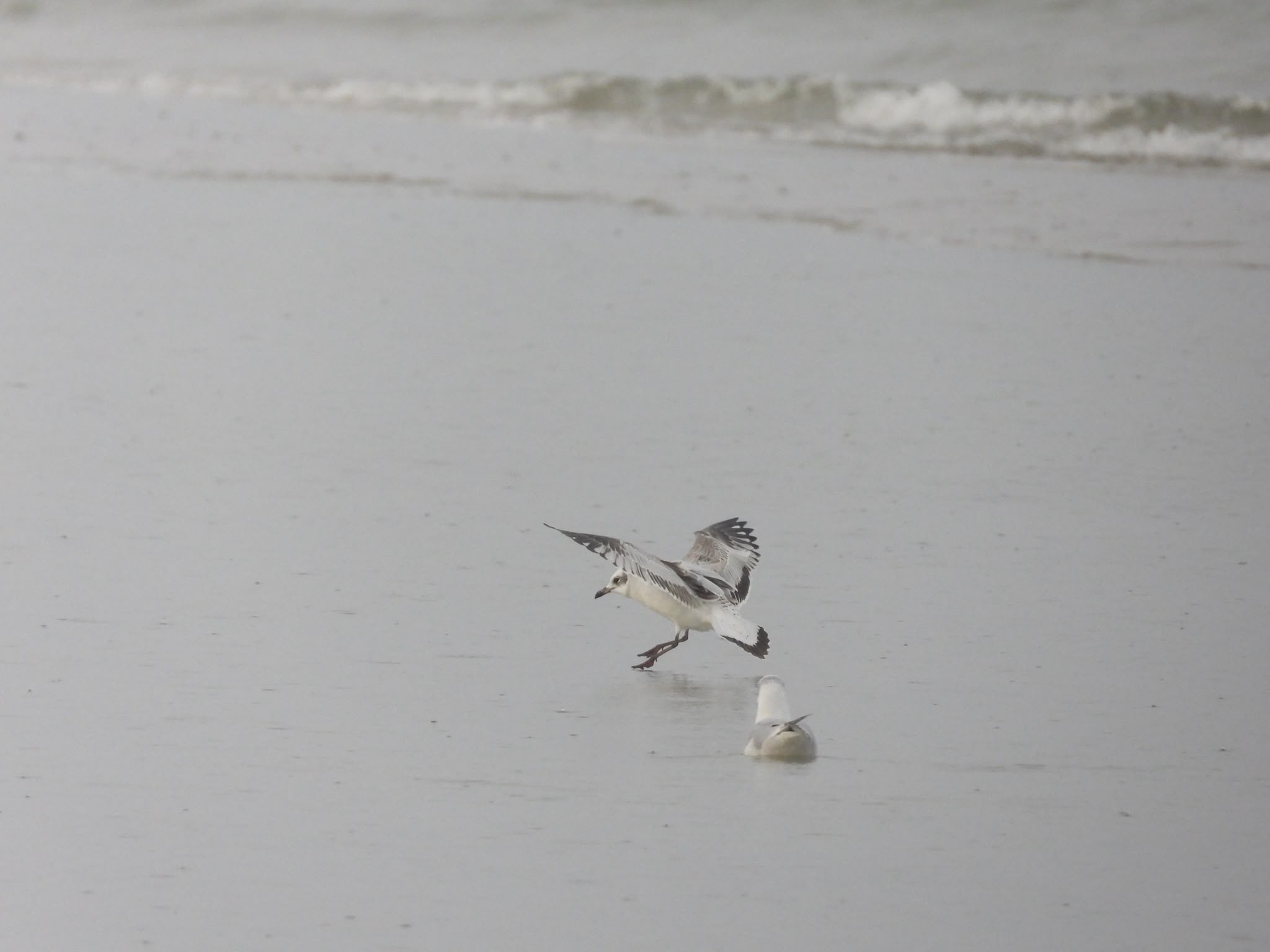
A nice 1k Mediterranean gull (sorthovedet Måge) showed up near the end of the count
We also got to admire the hundreds of diving Gannets (Sule) feeding close to the shore. How they manage to dive like that in such large groups without collision is a mystery! The conservation status of Northern Gannets is currently under review due to some steep declines in their biggest colonies. The UK holds over half of the world’s population, and some of the bigger colonies experienced severe crashes recently due to highly pathogenic avian influenza (bird flu), introduced from farmed chickens. Gannets also face threats due to climate change, and are particularly vulnerable to entanglements from marine pollution. As they collect nesting material from beaches and shallow waters, they can easily become trapped in ghost nets. Over half of all Gannet nests contain fishing nets, and in some colonies up to 100%.
Meanwhile, Louis-Marie and Mio went to Kabeltromlen with Simon for the ringing. Although they had opened the nets 2 hours late from the rain, they had a slightly busier day today, with a couple of nice surprises. Super-speedy Mio managed to snag a Sparrowhawk (Spurvhøg) from the net just before it escaped (they are a bit too big to become trapped in this size net). Rosie, Christina, and Gustav left the count to go admire this beauty.
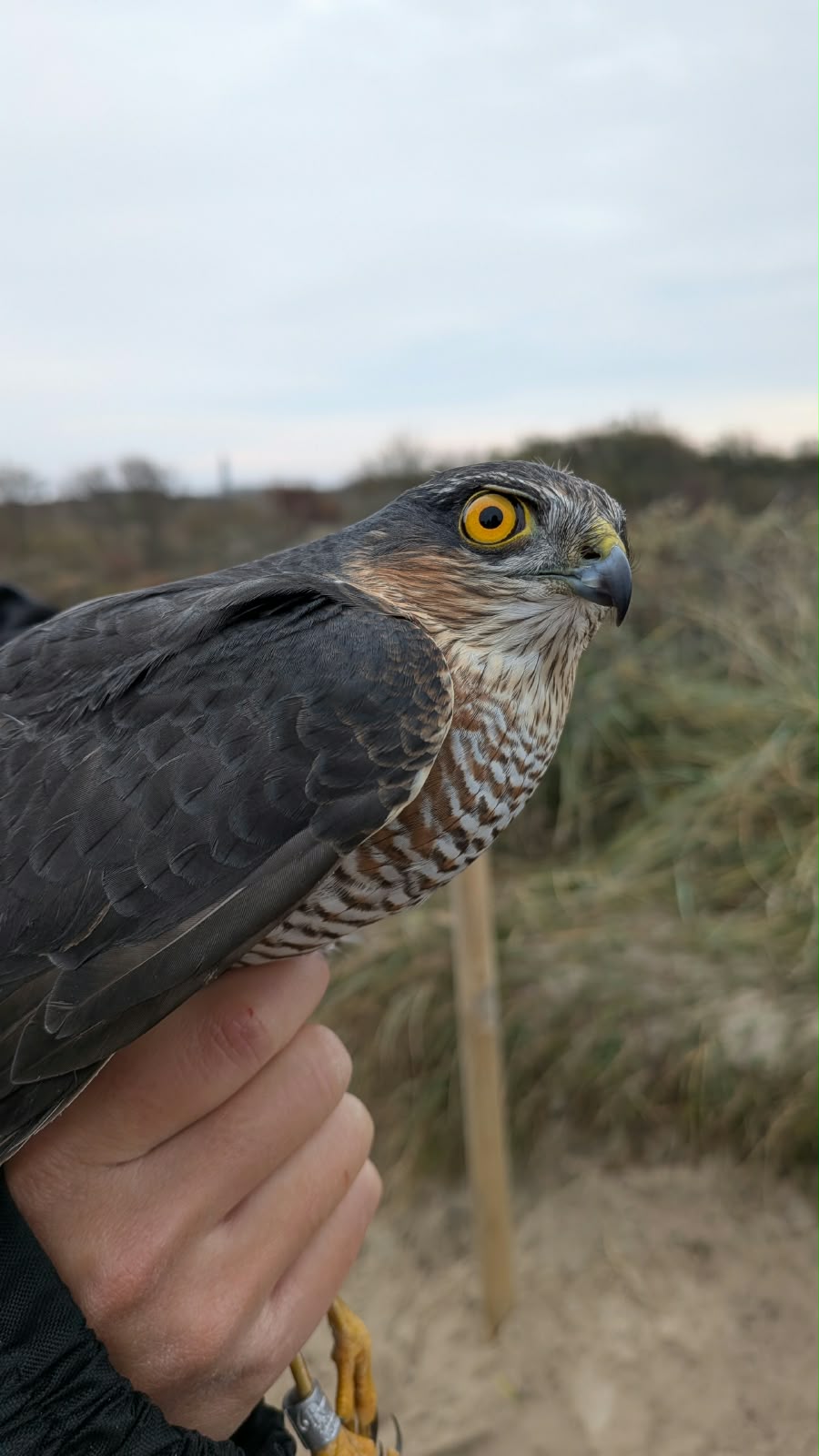
2k Male Spurvhøg
Simon’s dad was also at the ringing, with cake, hoping to see a Nødkrige. He did not, but he did get to see a nice arctic redpoll (hvidsisken). Simon assured me that the good ringing day when he was there was just a coincidence—the birds don’t know which one of us is there.
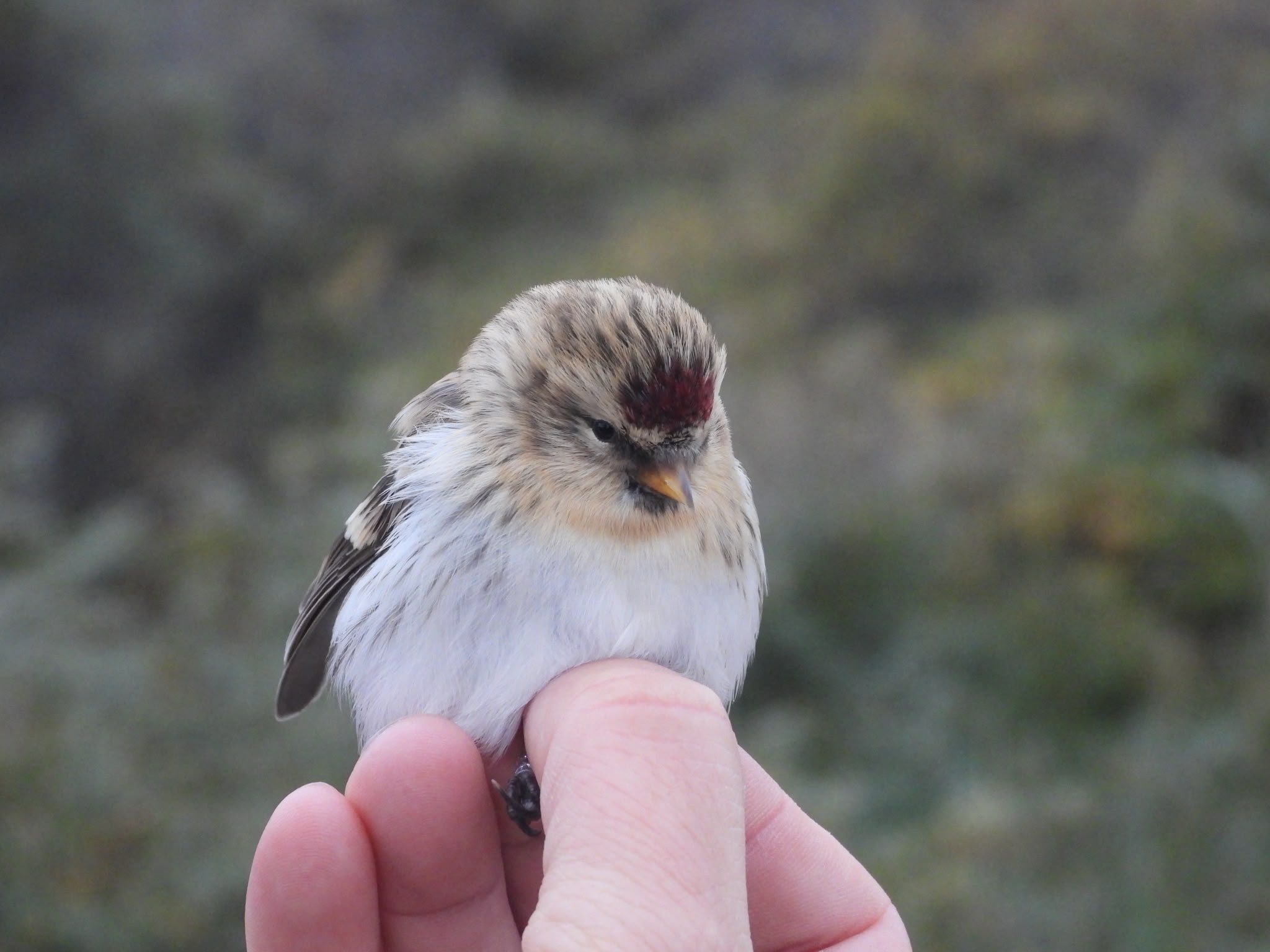
Glorious hvidsisken
After a nice lunch together, Christina and Rosie opened the garden nets and got two retrap Musvit. After dinner, our expert woodcock catchers will try again.
Highlights from World's End 3
Søkonge 1
Blåkærhøg 1
Lapværling 1
Sorthovedet måge 1
Hvinand 2
Havlit 11
Ringing Kabeltromlen
Spurvhøg 1
Gærdesmutte 1
Bogfinke 1
Dompap 2
Gråsisken 6
Stillits 1
Hvidsisken 1
Link to today’s observations in the Dofbasen from observers in the area.
People: Mio Brix, Simon Sigaard Christiansen, Sarah Partridge, Louis-Marie Gourmelon, Christina Liu, Rosie Berkin, Saxe Lind Christiansen, Gustav Juel og Gunnar Simonsen.