
Her på Skagen Fuglestations blog bringes korte nyheder i dagbogsformat om hændelser på fuglestationen.
-
FORSIDE

- Blog
Se indlæg fra måned: jan. (23)feb. (8)mar. (31)apr. (30)maj (31)juni (29)juli (31)aug. (31)sept. (30)okt. (10)
Cloudy morning
torsdag 30. april 2026
This morning Julian, Alix and Alvin were at ringing. The winds were coming from the Southwest today, so it meant we were hoping for better numbers of birds. Unfortunately, the cloud cover was higher than usual, so it meant the migration was a lot worse than we would’ve expected. Ringing totals were good in the first couple rounds with birds like Sparrowhawk (Spurvehøg) and Lesser Whitethroat (Gærdesanger) caught. Then the number of birds slowed down because the team had to close a lot of nets due to the high winds.
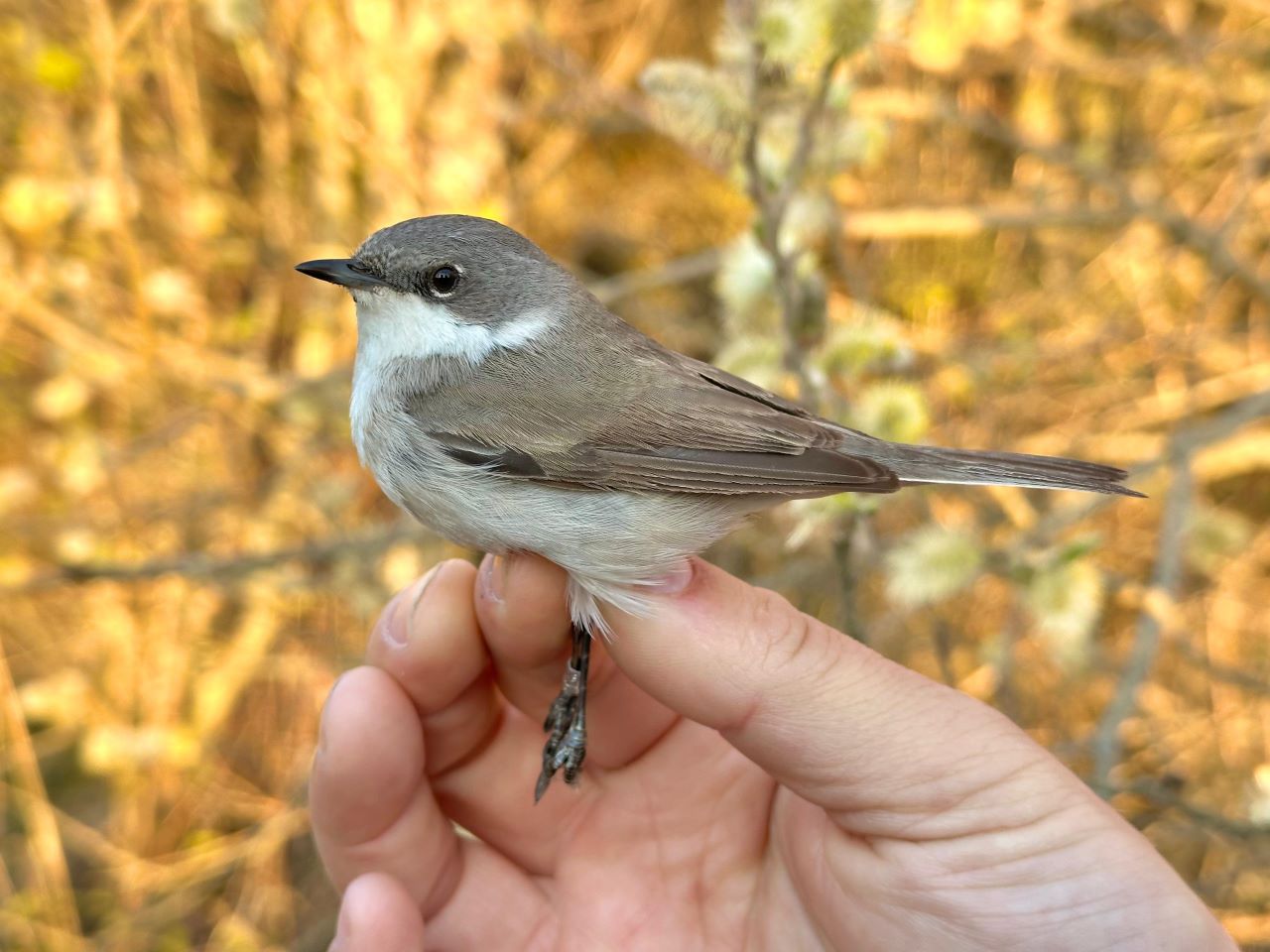
Lesser Whitethroat (Gærdesanger)
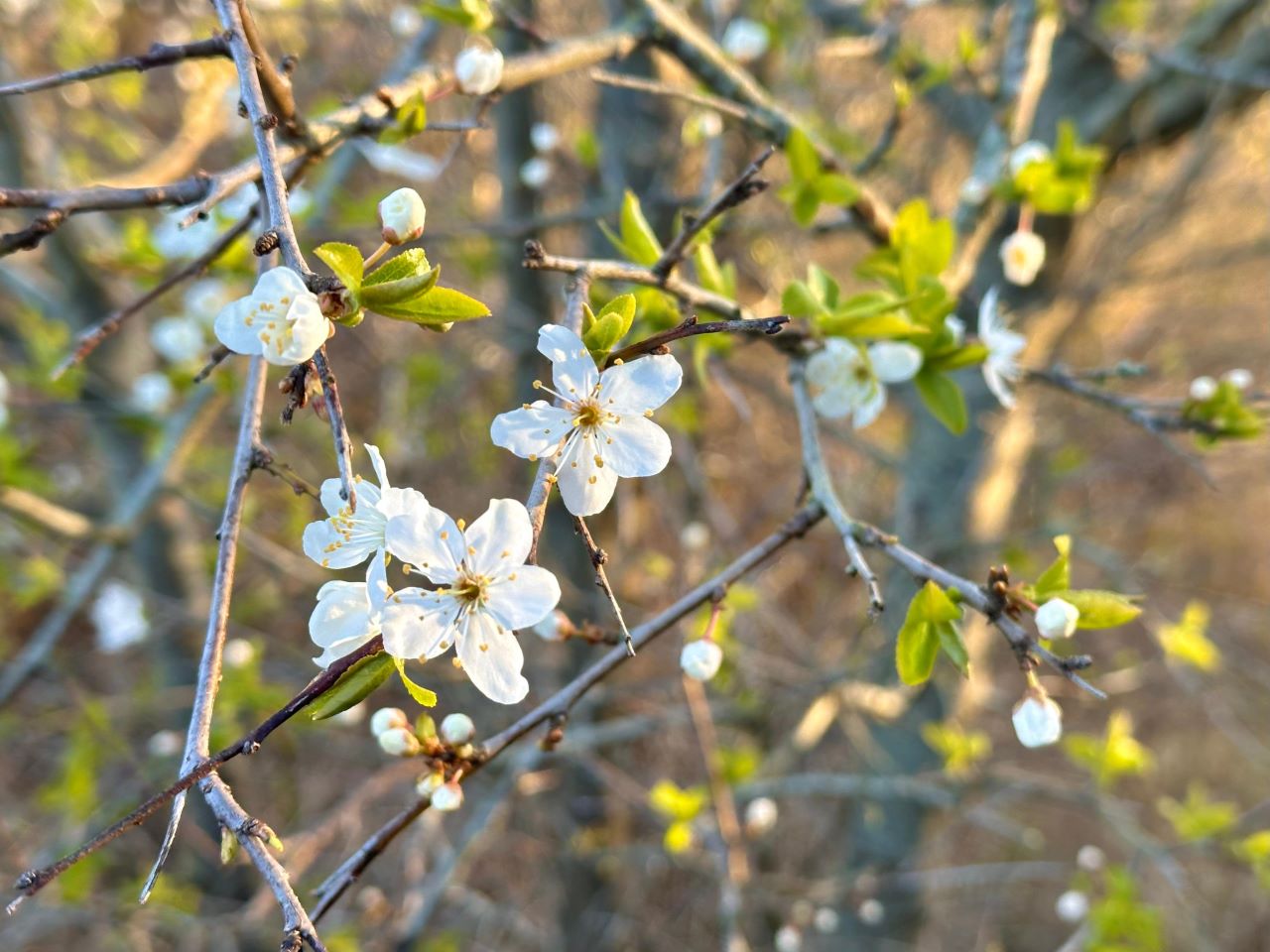
The first flowering plants of the spring
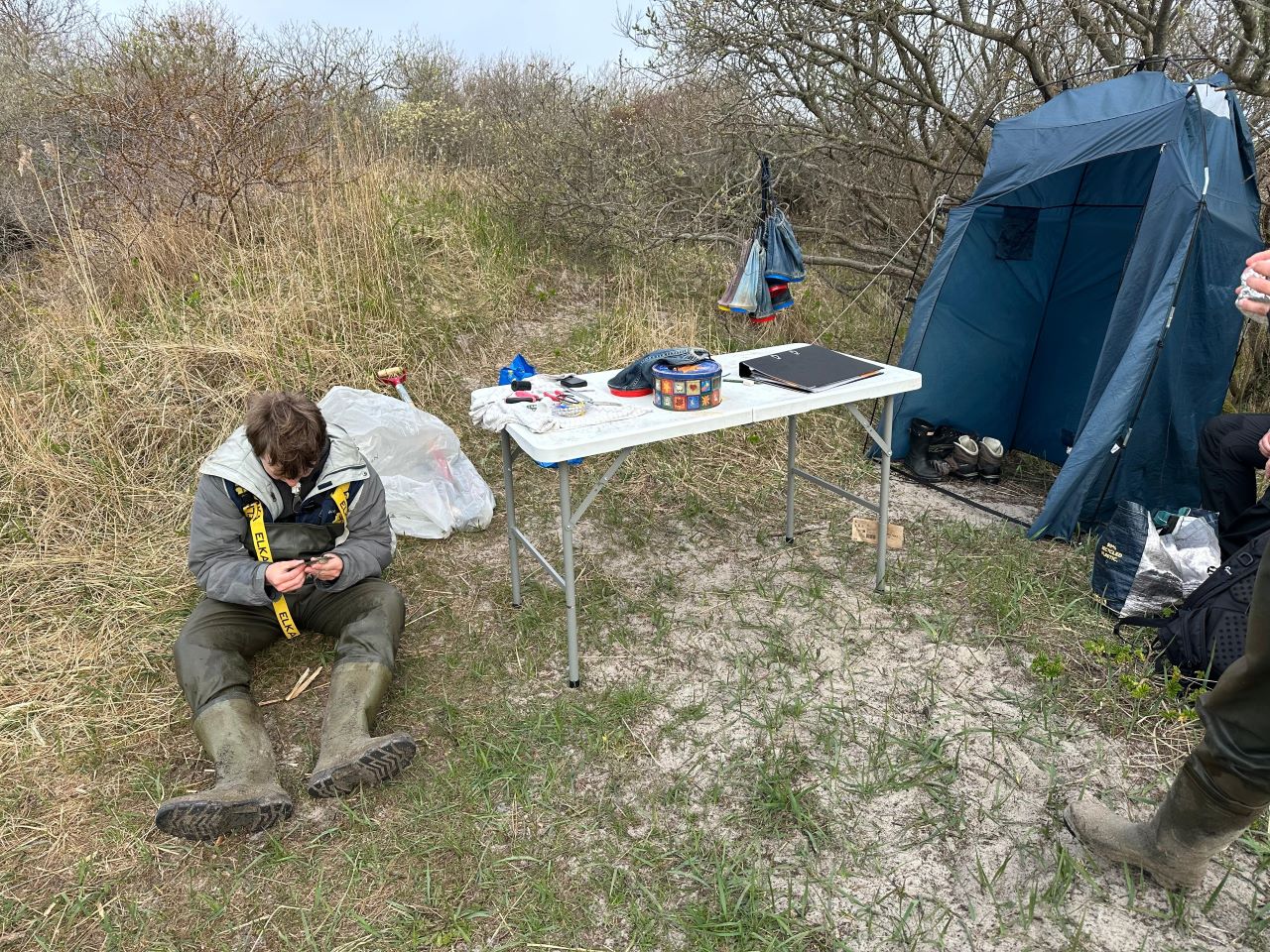
Ringing set up
This morning János and I were at the migration count. We too had less birds than we hoped but we still had a few nice species like Waxwing (Silkehale), Yellow Wagtails (Gul Vipstjert), Wood Sandpipers (Tinksmed), Rough-legged Buzzard (Fjeldvåge) and Little Ringed Plover (Lille Præstekrave). Hopefully the next few days will be better with higher numbers of migrating passerines.
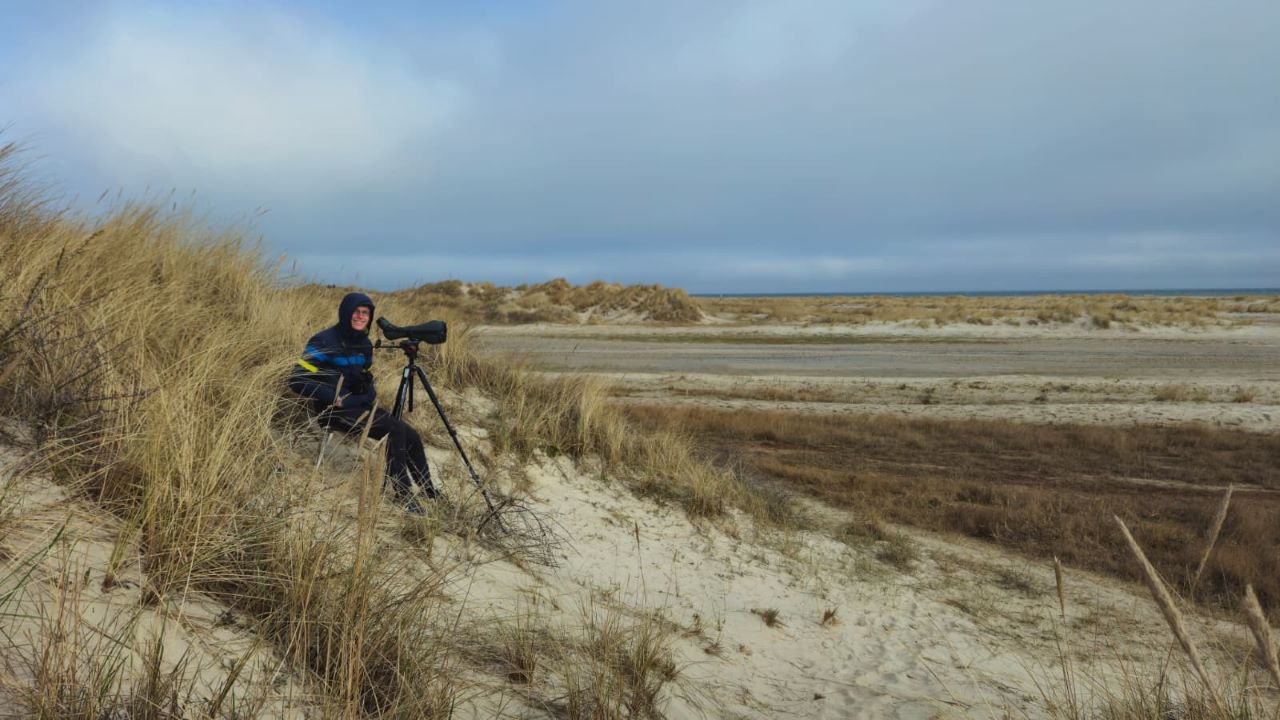
Me at the migration count
We have had a few more tiring days so we all had a quieter middle of the day than normal so we could catch up on some much need sleep.
After a shopping trip I decided to go for an afternoon birding trip to the harbour and a couple other sites. I had a much nicer time than expected with some nice birds including 13 Common Sandpiper (Mudderklire), 2 Purple Sandpiper (Sortgrå Ryle), a Turnstone (Stenvender) and a Caspian Gull (Kaspisk Måge). It was really nice to see and hear the Common Sandpipers (Mudderklire) as we have not had many this spring so far. On the way home I stopped at Batteriskoven to try my luck for some spring migrants. I was able to see a couple birds including a male Redstart (Rødstjert) and Pied Flycatcher (Broget Fluesnapper). In the coming days we hope to see out first Wood Warblers (Skovsanger) of the spring here.
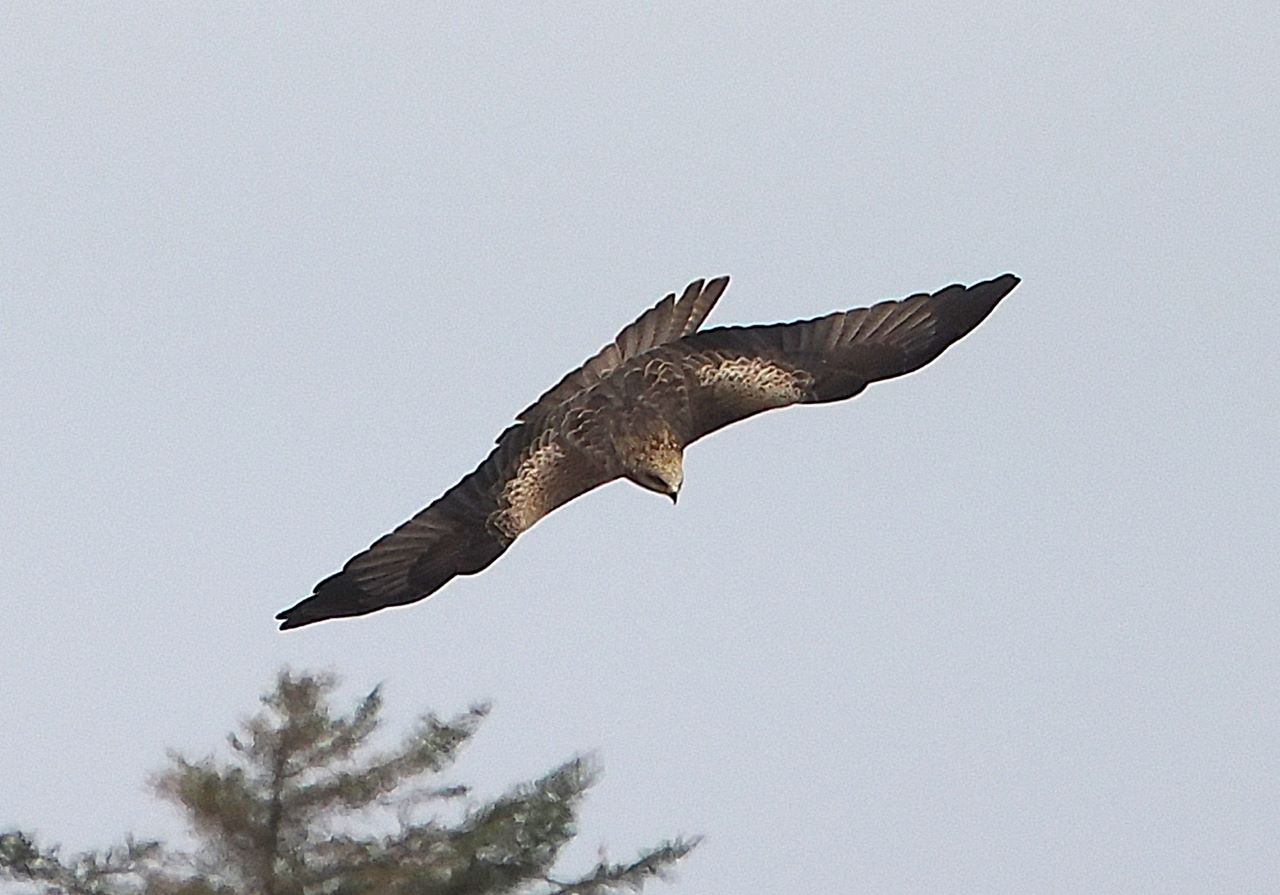
Black Kite (Sort Glente)
During my outing Alix and Alvin were enjoying some time outside doing some wood carving. Which was the first time they had done something like that. János aslo went outise to look at the sea and he saw a big group of 70 Fulmars (Mallemuk) following a couple of fishing boats on the sea from the Grey Lighthouse.
For dinner we had gnocchi bake made by Alix. It was very delicious and we look forward to eating the leftovers tomorrow.
Highlights from today:
Waxwing (Silkehale) - 1
Purple Sandpiper (Sortgrå Ryle) - 2
Black Kite (Sort Glente) - 1
Fulmar (Mallemuk) - 70
Ringing from today (Kabeltromlen)
Gransanger - 2
Gærdesanger - 1
Løvsanger - 2
Gærdesmutte - 1
Munk - 8
Sangdrossel - 1
Spurvehøg - 1
Total: 16
Link to today’s observations in DOFbasen from observers in the area
Summary of today's raptor migration in DOFbasen
People: Alvin Johansson, János Schadl, Alix Bortolussi, Julian Helbig, Dylan Daunt, Simon S. Christiansen, Søren
CES setup and sightings
onsdag 29. april 2026
Today for migration was Alvin and I at Grenen. The morning started out with an absolutely beautiful sunrise.
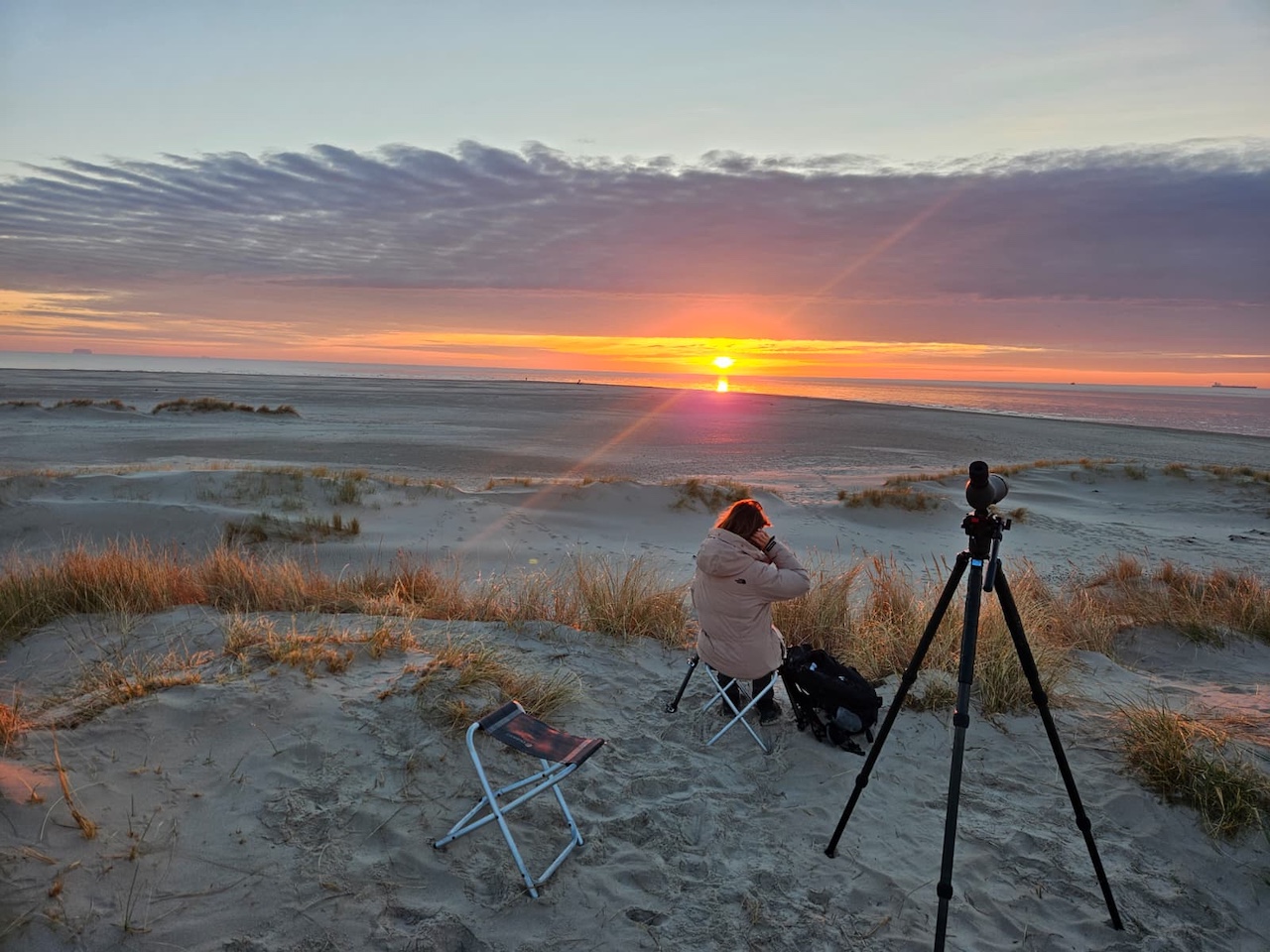 Sunrise at Grenen
The migration was a little slow but we had the chance of seeing and hearing a few waders like Wood Sandpiper (Tinksmed), Common Sandpiper (Mudderklire) or Redshank (Rødben) for example.
A Serin (Gulirisk) was called out around 07:30 and Alvin was lucky to hear it!
As we were getting ready to round up the last hour of the count, a Waxwing (Silkehalen) was heard and Alvin spotted two Arctic Skuas (Almindelig Kjove) far out which was so nice!
At ringing, the numbers happened to be a bit higher up today finally after a few days of very calm ringing sessions. The ringers caught the first Lesser Whitethroats (Gærdesanger) of the season, a beautiful male Bullfinch (Dompap), and a Sedge Warbler (Sivsanger) was heard by János!
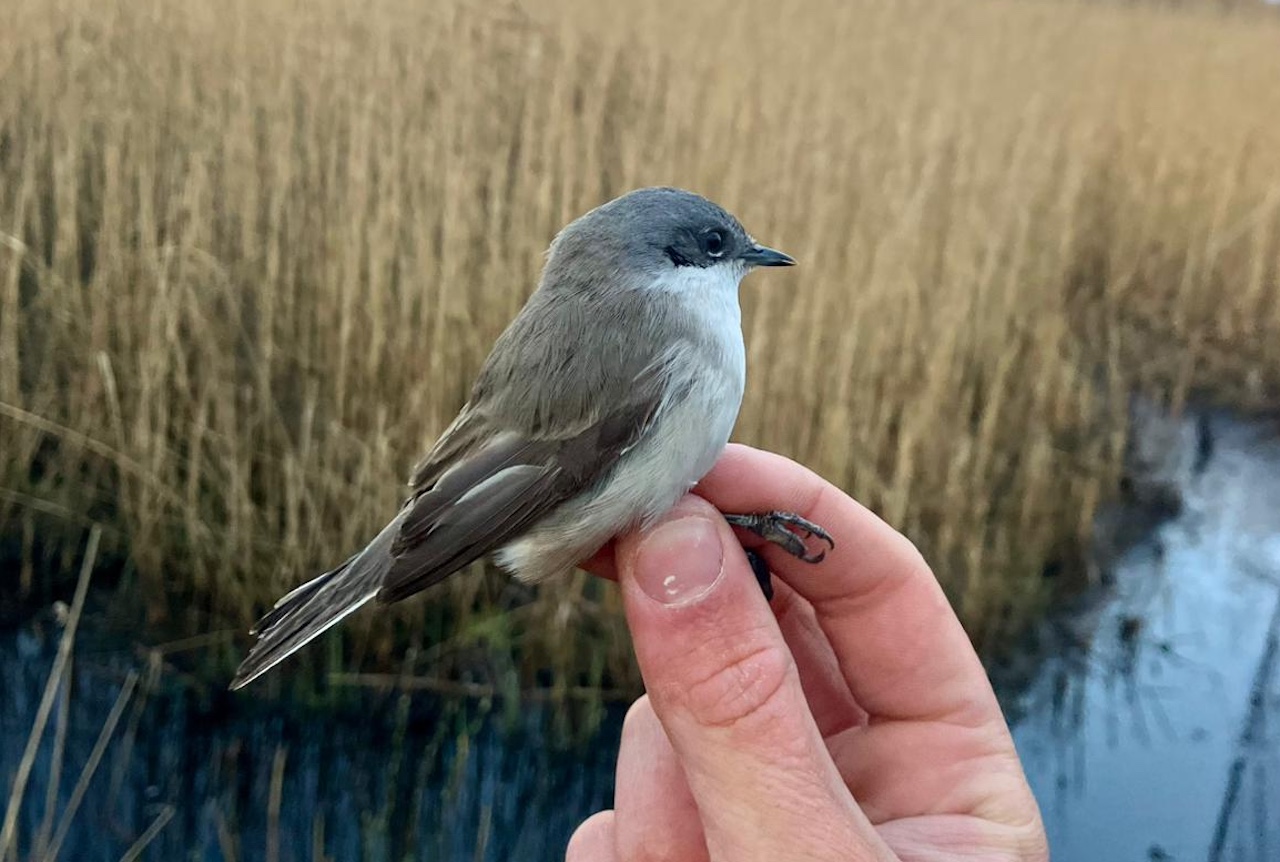 Lesser Whitethroat (Gærdesanger) caught today
In the afternoon the whole team went out to Nordstrand to finalise the set up of nets of our CES ringing site. After the efforts and installation, we were rewarded on our walk back with the sightings of 5 flying Spoonbills (Skestork), a Pallid Harrier (Steppehøg), a Wryneck (Vendehals) and even a White Stork (Hvid Stork) earlier in the afternoon.
Highlights of today:
Wryneck (Vendehals) - 1
White Stork (Hvid Stork) - 1
Spoonbills (Skestork) - 5
Serin (Gulirisk) - 1
Lesser Whitethroats (Gærdesanger) - 2
Pallid Harrier (Steppehøg) - 1
Ringing Kabeltromlen
Gransanger - 11
Gærdesmutte - 2
Gærdesanger - 2
Rødhals - 8
Jernspurv - 1
Munk - 4
Lille Dompap - 1
Rørspurv - 1
Total: 30
Link to today’s observations in DOFbasen from observers in the area
People at the station: Alvin Johansson, János Schadl, Alix Bortolussi, Julian Helbig, Dylan Daunt, Simon S. Christiansen, Søren
Safari birding trip
tirsdag 28. april 2026
Today's migration count was nice, with considerable movement compared to the previous week. Decent movement over the sea with Scoters (And), Divers (Lom), and good Common Tern migration (Fjordterne). What was notable though, was the Ring Ouzel (Ringdrossel) migration with 235 individuals! There was also a Great Northern Diver (Islom) that came from inland and migrated out over the sea.
In the ringing we recaptured a Redpoll (Gråsisken), that was ringed last year, an adult male.
After the morning duties, we went together with Simon to town and did some shopping at the pharmacy to buy, for example, station-suncream. Then we went birding, first in the industrial area in western Skagen and then at a horse field where we met a very cute dog and some beautiful horses.
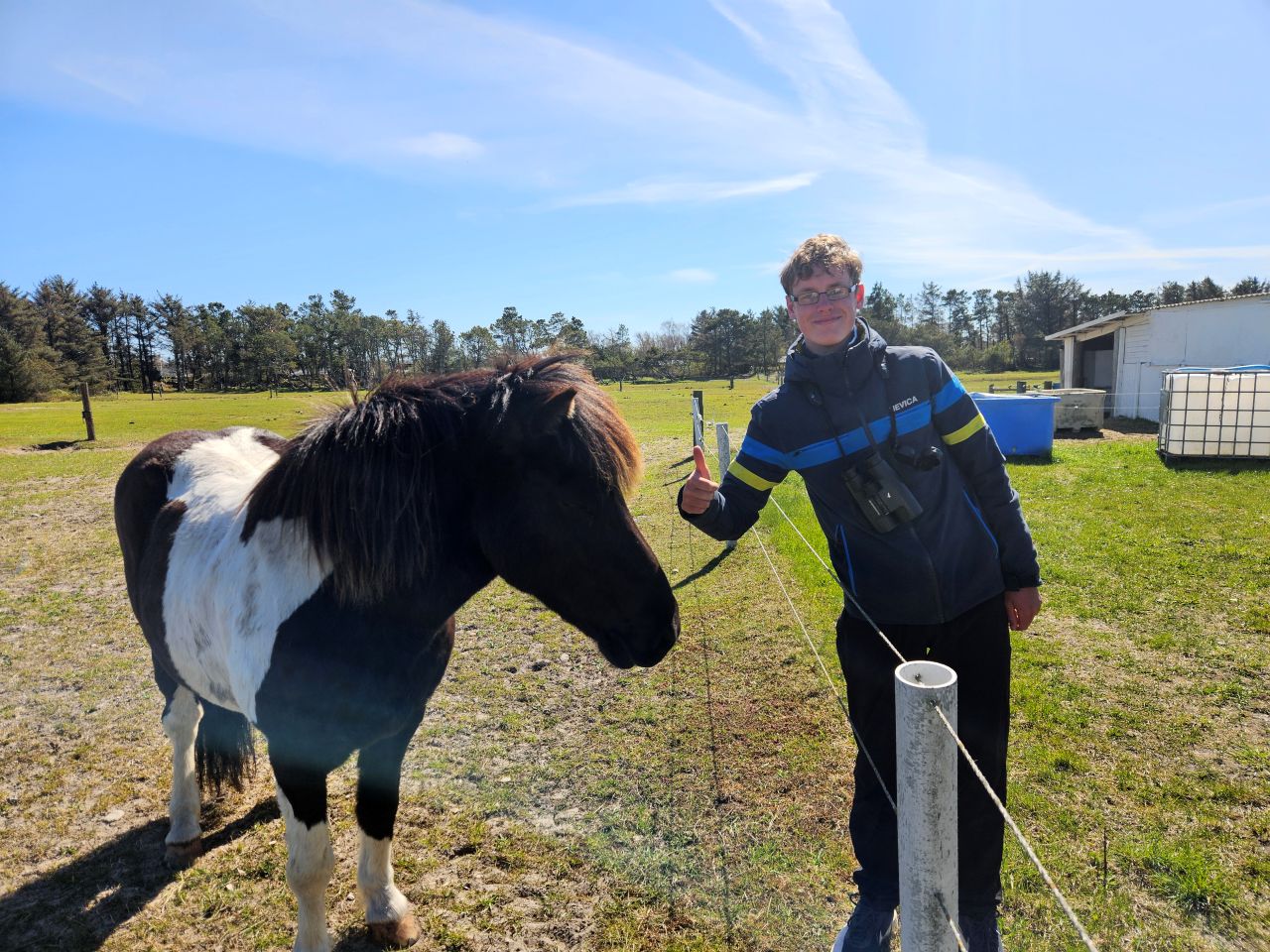 Dylan with horse
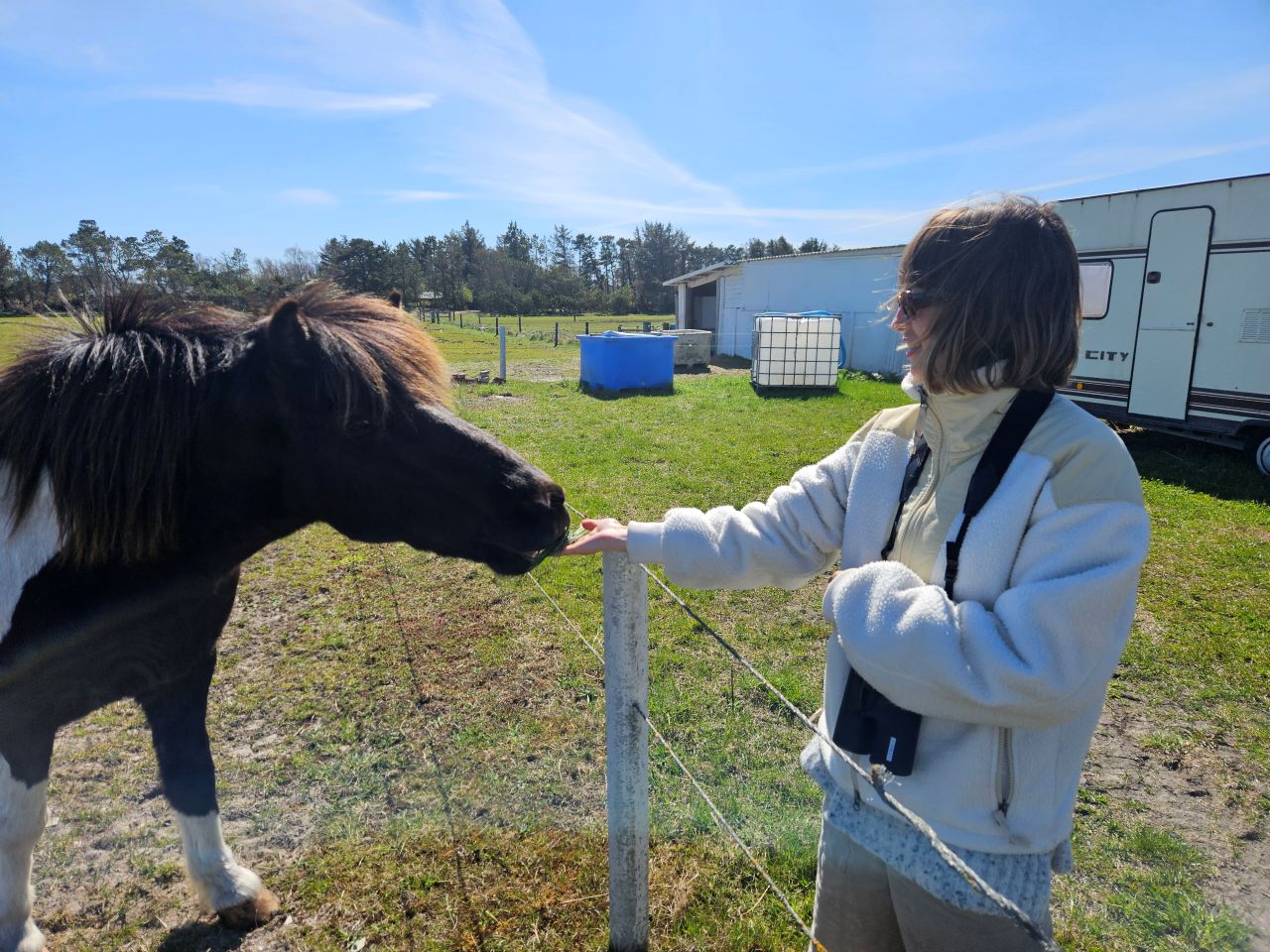 Alix feeding horse with grass
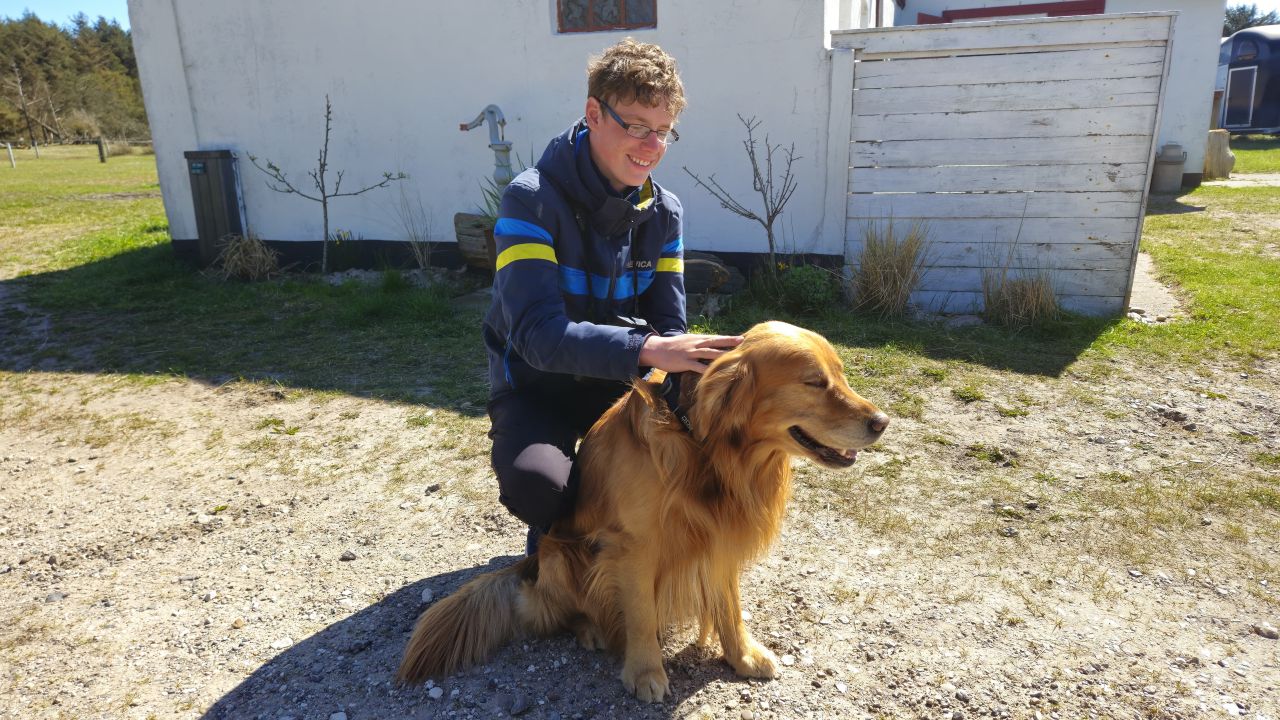 Dylan petting cute dog
We also went to Batteriskogen. There we saw three Pied Flycatchers (Broget Fluesnapper). Although we didn't find any mega rarities, we got to see some new birding spots, for most of us, and explore the town a little more.
Highlights from the observations:
Ring Ouzels (Ringdrossel) - 235
Great Northern Diver (Islom) - 1
Shag (Topskarv) - 5
Ringing (Kabeltromlen)
Gransanger 3
Fuglekonge - 1
Løvsanger - 5
Rødhals - 1
Munk - 1
Rørspurv 1
Musvit - 1
Sangdrossel - 1
Solsort - 1
Total: 15
Link to today’s observations in DOFbasen from observers in the area
People: Alvin Johansson, János Schadl, Alix Bortolussi, Julian Helbig, Dylan Daunt, Simon S. Christiansen, Søren, Knud Pedersen
Good old easterlies
mandag 27. april 2026
After some calm migration days, we finally got a good spell of easterly winds again, which made for a decent migration count at Nordstrand. Julian and I were out today and had decided to go to the White Lighthouse (Blyantel) again to get better views of the passerine movements. The morning started well with many Meadow Pipits (Engpiber) and Chaffinches (Bogfinke) and they kept us busy until the end of the count. The stars of the migration count however was the 165 Ring Ouzels (Ringdrossel) migrating in flocks of up to 40 birds. Amazing!
We also had the first larger arrival of Common and Arctic Terns (Fjord- and Havterne) and got very good views of a breeding plumage White-billed Diver (Hvidnæbbet Lom) passing close to the shore. The ringers also saw the bird from Grenen, although rather distant. It was a Lifer for Julian and Alvin, but Simon unfortunately missed it, leaving the ringing site a bit earlier to do some birding at Elle Krattet. They also had a productive morning ringing 17 birds from a nice diversity. Enjoyable was a male Pied Flycatcher (Broget Fluesnappper) and a few Blackcaps (Munk) as well as Chiffchaffs (Gransanger) and two Willow Warblers (Løvsanger). Our new guest Søren was also out with them and took some pictures of the migrating birds.
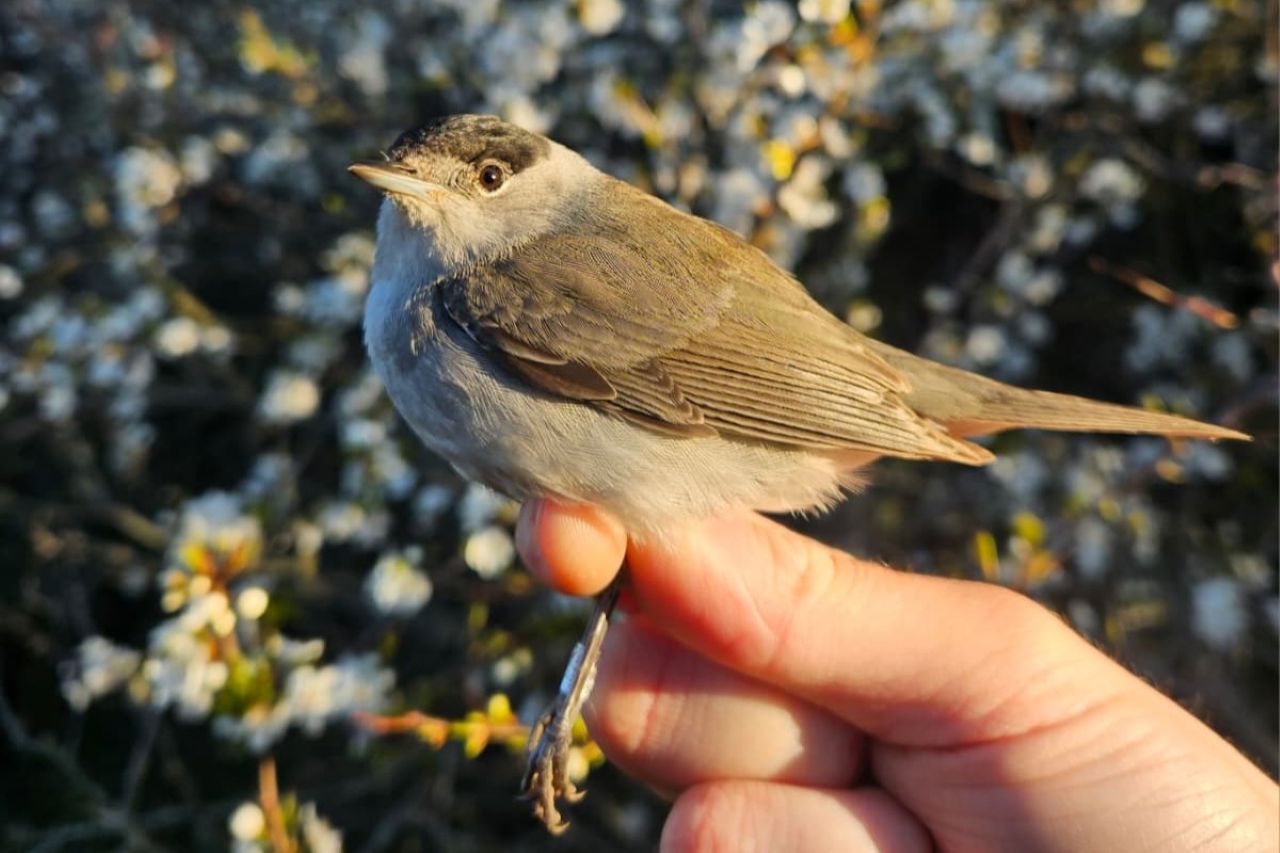
Blackcaps (Munk)
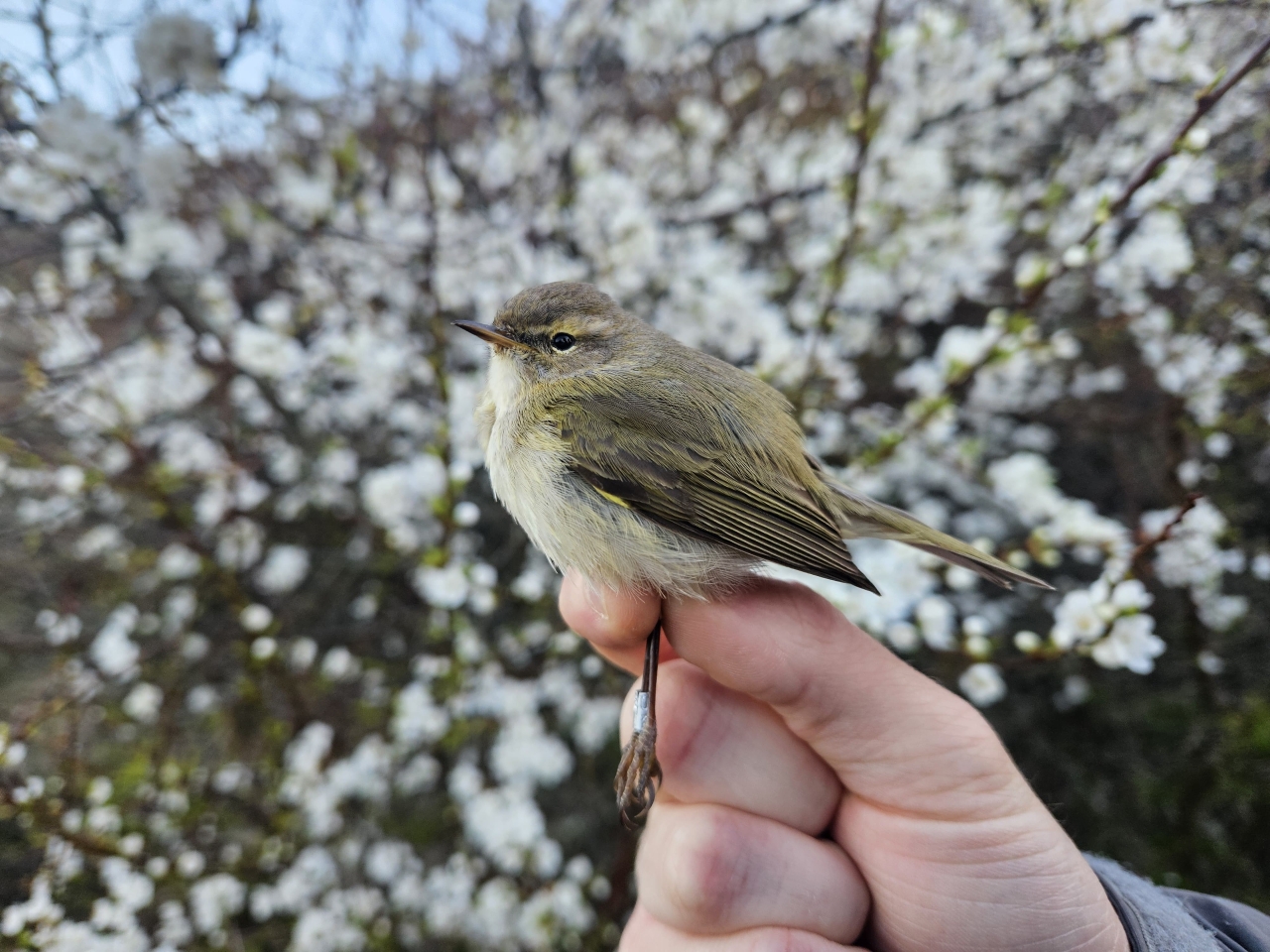
Chiffchaffs (Gransanger)
After the end of the standardized ringing and counting, the ringers went back and had a nap, while I and Julian started what will probably be our last beach walk this spring. We walked back over the beach from Nordstrand to the lighthouse. It was not many dead birds, but we managed to collect a Gannet (Sule) and when we reached the tip, we got very good views of two Little Terns (Dværgterne) resting on a mudflat, hunting, and passing small fishes to each other. We made a 20 minute break to watch them, and I also got some good pictures.
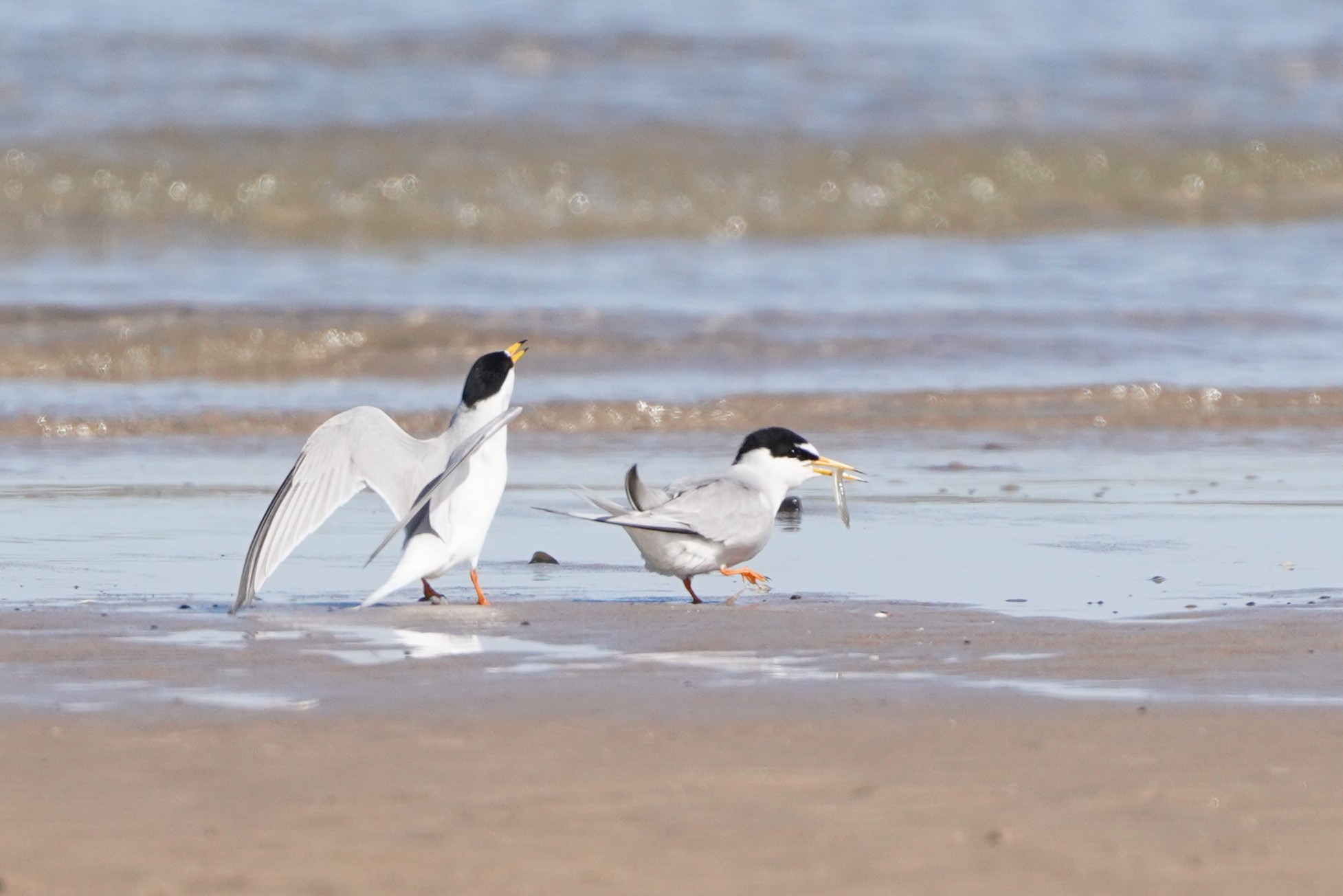
Little Terns (Dværgterne) passing a fish
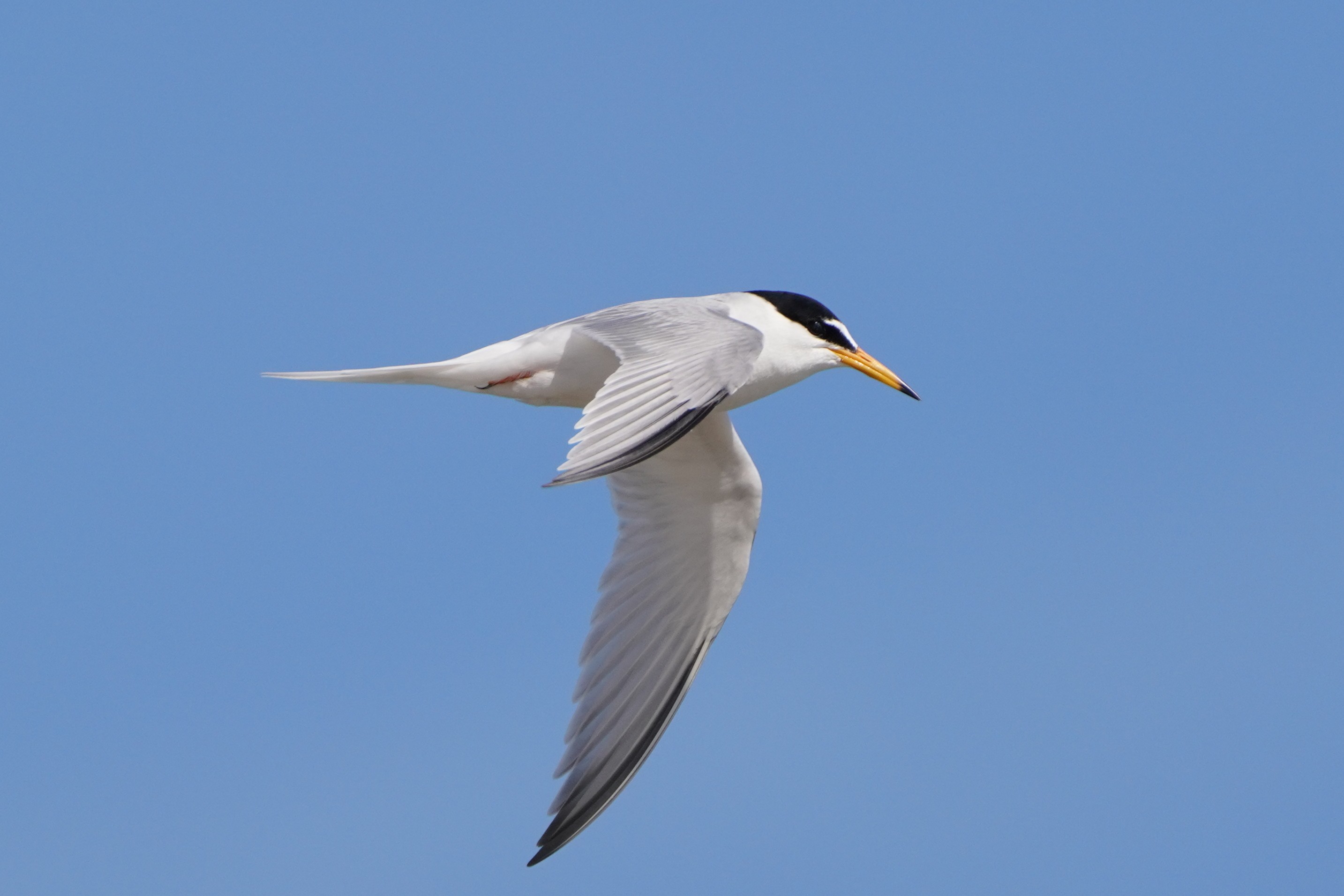
Little Tern (Dværgterne) hunting
When we came back, we had lunch and some of the cake I made yesterday before Dylan and Alix needed to leave to finish the beach walk from Gammle Skagen to Nordstrand. They did not find many birds and collected none, which shows that the beachwalk season is about to be over.
Me and Julian used the time to also take a nap and finsih the data entry, befor we had more cake.
In the evening Dylan cooked a dahl and later I went for an evening walk.
Highlights from the observations:
Ring Ouzels (Ringdrossel) - 165
White-billed Diver (Hvidnæbbet Lom) - 1
Shag (Topskarv) - 1
Little Tern (Dværgterne) - 2
Ring Ouzels (Ringdrossel) - 165
White-billed Diver (Hvidnæbbet Lom) - 1
Shag (Topskarv) - 1
Little Tern (Dværgterne) - 2
Ringing (Kabeltromlen)
Gærdesmutte 1
Jernspurv 1
Broget Fluesnapper 1
Rødhals 2
Løvsanger 2
Rørspurv 1
Munk 3
Blåmejse 2
Gransanger 4
Total: 17
Jernspurv 1
Broget Fluesnapper 1
Rødhals 2
Løvsanger 2
Rørspurv 1
Munk 3
Blåmejse 2
Gransanger 4
Total: 17
People: Alvin Johansson, János Schadl, Alix Bortolussi, Julian Helbig, Dylan Daunt, Simon S. Christiansen, Søren, Knud Pedersen
Windy morning, calm afternoon
søndag 26. april 2026
Alvin and Alix were up early this morning for the ringing. It was quite windy, so it meant that they had to decide which nets to open. In the end they opened 16 out of the 26 nets we have a Kabeltromlen. The number of birds caught was very low but they still caught a Chiffchaff (Gransanger), Robin (Rødhals) and Wren (Gærdemutte). During the ringing Alvin also saw the one of the Black-winged Kites (Blå Glente) from the previous days. We have all really enjoyed their presence recently.
Julian, Saxe, János and I were at the migration count this morning. It was pretty quiet but there were still a few birds moving of note. The highlights were three Shags (Topskarv), one Arctic Skua (Almindelig Kjove), Little Tern (Dværgterne) and 17 Fulmars (Mallemuk). I decided to head home early to finish my session on UK seabirds for the team that I will hopefully be giving at some point this week. After the migration count a Lapland Bunting (Lapværling) was heard migrating at Grenen, so János and I decided to go out to try and hopefully find it resting on the beach. We had no luck so that probably means it migrated out to sea.
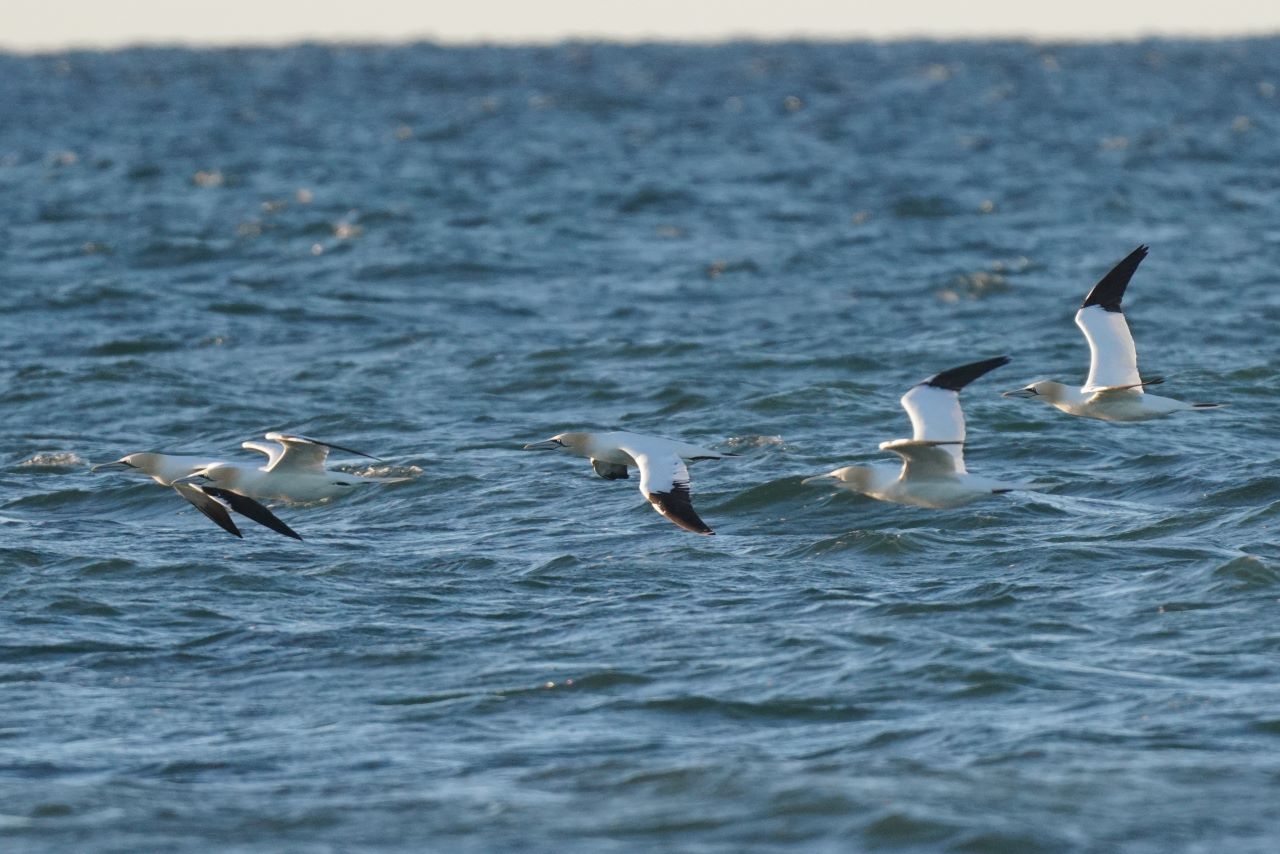
Gannets (Sule)
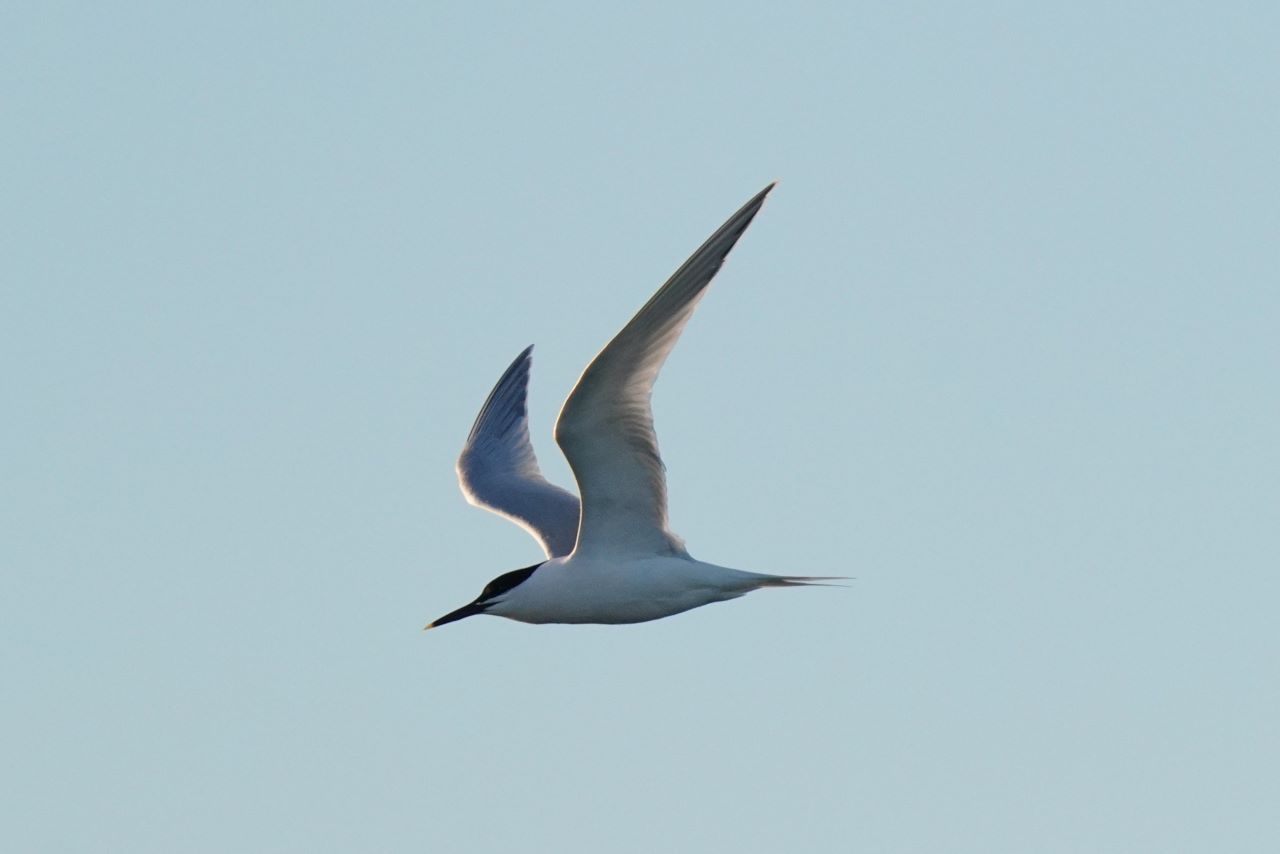
Sandwich Tern (Splitterne)
After lunch we said goodbye to Saxe as he had to head back down south to continue with school. It was really nice to have him, and we look forward to seeing him again later in the spring.
In the afternoon János and I went for a local walk around Storsig, Ellekrattet and Grenen. We were rewarded when I found a male Lesser Spotted Woodpecker (Lille Flagspætte) very close to us in Ellekrattet. It was also close to a Great Spotted Woodpecker (Stor Flagspætte) which meant we could make some nice size comparisons with it. This sighting was by far my best sighting of this species and hopefully it sticks around so we can get some nice photos. At Grenen we also had a really nice feeding flock of 16 Barn Swallows (Landsvale) and one Sand Martin (Digesvale). This was our first larger flock that we have seen this spring, and we look forward to seeing way more.
We then came home and had a really nice dinner that Alix had made. Tomorrow, the wind drops and turns slightly to the South so hopefully it produces some nice birds.
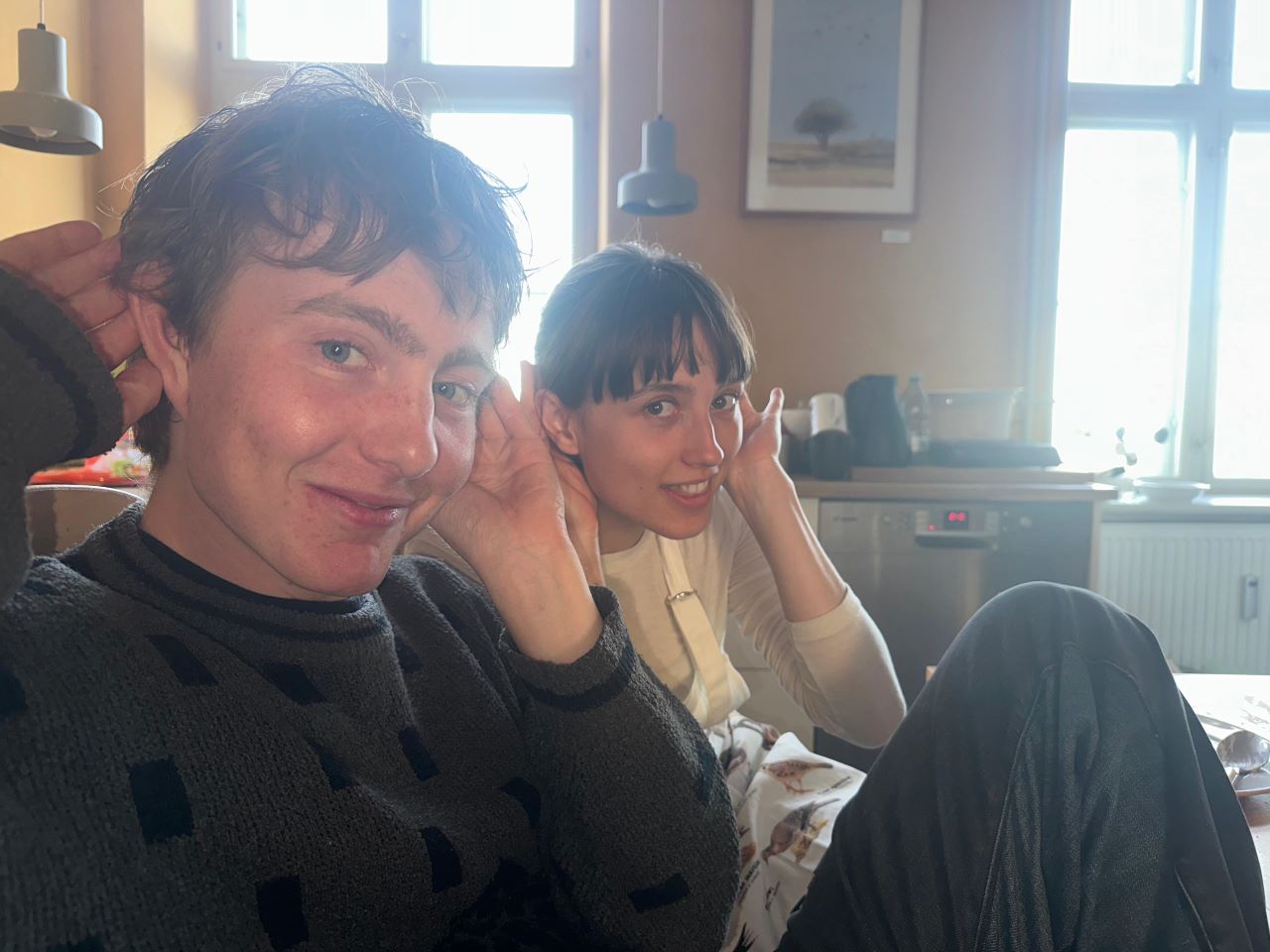
Alvin and Alix posing
Highlights from the observations:
Black-winged Kite (Blå Glente) - 1
Fulmar (Mallemuk) - 17
Shag (Topskarv) - 3
Little Tern (Dværgterne) - 1
Black-winged Kite (Blå Glente) - 1
Fulmar (Mallemuk) - 17
Shag (Topskarv) - 3
Little Tern (Dværgterne) - 1
Lesser Spotted Woodpecker (Lille Flagspætte) - 1
Ringing (Kabeltromlen)
Gransanger - 1
Gærdesmutte - 1
Gransanger - 1
Gærdesmutte - 1
Rødhals - 1
Total: 3
Total: 3
People: Alvin Johansson, János Schadl, Alix Bortolussi, Julian Helbig, Dylan Daunt, Simon S. Christiansen, Saxe Lind Christiansen, Søren
Despite Unhelpful Winds
lørdag 25. april 2026
Because of the stronger northwesterly winds today, we thought about whether or not to go ringing in the morning, but then decided to try at least. It was Alix and me at Kabeltromlen, and in the beginning the conditions weren’t too bad, so we could open 19 out of the 26 nets which was even better than expected. (Later on we had to reduce to 13 nets.) These nets however stayed mostly empty over the course of the following hours as we only caught four birds in total this morning.
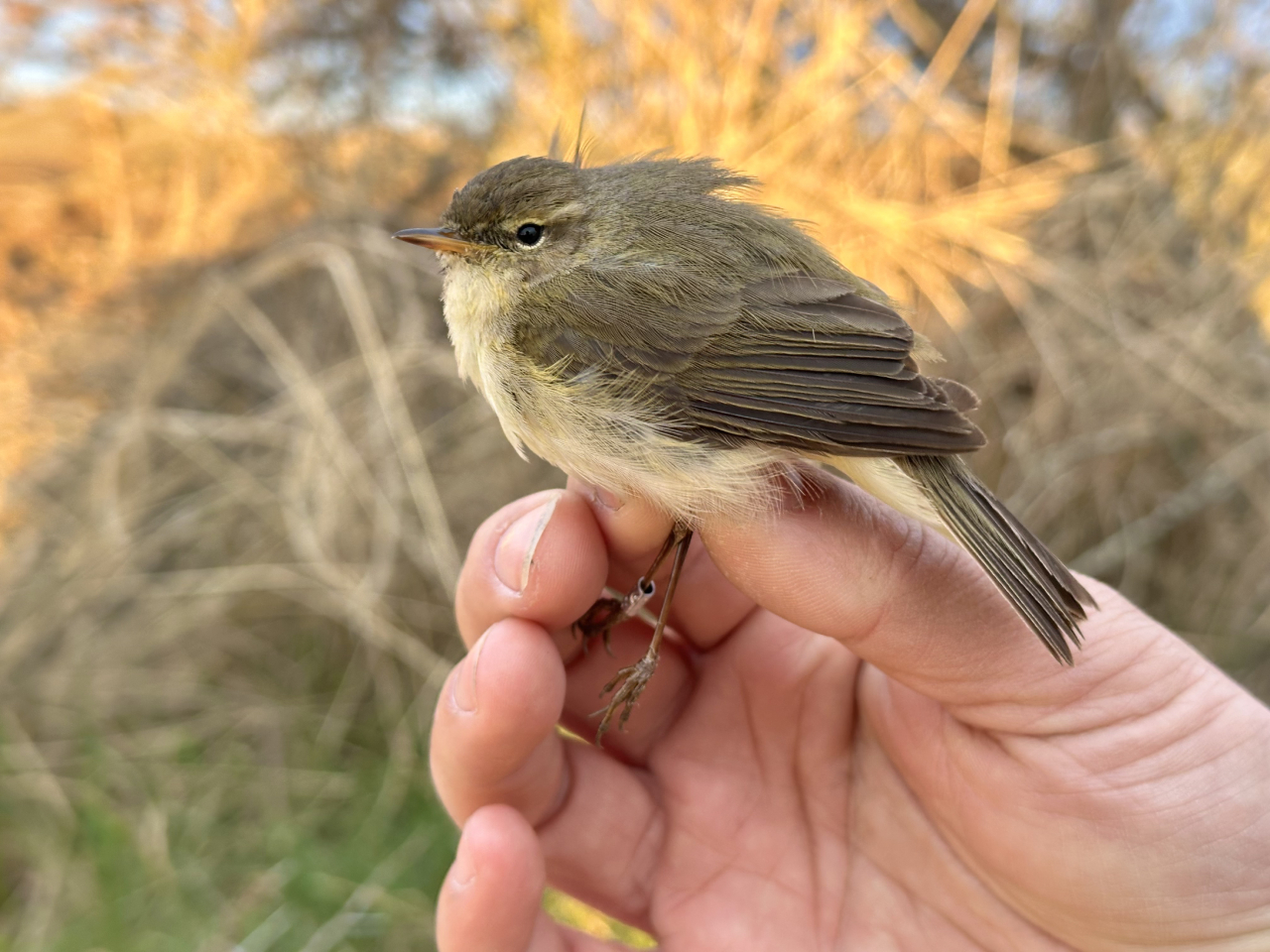
One of the three Chiffchaffs (Gransanger) we've ringed today. This one we found interesting because of its rather pale legs.
But we did have a really good highlight nevertheless: One of the two Black-winged Kites (Blå Glente) that arrived in the area yesterday turned up pretty close to Kabeltromlen and was spotted first by a very young and keen birder. For a while we had the great opportunity to observe the bird gliding and hovering as it was looking for prey in the heathlands and dunes. At 08:30 we had to close all nets earlier than usual since the winds had increased.
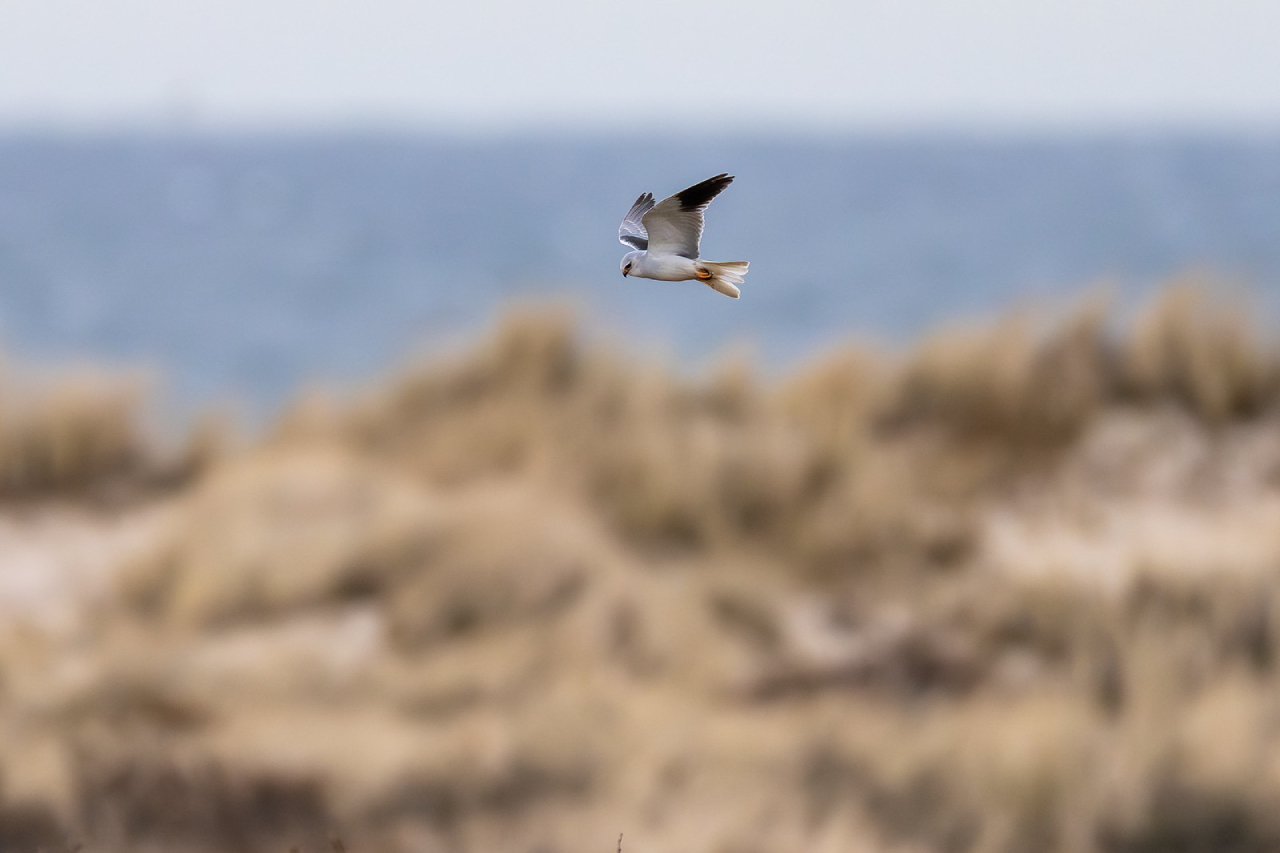
Black-winged Kite (Blå Glente). Photo by Erik Christophersen.
János, Dylan, Saxe, Anne and Alvin were observing and counting from Grenen today, where the cold northerlies blew straight into their faces. Although they didn’t have that many birds either and only very few passerines moved because of the weather conditions, there were some nice sightings, and especially Anne enjoyed watching the seabird migration (and the sea by its self). For example they had several Fulmars (Mallemuk), the first Whimbrel (Småspove) of the spring, one Great Skua (Storkjove) and a group of White-beaked Dolphins (Hvidnæse) very close.
After coming home again, we all needed some rest, many of us haven’t had a nap in days. Since I wanted to do some data entry first, I was the last of us to go for a nap, from which I was woken up by Simon an hour later, who wanted to give us a session about skull ossification in birds. This refers to the development of the skull in juvenile birds, which can be a way of ageing them mainly in autumn. We’ve also had the opportunity to take a look at some examples in the lab, which we all found highly interesting. With the feeling of having learned a lot we then opened the moth trap just to discover another highlight of the day: A Conformist (Rødelugle, Lithophane furcifera), a small, bark-coloured moth of which we couldn’t find any former records for Skagen.
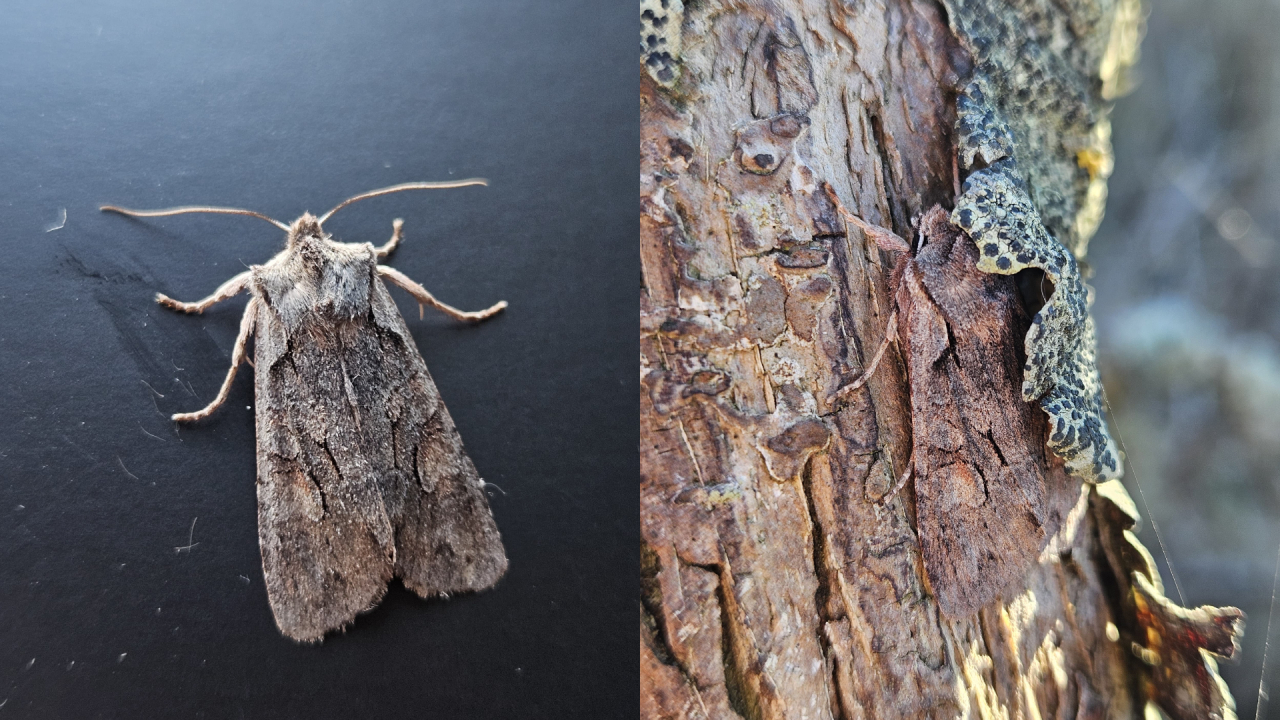
Lithophane furcifera in neutral and natural environment.
Anne and Bjarne spent their afternoon mainly with biking around the area and enjoying the landscape on their last day here. They also went out to the tip at Grenen, where Anne met a former colleague by a funny coincidence. At the station after our evening meeting, we celebrated the great sightings yesterday with some champaign brought by Simon. Skål! To many more amazing observations! Then Anne and Bjarne said goodbye to us, they’ll be leaving tomorrow morning. We hope they had a pleasant and interesting stay rich of fascinating birds!
Highlights from the observations:
Blå Glente - 1
Fulmar (Mallemuk) - 5
Whimbrel (Småspove) - 1
Great Skua (Storkjove) - 1
White-beaked Dolphins (Hvidnæse) - 3
Blå Glente - 1
Fulmar (Mallemuk) - 5
Whimbrel (Småspove) - 1
Great Skua (Storkjove) - 1
White-beaked Dolphins (Hvidnæse) - 3
Ringing (Kabeltromlen)
Gransanger - 3
Gærdesmutte - 1
Total: 4
Gransanger - 3
Gærdesmutte - 1
Total: 4
People: Alvin Johansson, János Schadl, Alix Bortolussi, Julian Helbig, Dylan Daunt, Simon S. Christiansen, Saxe Lind Christiansen, Anne & Bjarne
Raptor Chaos
fredag 24. april 2026
Shortly after arriving at Kabeltromlen in the morning, János heard a Spotted Crake (Plettet Rørvagtel), which is the first observation in Skagen this year. Dylan and Saxe, being awakened by János's zello call, immediately got out of bed and jumped on their bikes to go hear it, but unfortunately they were too late.
The ringing was very calm despite all 26 nets being open, and in five hours, five birds were caught. Although slow, it was still enjoyable with some nice sun and with no wind.
In the afternoon some of us went out to prepare the nets for the “constant effort site” we will be ringing at in a week and onwards until September.
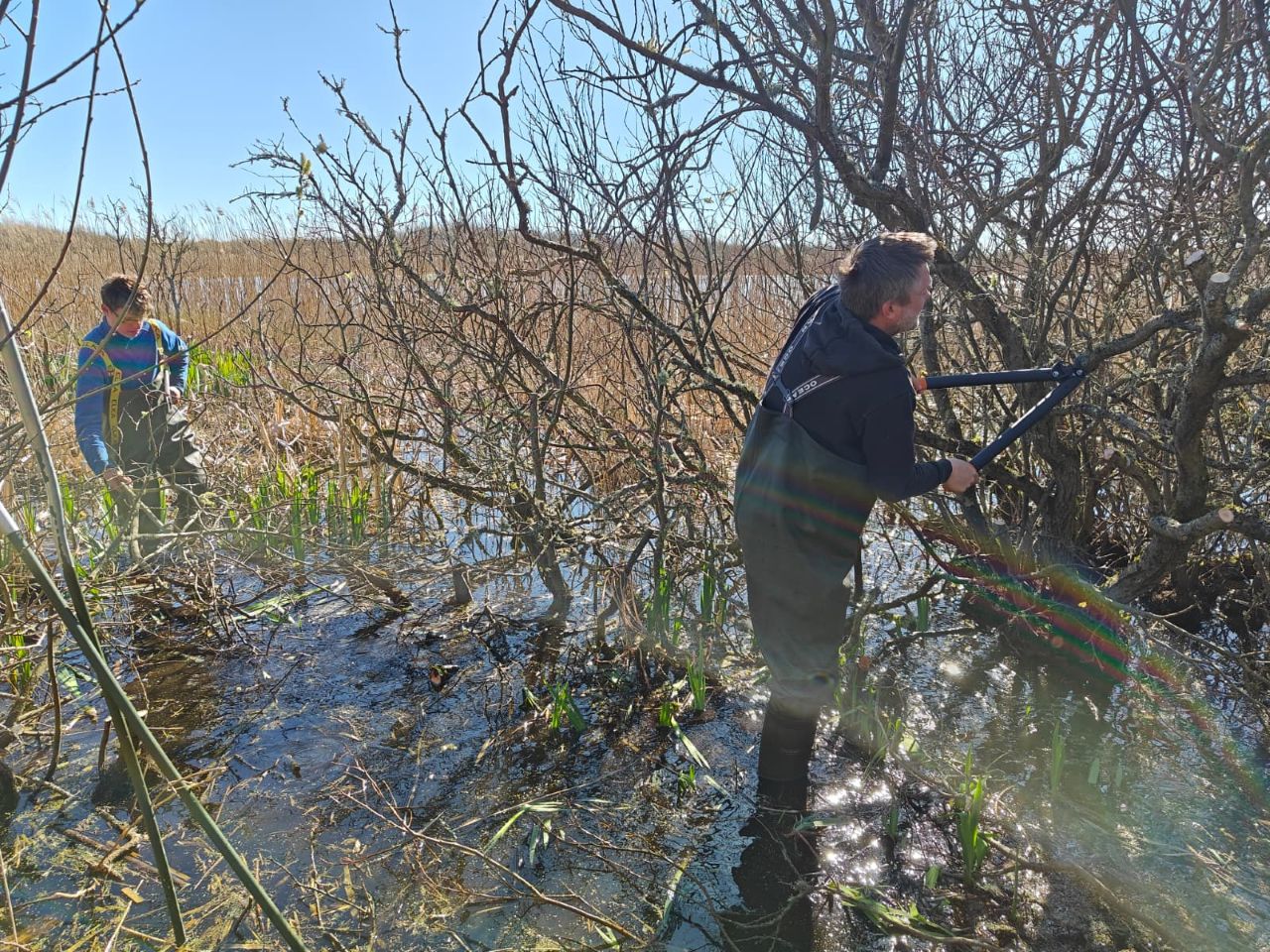 The creation of a new netline
Immediately after coming back, the Eastern Imperial Eagle (Kejserørn) was spotted further south as well as a Black-winged Kite (Blå Glente).
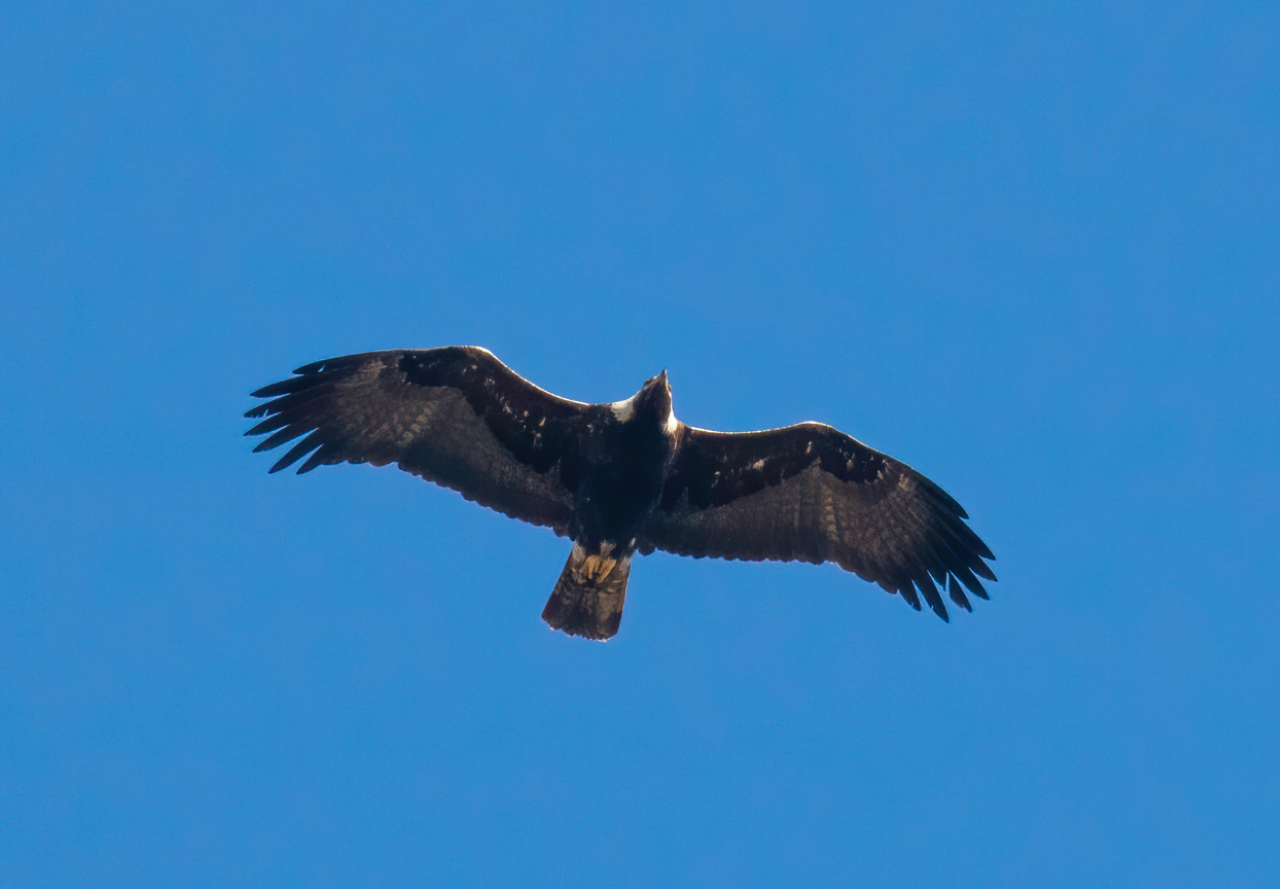 The Eastern Imperial Eagle (Kejserørn) spotted in Skagen (Photo by Egon Østergaard)
Saxe, János and Dylan biked to try and see them. To their disappointment, the eagle had seemingly flown further south, not to be seen by us from the station, and the kite must have passed overhead while they were biking.
After some further looking thought, they saw the Glaucus Gull (Gråmåge) flying very distantly. Then, János spotted the Black-winged Kite (Blå Glente) at Grenen. After having gotten some pretty good views of the bird, Simon found a second Black-winged Kite (Blå Glente) in the same area! And they could later be spotted as close as a meter beside each other for the rest of the evening. For me and Julian, it was our first time seeing this species, and to see two at the same time was very cool!
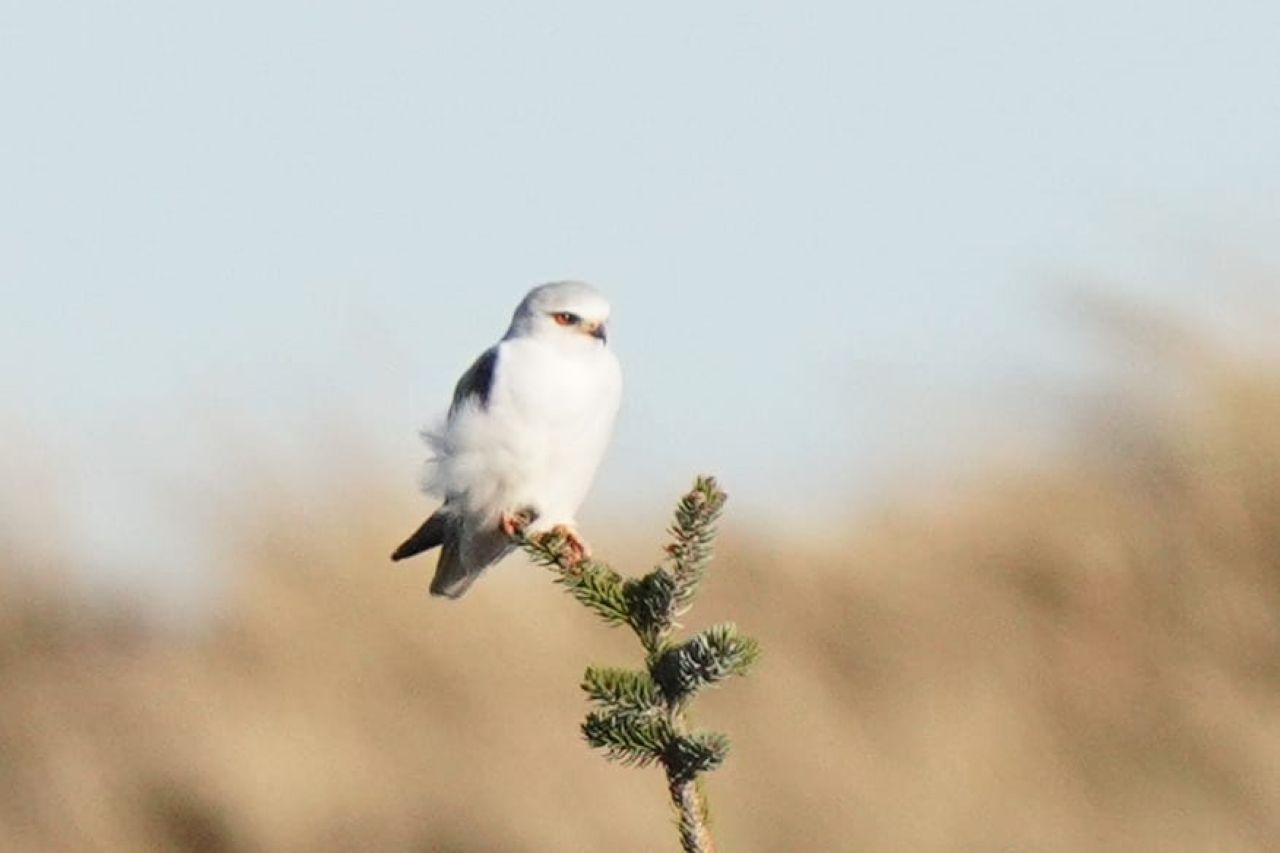 Black-winged Kite (Blå Glente) resting in a pine at Grenen
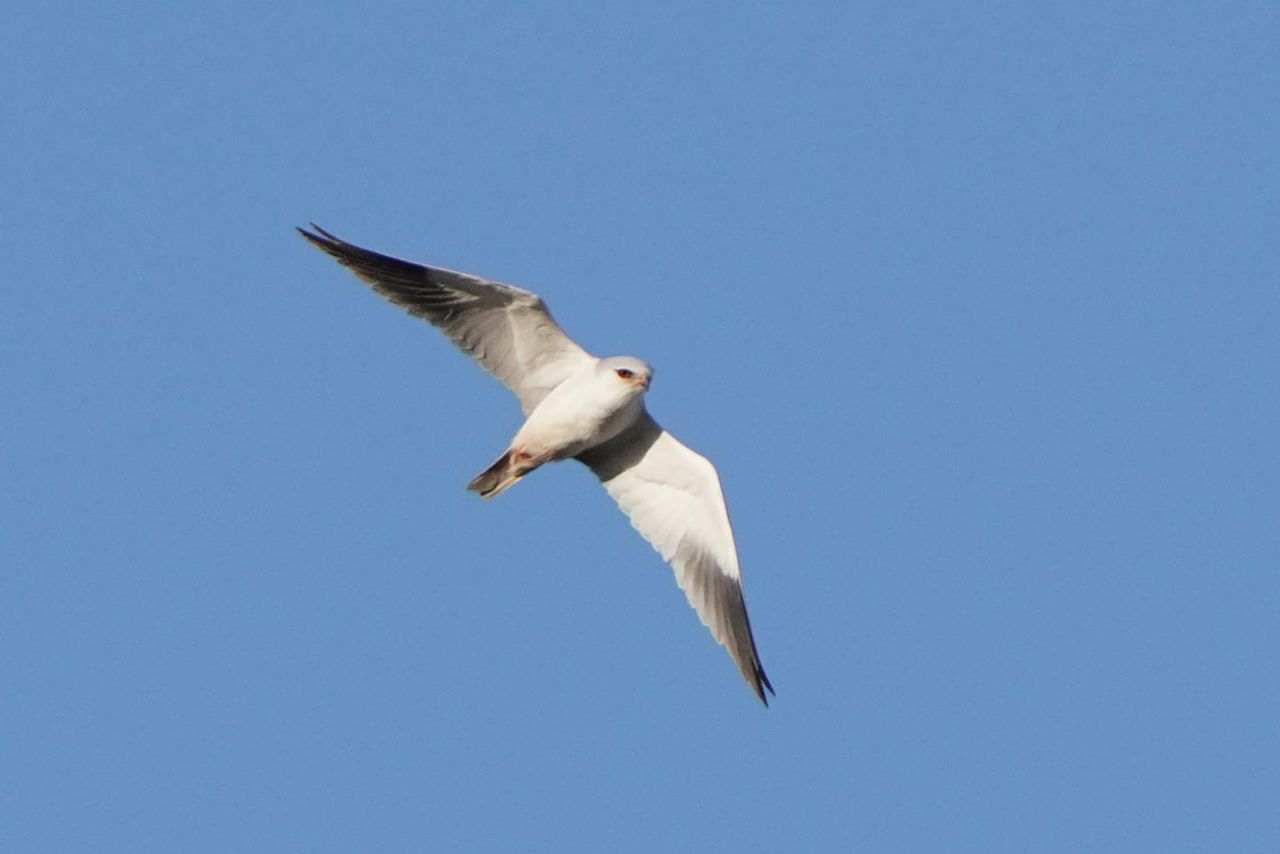 Black-winged Kite (Blå Glente) flying at Grenen
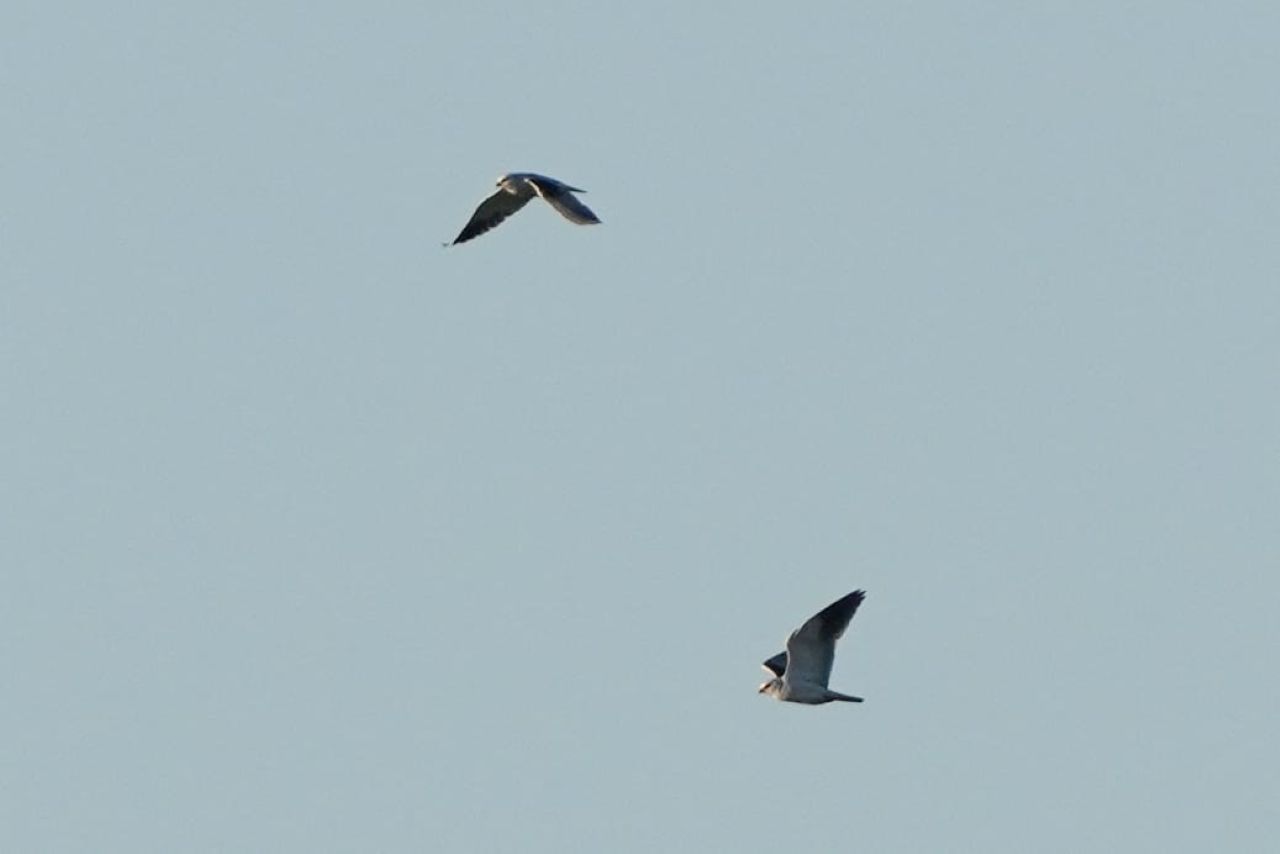 The two Black-winged Kite (Blå Glente) flying together at Grenen
Highlights from the observations
Eastern Imperial Eagle (Kejserørn) - 1
Black-winged Kite (Blå Glente) - 2
Glaucus Gull (Gråmåge) - 1
Great Grey Shrike (Stor Tornskade) - 1
Ringing (Kabeltromlen)
Gransanger - 1
Jernspurv - 1
Blåmejse - 1
Grønsisken - 1
Bogfinke - 1
Total: 5
Gransanger - 1
Jernspurv - 1
Blåmejse - 1
Grønsisken - 1
Bogfinke - 1
Total: 5
Ringing (Jennes Sø)
Gærdesmutte - 1
Musvit - 2
Total: 3
Gærdesmutte - 1
Musvit - 2
Total: 3
Ringing (Nordstjernevej)
Bogfinke - 3
Grønsisken - 2
Gransanger - 1
Total: 6
Bogfinke - 3
Grønsisken - 2
Gransanger - 1
Total: 6
People: Alvin Johansson, János Schadl, Alix Bortolussi, Julian Helbig, Dylan Daunt, Simon S. Christiansen, Saxe Lind Christiansen, Anne & Bjarne, Michael Ancher
Butterflies and moths
torsdag 23. april 2026
This morning started out at the ringing for Dylan and I. A calm morning like the past few days and we started opening nets as usual. When we came to the last net, Dylan shouted at me that he had seen a Green Sandpiper (Svaleklire) being chased by a Sparrowhawk (Spurvehøg) and that both birds where behind me in the net I had just opened! I immediately ran back to the net but the Sparrowhawk (Spurvehøg) escaped, and I could only manage to extract the Green Sandpiper (Svaleklire) which was left in the net. Unfortunately the bird got a little injured by the raptor and had to be released quickly, unringed. The release gave us hope for the little bird as it flew off really strong and even called a few times though.
Quite the stressful experience, but a learning one also. My first wader handling and a special situation of dealing with an injured uncommonly caught bird. A powerful start to the morning that Dylan and I took a little bit to recover from and to discuss afterwards.
Another highlight of the morning was the finding Simon made by taking a small walk around Kabeltromeln, a Lesser Spotted Woodpecker (Lille Flagspætte)! Very rare for the area, we had a chance to see it in flight and were really excited about it. Good spotting Simon!
The rest of the morning was filled with our usual visitors, a majority of Wrens (Gærdesmutte), Robins (Rødhals), or Willow warblers (Løvsanger) and Chiffchaffs (Gransanger).
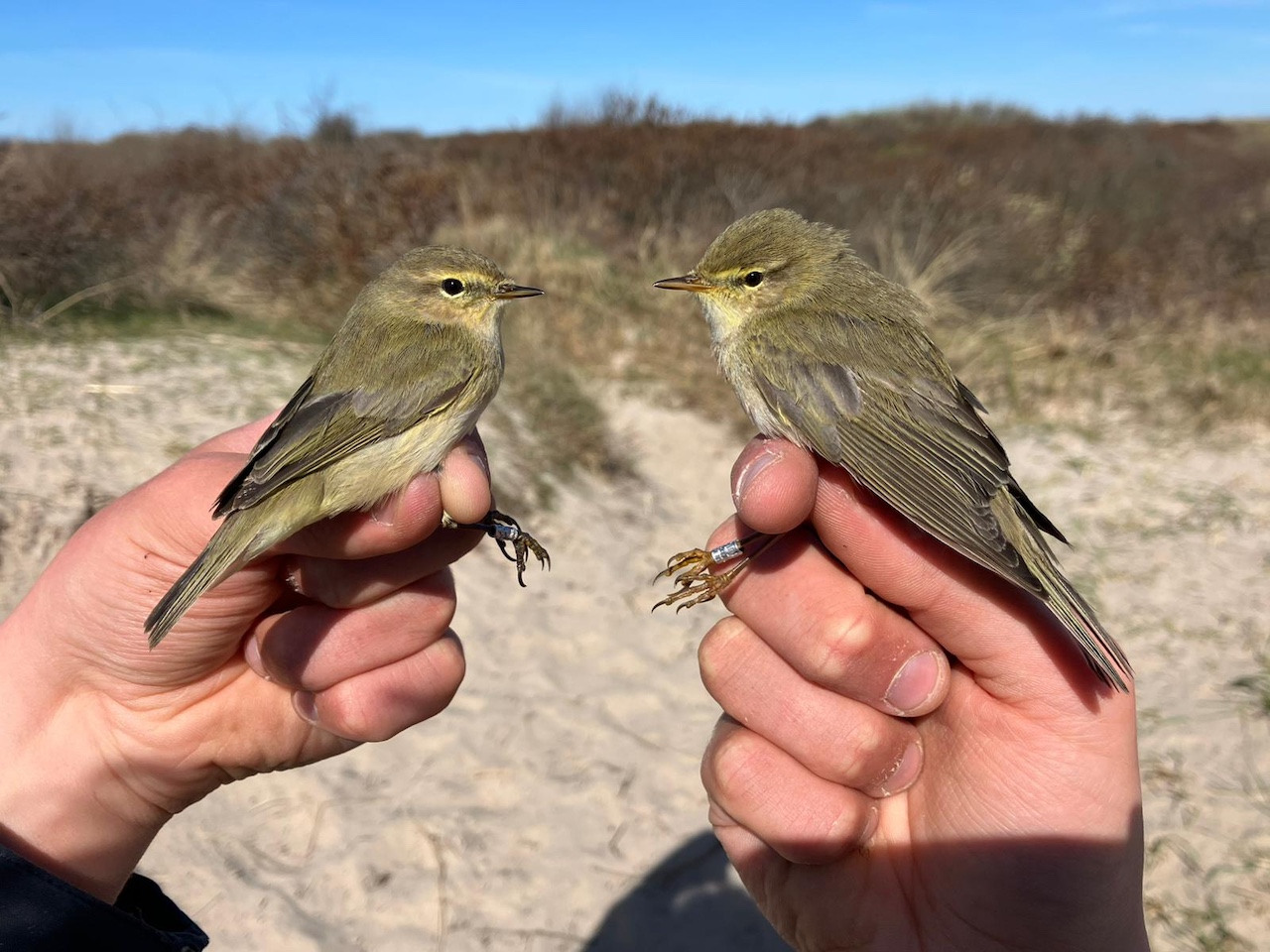 Chiffchaff (Gransanger) on the left and Willow Warbler (Løvsanger) on the right
For the observers, the morning was also a beautiful one and they had decided to count in a different spot we call « the pencil », which is Skagen’s West Lighthouse.
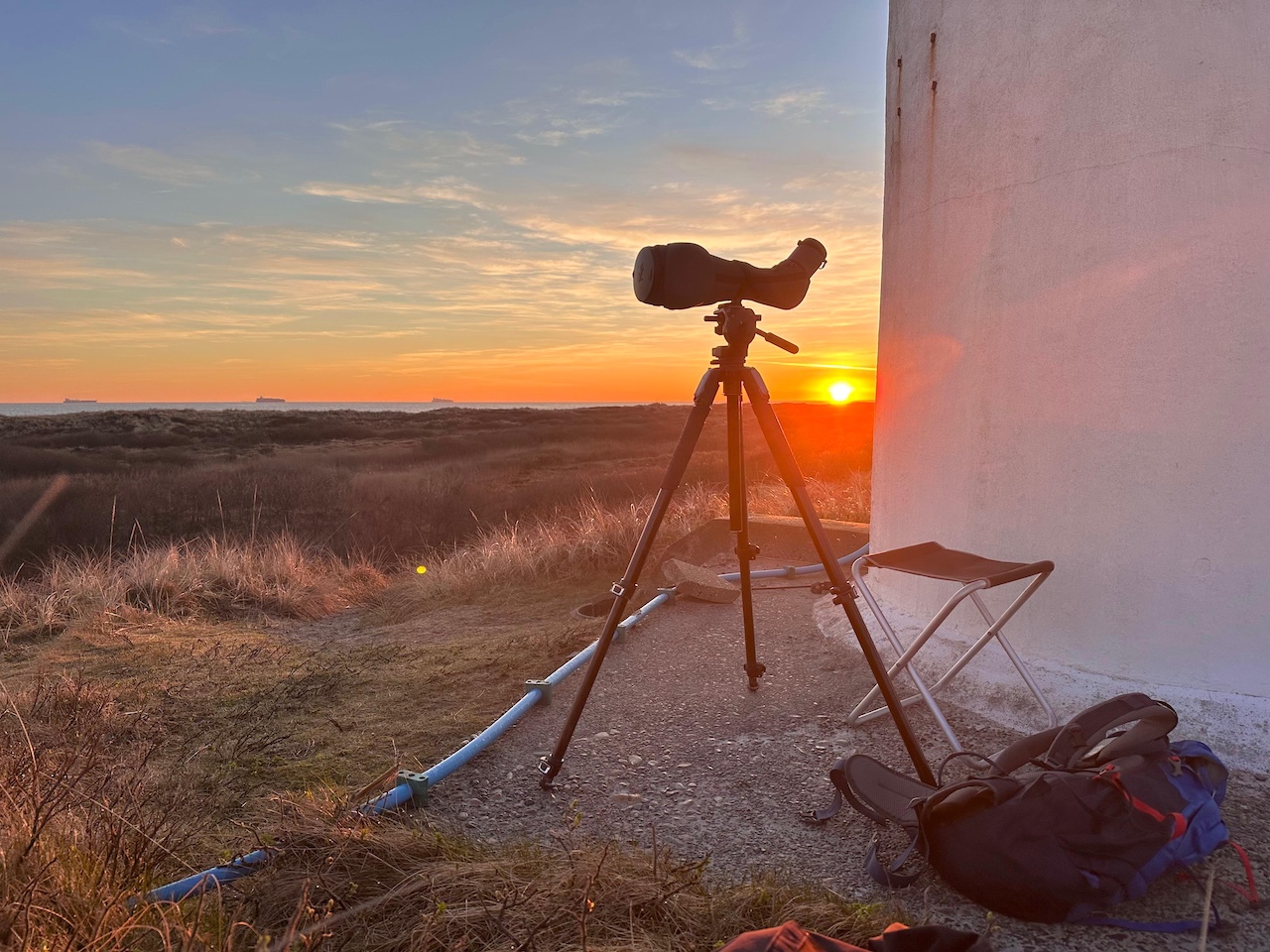 Migration spot
They had hopped to see a lot of Harriers there as it is a place where they usually fly lower and more frequently, but only saw one upon their arrival and none for the rest of the morning unfortunately.
The passerine migration was pretty good with some good numbers of Siskins (Grønsisken), Redpolls (Gråsisken) or even some Tree Pipits (Skovpiber).
Sea-wise, the migration was rather slow but that made it manageable and enjoyable for a single observer to tackle on their own, and Julian who was tasked with sea watching today could notice that the Guillemot (Lomvie) migration seems to be coming to an end with a total of 7 birds migrating over the 4h observation period. Some highlights of the sea would be some Long-tailed Ducks (Havlit), and 7 migrating Bar-Tailed Godwits (Lille kobbersneppe).
During the morning, the observer team was also lucky to spot a beautiful Camberwell Beauty (Sørgekåbe) butterfly, and Saxe managed to take some good pictures of it.
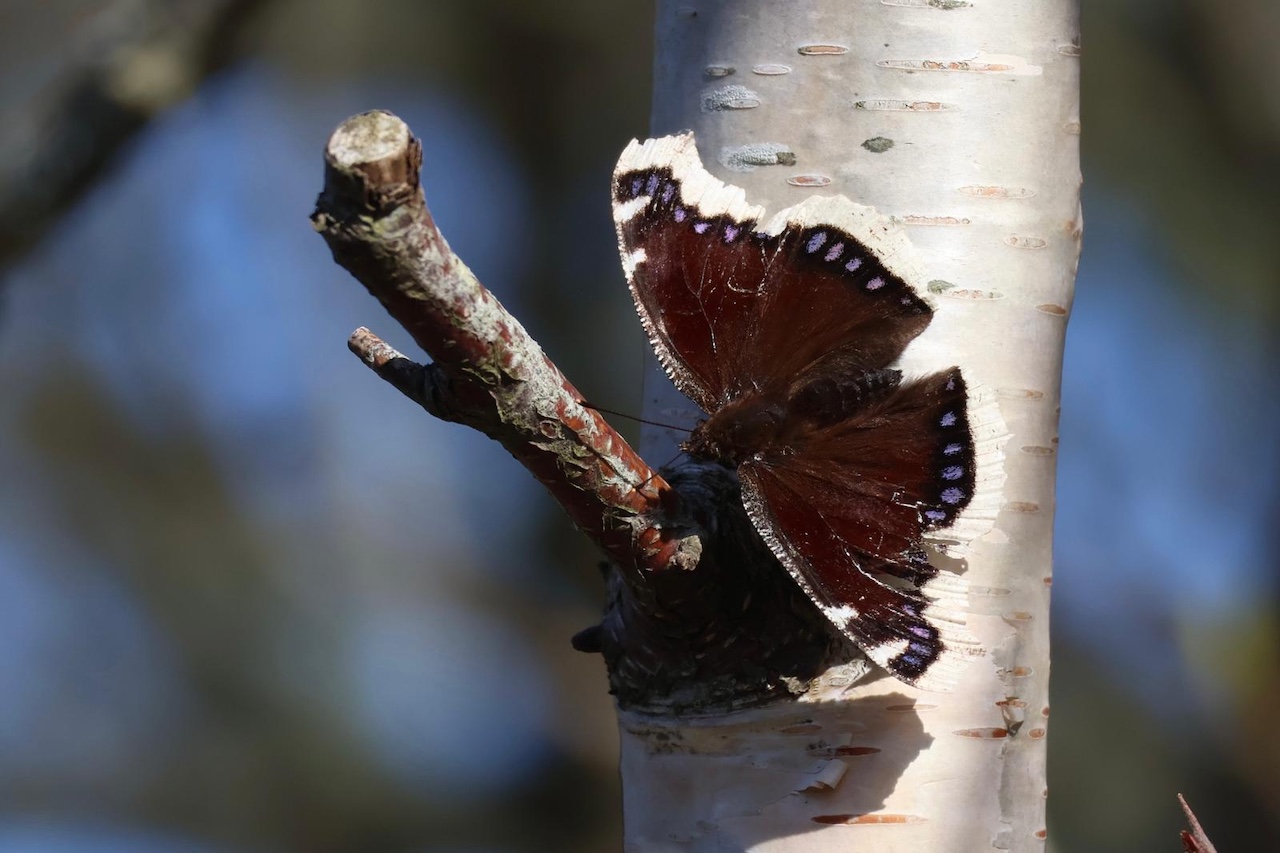 Camberwell Beauty (Sørgekåbe)
After everyone got back from our morning activities, we could have a look at our moth trap which was set up during the night. We were pleasantly surprised by a beautiful female Emperor Moth (Natpåfugleøje)! Our biggest catch so far, and everyone was very happy to see the beautiful specimen.
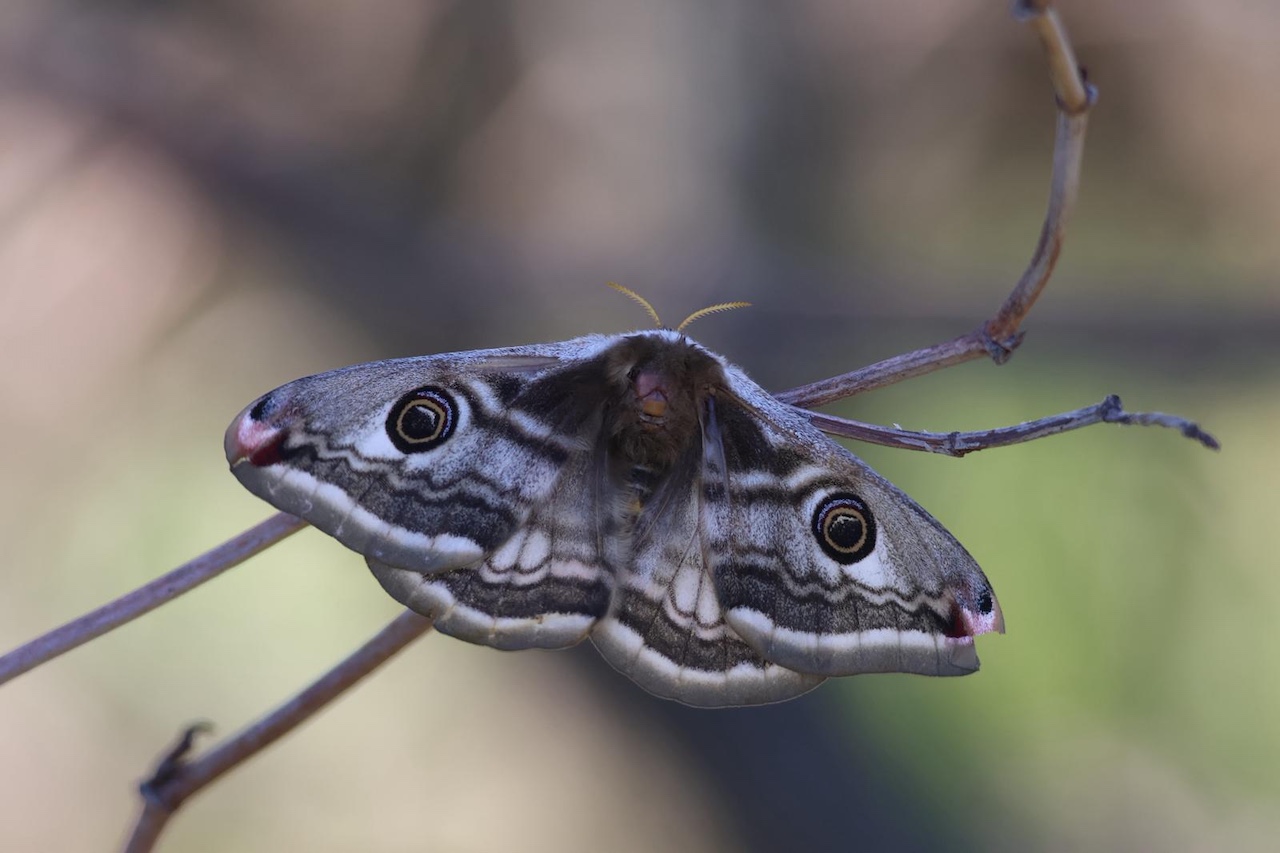 Female Emperor Moth (Natpåfugleøje)
With each days passing we manage to trap more and more moths, of varying species, which makes us look forward to the continuing season.
Highlights of today:
Lesser Spotted Woodpecker (Lille Flagspætte) - 1
Green Sandpiper (Svaleklire) - 1
Bar-Tailed Godwits (Lille kobbersneppe) - 7
Emperor Moth female (Natpåfugleøje) - 1
Camberwell Beauty (Sørgekåbe) - 1
Ringing Kabeltromlen
Gærdesmutte - 9
Rødhals - 5
Løvsanger - 2
Rørspurv - 1
Gransanger - 3
Total: 20
Ringing Nordstjernevej
Dompap - 2
Rødhals - 1
Jernspurv - 1
Bogfinke - 4
Gransanger - 1
Total: 9
Link to today’s observations in DOFbasen from observers in the area
Summary of today's raptor migration in DOFbasen
People at the station: Alvin Johansson, János Schadl, Alix Bortolussi, Julian Helbig, Dylan Daunt, Simon S. Christiansen, Saxe Lind Christiansen, Anne & Bjarne, Michael Ancher.
Barbeque!
onsdag 22. april 2026
This morning was fairly quiet, but the weather was nice, so we were all out. Julian and János were at ringing this morning. They caught a few more birds than the previous days with some species like Willow Warbler (Løvsanger) and Blackcap (Munk). They also had some nice sightings outside the ringing like Waxwing (Silkehale), Black Kite (Sort Glente), two White Storks (Hvid Stork) and two Ospreys (Fiskeørn). In between rounds they also had lots of free time, so they got up to some more silly activities!
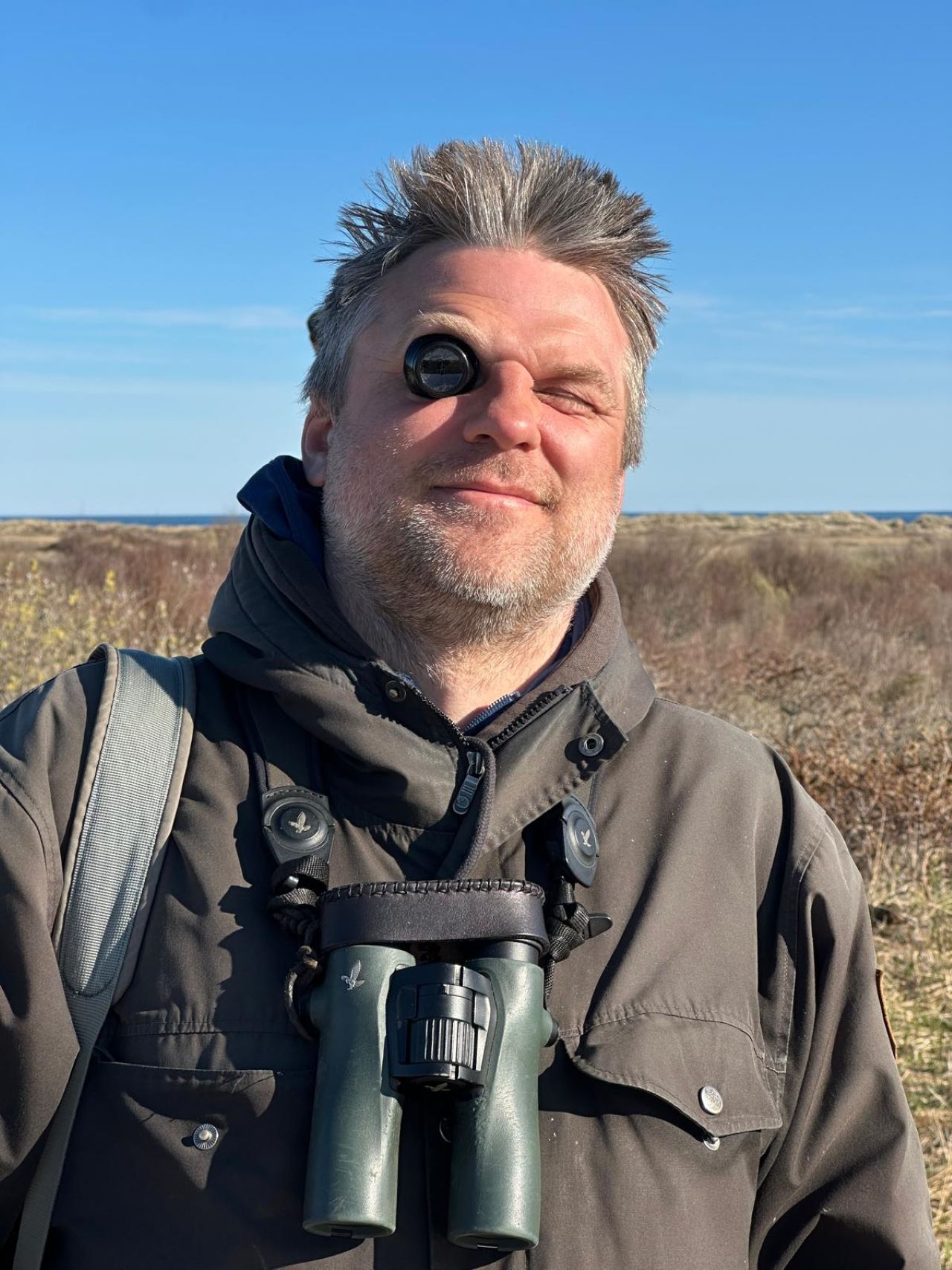
Mad-eye Simon!
The rest of us were at the migration. Today were at a place called Worlds End 1 which is slightly further than the usual place that we sit at. This helps us see more of the passerines that we can’t see from the tip. We had a quiet morning, but we still saw a few nice birds like Black-throated Diver (Sortstrubet Løm), Hen Harrier (Blå Kærhøg), Bearded Tit (Skægmejse) and Hawfinch (Kernebider). We also had some really nice views of this Green Hairstreak (Grøn Busksummerfugl). Another cool sighting was this Sparrowhawk (Spurvehøg) which had white spots on its back. The name for a bird like this is partially leucistic.
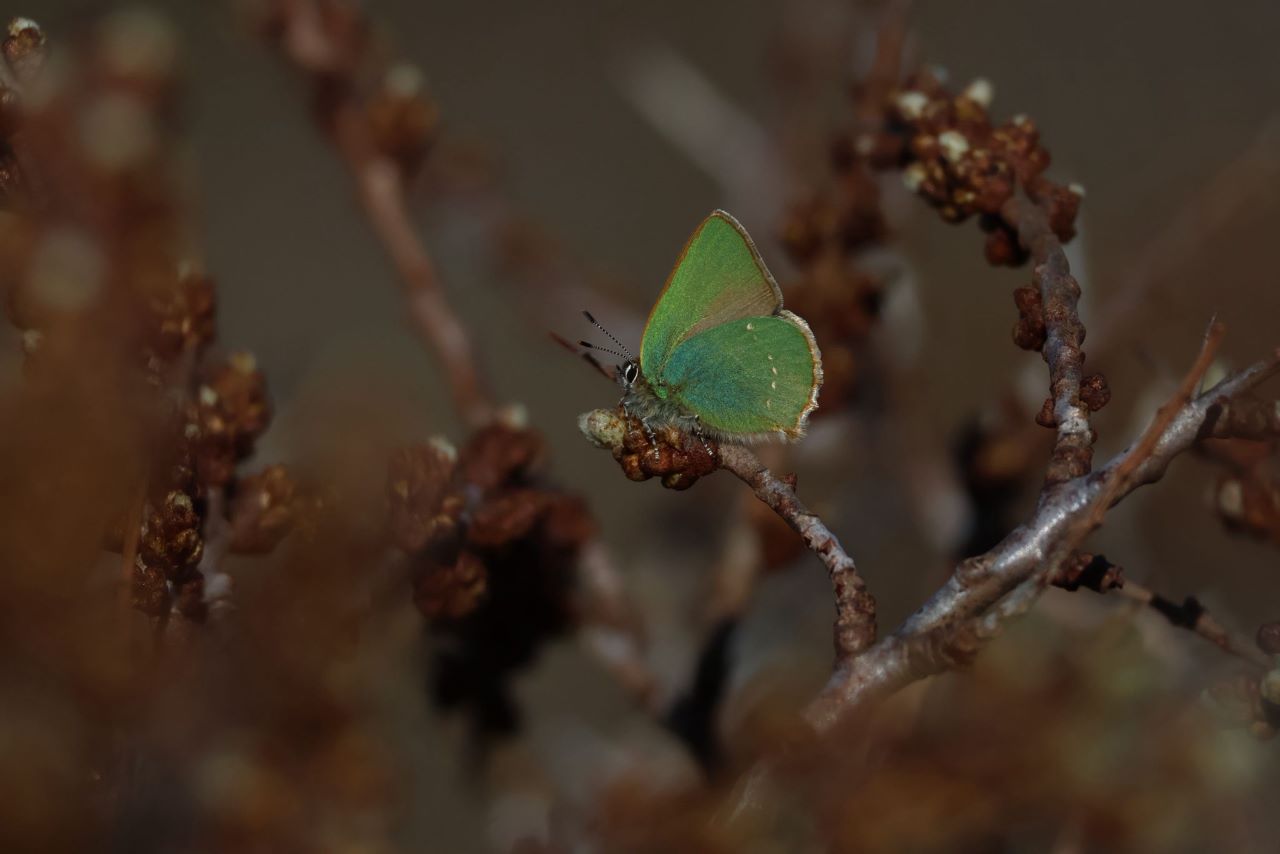
Green Hairstreak (Grøn Busksummerfugl)
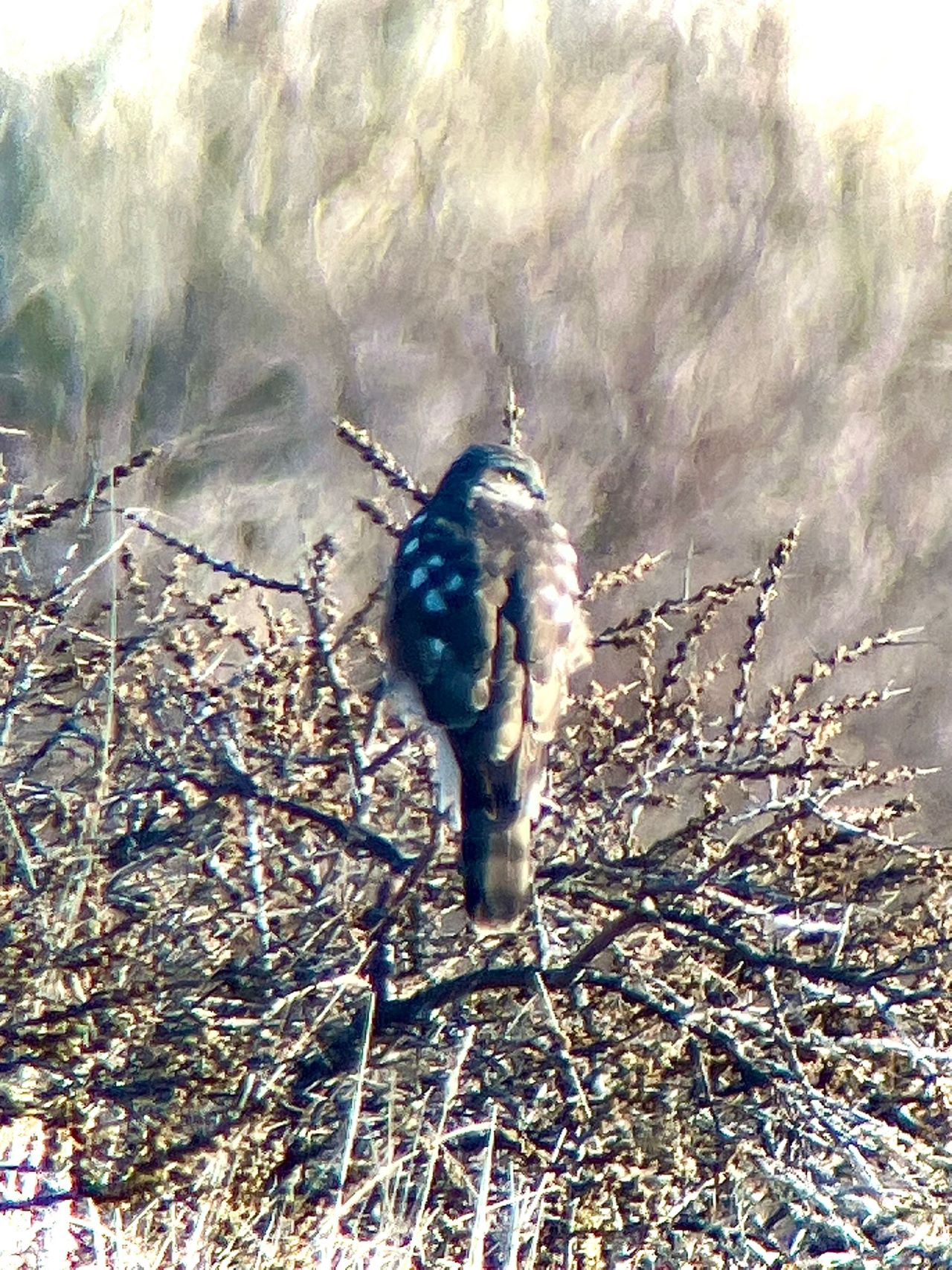
Partially leucistic Sparrowhawk (Spurvehøg)
Once we were all back, we had a look at the moths from last night. We had lots of moths including some Northern Drabs (Hedepletugle) and this beautiful Puss Moth (Hermelinskåbe).
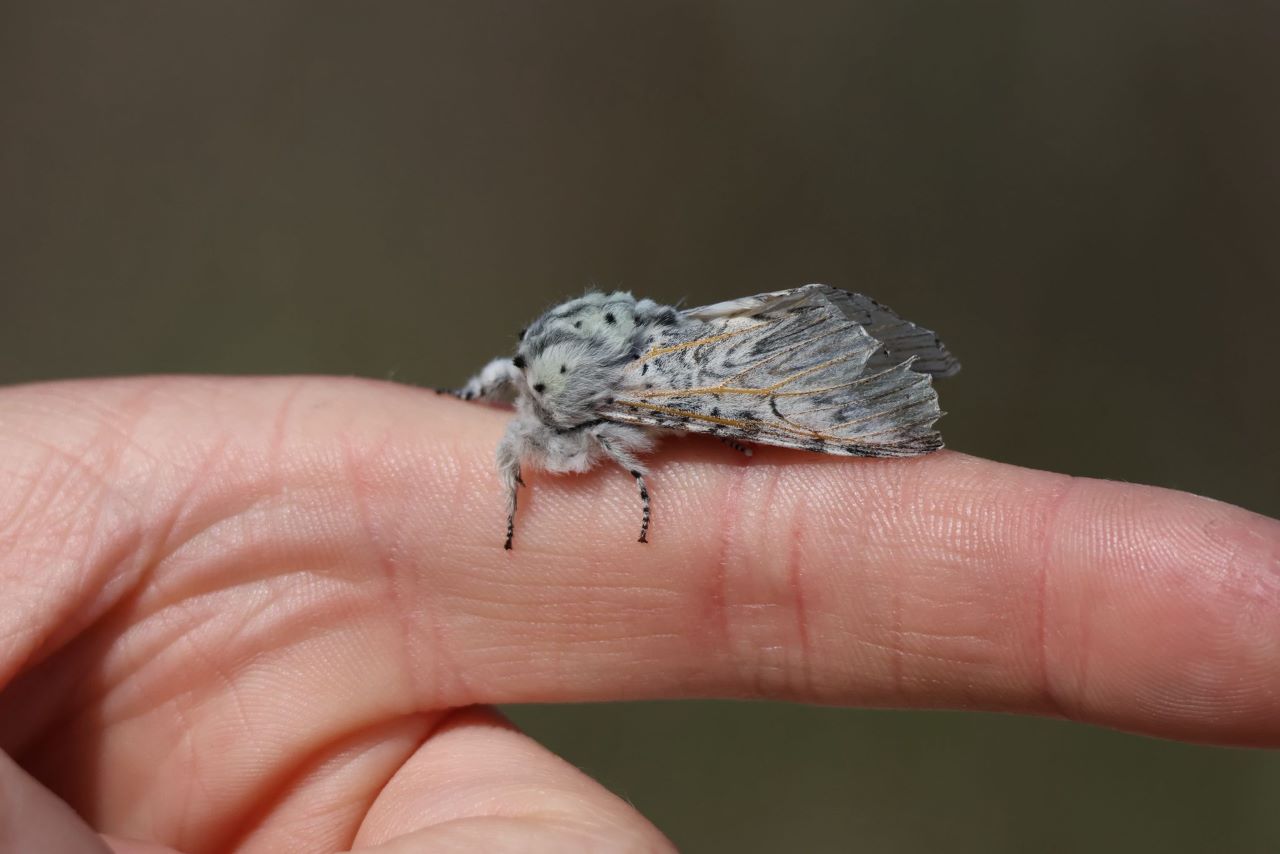
Puss Moth (Hermelinskåbe)
In the early afternoon Saxe and I went to Batteriskoven to look for some butterflies and early spring birds. We had no luck but we did get very close to a pair of Great Spotted Woodpeckers (Stor Flægspette) and we heard some Crested Tits (Topmejse). Simon also went out nd saw this rare beetle called a Golden-dimpled Ground Beetle (Dyndløber).
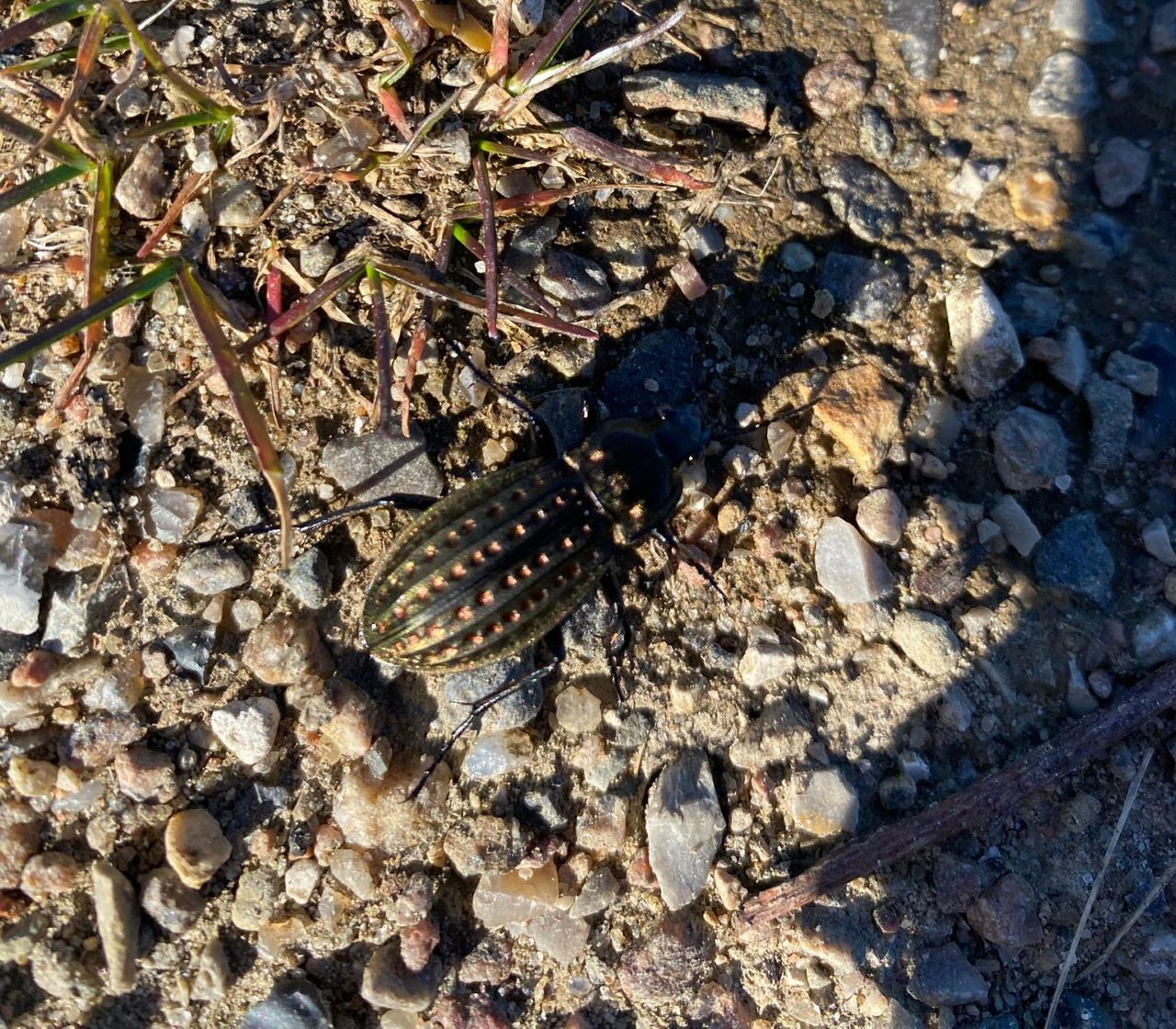
Golden-dimpled Ground Beetle (Dyndløber)
Tonight we had a barbeque which meant we had to prepare a lot of food for a few hours. János, Alix and I made lots of salads and food ready for the grill. Dinner was really nice and we hope to be able to have more like these in the future!
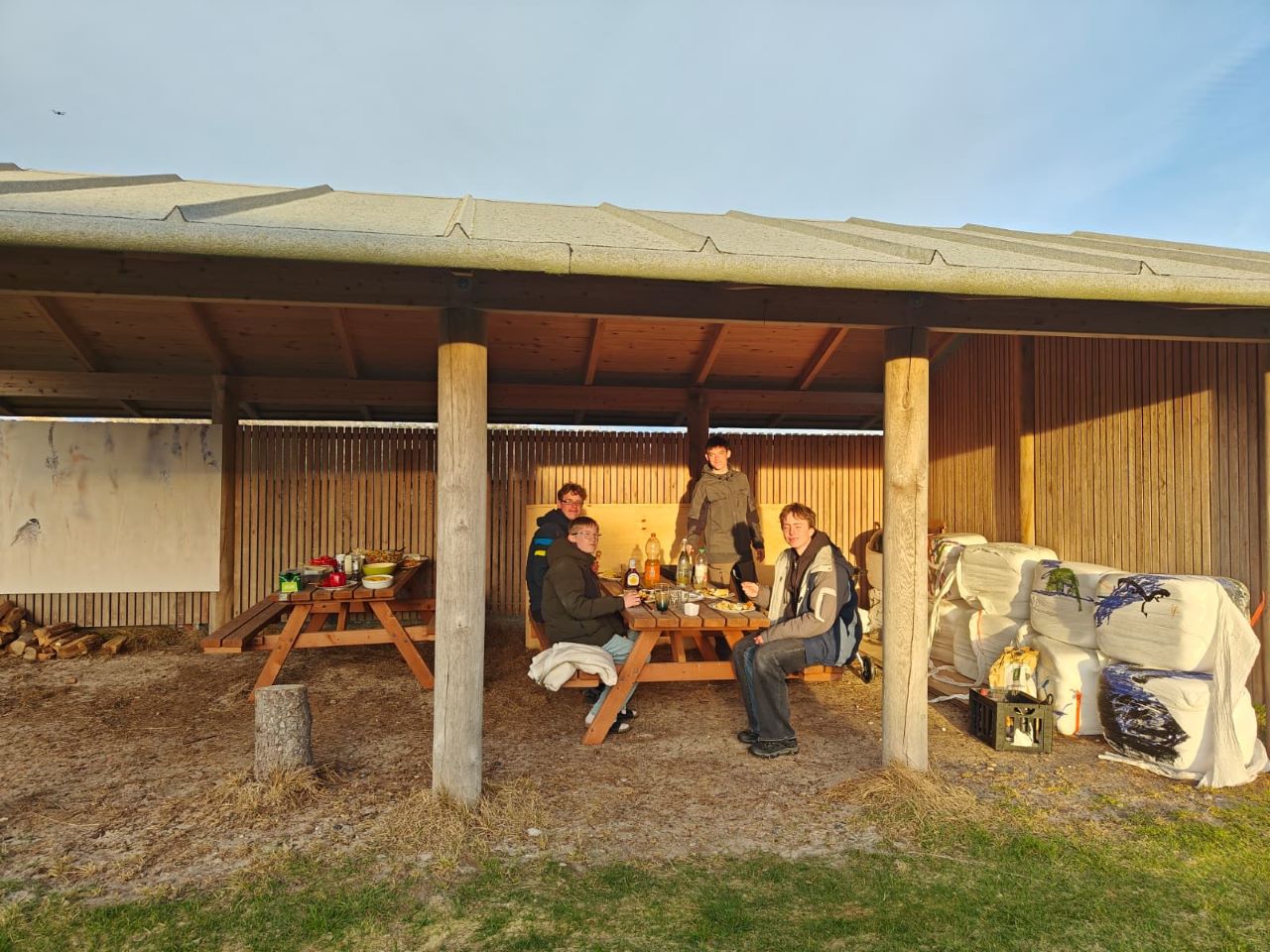
Barbeque night!
During our preparation Saxe went for a local walk a found something very special. A Wryneck (Vendehals)! He had amazing views and took some really nice photos. Once he was back, he then went out again with Julian to have a look for it. Fortunately, the bird had stayed put for them, so they were able to get more views and photos.
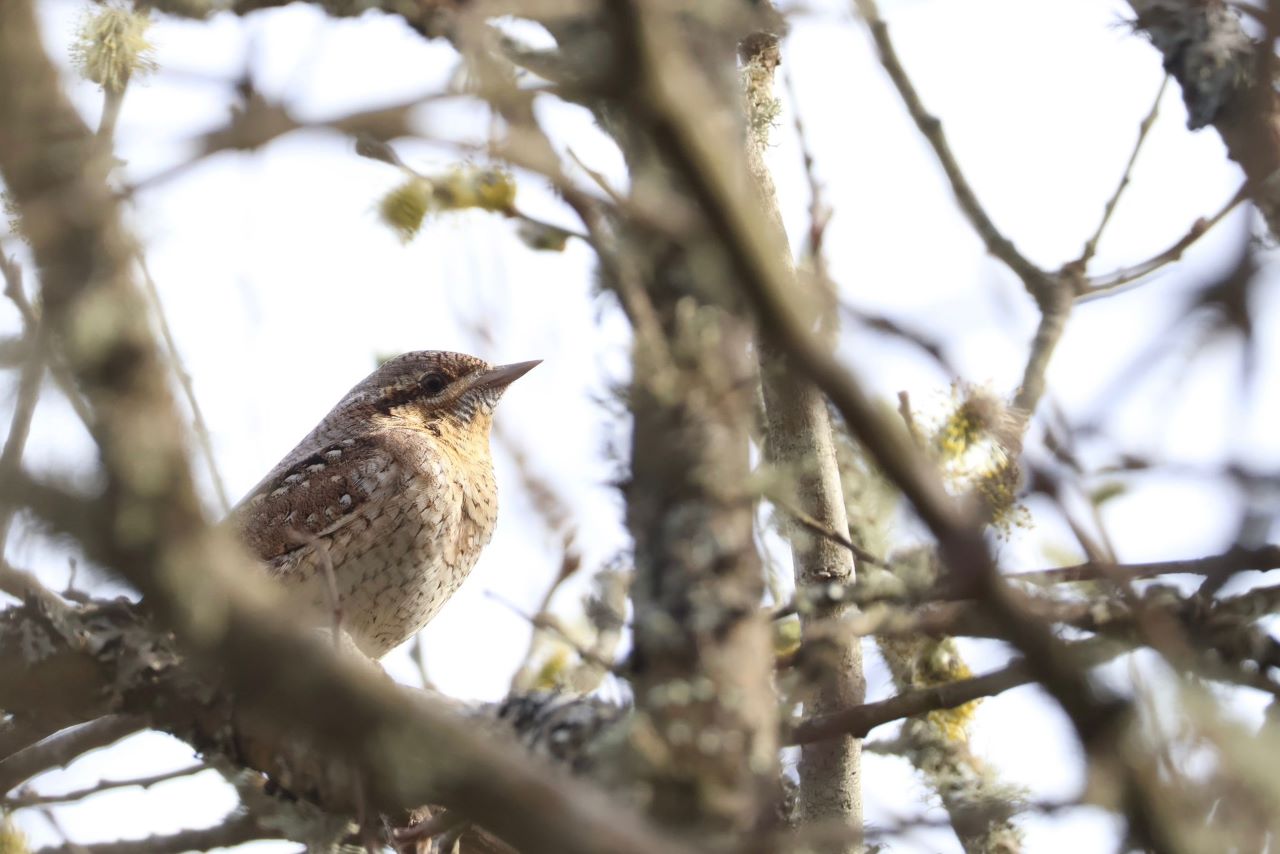
Wryneck (Vendehals)
Highlights from the observations:
White Stork (Hvid Stork) - 2
White Stork (Hvid Stork) - 2
Wryneck (Vendehals) - 1
Waxwing (Silkehale) - 1
Serin (Gulirisk) - 1
Ringing (Kabeltromlen)
Gransanger - 5
Gærdesmutte - 4
Rødhals - 3
Løvsanger - 1
Munk - 1
Total: 14
Gransanger - 5
Gærdesmutte - 4
Rødhals - 3
Løvsanger - 1
Munk - 1
Total: 14
People: Alvin Johansson, János Schadl, Alix Bortolussi, Julian Helbig, Dylan Daunt, Simon S. Christiansen, Saxe Lind Christiansen, Anne & Bjarne
Napping in the sun
tirsdag 21. april 2026
Today, Alvin, Dylan, Julian and I went ringing at Kabeltromlen, where we expected a nice, but not too busy day. Alix and János went to worlds end 1 for the standardized migration count.
The ringing started off slowly with very few birds, and it unfortunately continued this way, until Simon found a 3cy male Pallid Harrier (Steppehøg), that was his first one gave us some good views. It was my first time being through the whole ringing process, and even with few birds in the nets, I still had a great time!
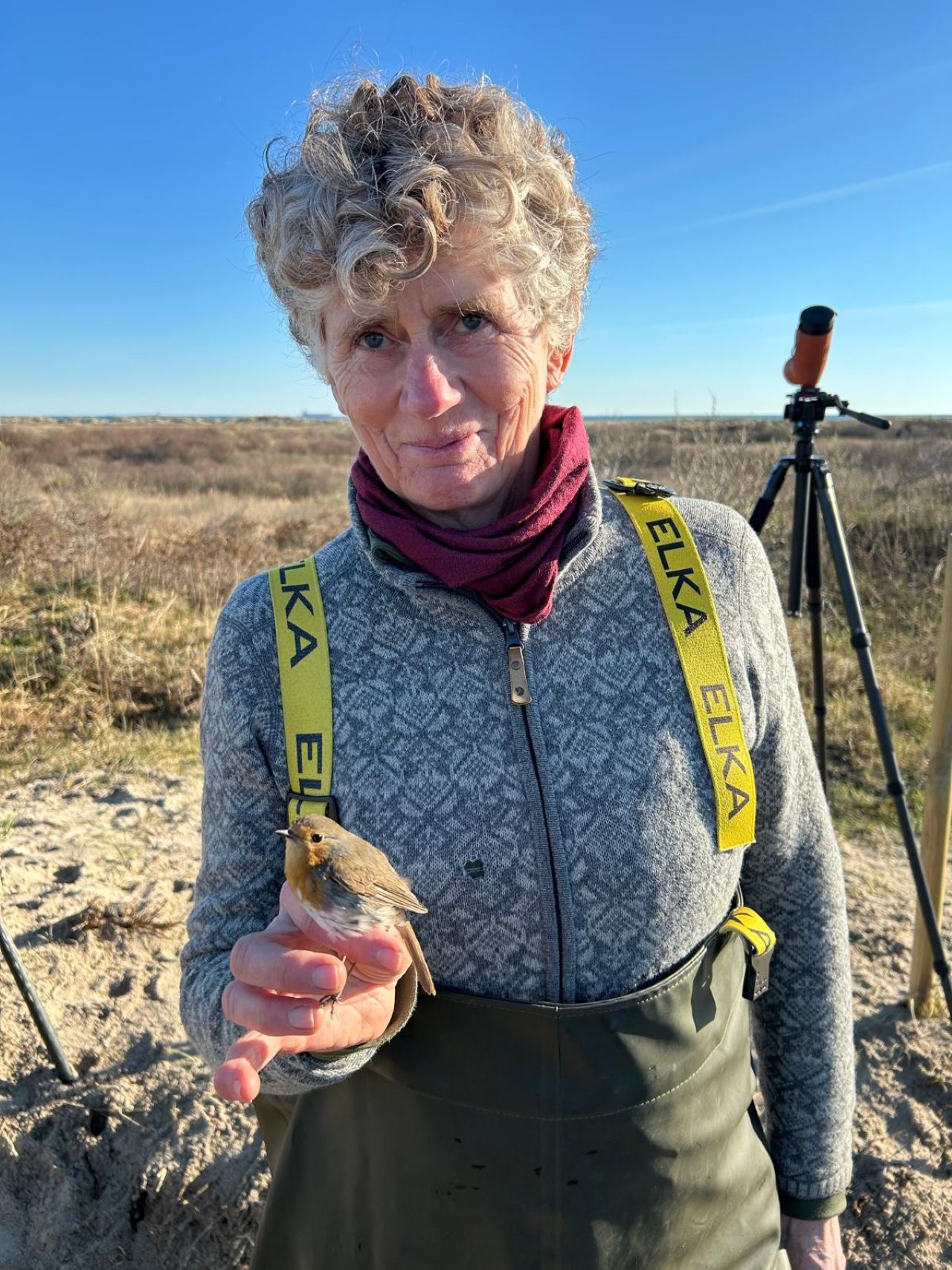
Anne ringing her sixth bird ever, a cute Robin (Rødhals)
Meanwhile János and Alix had some good birds at worlds end 1. In the first two hours they had lots of divers and constantly a small number of passerines flew over them. They had 9 Ring Ouzels (Ringdrossel) and 5 Red Crossbills (Lille Korsnæb). Hour 3 and 4 where very slow with almost no migration at all. Alvin joined them and helped them count between two ringing rounds.
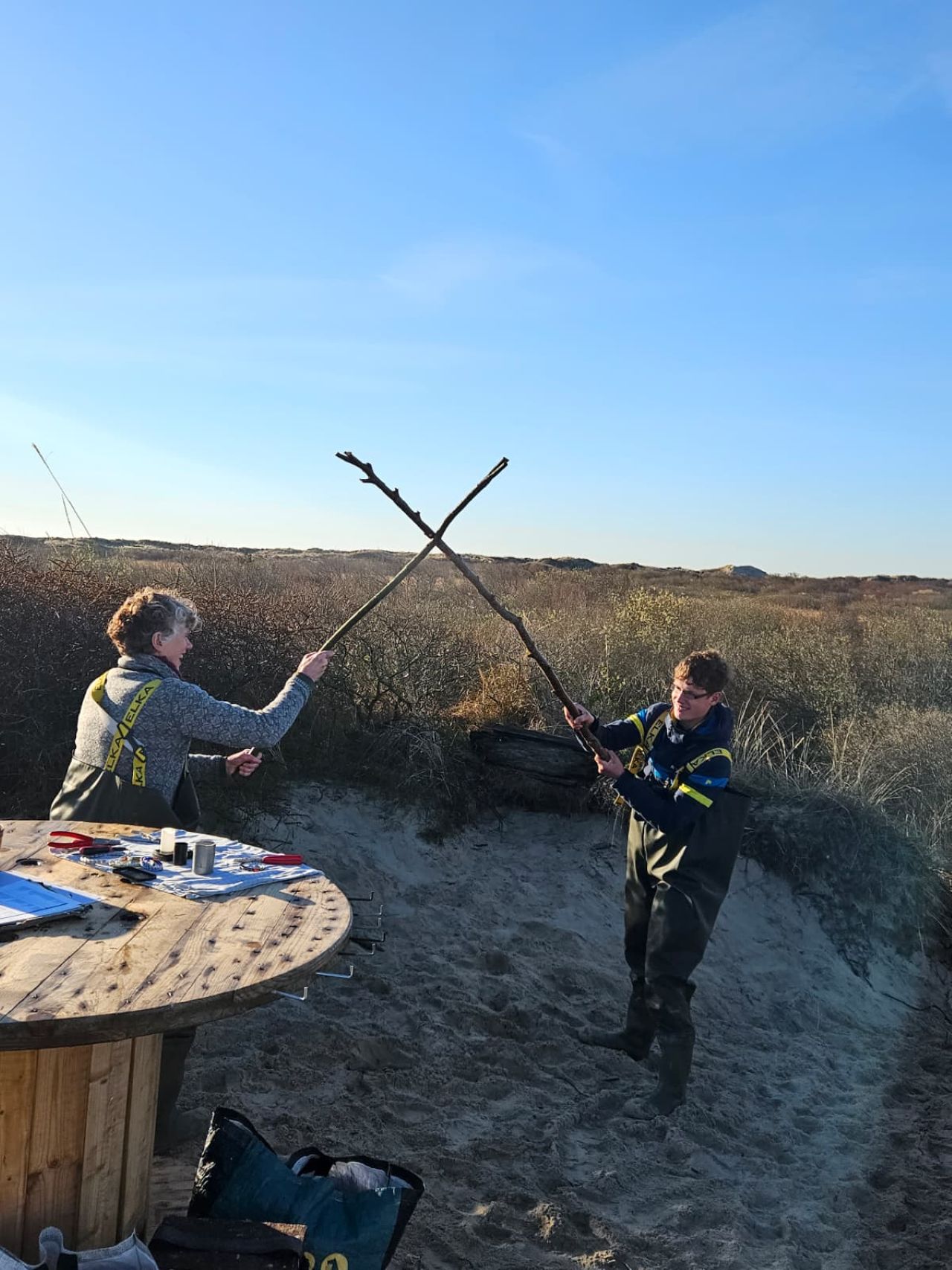
Tomfoolery at Kabeltromlen
When everyone got home, we checked the moth trap, where there were a lot of interesting moths.
The weak winds from NW and sunshine made it a great day for raptors, so János and I stood beside the lighthouse for a bit, where we saw a White-tailed Eagle (Havørn), an Osprey (Fiskeørn) and János saw a female Pallid harrier (Steppehøg).
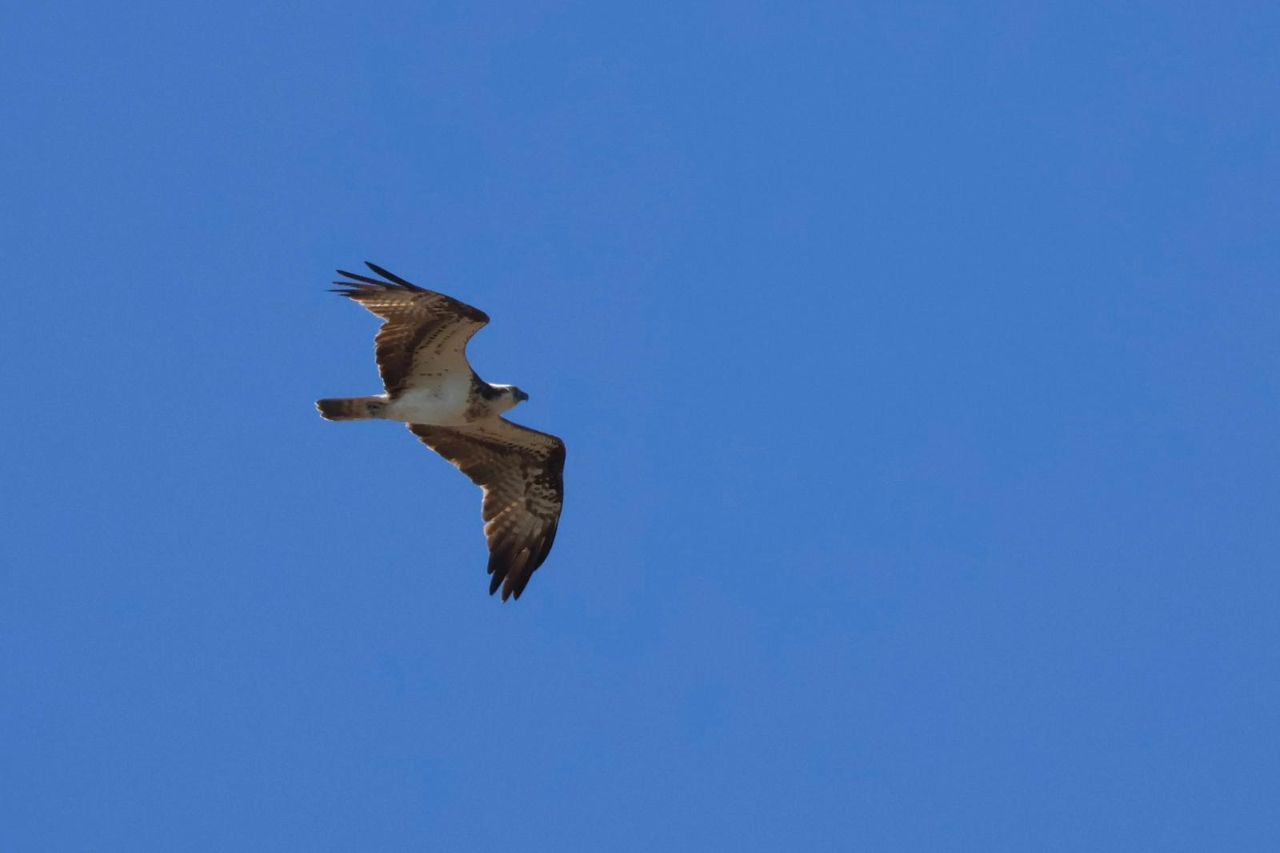
Migrating female Osprey (Fiskeørn)
Julian went to Batteriskoven where he saw 2 Crested Tits (Topmejse) before falling taking a nap there. Alix and Alvin went to the beach, and sunbathed. Alvin also went for a swim in the sea.
Dylan went out to look at some raptors from a hill on the heath, but he took a nap and woke up two hours later when most of the raptor migration had stopped.
I positioned myself on a nearby hill, where I saw 5 Red Kites (Rød Glente), 3 Kestrels (Tårnfalk), 4 Ospreys (Fiskeørn), 20 Sparrowhawks (Spurvehøg), 1 Merlin (Dværgfalk), 1 White-tailed Eagle (Havørn) and around 180 Buzzards (Musvåge). I also took a small nap in the beautiful weather.
Simon found a Wryneck (Vendehals) at Farmerstien and a Camberwells Beauty (Sørgekåbe) at Ellekrattet.
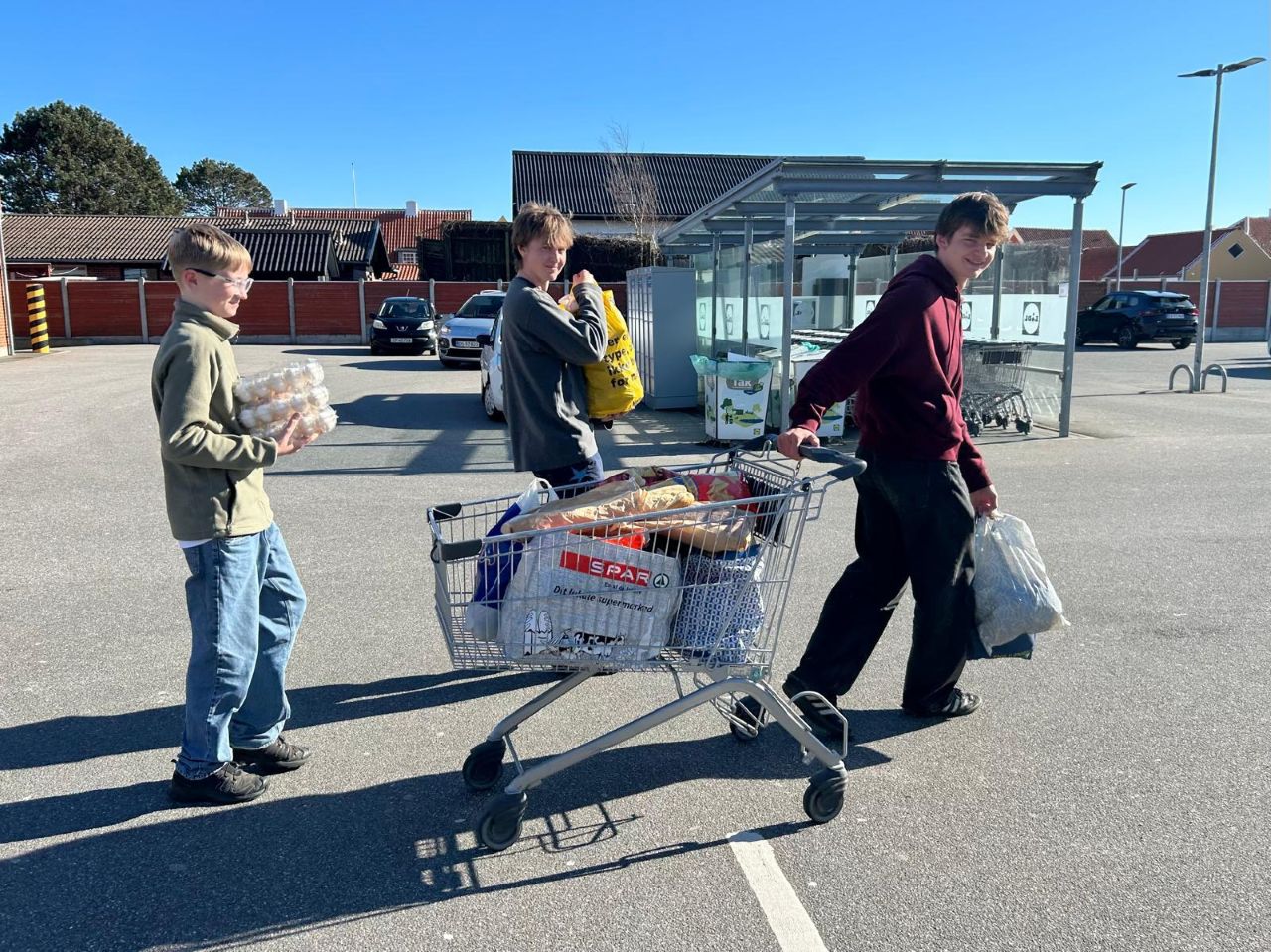
Huge shopping trip
Highlights of the day:
Pallid Harrier (Steppehøg) - 2
Wryneck (Vendehals) - 1
Camberwells Beauty (Sørgekåbe) - 1
Ring Ouzel (Ringdrossel) - 9
Ringing (Kabeltromlen)
Gransanger - 5
Gærdesmutte - 2
Jernspurv - 1
Rødhals - 3
Munk - 1
Total: 12
People: Alvin Johansson, János Schadl, Alix Bortolussi, Julian Helbig, Dylan Daunt, Simon S. Christiansen, Anne & Bjarne