
Her på Skagen Fuglestations blog bringes korte nyheder i dagbogsformat om hændelser på fuglestationen.
-
FORSIDE

- Blog
About great guests from the north and small primaries
lørdag 8. august 2026
The day started earlier than the days before for Simon and me. We headed to Skarvøen to do the CES ringing. Due to the wind, we immediately noticed less songbird activity in the bushes, but as we arrived, we got some great views of different larger white birds: 10 Great White Egrets (Sølvhejre), one Mute Swan (Knopsvane), and the now well-known 1K Spoonbill (Skestork) was still around. Different wader species on the muddy parts kept us looking the lake, while a young Goshawk (Duehøg) gave us another reason to keep an eye on the sky between the net rounds.
Actually, we caught more birds in total than we expected. We ringed 21 birds, which is still not much for a CES ringing day, but completely okay under these windy conditions. And you always get at least one interesting bird in the nets. Today, it was a Lesser Whitethroat (Gærdesanger) with a smaller P1 on the left wing. As we looked at the bird in more detail, we noticed that there were some kind of parasites on it. Later, Simon got a message via Instagram that these were mallophaga, which chew on feather keratin.
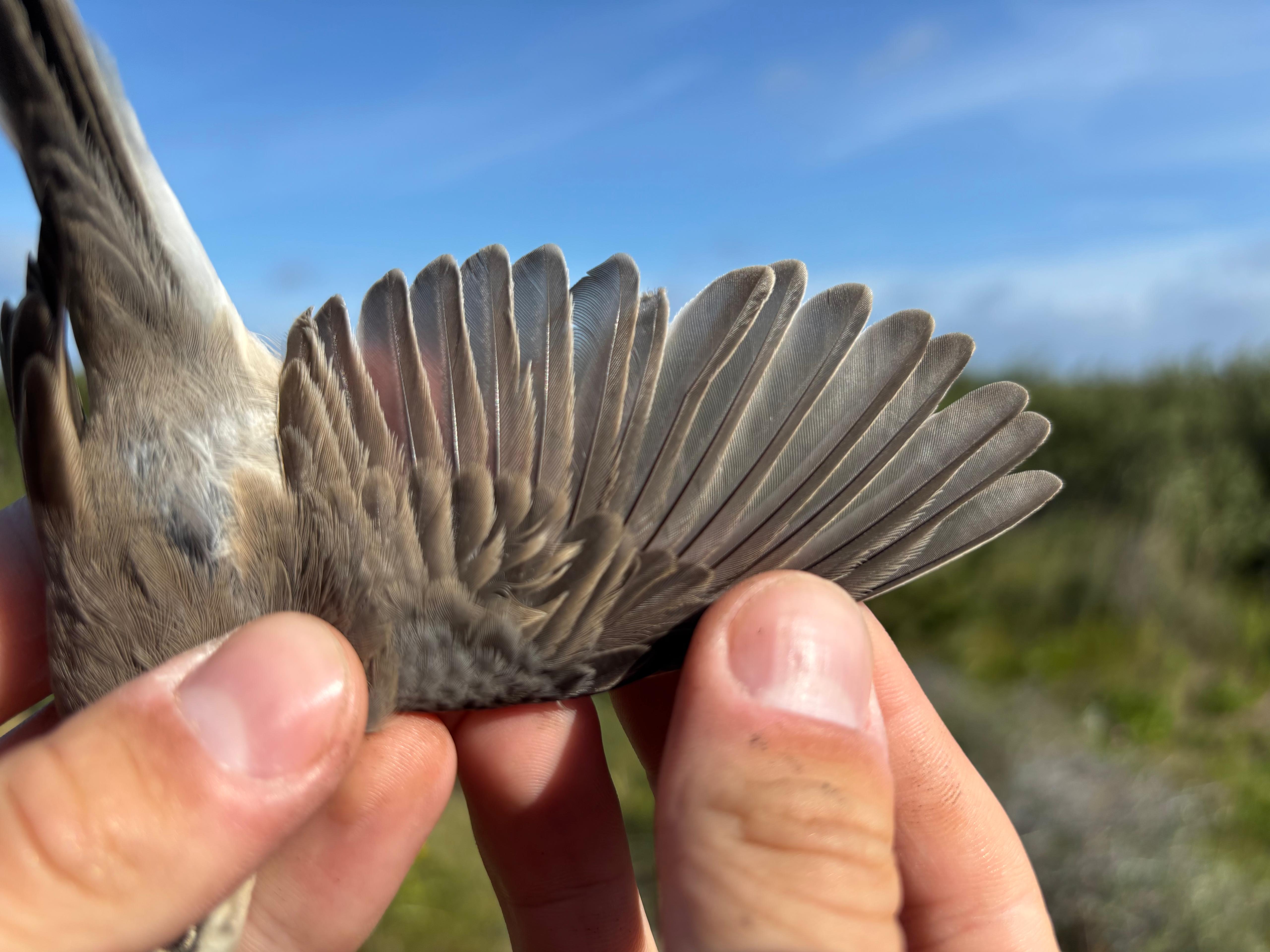 Lesser Whitethroat (Gærdesanger) with a smaller P1. Foto by Simon Kiesé
Jule and Moritz went out to World’s End 3 for the migration count today and were later joined by Erik. There were not many birds migrating in total, but the stationary birds also kept them looking to the sea. They got a migrating Great Skua, which, like the birds from the last few days, migrated into the Skagerrak. Maybe it will meet the other Great Skuas we had the days before, and then they can talk about how nice their way over the tip was ;)
And, just like with the Spoonbill (Skestork) at Skarvøen, they also got the well-known 2K Great Northern Diver (Islom) again, which moved from its sleeping place somewhere near the Sealbunker over the tip until it reached the Skagerrak and met its smaller friends, the Red-throated Divers (Rødstrubet Lom) up there. Moritz managed to get some great pictures of that bird, which I now present to you:
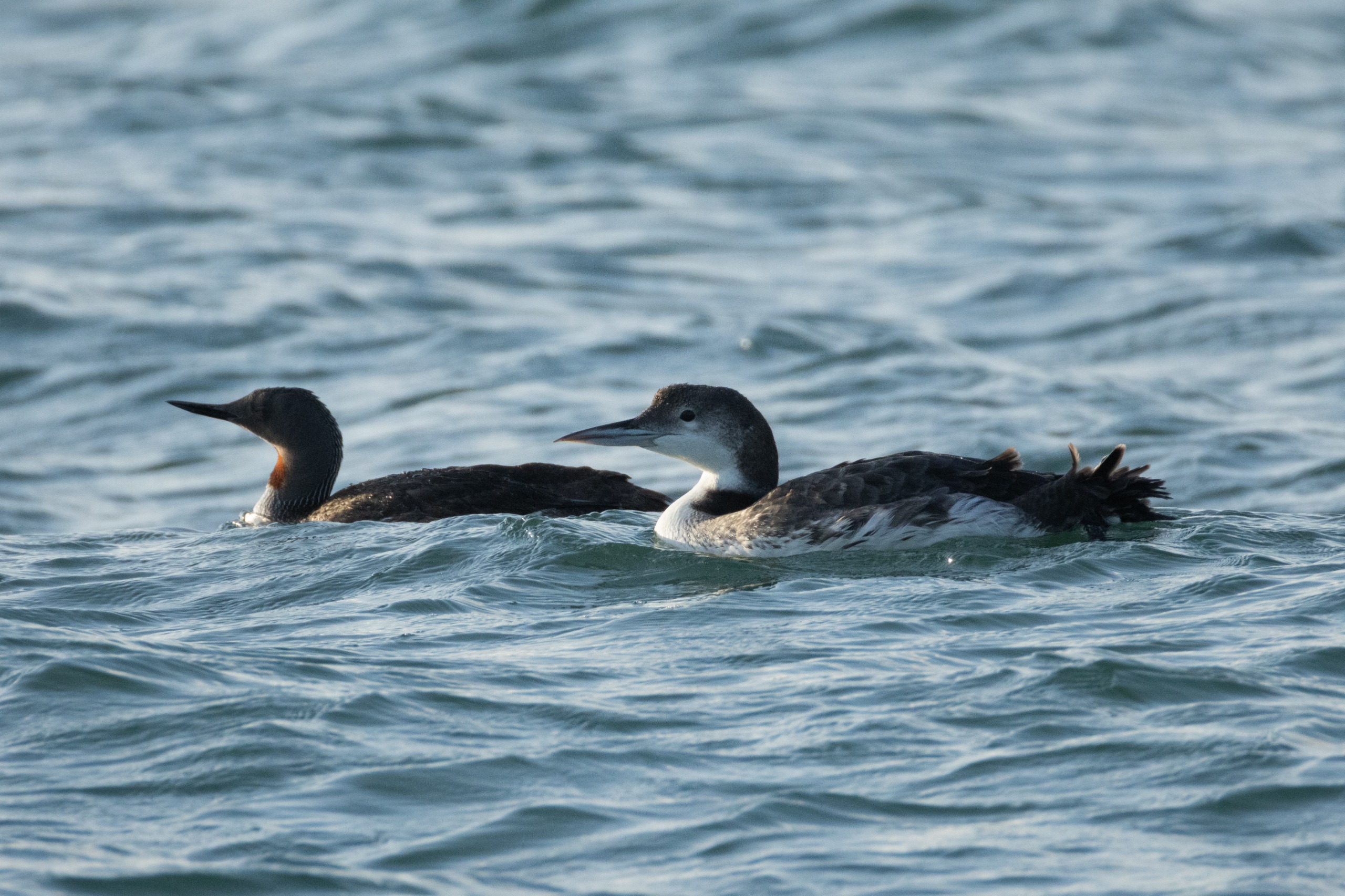 2K Great Northern Diver (Islom) to the right with a Red-throated Diver (Rødstrubet Lom) to the left close to the shoreline at Grenen. Foto by Moritz Morteani
We all also heard that the Basking Shark (Brugde) at Ålbæk (20 km south of Skagen) unfortunately died, but somehow you would also expected this from an animal which is not used to our conditions up here.
At noon, most of us ate something and took a nap to get some energy back after our morning. With this new energy, Jule and I went grocery shopping for some things we need for the next great dinners up here. As we had today as well. Jule prepared a delicious dinner, and while eating, we welcomed Cora, a former volunteer, who will stay here for two weeks. It’s nice to have her back at the station after her longer stay in spring and summer 2025.
After dinner, we had the evening meeting and planned the next few days. In the coming days, especially when the wind goes down, we can look forward to night catching and maybe Shearwaters (Skråpe) in the field.
Lets see what the next days will bring!
Highlights from Observations:
Great Northern Diver (Islom)-1
Great Skua (Storkjove)-1
Goshawk (Duehøg)-1
Spoonbill (Skestork)-1
Ringing (Skarvøen):
Chiffchaff (Gransanger)-2
Garden Warbler (Havesanger)-1
Common Whitethroat (Tornsanger)-4
Blackcap (Munk)-2
Reed Bunting (Rørspurv)-1
Gray Flycatcher (Grå Fluesnapper)-1
Willow Warbler (Løvsanger)-2
Lesser Whitethroat (Gærdesanger)-2
Reed Warbler (Rørsanger)-5
Marsh Warbler (Kærsanger)-2
Total: 21
Link to today's observations in the DOF base from observers in the area.
People: Cora Köberle, Jule Tappe, Mio Brix, Moritz Morteani, Simon Kiesé, Katia Kit, Simon S. Christiansen, Erik Christophersen
Basking Shark!!!
fredag 7. august 2026
Today we saw a rare Basking Shark!!!! But let me start in the beginning…
Today is a perfect example of how even slow days have their highlights. We did not expect the big highlight in the afternoon, when we left the station in darkness and strong winds at 4 am. My place for the morning was Kabeltromlen. I don’t want to spend too much time writing about the 1 (ONE!!) bird, we ringed today, because the observations were fine. The counters used the weather and pulled birds out of the sky, as a magician pulls rabbits from a hat: 5 Arctic Skuas (Almindelig Kjove) and even more exciting 3 close Great Skuas (Storkjove). Since we did not have anything else to do at the ringing, we also looked at the sea and could enjoy those birds together with the counters out at World’s End 3. Another highlight we shared was this doubled rainbow, that announced a cold shower:
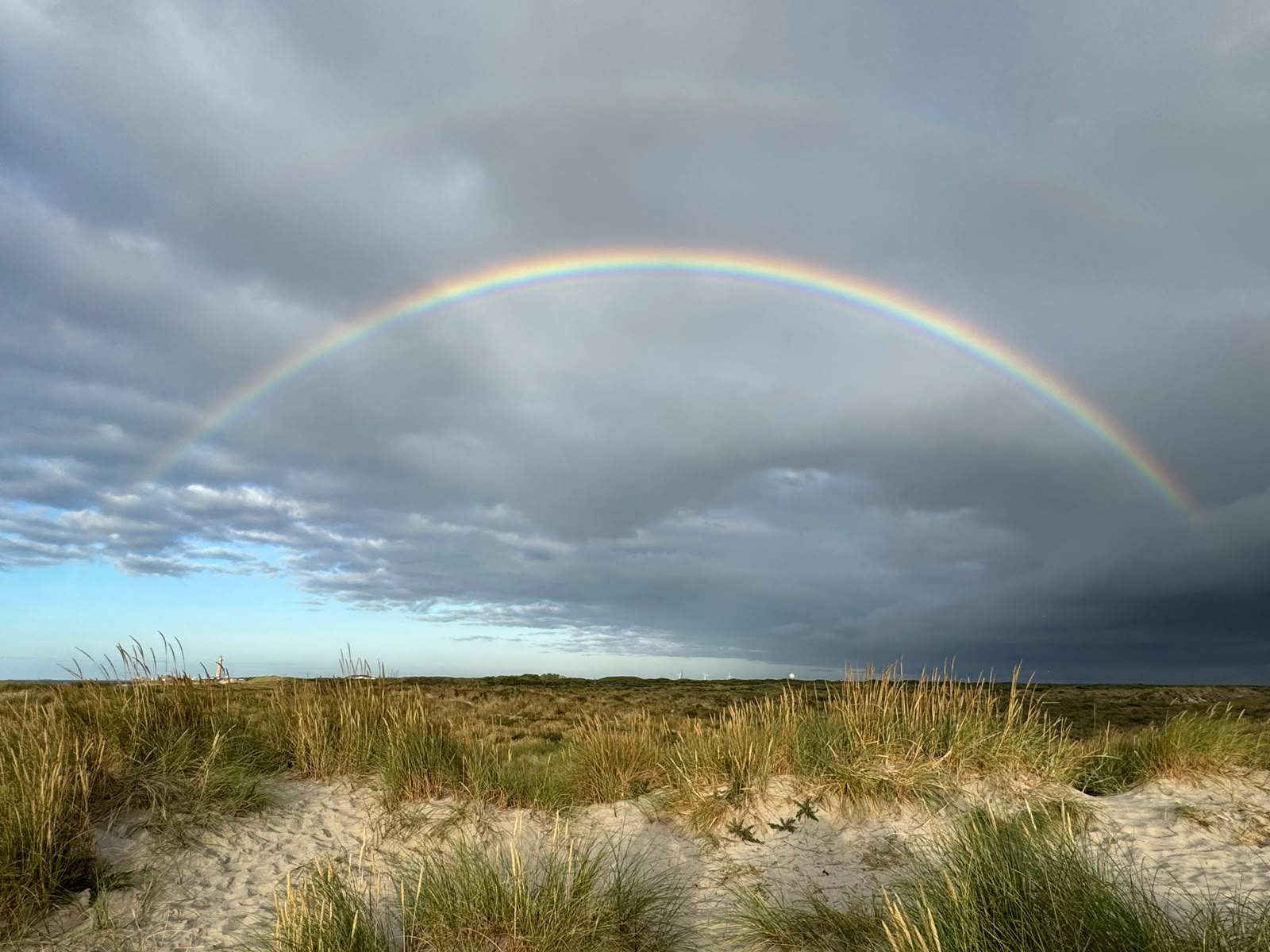 Doubled Rainbow over Grenen. Foto: Mio Brix.
Mio, Moritz and Knud spotted a Little Stint (Dværgryle) in the company of four Dunlins (Almindelig Ryle), which landed on the beach for ten seconds before deciding that they wanted to fly towards the end of the rainbow(s) to look for a pot of gold or something.
There were more Guillemots (Lomvie) than the past days, a Temminck‘s Stint (Temminksryle) was flying over the last dune row, and Knud’s stories kept us warm during the rain shower.
After the morning activities, Katia and I decided to walk to town and find a nice café. We succeeded in our search, and while we were enjoying a Danish pastry, my phone went off with the news that there was a Basking Shark Cetorhinus maximus (Brugde in danish) in Ålbæk, just 20 km south of Skagen. Since Jørgen also wanted to see this rare shark, we quickly jumped into his car to head to Ålbæk. After arriving at the beach, we saw no shark, just happy faces that told us “yeah, it was here, so close, just two minutes ago”. Okay, we might need some patience. After ten minutes I spotted it swimming quite far out, but it directly dived away before Jørgen and Katia were able to have a look themselves. Ten more minutes later it finally showed up. Close to the beach, as close as before. We saw it for over an hour foraging in the shallow water.
Basking Sharks are ram feeder, so they swim around to filter the shallow water for zooplankton. We were able to observe this natural behaviour out of less then 10 m distance from the beach. Stunning!
Phone video of the foraging Basking Shark. Video: Simon Kiesé
As the second biggest shark of the world Basking Sharks usually become 8 meters long. This one was around 4.5 meters long, which was big enough to impress us and the other people at the beach.
Tonight Karen Cecilie Cæsar plays a concert in front of the lighthouse, so after eating dinner (Moritz cooks Curry, I can’t wait for it) we will go there and enjoy the music.
Highlights from Observations:
Great Skua (Storkjove) - 3
Little Stint (Dværgryle) - 1
Ringing (KAB)
Blackcap (Munk) - 1
Total: 1
Link to today's observations in the DOF base from observers in the area.
People: Jule Tappe, Mio Brix, Moritz Morteani, Simon Kiesé, Katia Kit,Alexander Nyholm, Simon S. Christiansen, Knud Pedersen, Jørgen Kabel, Erik Christophersen.
Small numbers - big birds
torsdag 6. august 2026
Today the weather was better, and we were able to follow the standard routine. Simon, Alexander, and Jule opened the nets at 04:45, while Mio and I started the ount at 05:22.
Ringing today was very slow, with only 8 birds caught. This was not too bad, as it gave Alfred the opportunity to gain his first experience extracting and handling birds. The ringing team also enjoyed some nice field observations, including a Caspian Tern (Rovterne) and a Stock Dove (Huldue).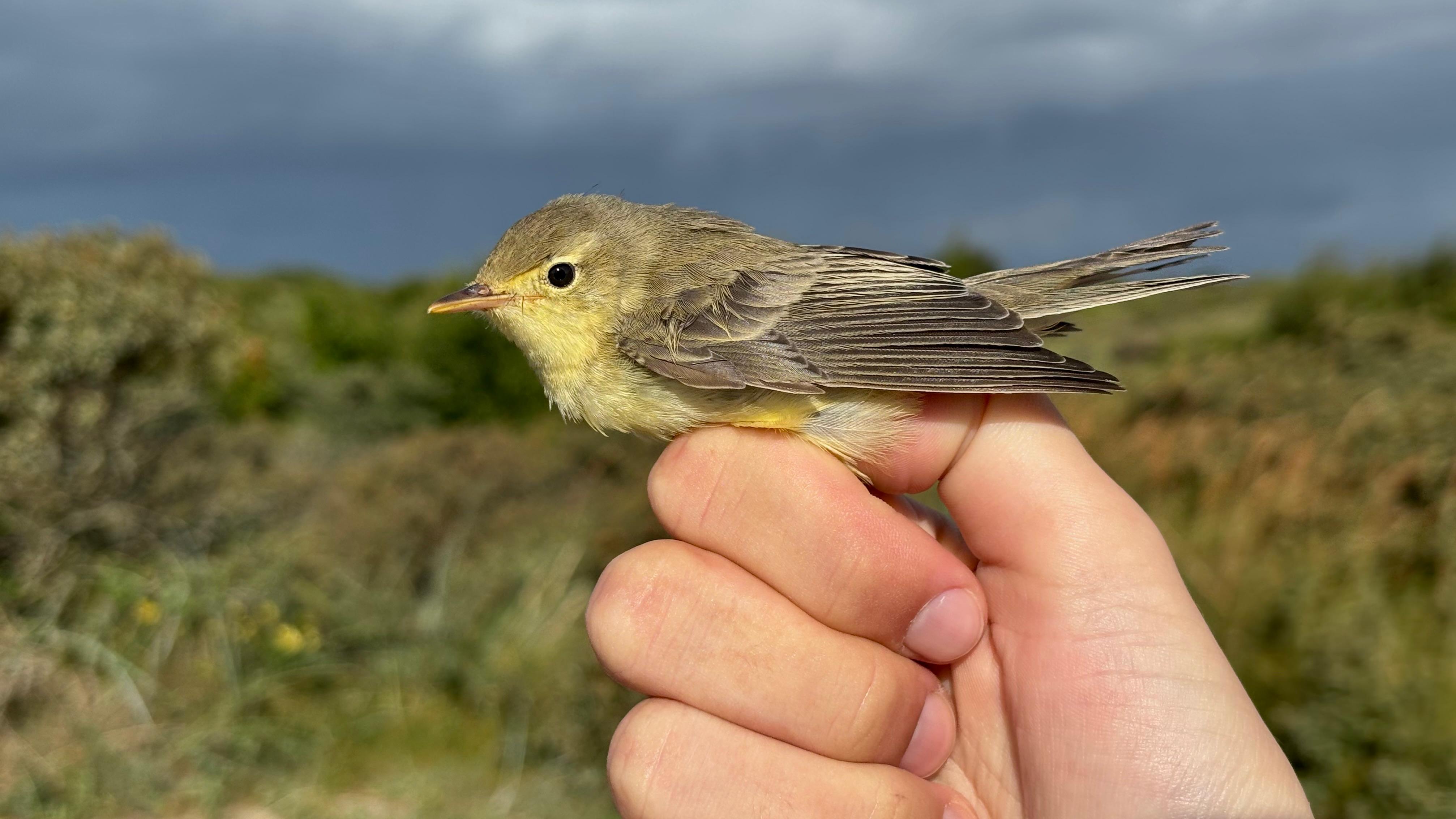
It's inconspicuous looks hides a phenomonal song: The Icitrine Warbler (Gulbug)
Migration during the count was slow as well but provided a few nice surprises, including two adult Great Skuas (Storkjove) and a small movement of waders, mainly Golden Plovers (Hjejle) and Oystercatchers (Strandskade). Seeing the great skuas (Storkjove) was especially exciting because this species is sadly in strong decline. We extended the count by one hour because, towards the end, some light raptor migration began, with a few Common Buzzards (Musvåge) and a Honey Buzzard (Hvepsevåge).
During the morning survey, some large, dark rain clouds approaching from the southwest took us on a roller coaster of emotions by just barely missing our position. However, that did not deter us, as every birder knows that facing bad weather is simply part of the experience.
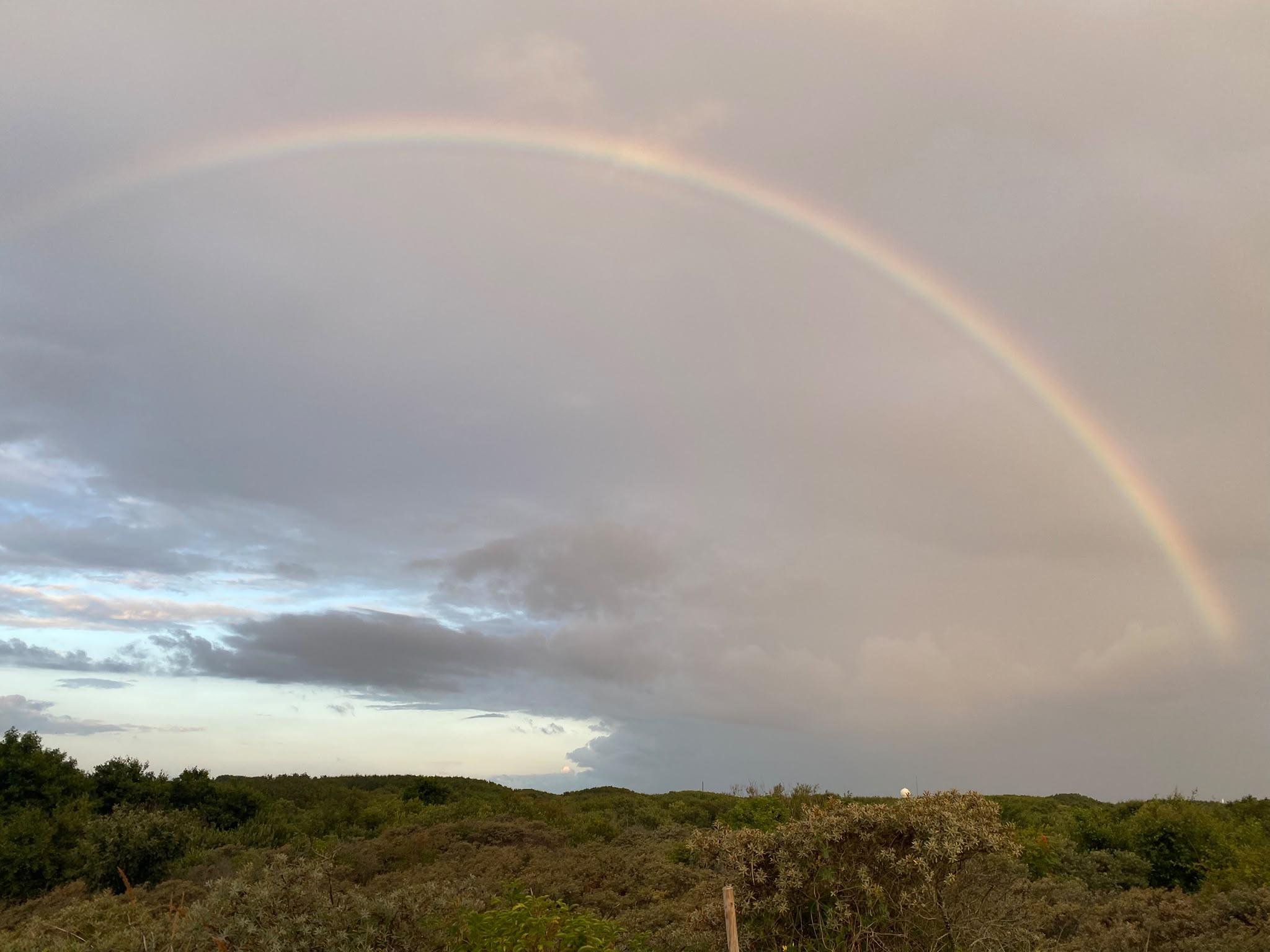
Changing weather created a nice atmosphäre
In the afternoon, we did some additional seawatching in the hope of finding some of the interesting shearwater species that had been observed 150 km south. This proved unsuccessful, so we checked the freshwater lake for waders instead and observed several snipes (Dobbeltbekkasin) and a Wood Sandpiper (Tinksmed).
With the strong westerly wind forecast for tomorrow, we are excited and hopeful for some nice species at sea.
Highlight from Observations:
Caspian Tern (Rovterne)- 1
Great Skua (Storkjove) - 2
Mediterranean Gull (Sorthovedet Måge)-5
Ringing KAB
Solsort - 1
Kaersanger - 2
Gulbug - 1
Tornsanger - 2
Munk - 1
Rorspurv - 1
Total: 8
Link to today's observations in the DOF base from observers in the area.
People: Jule Tappe, Mio Brix, Simon Kiesé, Katia Kit, Alexander Nyholm, Simon S. Christiansen, Moritz Morteani
Snipes and Skippers
onsdag 5. august 2026
Because of the rain this morning we were able to sleep in and Simon was so nice to wake up early to check the weather for us (thank you Simon). Around 7 the rain stopped and we could do migration count and ringing.
Today Mio and Moritz did the migration count which was slow, but not boring. A bit of shorebird migration kept things going with highlight being good amount of common snipes (Dobbeltbekkasin) and a migrating Curlew sandpiper (Krumnæbbet ryle).
At the ringing we only caught 6 birds today (one recapture) and the highlight was the blackbird which was a new ringing species in Skagen for Jule. We also saw a bunch of snipes from Kabeltromlen, which was really cool. We were visited by a French family at the ringing, they brought cake and it was very “hyggeligt”.
After ringing i went south of Skagen to find the rare butterfly Silver spotted skipper (Kommabredpande). The species was once quite common in Denmark being found all over the country, but can now only be found in select parts of eastern and northern Jutland. I counted six individuals and to pairs of them seemed to be breeding which was good to see.
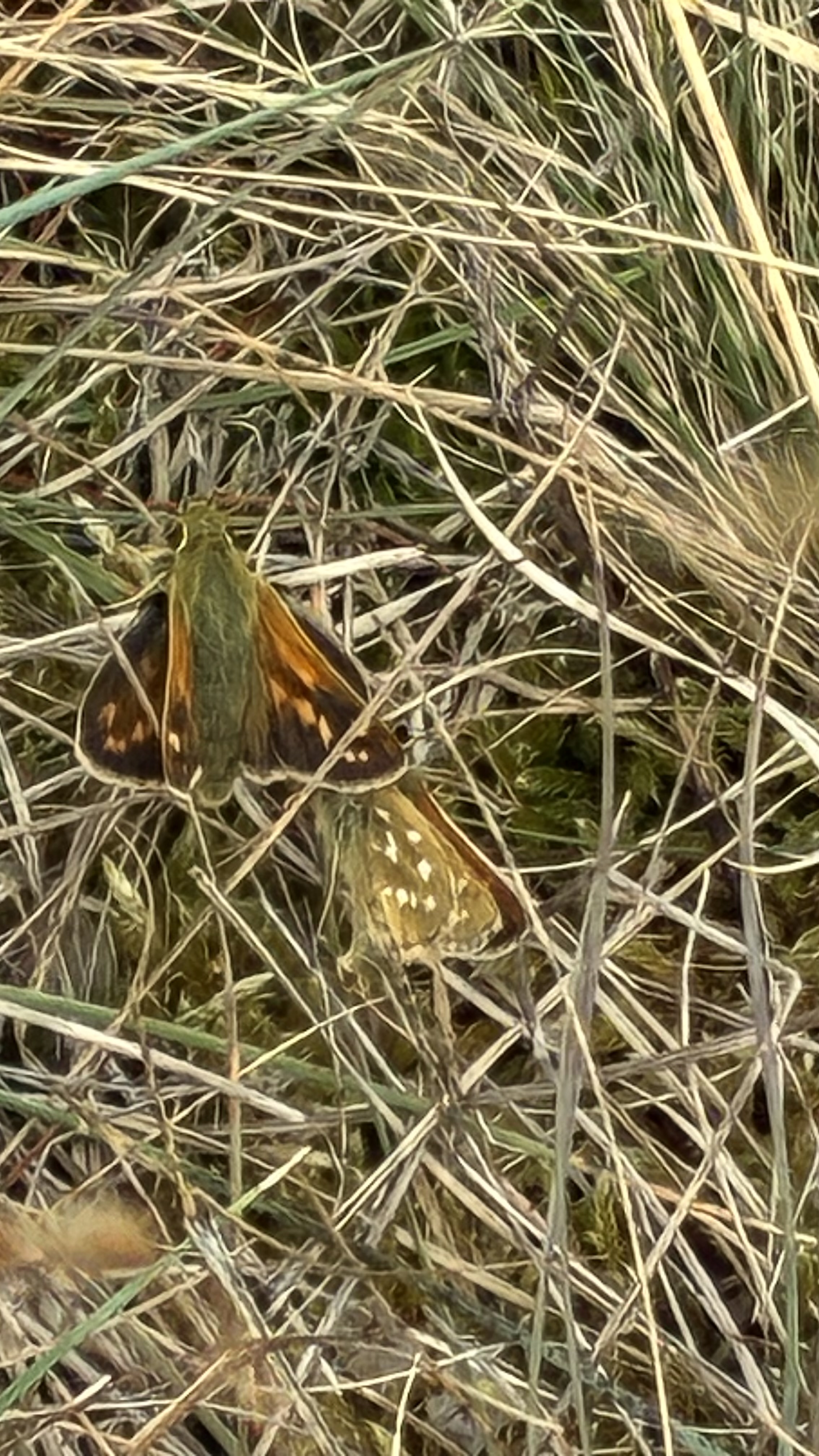
Silver spotted skipper/Kommabredpande/Hesperia comma. Pictures by Alexander Nyholm
Today we also (unfortunately) had to say goodbye to Alfred who stayed here for the last 5 days. He will no doubt be back at sometime in the near future.
Highlights from observations:
Krumnæbbet ryle - 1
Ringing (Kabeltromlen):
Tornsanger – 2
Munk – 1
Solsort – 1
Musvit – 1
Total 5
Link to today’s observations in DOFbasen from observers in the area.
People: Jule Tappe, Mio Brix, Simon Kiesé, Katia Kit, Moritz Morteani, Alfred Godsk Geckler, Alexander Nyholm, Simon S. Christiansen
A Night to Remember: Storm-Petrels, Nightjars and Morning Migration
tirsdag 4. august 2026
Today (or in the night), me and the other volunteers woke up around midnight, because a European Storm-Petrel (Lille Stormsvale) has flown into the net. It’s a species that the bird station tries to ring every year, and I have been here for several times the past two years without catching any, so I was very happy (and very tired) when I saw the little, black bird.
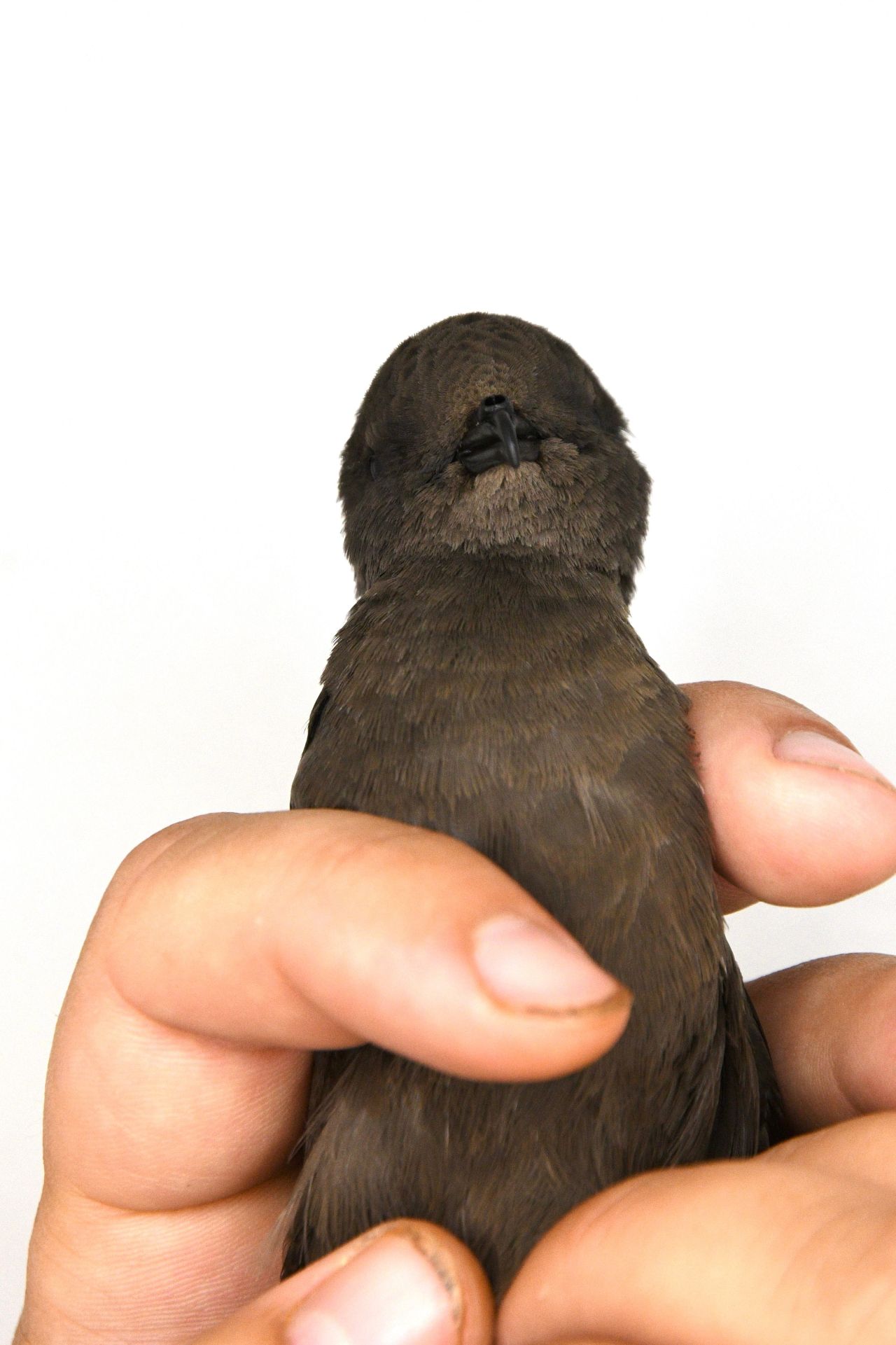 European Storm-petrel (Lille Stormsvale) with it's small tube-nosed bill. Photo: Simon Kiesé
After seeing (and holding!) the Storm-Petrel, I decided to try and sleep some more. But one and a half hours later we were woken up again. This time, because a European Nightjar (Natravn) had flown in the other net. A very special bird, which we were also very happy to see.
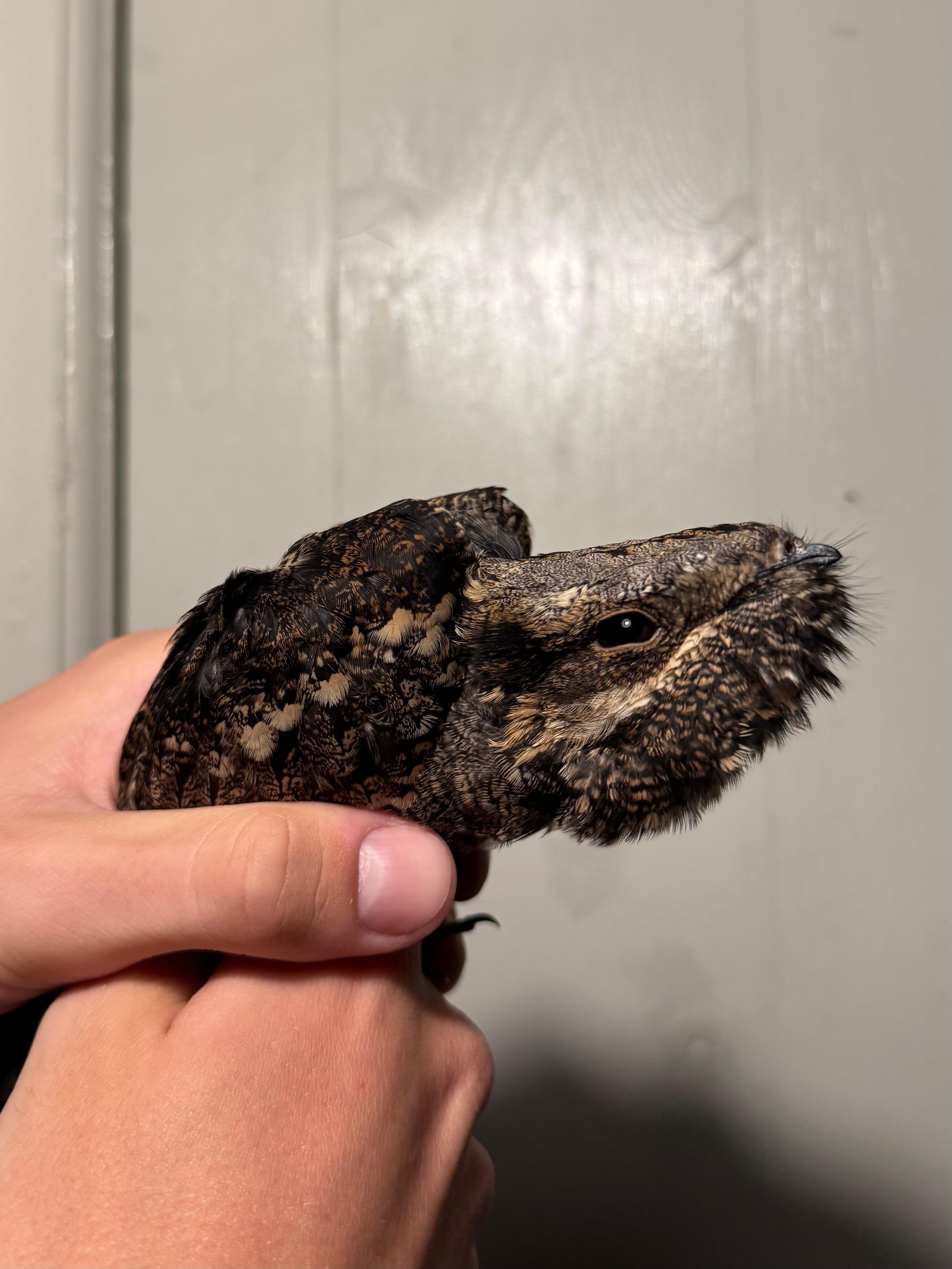 1cy. Nightjar (Natravn)
Another European Storm Petrel (a 3K+) flew into the net at 3 am. At 4 am, another Nightjar (an adult male with white patch in the wings and tail) flew in the net. I didn’t see any of them, because the sleep kept me in the bed.
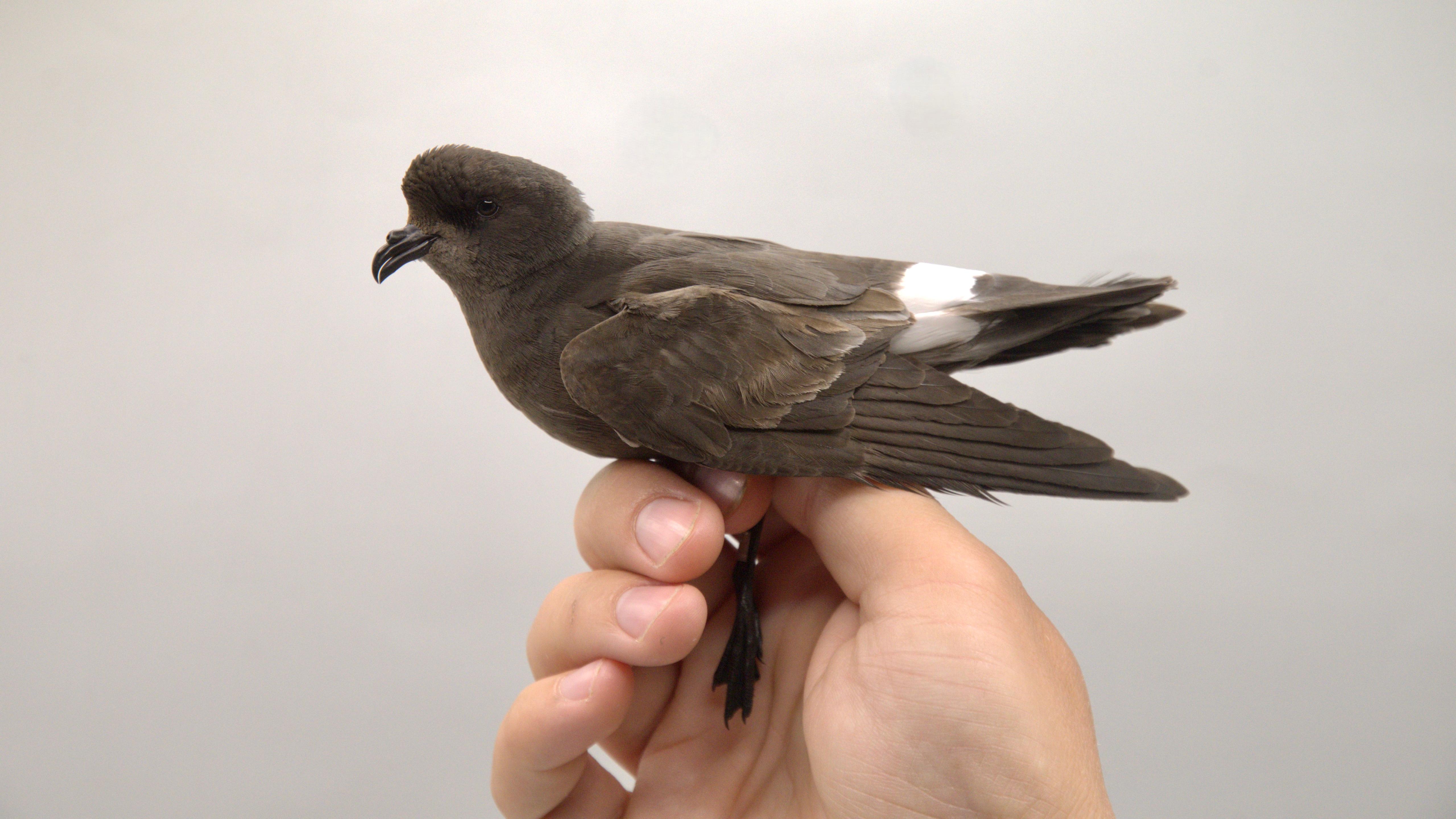 Second Storm-Petrel (Lille Stormsvale) of the night, a 3cy.+. Foto: Simon Kiesé
When we woke up in the morning, (except for Mio, who had been up all night) me and Alexander went to Verdens Ende 3 to do migration count, while 2xSimon, Jule and Moritz headed to Kabeltromlen to ring. Here they where visited by Lars Askholm from Sjælland and an Italian Bird Ringer; Michelangelo Morganti. They both also experienced the great birds last night.
The highlight in the first two hours on observation was a Ruddy Turnstone (Stenvender), but in the last two hours, we saw over 400 Common Swift (Mursejler) on migration. There were a lot of Barn Swallow (Landsvale) and Western House Martin (Bysvale) as well. The highlight at the ringing was also the many swifts, and the wader migration. They even got a big flock of 27 Oystercatchers (Strandskade).
When we got home, almost everyone went to sleep, but Simon and Simon took to Skagen station to pick up Katia, Simons girlfriend. When me and Alexander woke up, we put the birds we saw today on Dofbasen, while the rest either slept or was eating watermelon.
Ringing (Kabeltromlen):
Tornsanger - 12
Gærdesanger - 5
Gransanger - 2
Havesanger - 1
Munk - 3
Løvsanger - 1
Kærsanger - 1
Gulbug - 1
Total: 26
Ringing (Det Grå Fyr):
Tornsanger - 12
Gærdesanger - 5
Gransanger - 2
Havesanger - 1
Munk - 3
Løvsanger - 1
Kærsanger - 1
Gulbug - 1
Total: 26
Ringing (Det Grå Fyr):
European Storm-Petrel (Lille Stormsvale) - 2
European Nightjar (Natravn) - 2
Link to today’s observations in DOFbasen from observers in the area.
People: Jule Tappe, Mio Brix, Simon Kiesé, Katia Kit, Moritz Morteani, Alfred Godsk Geckler, Páll Van Kjærbo, Sophie Booker, Michelangelo Morganti, Lars Askholm, Alexander Nyholm, Simon S. Christiansen
Lesser Wind and Lesser Redpoll
mandag 3. august 2026
With the time, sunrise gets later and later, so our daily routine with ringing and migration counts gradually starts later as well. If you are at the station, you really feel this change, and it's cool to experience the natural day cycle. Today, the day cycle brought Simon and me to Kabeltromlen at around 04:30 to open the nets, which should be done about 30 minutes before sunrise. Alfred joined us later for the first round. During the first round, with an amazing sky above us, a Black Redstart (Husrødstjert) ended up in our nets: a species that we don't catch very often.
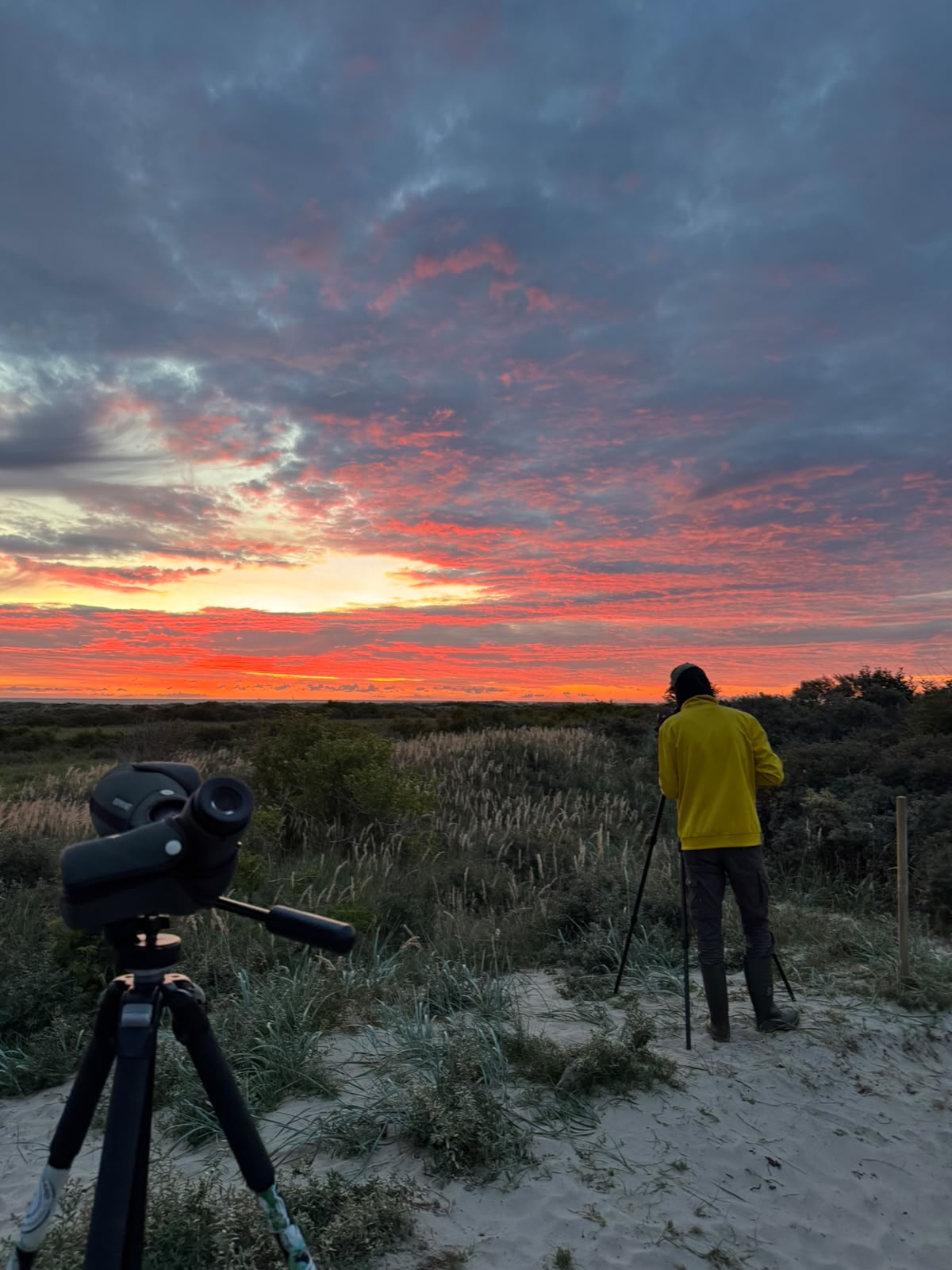 Morning sky over Kabeltromlen
Later, during the second round, the other highlight of this ringing morning showed up: two Lesser Redpolls (Lille Gråsisken), one adult male and one adult female were hanging in the same net at the same time. It was great to see them and to learn how the adults look before their complete moult. Although the moult has already started in many adults birds, it had not yet begun in these individuals.
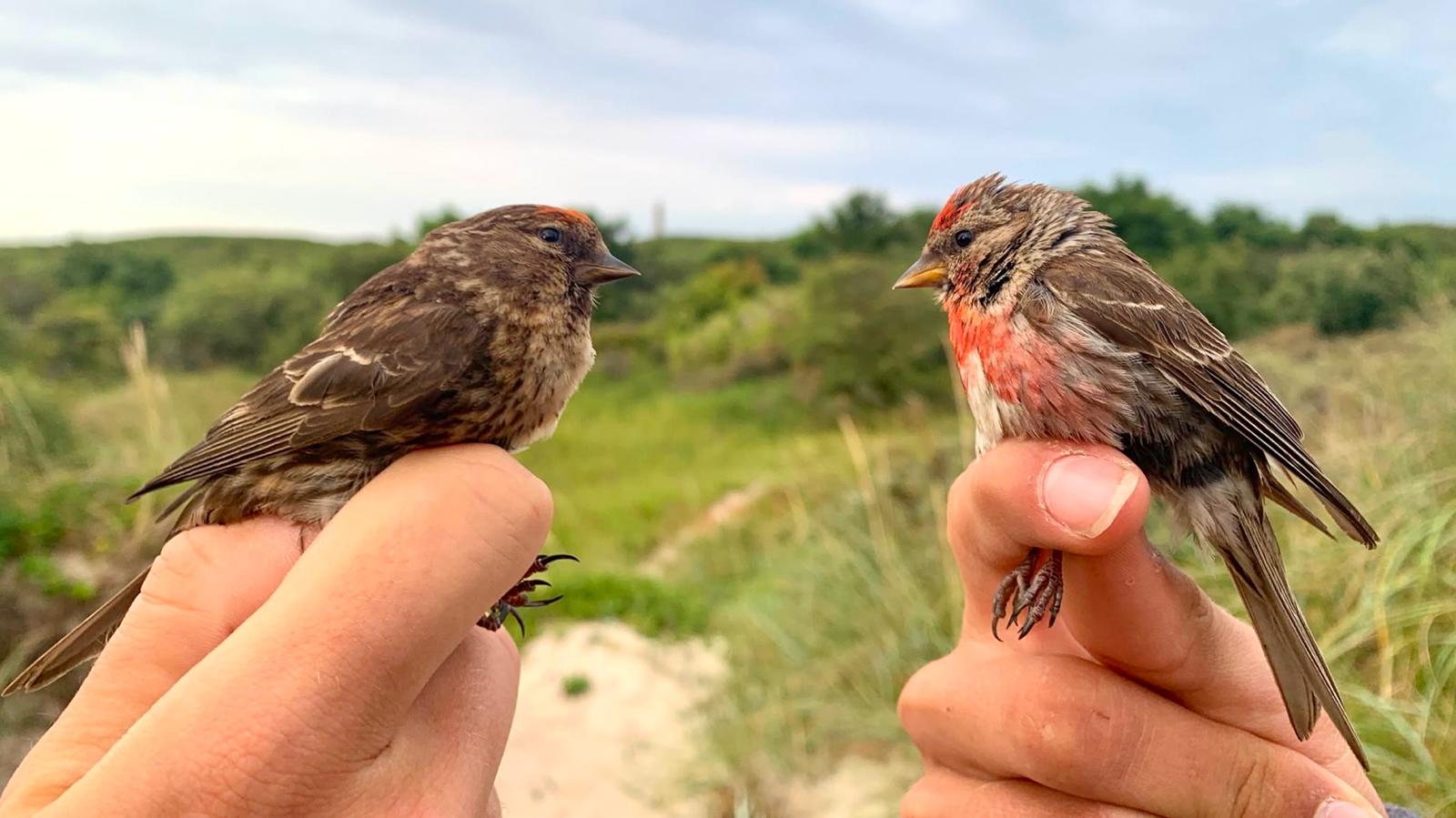 Adult female (left) and adult male (right) Lesser Redpoll (Lille Gråsisken)
The observation team, consisting of Jule and Alexander, also got to enjoy the amazing sky. However, the sky wasn't as impressive as their sightings of a total of six Arctic Skuas (Almindelig Kjove). As yesterday, the birds came close to the shoreline and even closer when they flew over the beach, showing their typical foraging behaviour: chasing gulls and terns until they dropped their food. All other skua species are also known for this behaviour, including the Great Skua (Storkjove), which was also seen today. It didn't come as close as the Arctic Skuas (Almindelig Kjove), but Jule and Alexander still got some great views.
After we all headed back to the station, we welcomed Moritz, who will stay here for one week. To show him the area, Moritz and I walked out to Grenen, where we did some colour-ring reading of terns and gulls along the beach. We read a total of 14 rings, so we were quite successful! While reading the rings, we also saw three Marsh Harriers (Rørhøg) arriving from the sea and continuing their migration south.
After Moritz and I headed back to the station, we had our evening meeting and enjoyed a nice dinner prepared by Jule. Just a few minutes before Simon arrived for dinner, he spotted a Merlin (Dværgfalk) coming in from the sea. First of the season!
While eating, we looked out of the station window and noticed how calm and flat the sea was, so we decided to head out again for some evening observations at the Seal Bunker. Almost immediately after we started scanning the sea, the first bird I found in my scope was a 2K Great Northern Diver (Islom)! It was a fantastic bird for all of us to enjoy in such perfect conditions. Thanks to the calm sea, we also recorded good numbers of Black Guillemots (Tejst) and Razorbills (Alk).
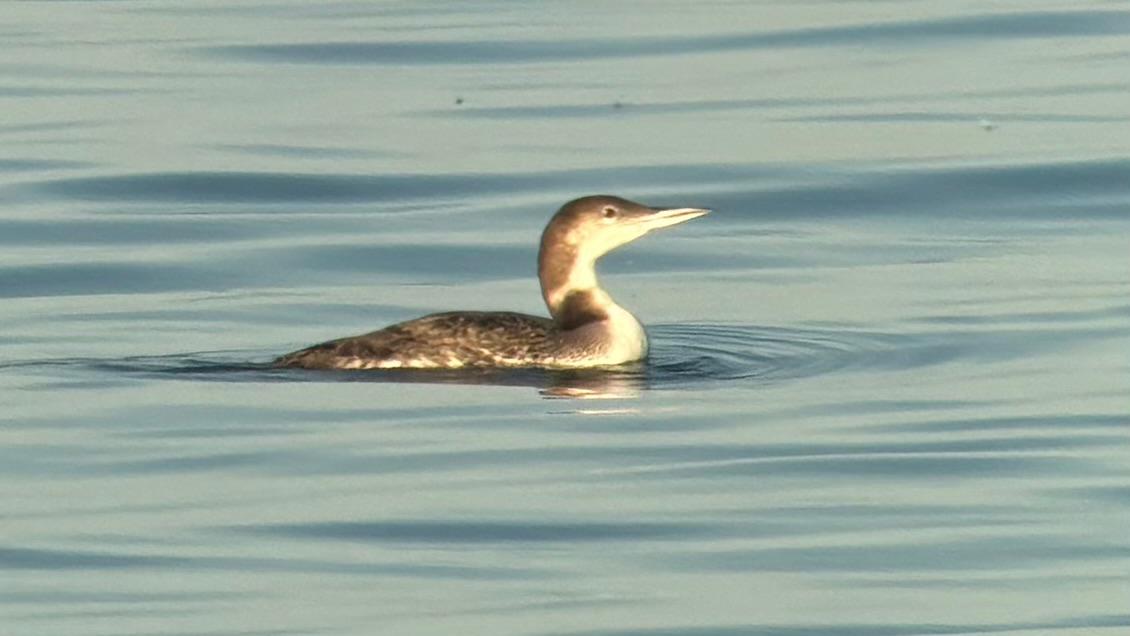 Great Northern Diver (Islom)
Now we are trying to catch stormpetrels (Stormsvale) and Nightjars (Natravn) again. We'll update you in the next blog if we catch something!
Ringing (Kabeltromlen):
Chiffchaf (Gransanger)-2
Blackcap (Munk)-2
Whitethroat (Tornsanger)-13
Willow Warbler (Løvsanger)-1
Lesser Redpoll (Lille Gråsisken)-2
Black Redstart (Husrødstjert)-1
Reed Warbler (Rørsanger)-2
Total:22
Highlights from the observations:
Great Northern Diver (Islom)-1
Great Skua (Storkjove)-2
Arctic Skua (Almindelig Kjove)-6
Rosefinch (Karmindompap)-1
Merlin (Dvægfalk)-1
Link to today’s observations in DOFbasen from observers in the area.
People: Jule Tappe, Mio Brix, Simon Kiesé, Moritz Morteani, Alfred Godsk Geckler, Alexander Nyholm, Simon S. Christiansen
A very Skua day, Orcas and long primaries
søndag 2. august 2026
This morning, Alexander, Simon K. and Mette jumped out of their beds to open nets at Kabeltromlen. Alfred, Mio and I were on our ways shortly after. While I joined the other ones at KAB, Alfred and Mio drove to World’s End 3 for migration count.
In ringing, we had rounds with very varied number of birds, ranging from 0 to 15. In total, we ringed 25 birds, among them a Garden Warbler (Havesanger), many Common Whitethroats (Tornsanger) and a curious looking Reed Warbler (Rørsanger) with an exceptionally long 8th primary on its right wing (4 mm longer than on left wing). We have never seen anything like that, what an odd sight!
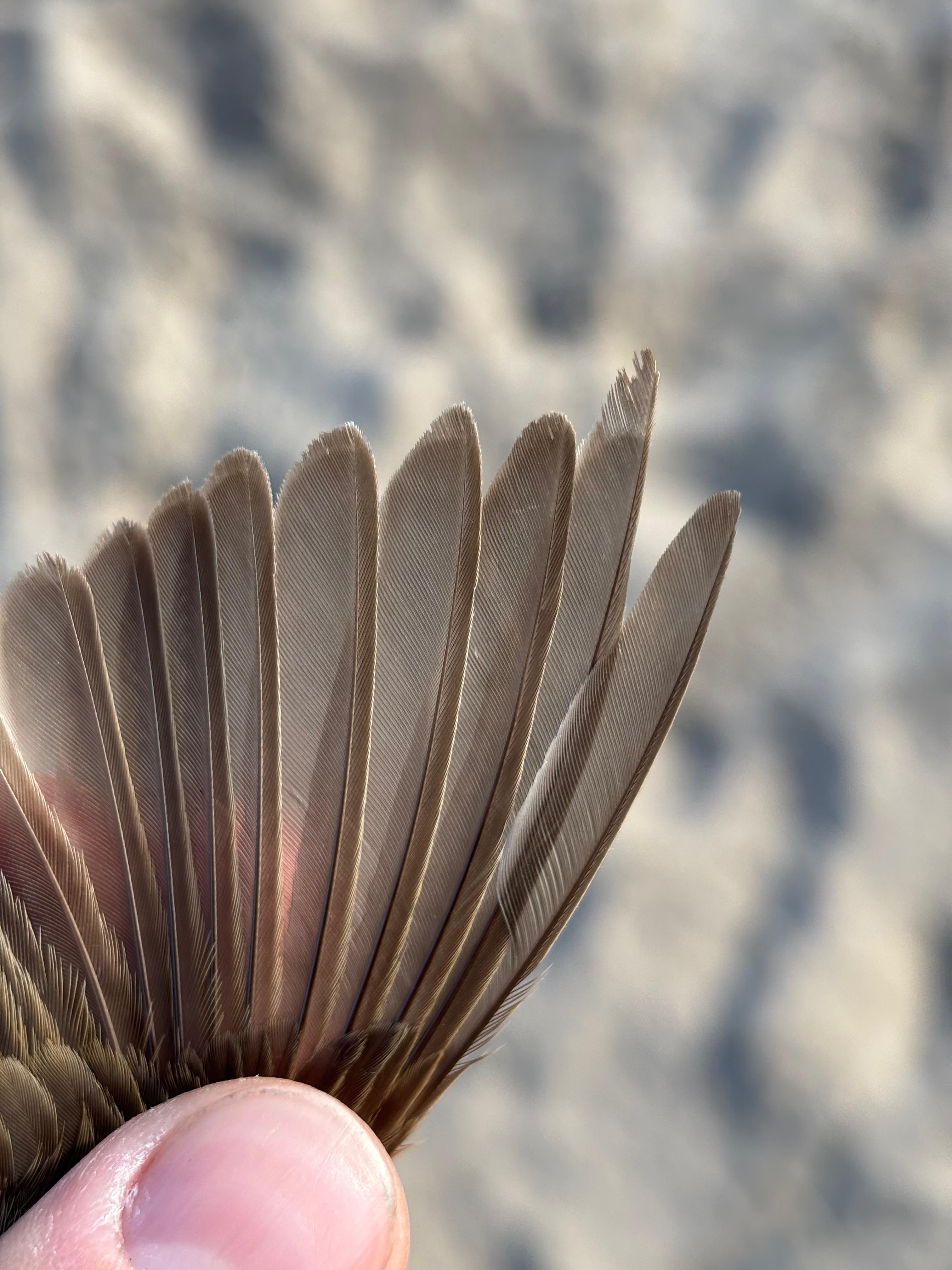
Right wing of Reed Warbler (Rørsanger) with exceptionally long P8.
In between rounds, we were entertained by overflying Golden Plovers (Hjejle), Curlews (Storspove) and a very athletic Wood Pigeon (Ringdue). Also, Simon found a steppe grasshopper (Chorthippus vagans, steppegræshoppe), a grasshopper species that is only spread in Skagen for Denmark. In addition, Mio and Alfred, who were joined by Erik and Knud, spotted some nice birds on the sea: 5 Great Skuas (Stor Kjove) and 4 Arctic Skuas (Almindelig Kjove) were foraging in Skagerrag and Kattegat. This is a relatively high number and allowed the counters to get exciting photos! Knud even managed to read a ring from one of the Arctic Skuas resting on the beach so we now know it was ringed in Brattholmen, Mandal, Norway as a juvenile in July 2024. This means, it's a third calendar year bird.
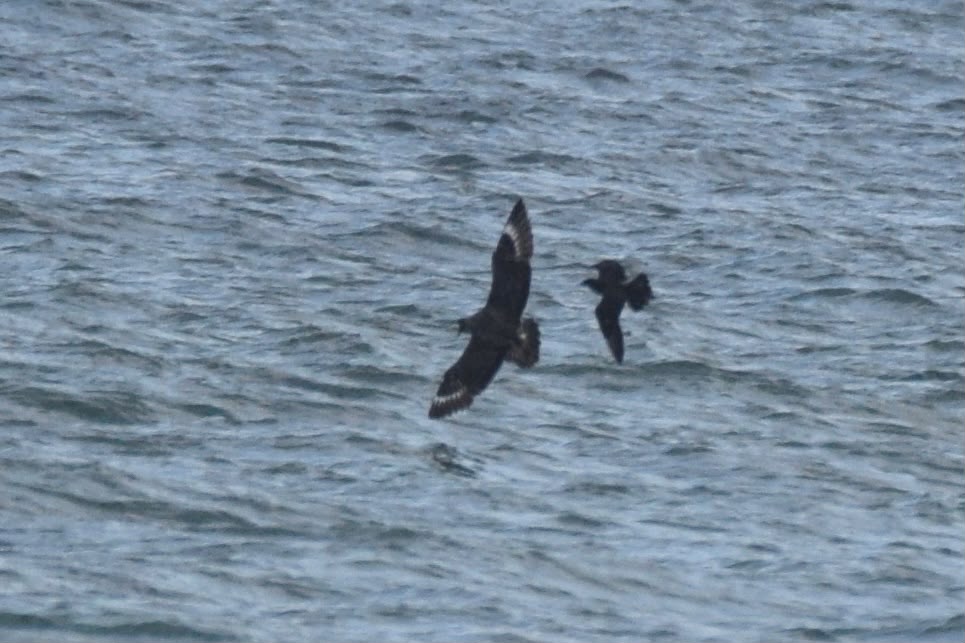
Great Skua (Stor Kjove) and Arctic Skua (Almindelig Kjove). Foto: Alfred Godsk Geckler.
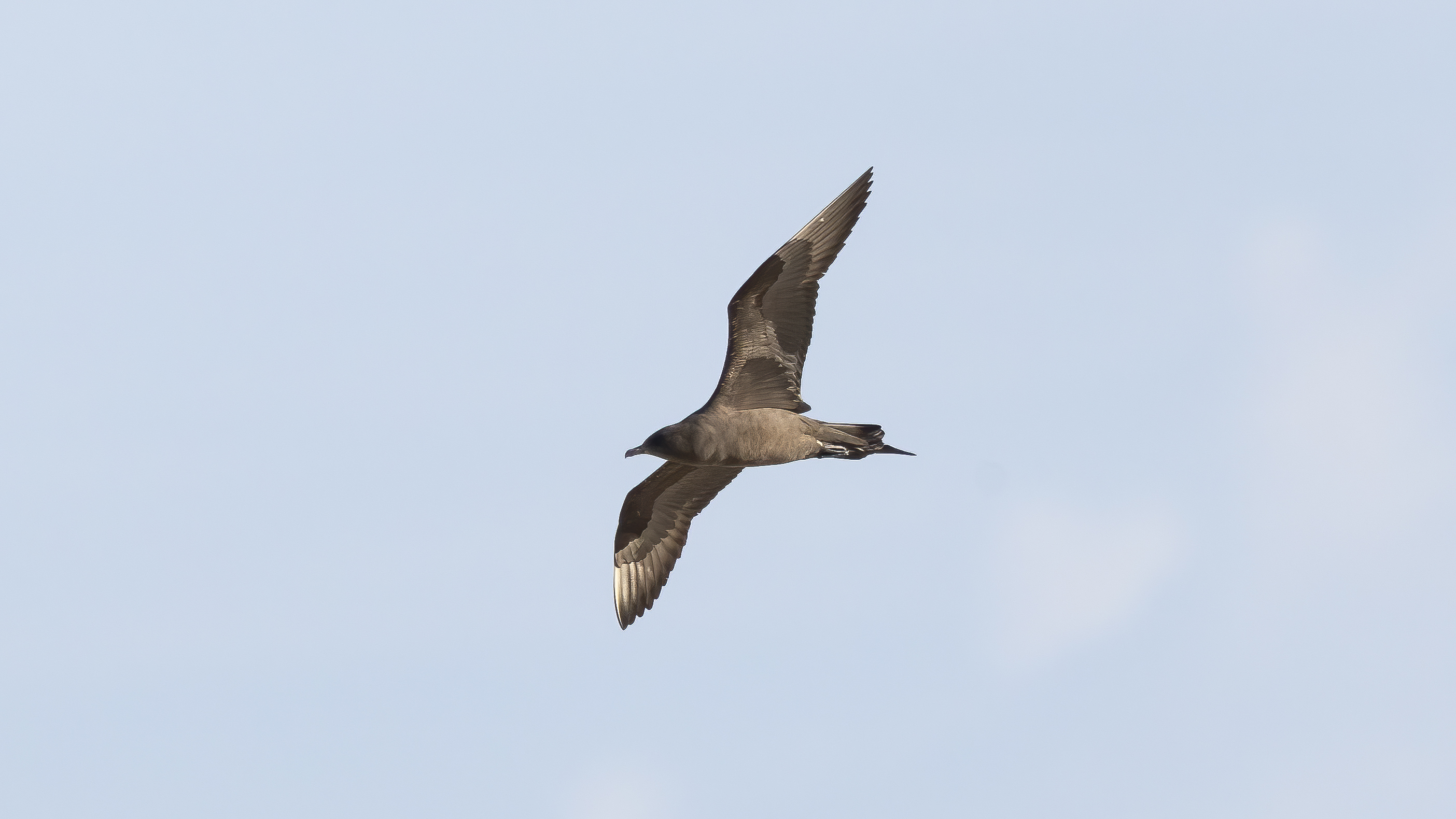
Arctic Skua (Almindelig Kjove) with Norwegian ring. Foto: Knud Pedersen.
Next to birds, there were also mammal observations that both the counting and ringing team got to see: three Orcas (Spækhugger)! The two females and one male were observed blowing water and swimming around Denmark’s tip. Orcas are a regular sight and Grenen, but are still rare and thrilling to see!
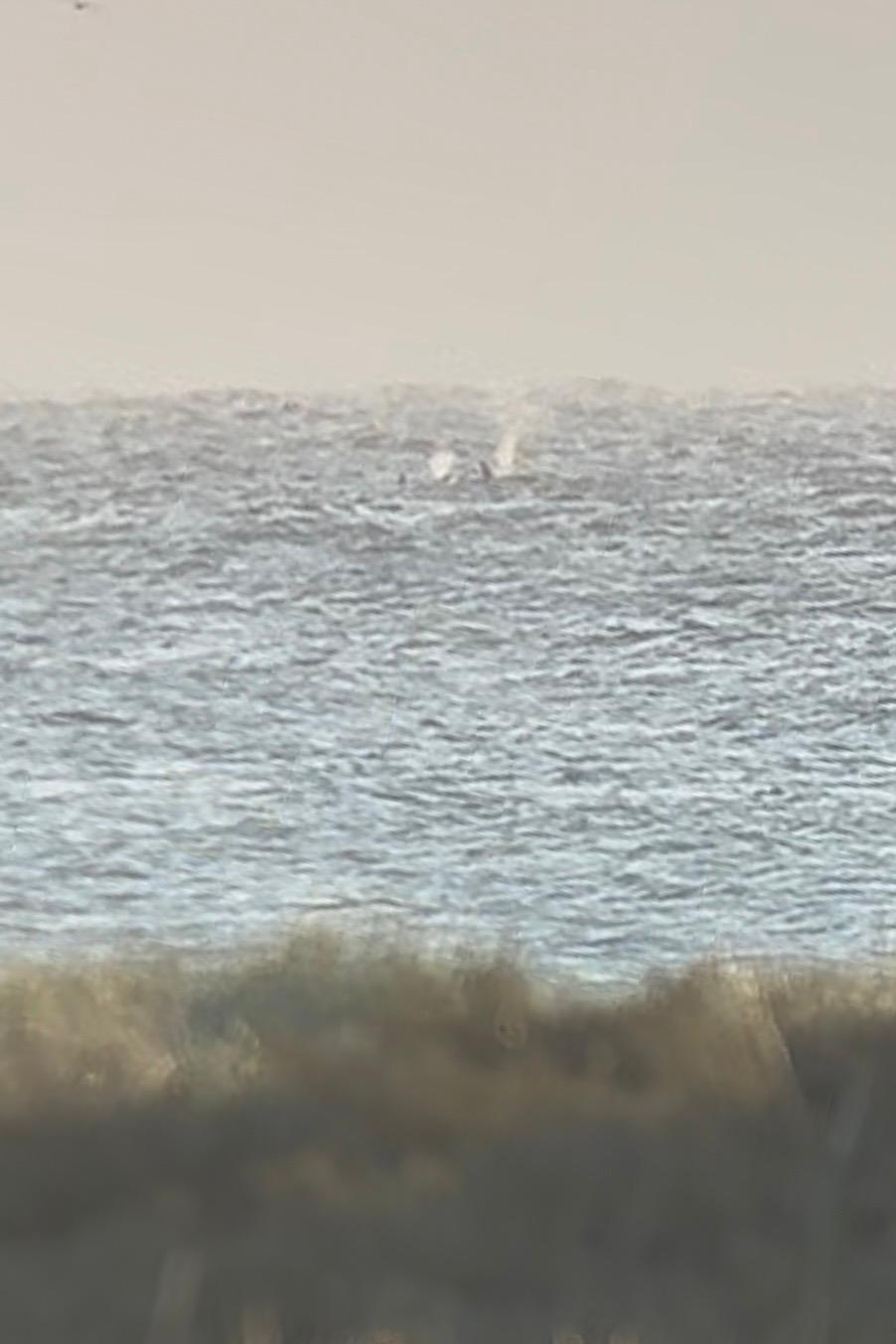
Orcas (Spækhugger) blowing water. Foto: Simon Kiesé.
After this eventful morning, we cycled back to the lighthouse for data entry, a nap and cleaning and we said goodbye to our guest Mette. Have a good journey back! Next up was a very early dinner, because the sightings of today’s morning motivated us for another bird watching session in the evening at Grenen with better light and hopefully just as good views. So in the evening, Simon, Mio, Alexander and Alfred walked out to World’s End 3 for seawatching. Later, they were joined by me, since I had to prepare this blog post! We were all rewarded with views of over 200 Fulmars and great views of skuas.
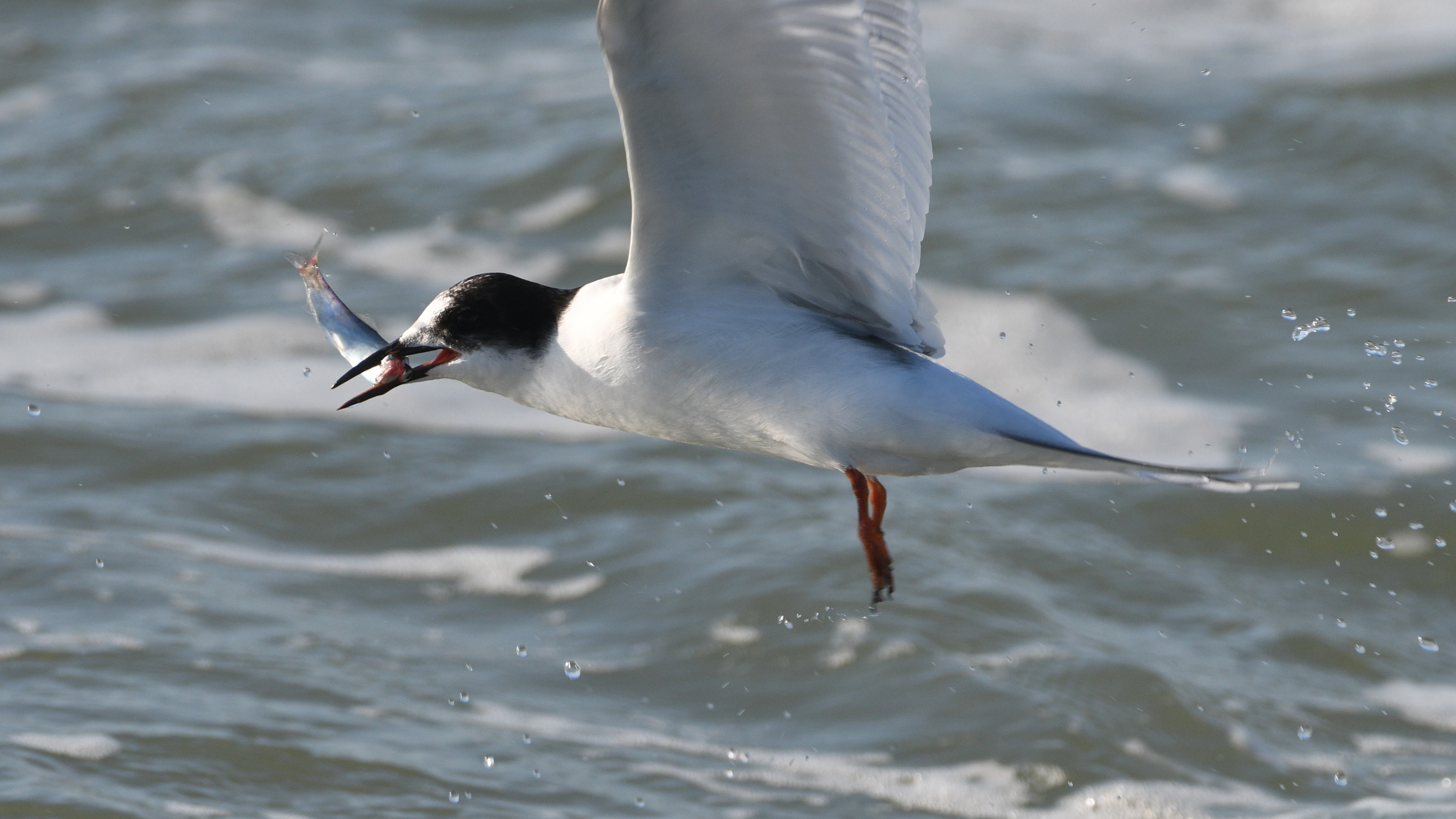 Young Arctic Tern (Havterne) with an Atlantic Herring. Foto: Simon Kiesé
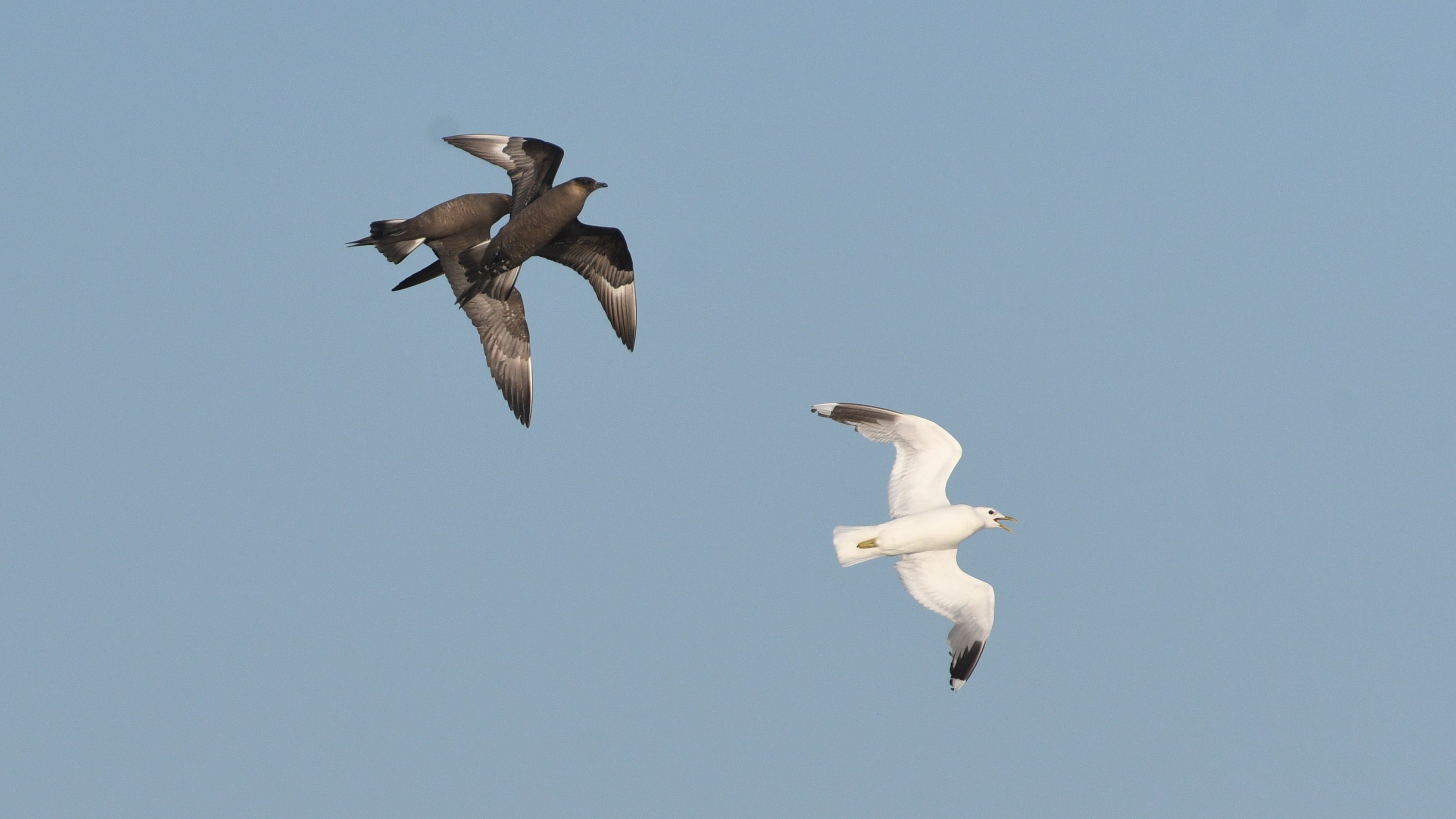 Arctic Skuas (Almindelig Kjove) chasing a Common Gull (Stormmåge). Foto: Simon Kiesé
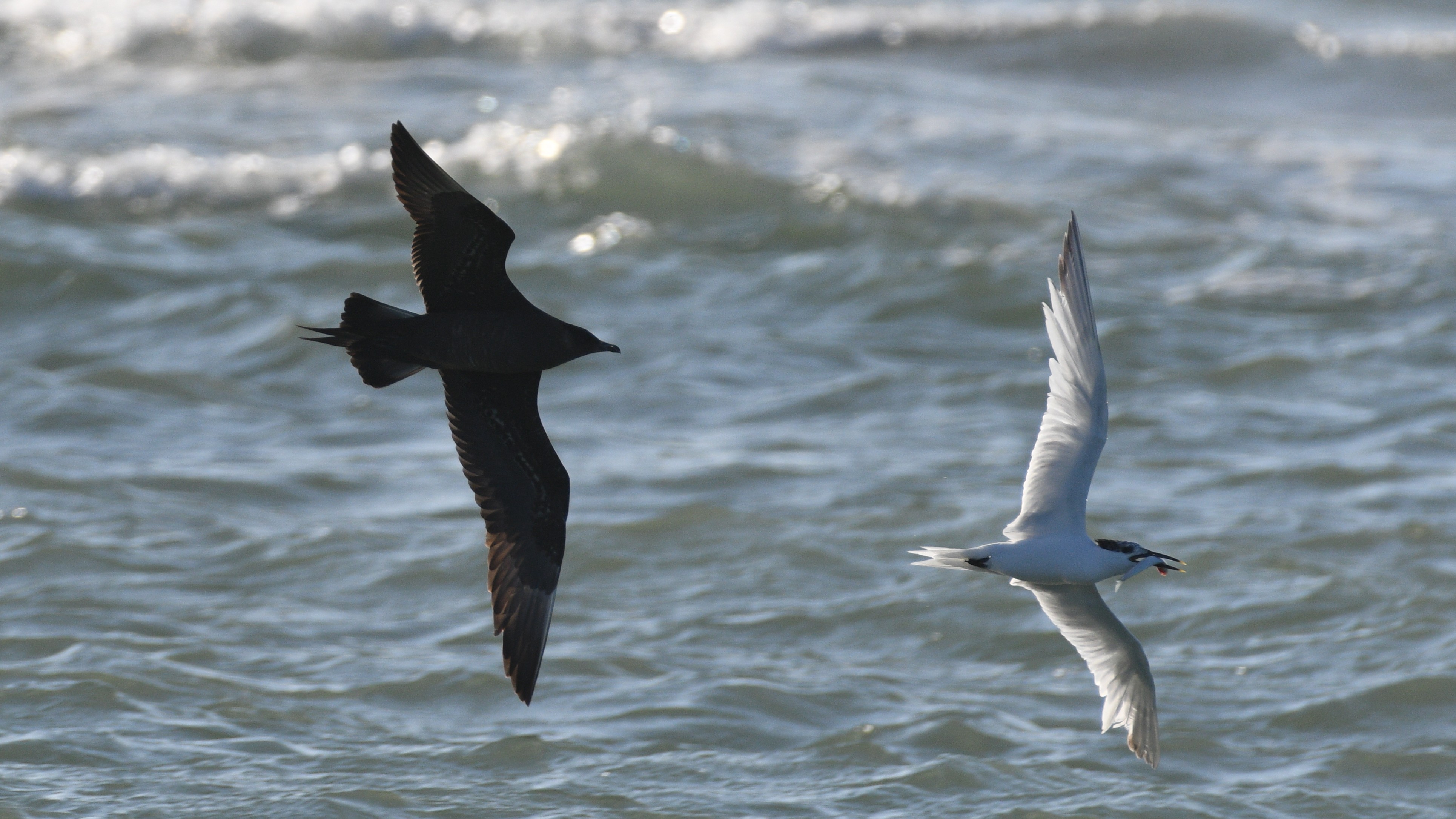 Arctic Skua (Almindelig Kjove) chasing a Sandwich Tern (Splitterne). Foto: Simon Kiesé
Let’s see if this skua streak continues tomorrow!
Ringing (Kabeltromlen):
Kærsanger – 3
Gærdesanger – 3
Rørsanger – 2
Tornsanger – 13
Havesanger – 1
Munk – 2
Gransanger – 1
Total: 25
Ringing (Fyrhaverne):
Tornsanger – 1
Total: 1
Highlights from the observations:
Arctic Skua (Almindelig Kjove) – 4
Great Skua (Stor Kjove) – 5
Mediterranean Gull (Sorthovedet Måge) – 4
Link to today’s observations in DOFbasen from observers in the area.
People: Mio Brix, Simon S. Christiansen, Alfred Godsk Geckler, Simon Kiesé, Alexander Nyholm, Jule Tappe, Knud Pedersen, Erik Christophersen.
Diving Birds and Driving Volunteers
lørdag 1. august 2026
Jule was the first one who got up this morning to open the nets at Kabeltrommeln. Simon and Alexander joined her later for the first round. Due to the ongoing westerly wind, there weren't many passerines active, so they didn't catch many birds today. But on the last round they were all happy about a Tree Pipit (Skovpiber) in the net. These birds are always great to see close up.
My morning took me out to World's End 3 to do the migration count. I started with scanning the terns (Terne) and gulls (Måge). There were 7 Mediterranean Gulls (Sorthovedet Måge) on the beach, so still a good number after our and Skagen's all-time highcount of 14 (!) birds yesterday. While scanning the sea, I heard the flight calls of a Temminck's Stint (Temmincksryle), and then it flew quite close over the dune.
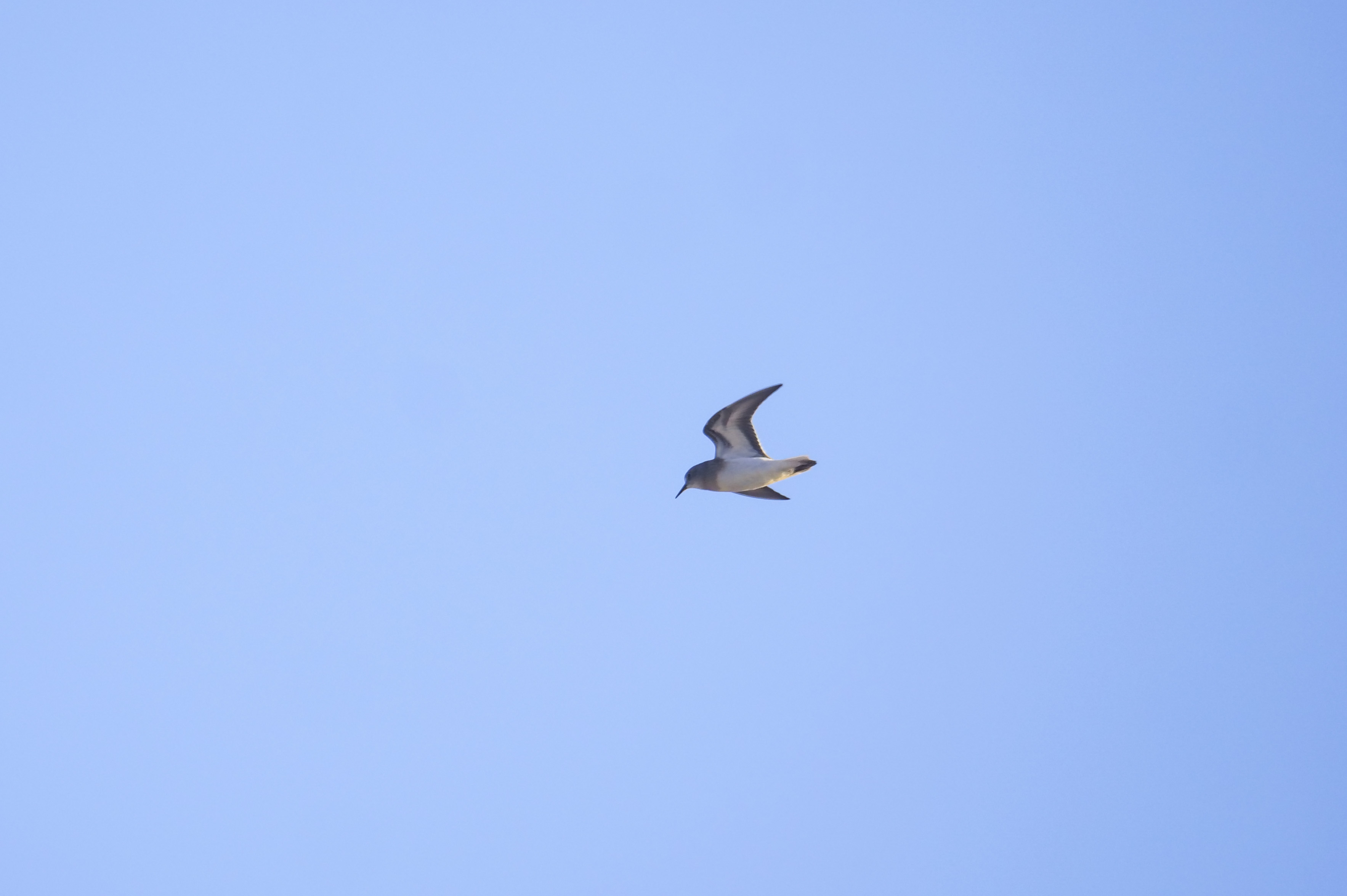 Temminck's stint (Temmincksryle) over World's End 3
Knud and Erik joined me at the end of the second hour, and a few minutes later, I spotted 2 Slavonian Grebes (Nordisk Lappedykker) swimming quite close to the shoreline. One 1K and one adult bird, which was moulting into winter plumage but still had some feathers of its breeding plumage. But that was not the only highlight of the count: while scanning the Kattegat to look for some resting birds, for example the known Long-tailed Duck (Havlit), which I also found later on, Knud spotted a 2K Great Northern Diver (Islom) close to the shoreline, another nice diving bird today! Jule, Simon and Alexander were also able to see both the Slavonian Grebes (Nordisk Lappedykker) and the Great Northern Diver (Islom) from Kabeltrommeln.
After we all headed back (with the good birds from today in our back), we had a quick breakfast and welcomed Alfred, who will stay here at the station until the 5th of August. Then Mette and Páll picked us up and drove us bit south to ring a clutch of Barn Owls (Slørugle) chicks. We really enjoyed the ride to this place with some music in the car! And of course, we enjoyed ringing the owls!
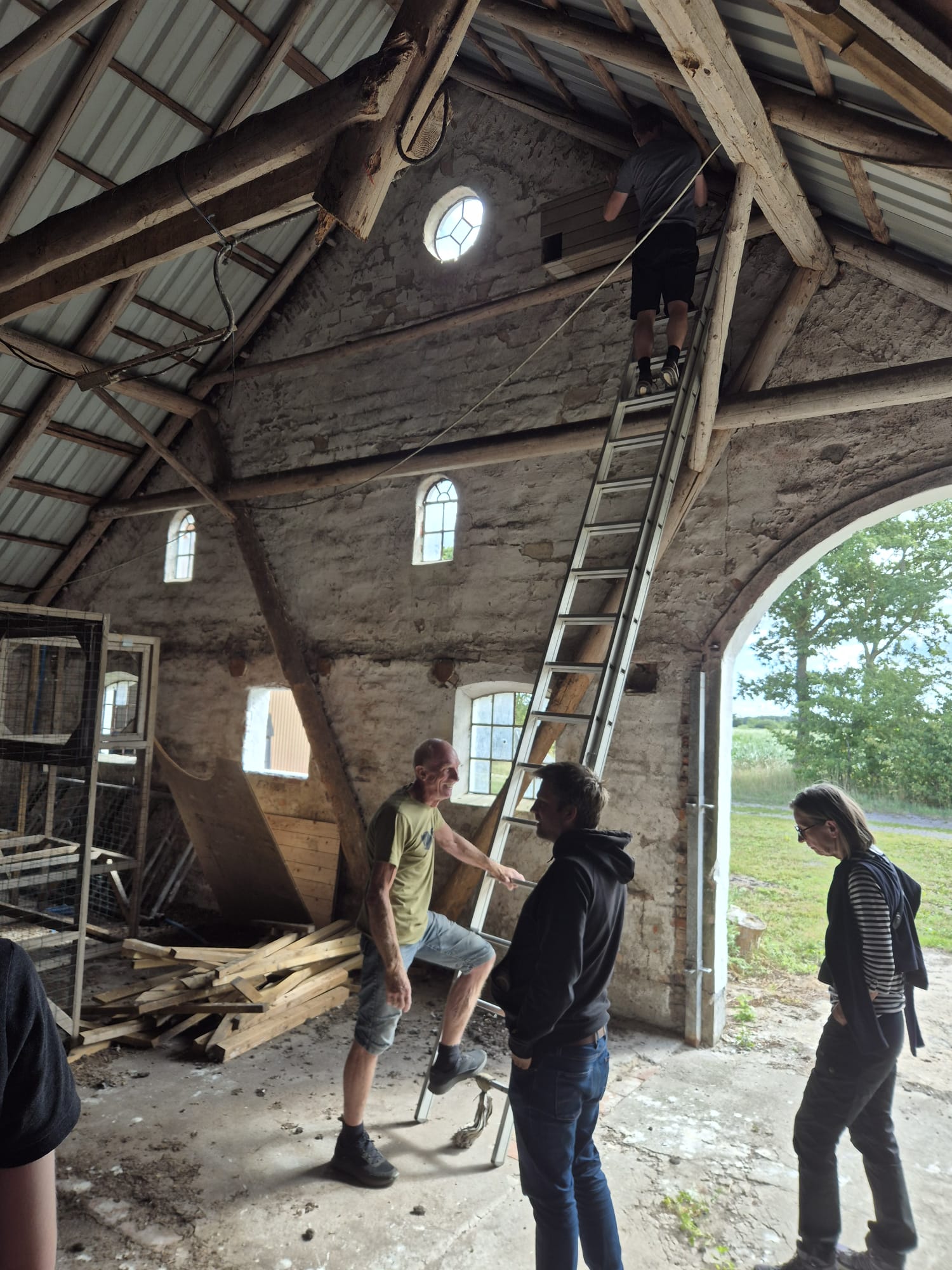 Taking Barn Owls (Slørugle) out of their breeding box
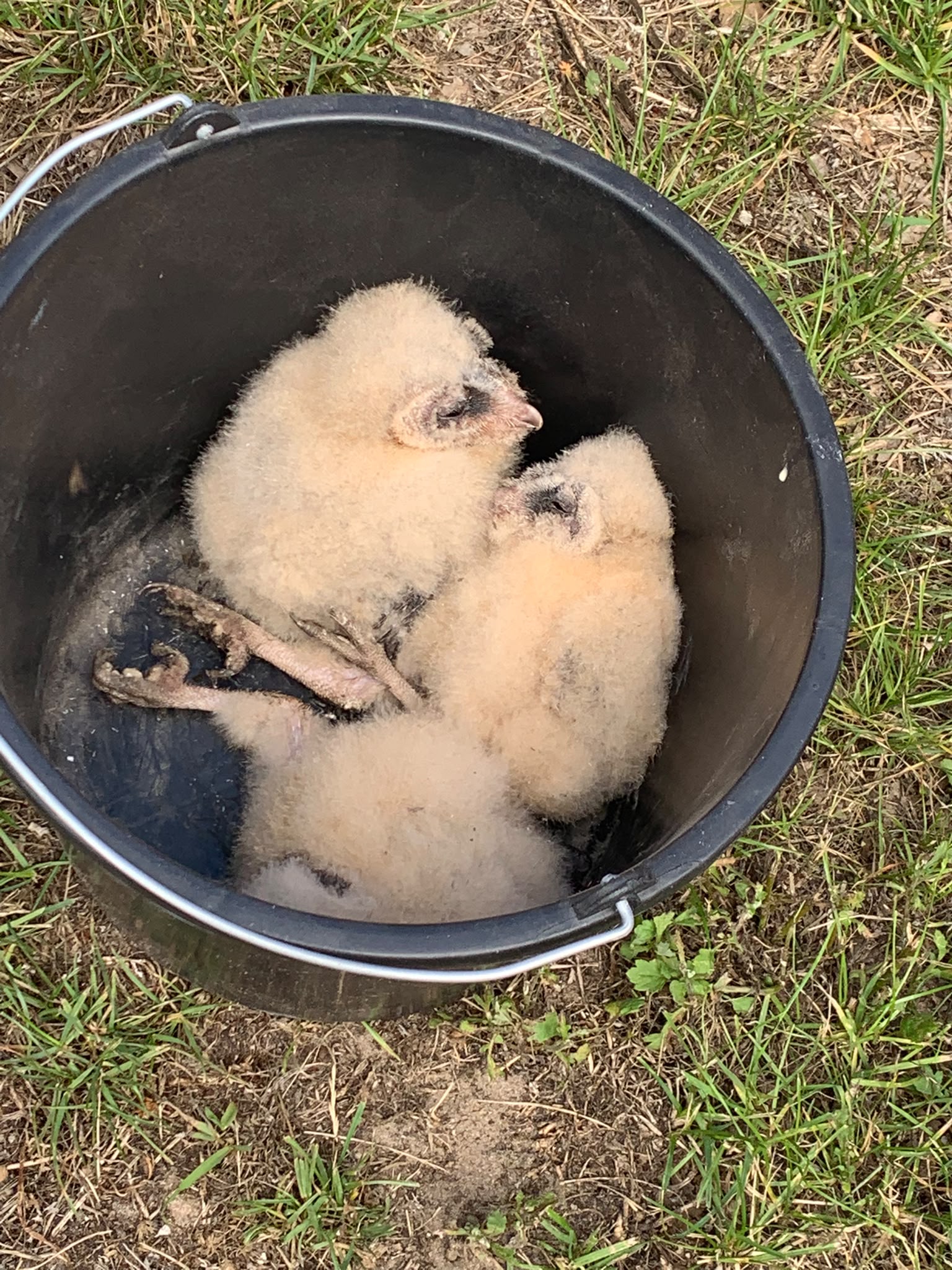 3 Young Barn Owls (Slørugle) waiting for their rings
After we drove back, most of us had a nap, and after that we did our daily tasks, including grocery shopping, and had a nice strawberry cake again! Thanks to Mette for bringing this delicious cake two days in a row!
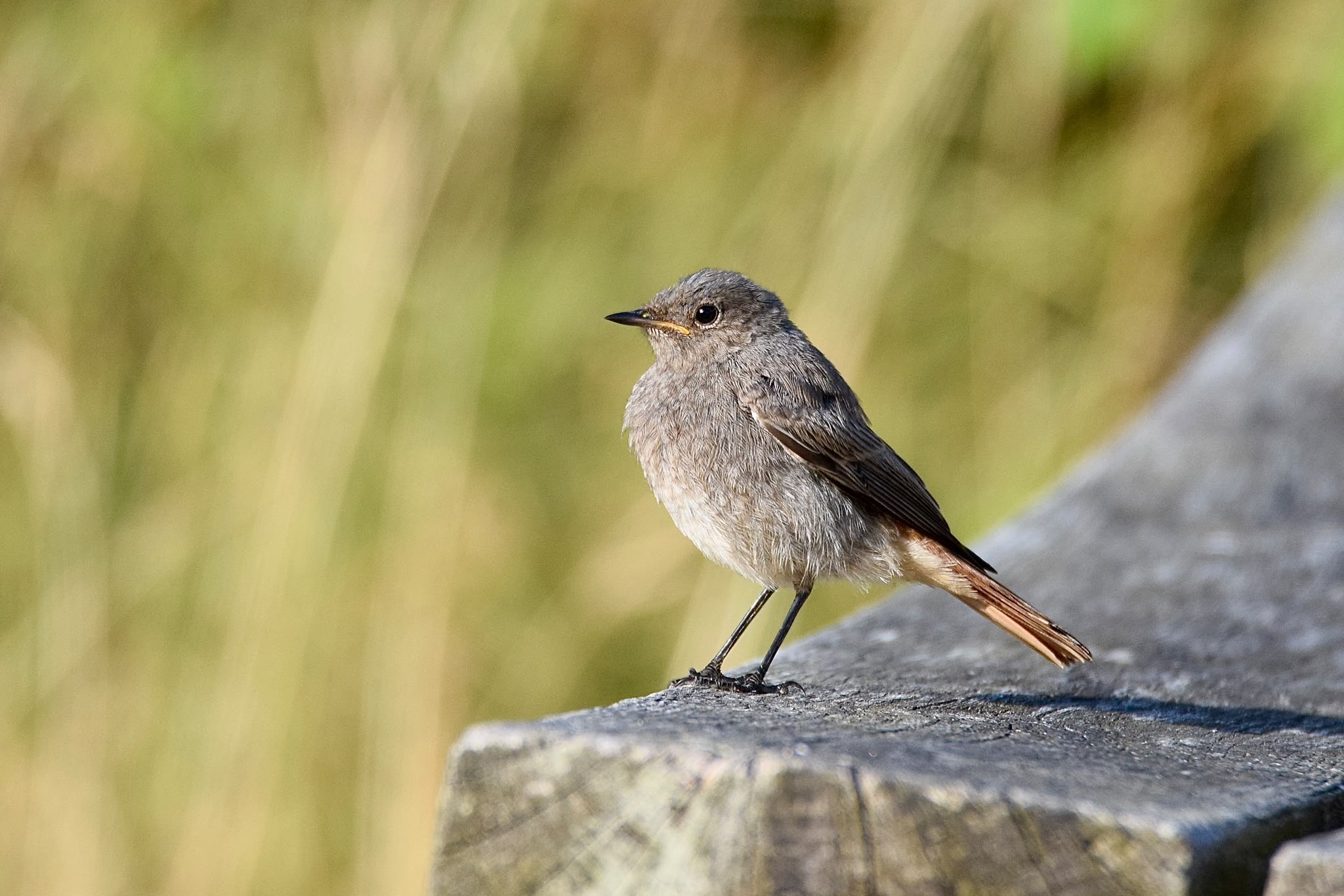 1K Black Redstart (Husrødstjert) in the lighthouse garden. Picture by Alfred
And with that, another day at Skagen Fuglestation comes to an end. Let's see what the next days will bring!
Ringing (KAB):
Wren (Gærdesmutte)-2
Willow Warbler (Løvsanger)
Dunnock (Jernspurv)
Reed Warbler (Rørsanger)
Blackcap (Munk)-1
Tree Pipit (Skovpiber)-1
Total:13
Common Whitethroat (Tornsanger)- 6
Ringing (Nordøstvendsyssel):
Barn Owls (Slørugle)-3
Highlights from the observation:
Great Northern Diver (Islom)- 1
Slavonian Grebes (Nordisk Lappedykker)-2
Temminck's stint (Temmincksryle)-1
Mediterranean Gulls (Sorthovedet Måge)-7
Cuckoo (Gøg)-1
Link to today’s observations in DOFbasen from observers in the area.
People: Jule Tappe, Mio Brix, Simon Kiesé, Alexander Nyholm, Alfred Godsk Geckler, Mette Breede,Páll Vang Kjærbo, Lisa Vergin, Simon S. Christiansen, Knud Pedersen, Erik Christophersen.
My highlight was the strawberry cake
fredag 31. juli 2026
The length of my blog post reflects the number of birds spotted today, which is why it’s going to be a short one (spoiler: it's not). The reason for this was the increasing westerly wind.
During the ringing session, we were particularly pleased by the good company, but also by a young Spotted Flycatcher (Grå Fluesnapper). Nevertheless, it’s lovely to see birds flying about, such as Honey Buzzards (Hvepsevåge) and a Mistle Thrush (Misteldrossel).
Alexander and Jule spent the morning at WE3, where at least a few waders, such as Bar-tailed Godwits (Lille Kobbersneppe), were resting. A young (1K) White-tailed Eagle (Havørn) flew so close that it almost took their breath away. Jule also finally spotted her very first Black-throated Diver (Sortstrubet Lom). Jule was watching Sule (and perhaps the gannets were watching Jule too).
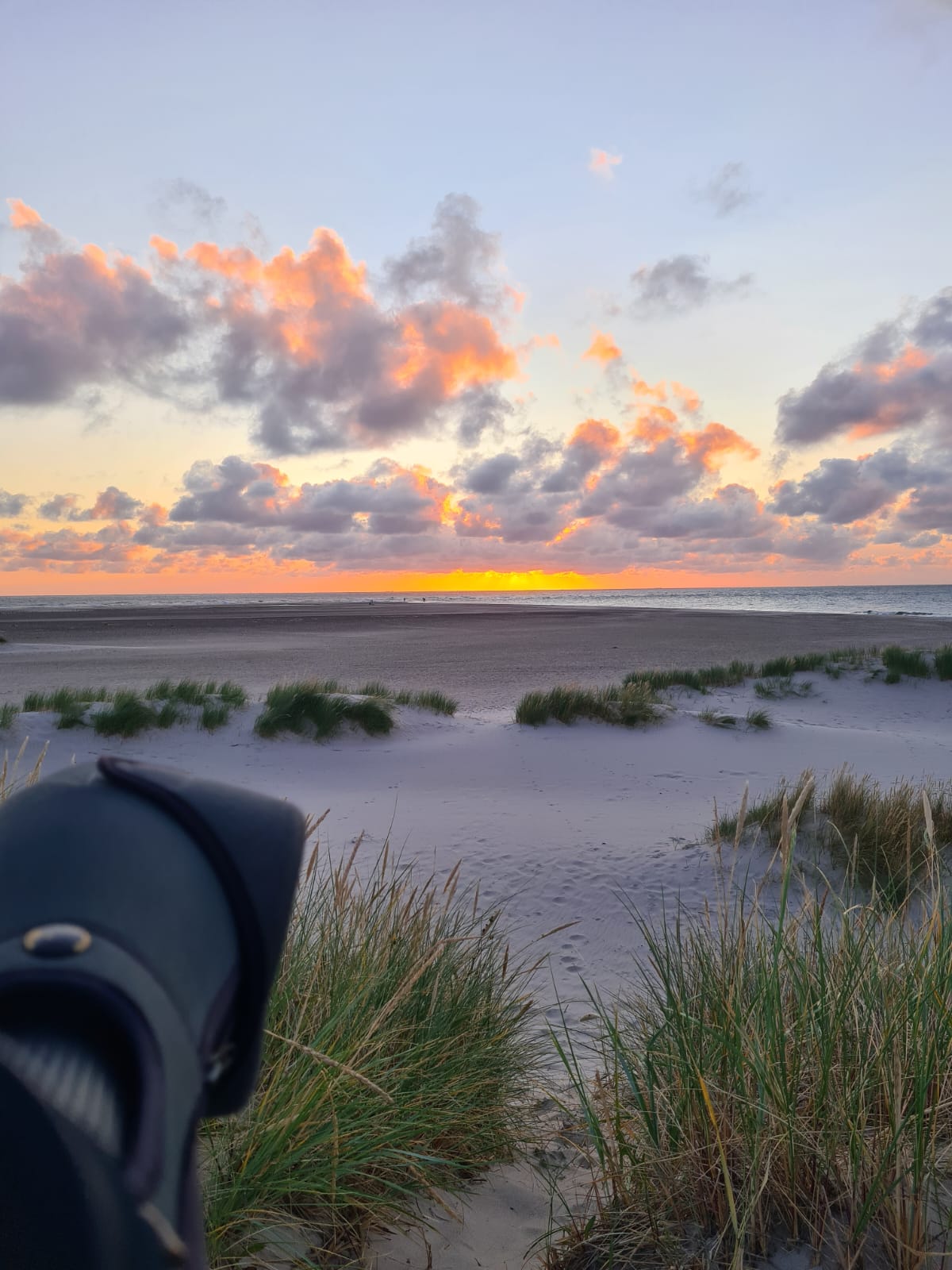 Literally the only picture taken this morning, but a nice one. Taken by Jule.
In the afternoon I played some guitar. Mette gave us delicious Strawberry-Cake, which rounded up Mio's nice dinner. After that, we had some free time, that we wanted to use for one of our favorite activities: birding! So we went out to Grenen. Since I took my camera with me (it has been a while since I did that), you are privileged to see the following story in many pictures!
While walking out towards Grenen, there were already many Terns (Terner) flying around. Also my favorite one, the Arctic Tern (Havterne):
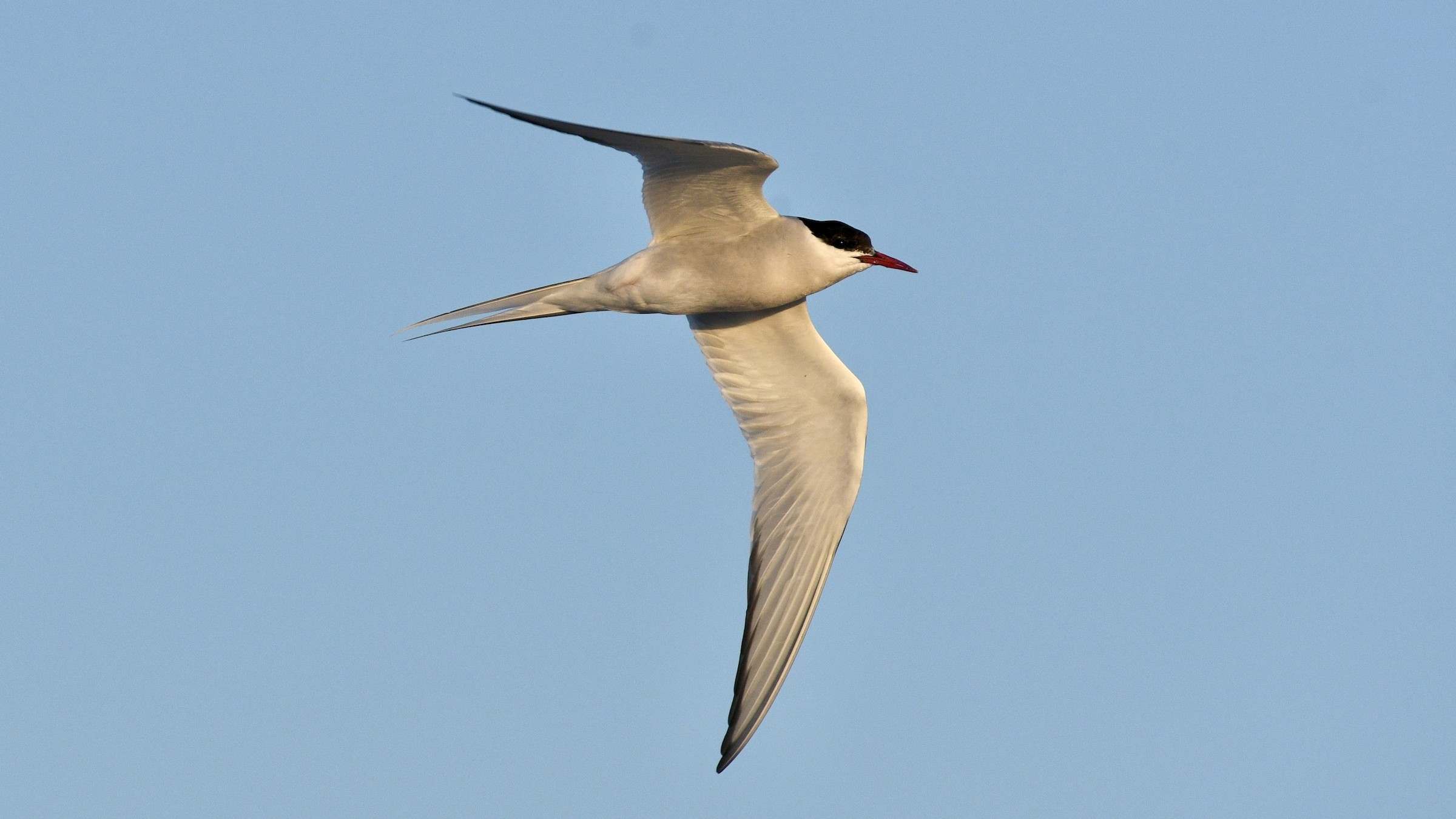 Pure elegance: adult Arctic Tern (Havterne). Picture by Simon Kiesé
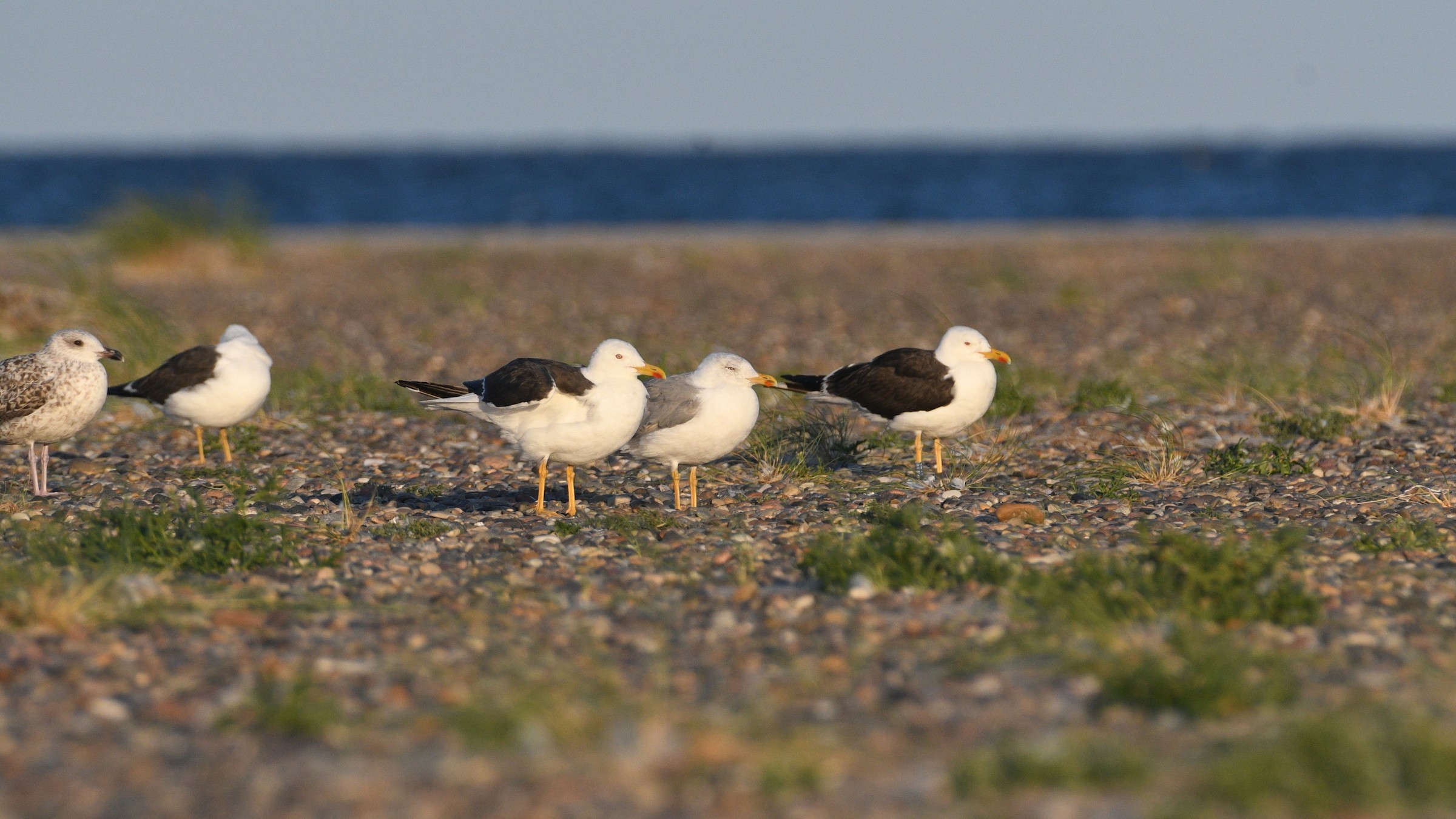 Yellow-legged Gull (Middelhavsølvmåge) in between Lesser Black-backed Gulls. Both have yellow legs, but this is not a helpful criteria, since Herring Gulls (Sølvmåge) can also show this leg colour. Therefore we only identify YLG by its primary patern. Picture by Simon Kiesé
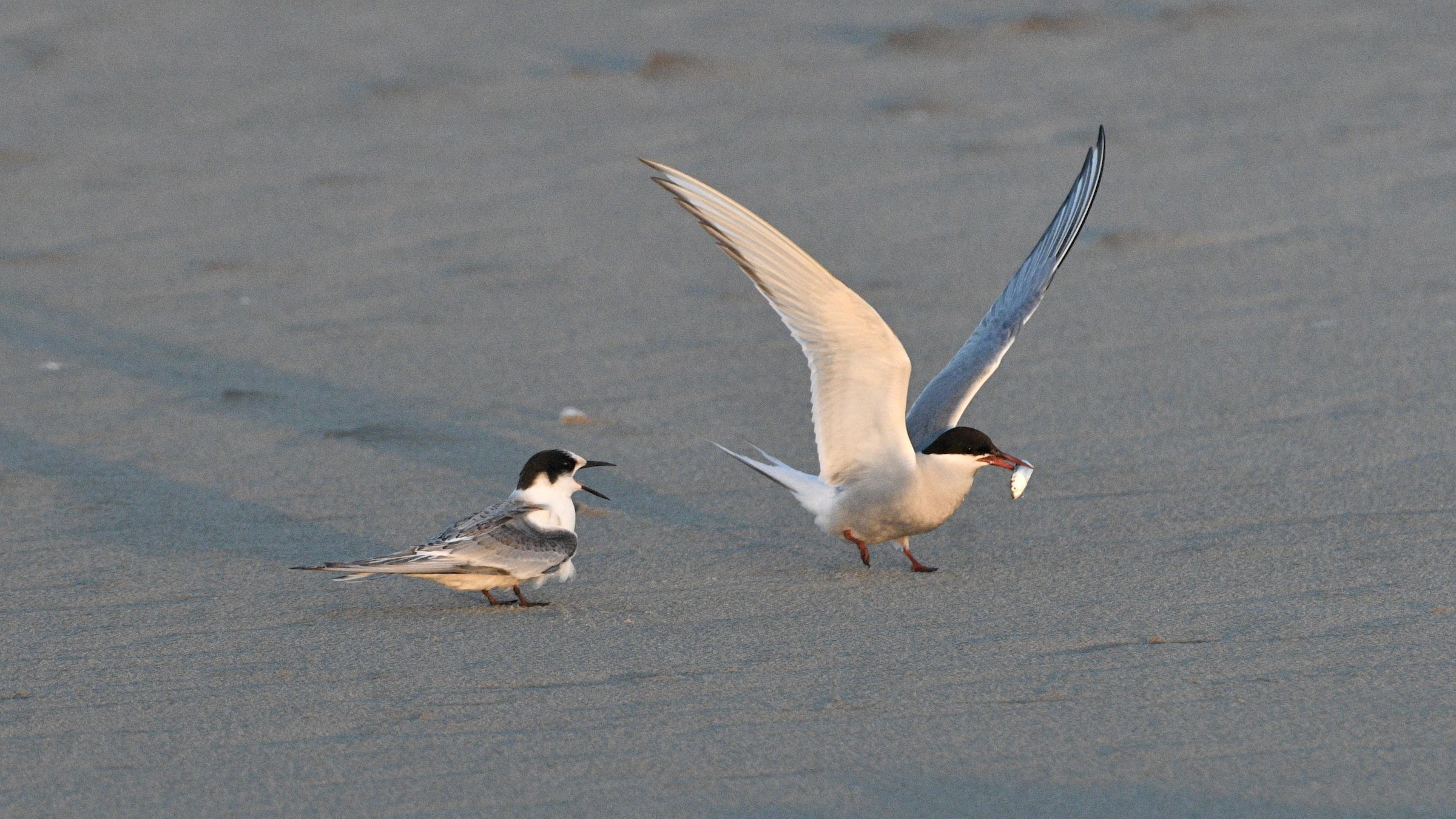 Young Arctic Tern (Havterne) waiting nervously for the partent bringing tasty fish. Picture by Simon Kiesé
We quickly spotted several Mediterranean Gulls (Sorthovedet Måge) in the flock. Even though we see them now every day, we directly noticed, that there were quite many. In the end we counted 14 young ones (3 with german rings): a new Skagen highcount!!
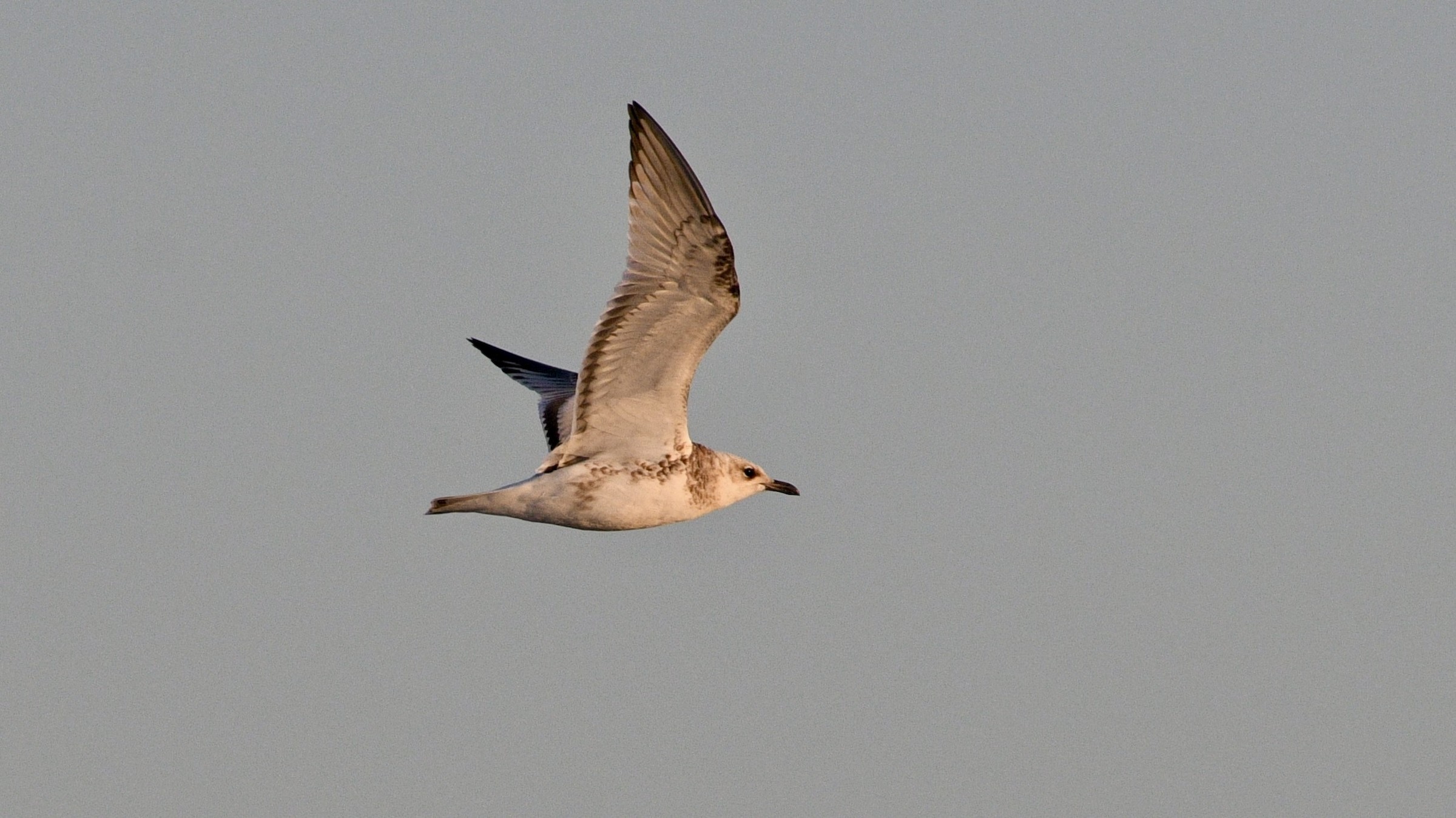 Young Mediterranean Gull (Sorthovedet Måge) - one of 14 birds today: a new Skagen highcount! Picture by Simon Kiesé
After these results (the pictures are not edited, just cropped), I was really satisfied and coult not wait to check the pictures on my laptop. That's why I now write this blog at 11.50 pm. Time to go to bed.
*Since the hosting had problems, I was not able to update the blog. So this version is updated now finally (yayyy) on the 3rd of August.
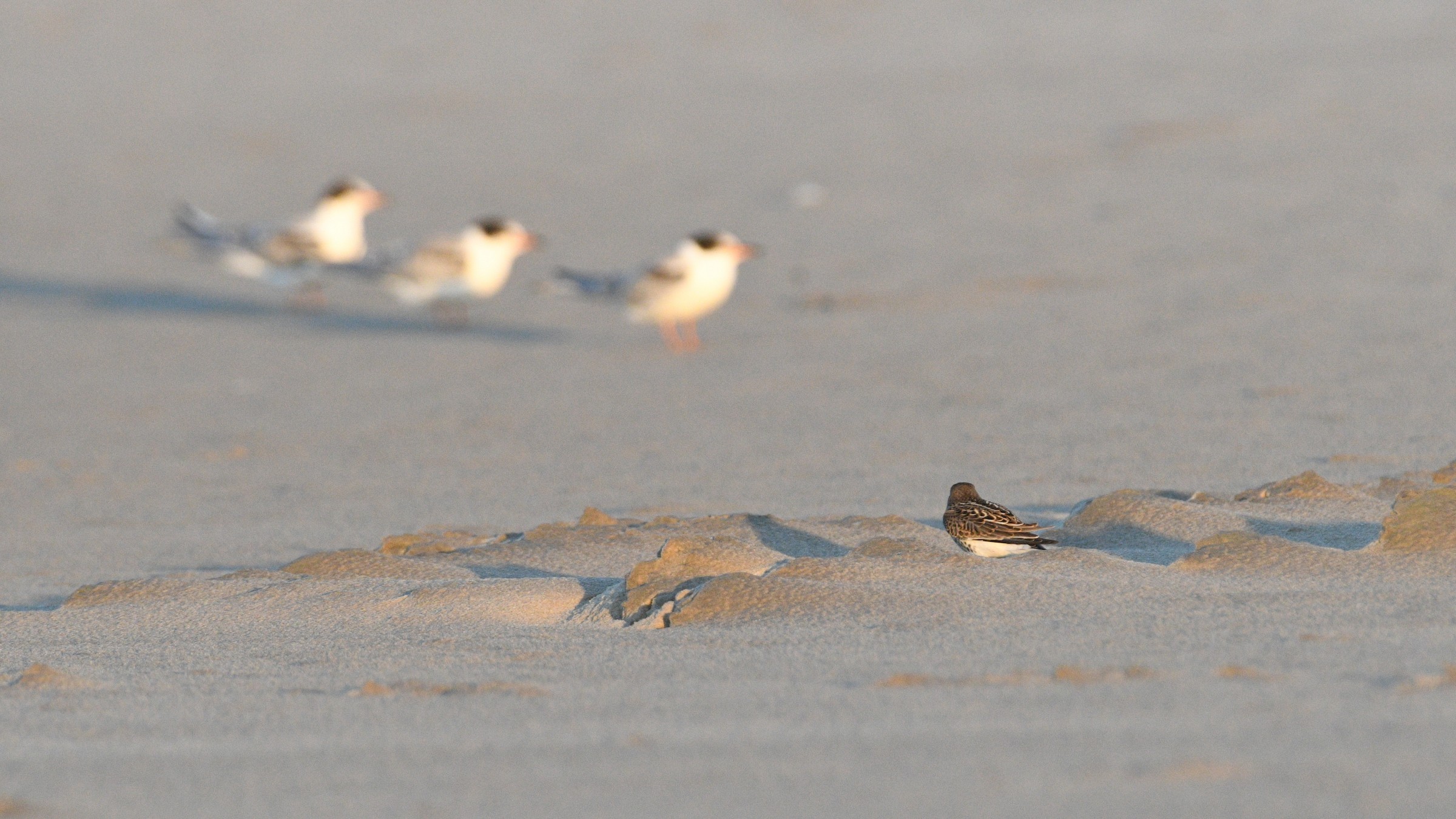 Quiz picture: can you identify both species? ;-)
Ringing (KAB):
| Common Whitethroat | Tornsanger | 7 | ||||||||||||||
| Reed Warbler | Rørsanger | 1 | ||||||||||||||
| Chiffchaff | Gransanger | 1 | ||||||||||||||
| Blackcap | Munk | 2 | ||||||||||||||
| Spotted Flycatcher | Grå Fluesnapper | 1 | ||||||||||||||
| Willow Warbler | Løvsanger | 1 | ||||||||||||||
| Blackbird | Solsort | 1 |
Total: 14
Highlight in today's observations:
Yellow-legged Gull (Middelhavsølvmåge) - 1 (known 4K bird still present)
Mediterranen Gulls (Sorthovedet Måge) - 14 (New Skagen highcount!)
Link to today’s observations in DOFbasen from observers in the area.
People: Jule Tappe, Mio Brix, Simon Kiesé, Alexander Nyholm, Mette Breede, Páll Vang Kjærbo, Simon S. Christiansen.
Big ringing day with Storm-Petrel + a Waxwing!
torsdag 30. juli 2026
The day started really early today when a little over midnight Mette woke Simon, Mio and me up and told us they had caught a small black bird at the beach. Simon and I immediately realised that it must be a Storm-Petrel, so we quickly rush down to the lab.
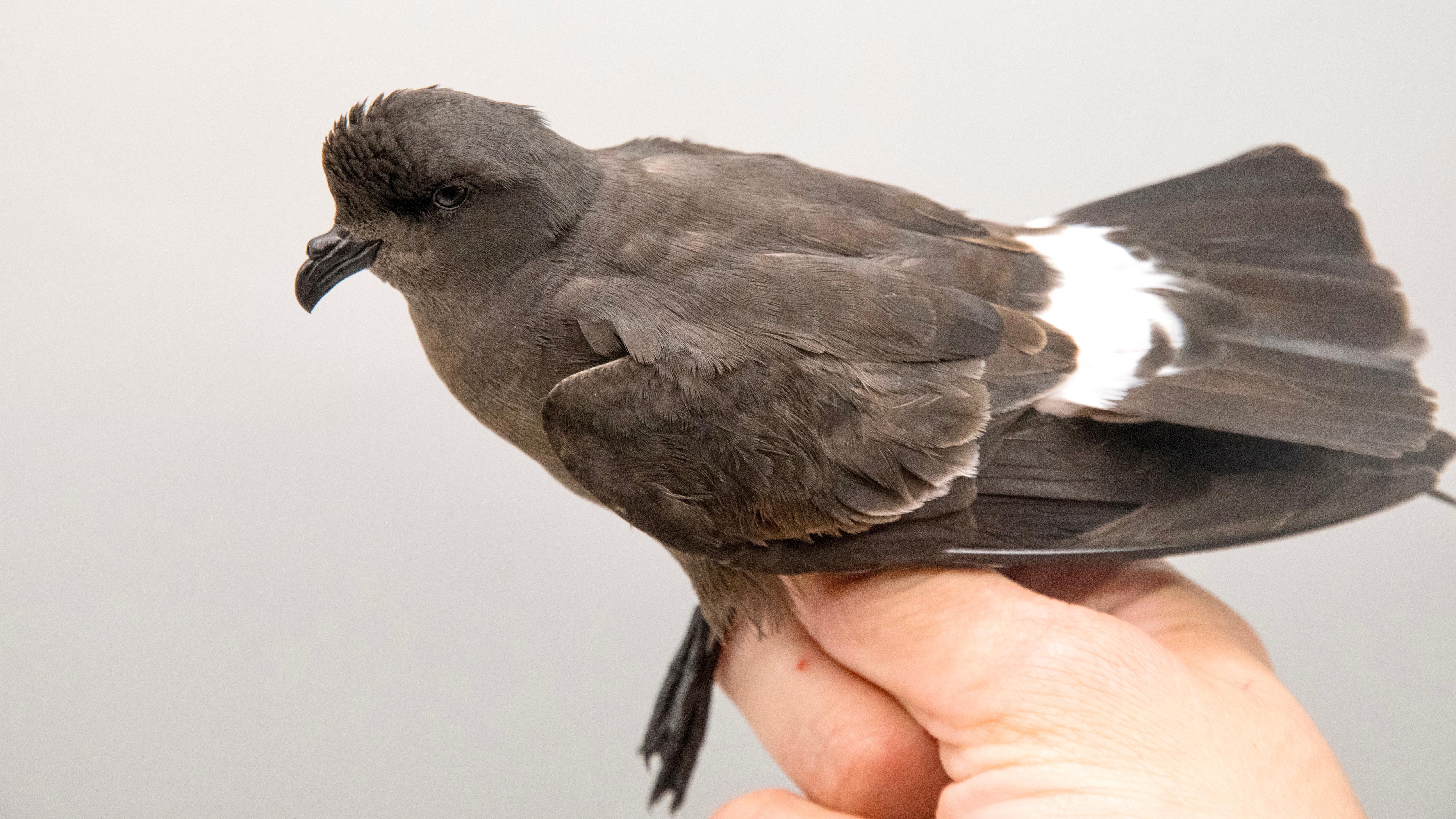 European Storm-Petrel (Lille Stormsvale) tonight. Picture by Simon Kiesé
It was a European Storm-Petrel (Lille Stormsvale) and suddenly the low amount of sleep seems worth it. Around 8 people went to see this seldom observed pelagic species in the middle of the night and it was a lifer for me.
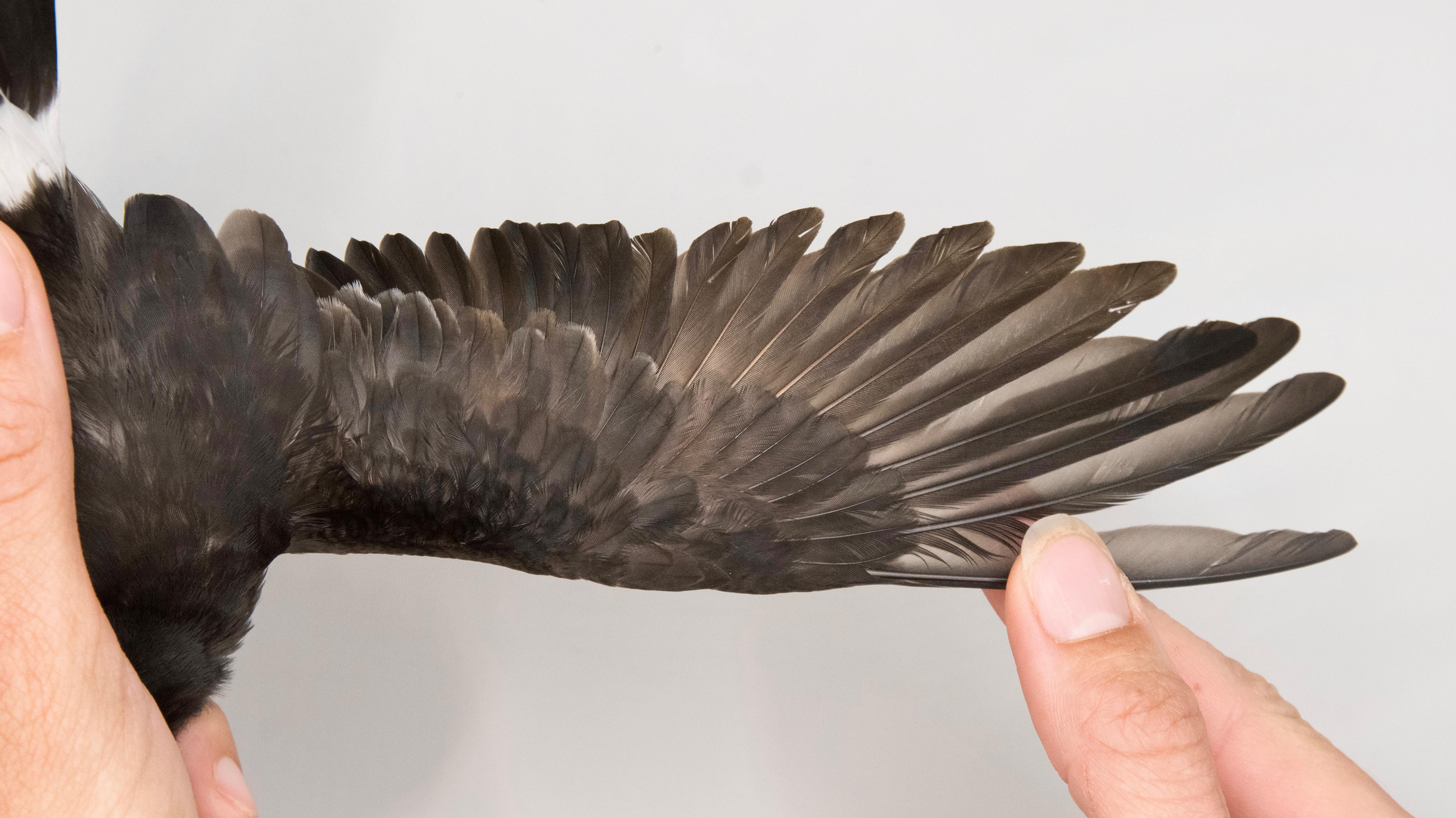 Wing picture of the 3cy.+ Storm-Petrel. Picture by Simon Kiesé
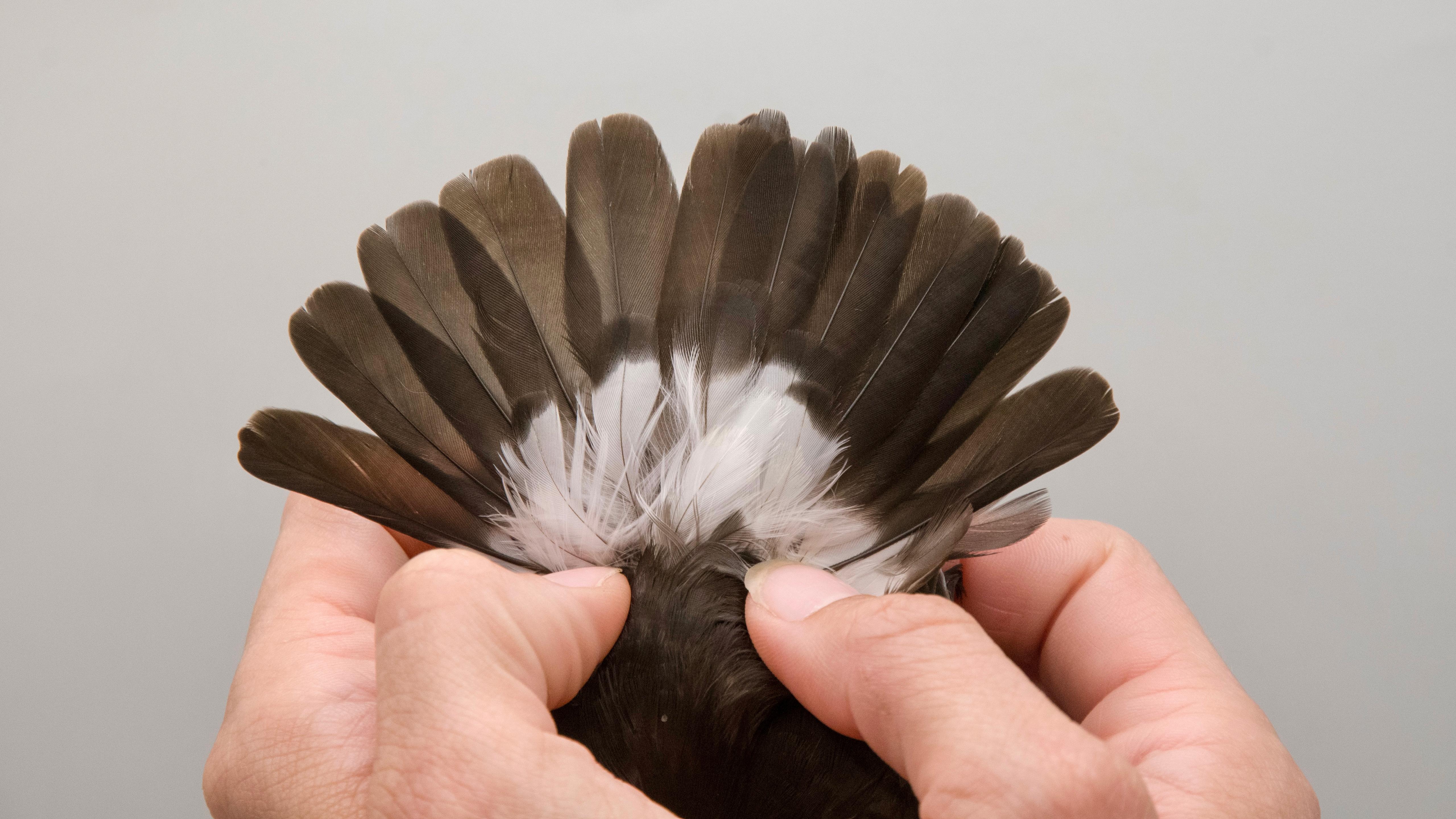 Look at the white rump! Picture by Simon Kiesé
When we woke up again a few hours later it was time for ringing at Kabeltromlen. Today it was Jule, both Simon’s, Mette and me at the ringing. Today would be a day with a lot of birds and especially warblers and we ended up ringing 67 birds and 9 different species of warblers. Most common was a staggering 28 Common Whitethroats (Tornsanger). We also caught a nice Wood Warbler (Skovsanger). We had quite a few visitors at the ringing today as well, which was nice.
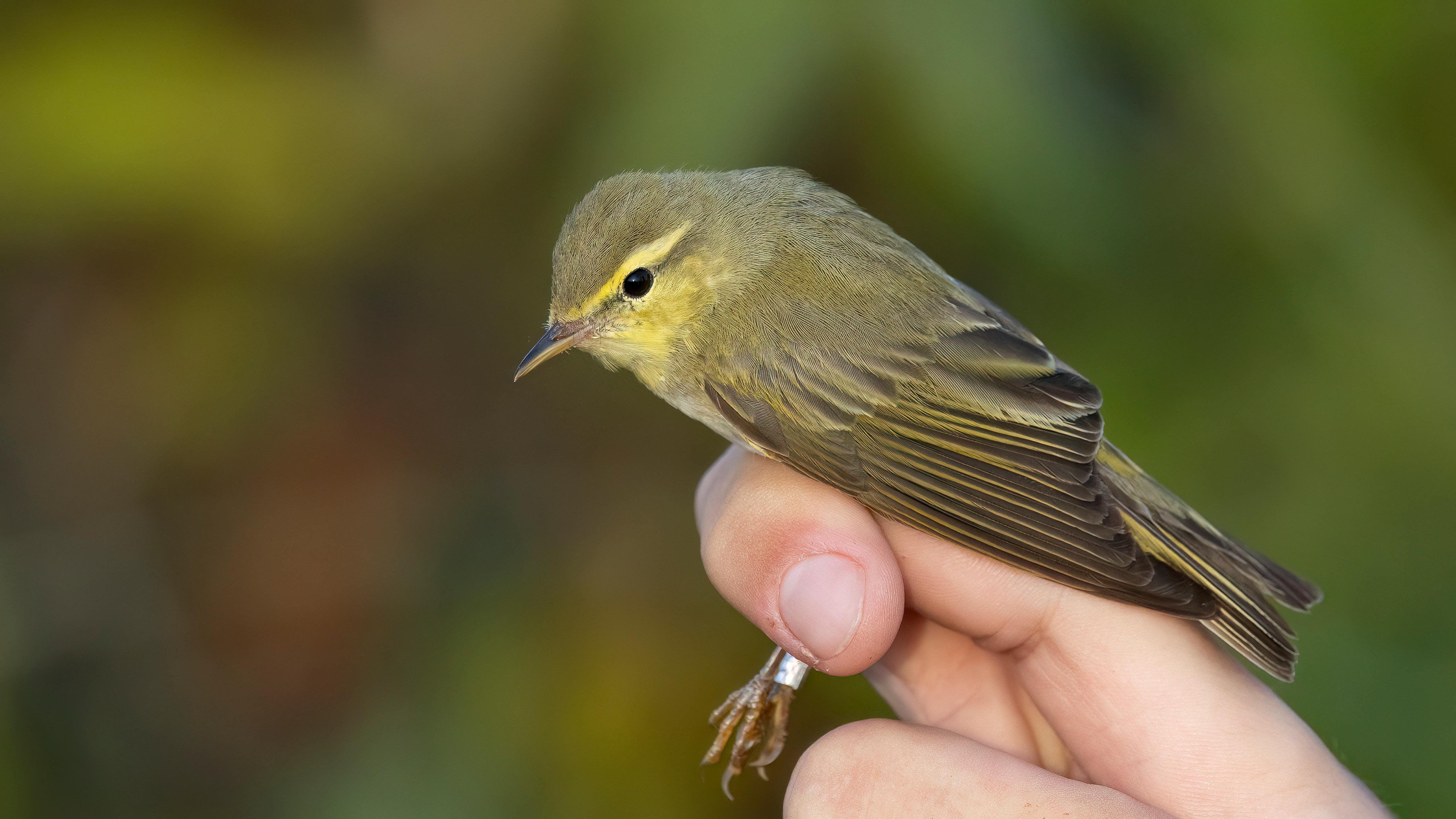 Wood Warbler (Skovsanger). Picture by Knud Pedersen
Other highlights from the ringing include Lesser Redpoll (Lille Gråsisken) and Garden Warbler (Havesanger). During the ringing period a few good species came by including a Common Rosefinch (Karmindompap), adult Caspian Tern (Rovterne) and most surprisingly a summer record of Bohemian Waxwing (Silkehale). Only the 3rd time this species has been recorded in the area during July. There was also a good number of Kestrels (Tårnfalk) flying through.
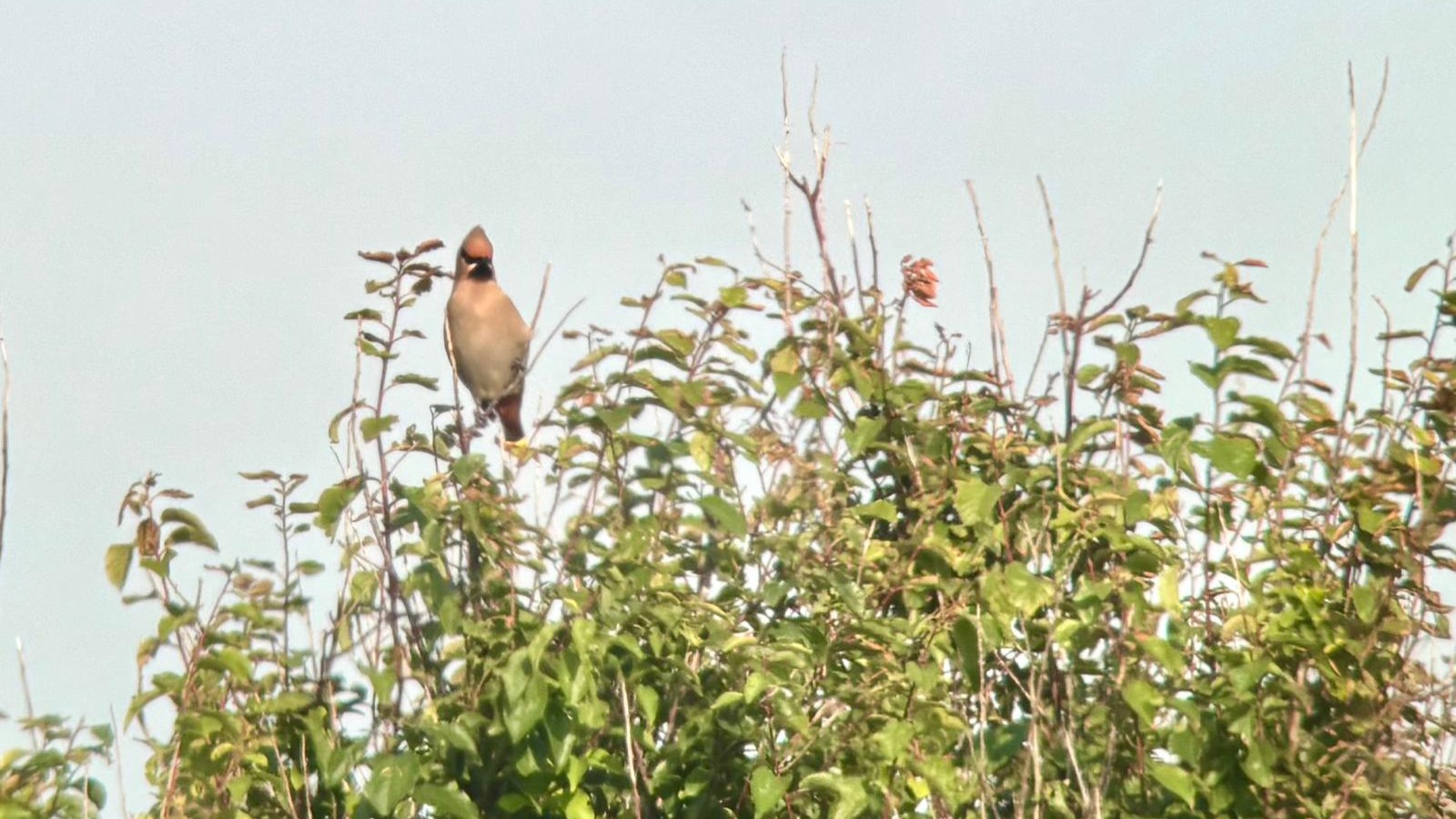 Bohemian Waxwing (Silkehale) at Kabeltromlen. Picture by Simon Kiesé
Mio was on observation duty today at Grenen. In the first hour he had a lot of migrating shorebirds compared to the last few days including: Whimbrel (Småspove), Bar-tailed Godwit (Lille Kobbersneppe), Ruddy Turnstone (Stenvender) and a lot of sandpipers the “tringa” genus (Klirer). Espacially Spotted Redshank (Sortklire) is not that common up here. In the second he also had a Great Skua (Storkjove) migrating north-west.
We ended the day by watching 168 Fulmars (Mallemuk) from the dune just outside the lighthouse.
Ringing (KAB):
Chiffchaff (Gransanger) - 9
Blue Tit (Blåmejse) - 7
Common Whitethroat (Tornsanger) - 28
Garden Warbler) Havesanger - 1
Blackcap (Munk) - 5
Lesser Redpoll (Gråsisken, Lille (ssp. cabaret)) - 1
Willow Warbler (Løvsanger) - 1
Icterine Warbler (Gulbug) - 4
Lesser Whitethroat (Gærdesanger) - 5
Wood Warbler (Skovsanger) - 1
Reed Warbler (Rørsanger) - 2
Marsh Warbler (Kærsanger) - 3
Total: 67 new (+7 recap)
Ringing (Det Grå Fyr):
European Storm-Petrel (Lille Stormsvale) - 1
Highlights from the observation:
Waxwing (Silkehale) - 1 (3rd July record for Skagen; sound recording of its call on this link)
Caspian Tern (Rovterne) - 1 (Listen to recording of its call on this link)
Great Skua (Storkjove) - 1
Rosefinch (Karmindompap) - 1
Link to today’s observations in DOFbasen from observers in the area.
People: Jule Tappe, Mio Brix, Simon Kiesé, Alexander Nyholm, Mette Breede, Lisa Vergin, Knud Pedersen, Simon S. Christiansen.