
Her på Skagen Fuglestations blog bringes korte nyheder i dagbogsformat om hændelser på fuglestationen.
-
FORSIDE

- Blog
Se indlæg fra måned: jan. (23)feb. (8)mar. (31)apr. (30)maj (31)juni (29)juli (31)aug. (31)sept. (30)okt. (10)
Various Sea Mammals
tirsdag 31. marts 2026
It was a beautiful sunrise with only some clouds and a decent wind blowing from the southeast, as Alvin, Dylan and I biked to Grenen for the migration count today, while Alix, János and Julia, the Danish volunteer who arrived yesterday evening and will stay with us for four days, were already ringing at Kabeltromlen. Both the migration and the ringing started off pretty slowly with not so many birds in total. Nice sightings although were two White-tailed Eagles (Havørn), the Glaucous Gull (Gråmåge) again and a 2cy Gannet (Sule), which means an individual that hatched last year and is very uncommon to see here this time around, because they normally remain on their wintering grounds during summer. Apart from that, there weren’t any other highlights in the birds, but nevertheless there was more going on out at sea… At half past nine, it was me to spot the first whale. I only saw it once, blowing and then diving away, but judging from its size and the shape of its dorsal fin, it should’ve been a Minke Whale (Minkhval). However, the whale-watching didn’t stop there: About half an hour later, a group of six Orcas (Spækhugger) appeared. Over the course of the next two hours, we were able to observe them very well, getting some great views on them at times.
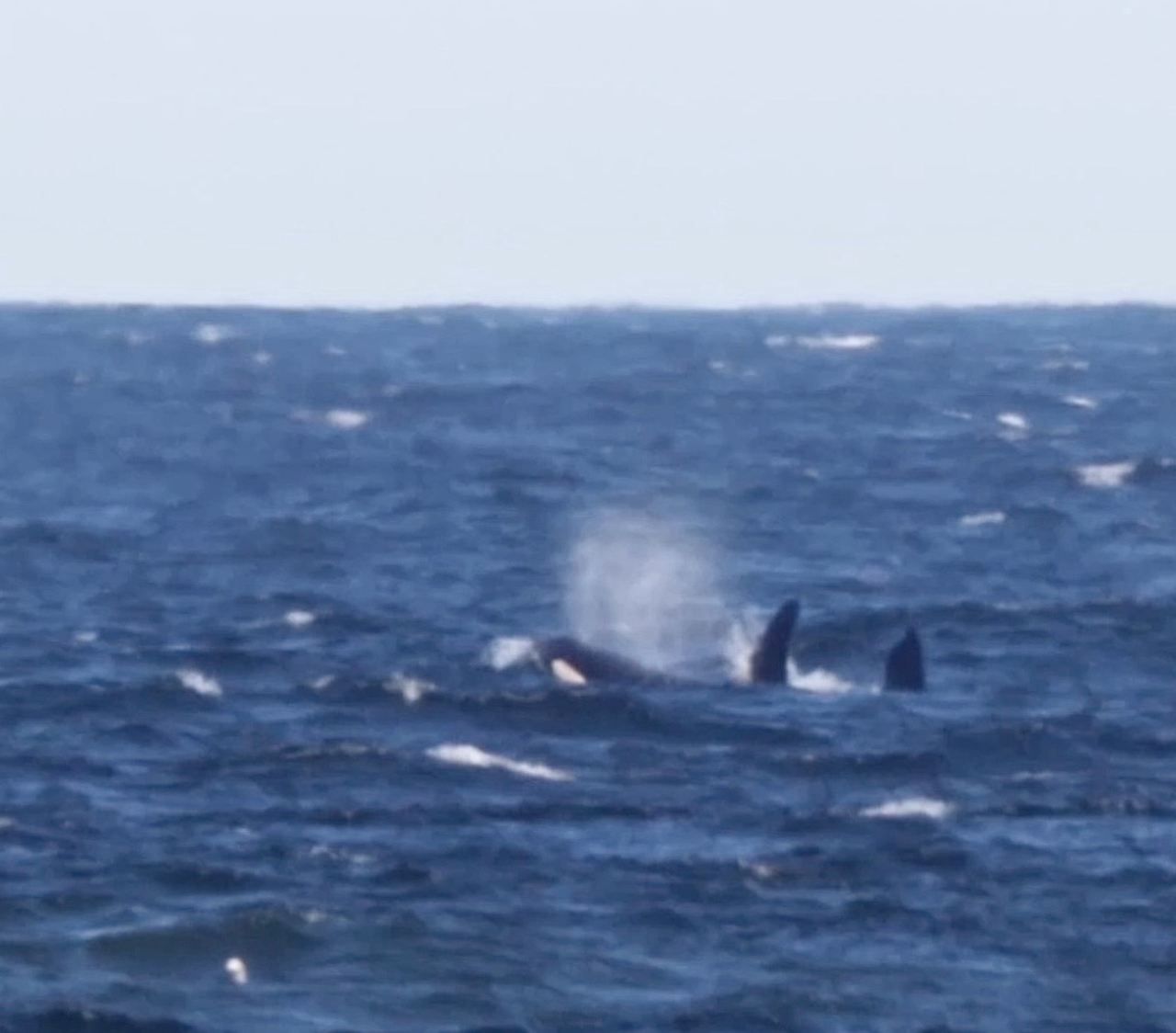
Whale in sight!
For Alvin and me it was the first time ever to observe this very impressive species, and therefore also a little bit exciting. After performing a silly but cheerful activity we call “sand dune jumping“ (sdj) which warmed us up after the four hours of sitting in the wind, we biked back to the station.
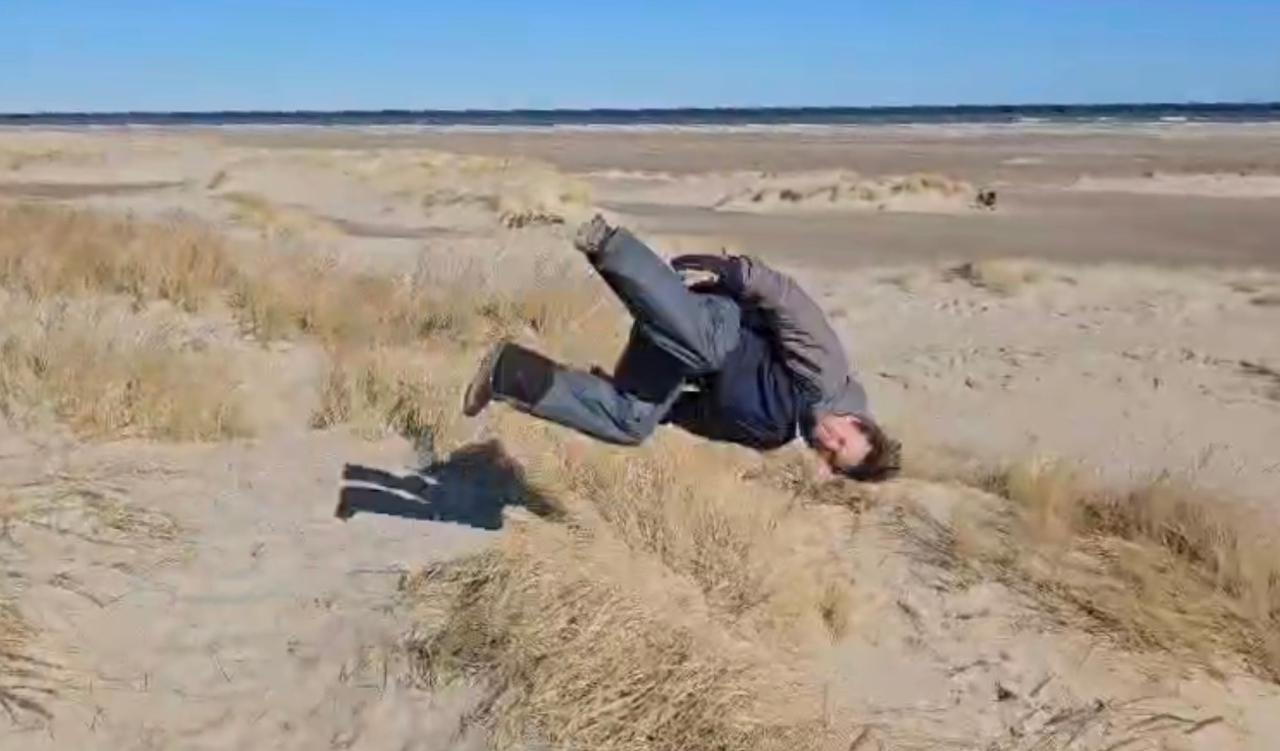
Sand Dune Jumping!
In the afternoon, Dylan and Alvin wanted to build a moth trap to set up in the next days and maybe catch some interesting moth species, but there were some complications to it, so they couldn’t complete the contraption. It’s a project for the following days then. Later on, János and Dylan had the opportunity to guide a bird-watching tour, going to Grenen and Nordstrand, keeping an eye out both inland and on the sea. They’ve had a very kind and interested audience, and all together they were able to observe some nice birds, for example a singing male Stonechat (Sortstrubet Bynkefugl), Sanderlings (Sandløber) and Teals (Kirkand); they also heard a Bittern (Rørdrum). In the meantime, Alix and Alvin went shopping for groceries, while Julia and I both went on a small and very sunny evening walk. On the way to Grenen, a little Grey Seal (Gråsæl) was laying on the beach.
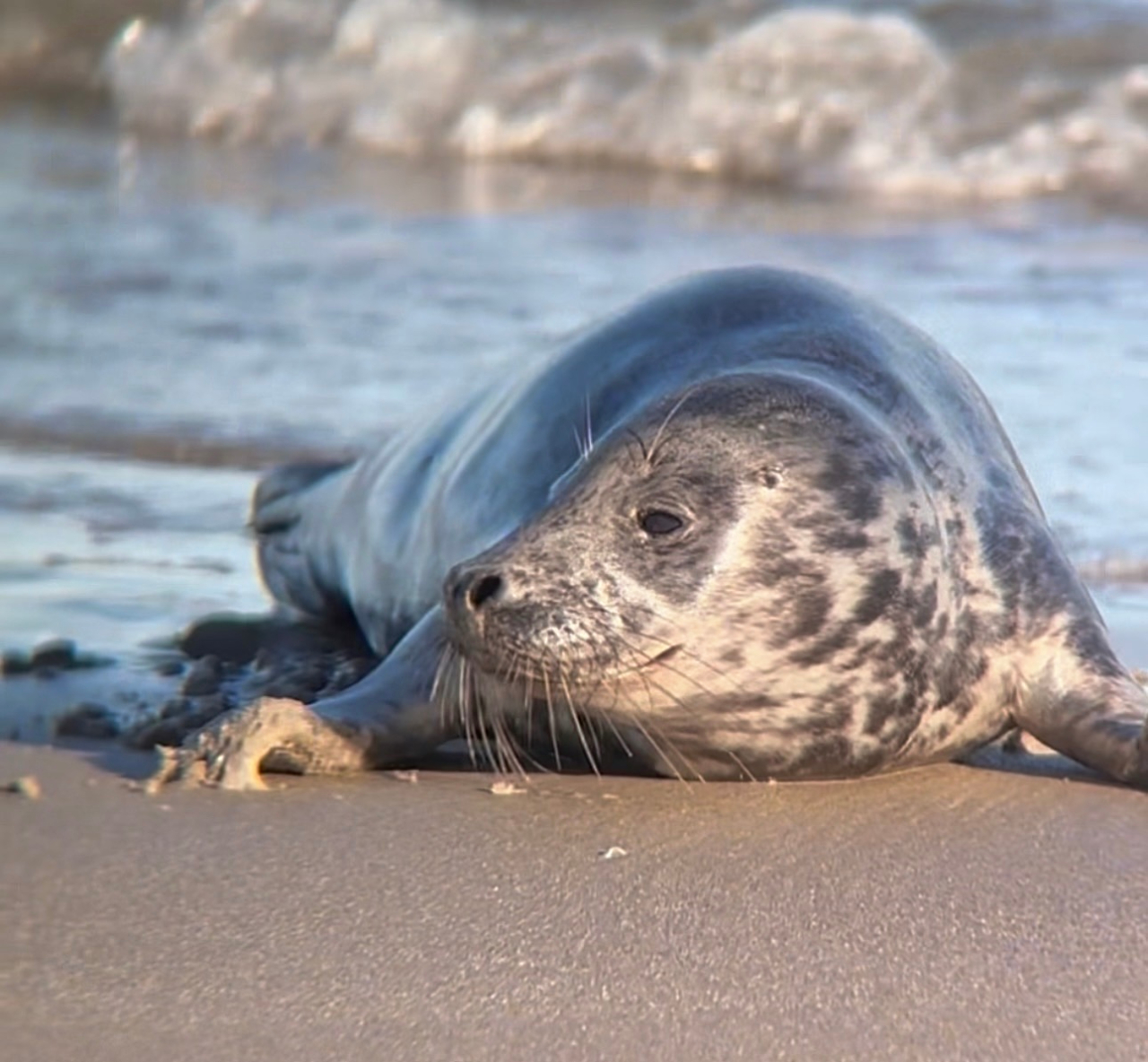
Grey Seal (Gråsæl)
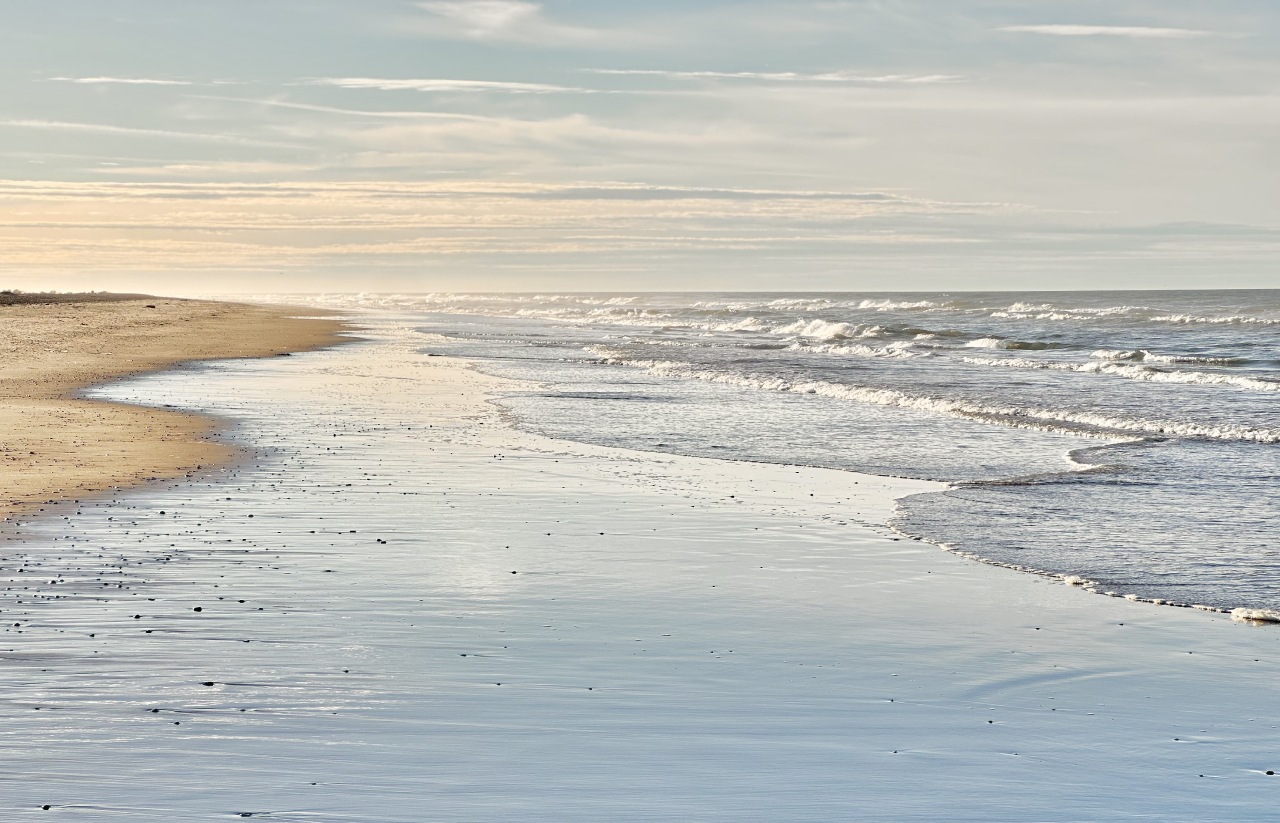
Grenen and evening sun.
The day was rounded off with a delicious spinach ceviche made by Alvin.
Highlights from the observations:
White-tailed Eagle (Havørn) - 2
Glaucous Gull (Gråmåge) - 1
2cy Gannet (2k Sule) - 1
Minke Whale (Minkhval) - 1
Orca (Spækhugger) - 6
White-tailed Eagle (Havørn) - 2
Glaucous Gull (Gråmåge) - 1
2cy Gannet (2k Sule) - 1
Minke Whale (Minkhval) - 1
Orca (Spækhugger) - 6
Ringing (Kabeltromlen)
Gransanger - 1
Jernspurv - 1
Bogfinke - 1
Blåmejse - 14
Musvit - 4
Gransanger - 1
Jernspurv - 1
Bogfinke - 1
Blåmejse - 14
Musvit - 4
Summary of today's raptor migration in DOFbasen
People: Alvin Johansson, János Schadl, Alix Bortolussi, Dylan Daunt, Julia Skytte, Julian Helbig, Simon S. Christiansen, Knud Pedersen, Katrin, Tove, Eik and Inger
Cool birds!
mandag 30. marts 2026
Today’s ringing session started with a beautiful view of the setting moon over the dunes. The weather was quiet and clear. The whole morning was filled with an overall lower number of ringed birds than the previous days, but that was due to the fact we had a much lower amount of Blue Tits (Blåmejse) that day.
Diversity-wise, the day was interesting with the highlights being a female Bullfinch (Dompap) and two Redpolls (Gråsisken), one of them being a Lesser Redpoll (Lille Gråsisken) (subspecies cabaret) and the other being of the flammea subspecies (Nordlig Gråsisken) which is fenno-scandinavian. These two individuals were particularly interesting to compare as they were caught at the same time, so we could study their differences and notice the subtle variations of these two subspecies. Both were adult males, which made their plumage especially enjoyable as well.
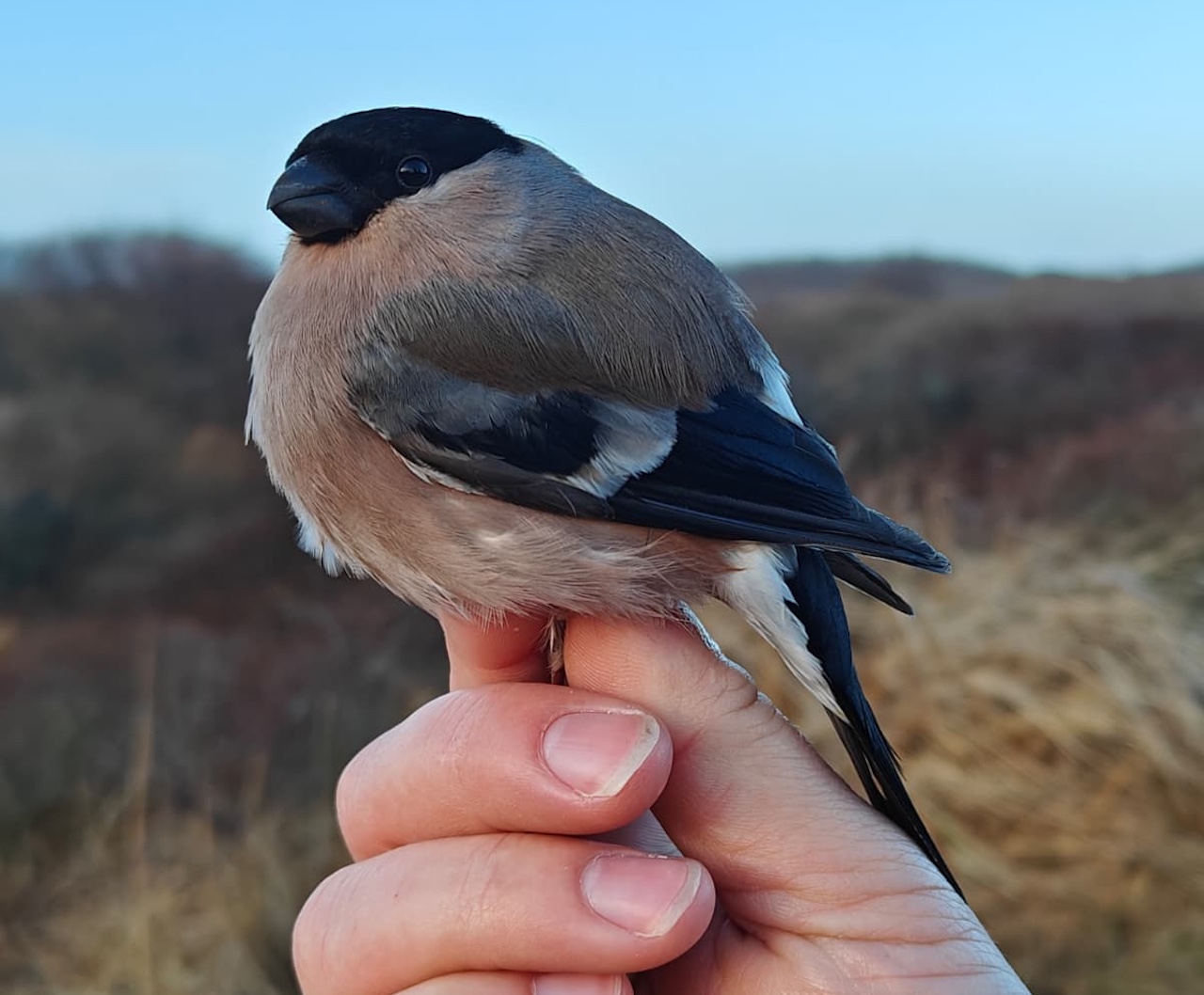 Female Bullfinch (Dompap)
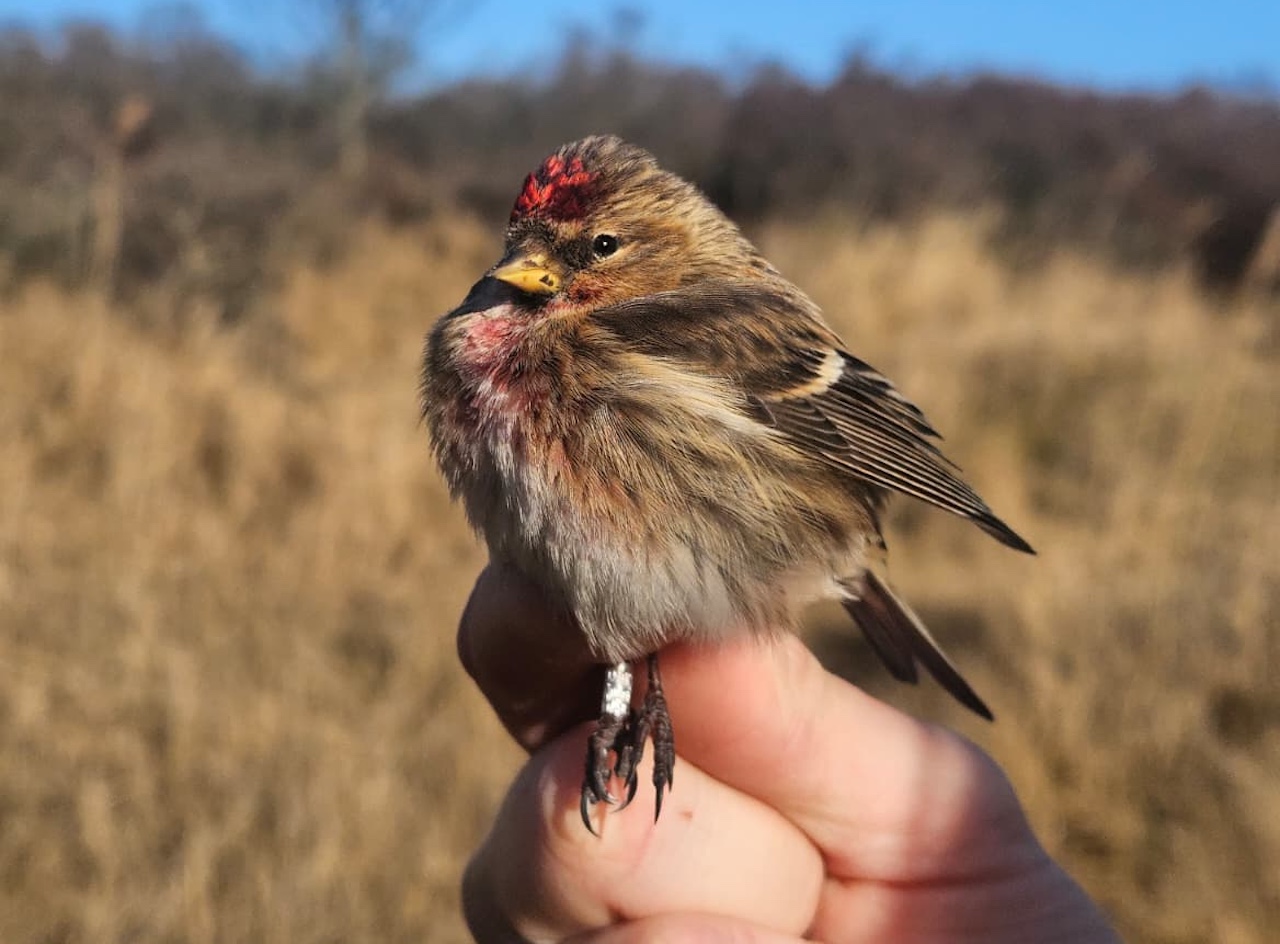
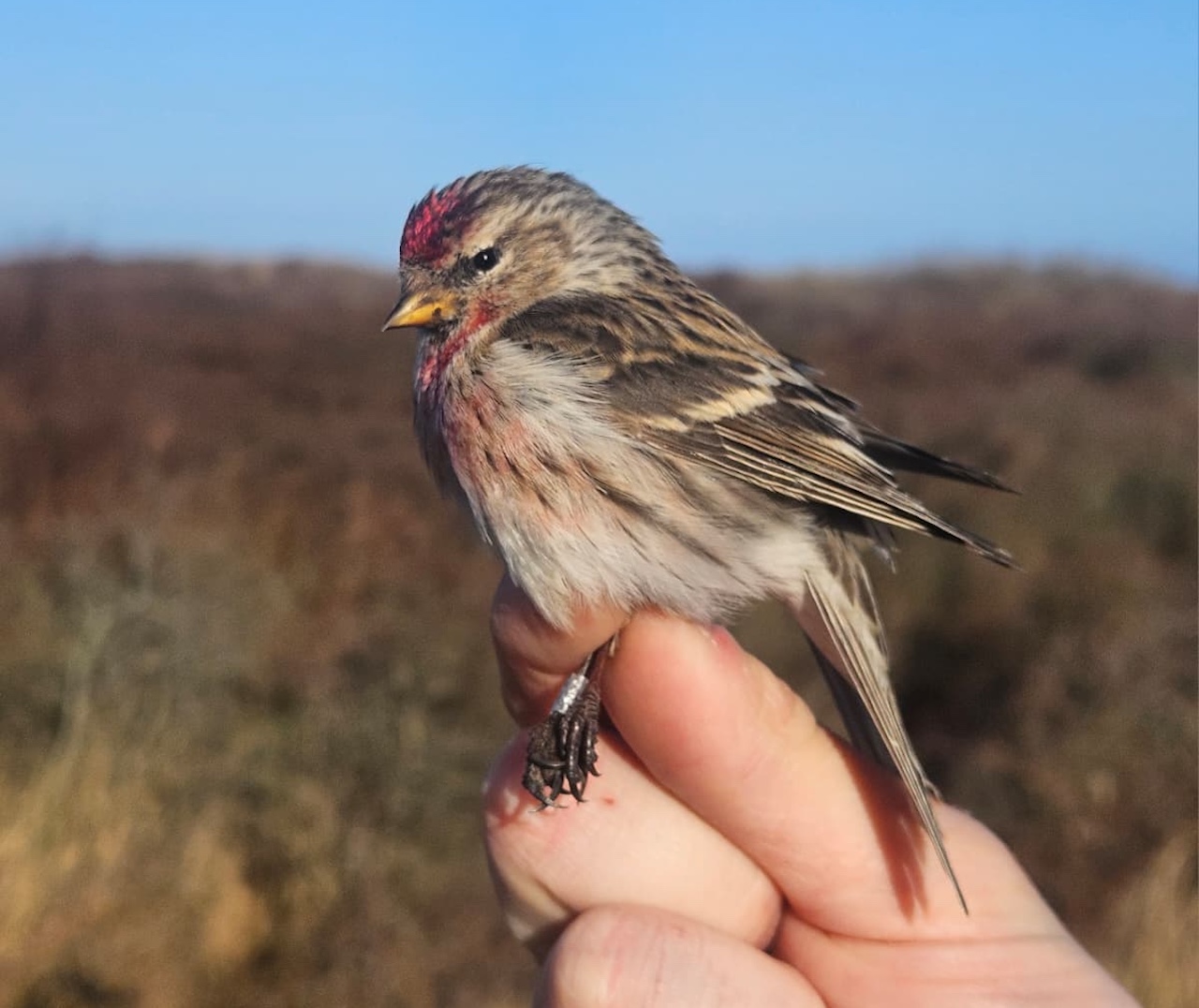 Lesser Redpoll (Lille Gråsisken) (subspecies cabaret) on top, and the fenno-scandinavian subspecies flammea (Nordlig Gråsisken) on the bottom.
During the morning at the ringing site, some of us were lucky to hear a Waxwing (Silkehale) call around the nets, as well as see a beautiful Golden Eagle (Kongeørn) soaring above us.
Around 9 o’clock we had the visit of a group of birders guided by Simon who wanted to learn more about the process of ringing. The group was really happy to witness us ringing a few birds and hearing about interesting facts about them from Simon, as well as more details about the various steps of ringing.
On the side of migration, the numbers of overall migrating birds were a little lower than the previous days, but still decent. The observers spotted a couple of Fulmars (Mallemuk), a Little Gull (Dværgmåge), a Peregrine Falcon (Vandrefalk) resting on the beach and calling, as well as two Arctic Skuas (Almindelig Kjove) which were a pale morph and a dark morph respectively.
In the fourth hour of migration, a Black-Winged Kite (Blå Glente) was called out on Zello, just south of the counting spot, and despite trying to see it immediately, the observers missed it by a few seconds as it flew behind dunes. They only managed to watch around 20 bird watchers watching the bird unfortunately!
This sighting of Black-Winged Kite (Blå Glente) was the second ever record of this species in March in Skagen.
3 orcas were also spotted during the morning, which is always a pleasure to witness!
A few days ago a GPS-tagged White-tailed Eagle (Havørn) was spotted flying over Grenen, so we contacted the person in charge of the tagging project and received some interesting information about this individual! It was originally tagged in 2022 in Vilsted Lake, and is an adult male. It is always amazing to spot tagged or ringed birds and learn more about their life and history.
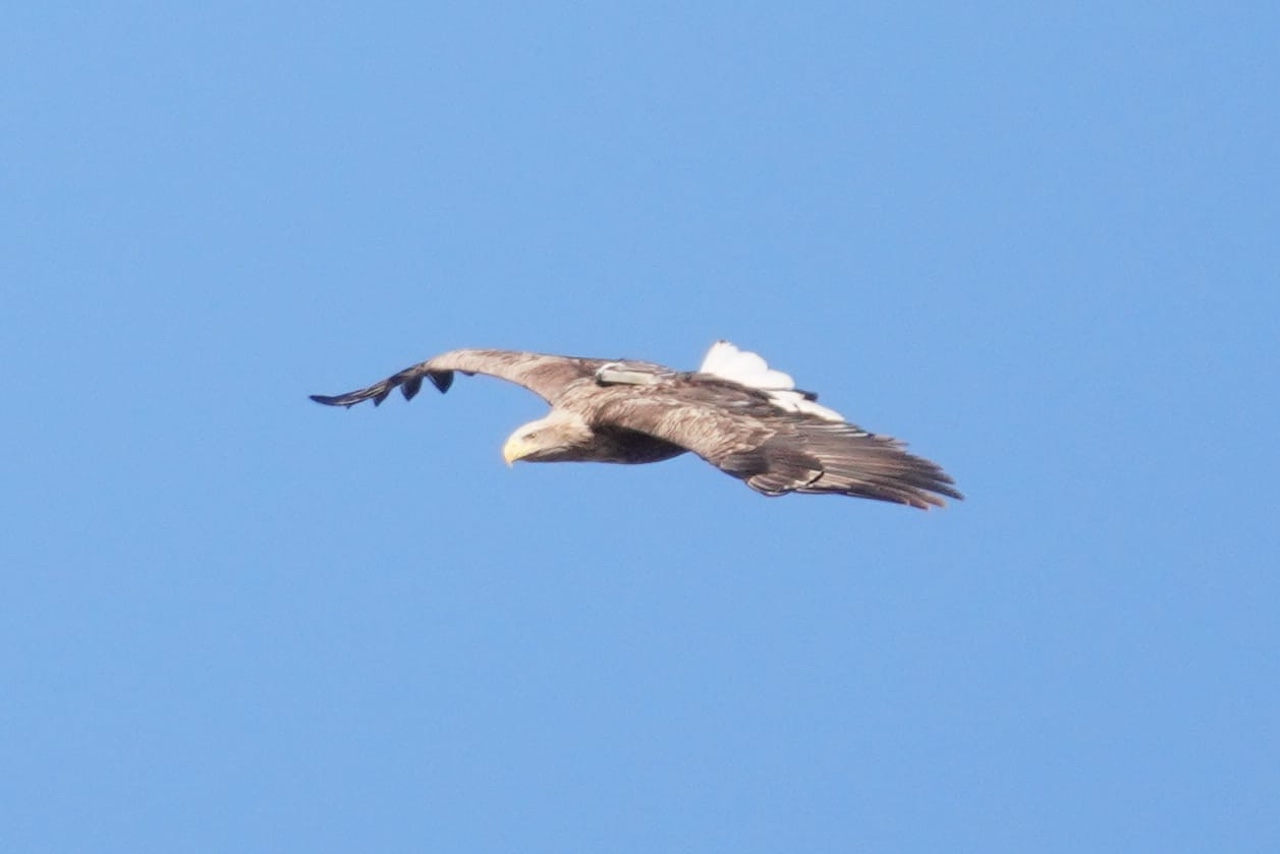
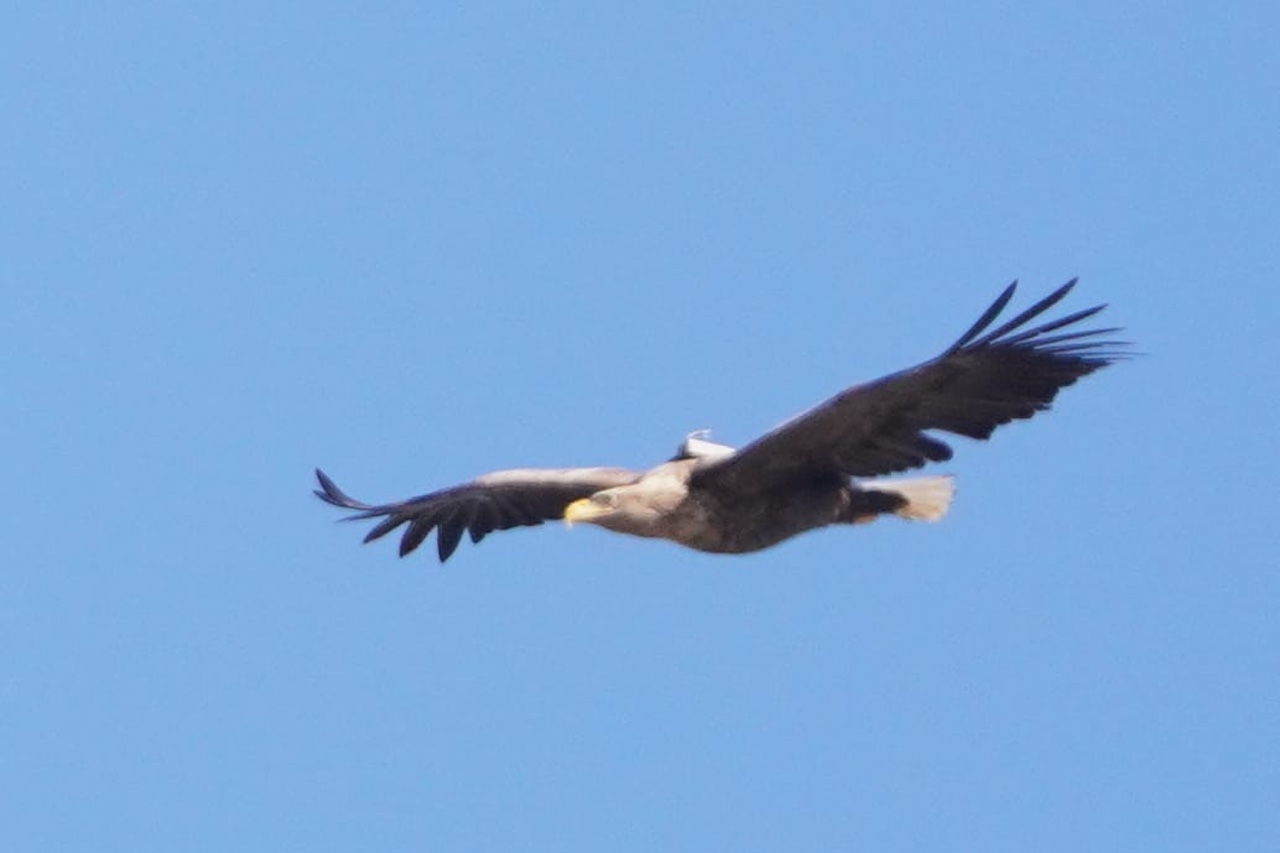
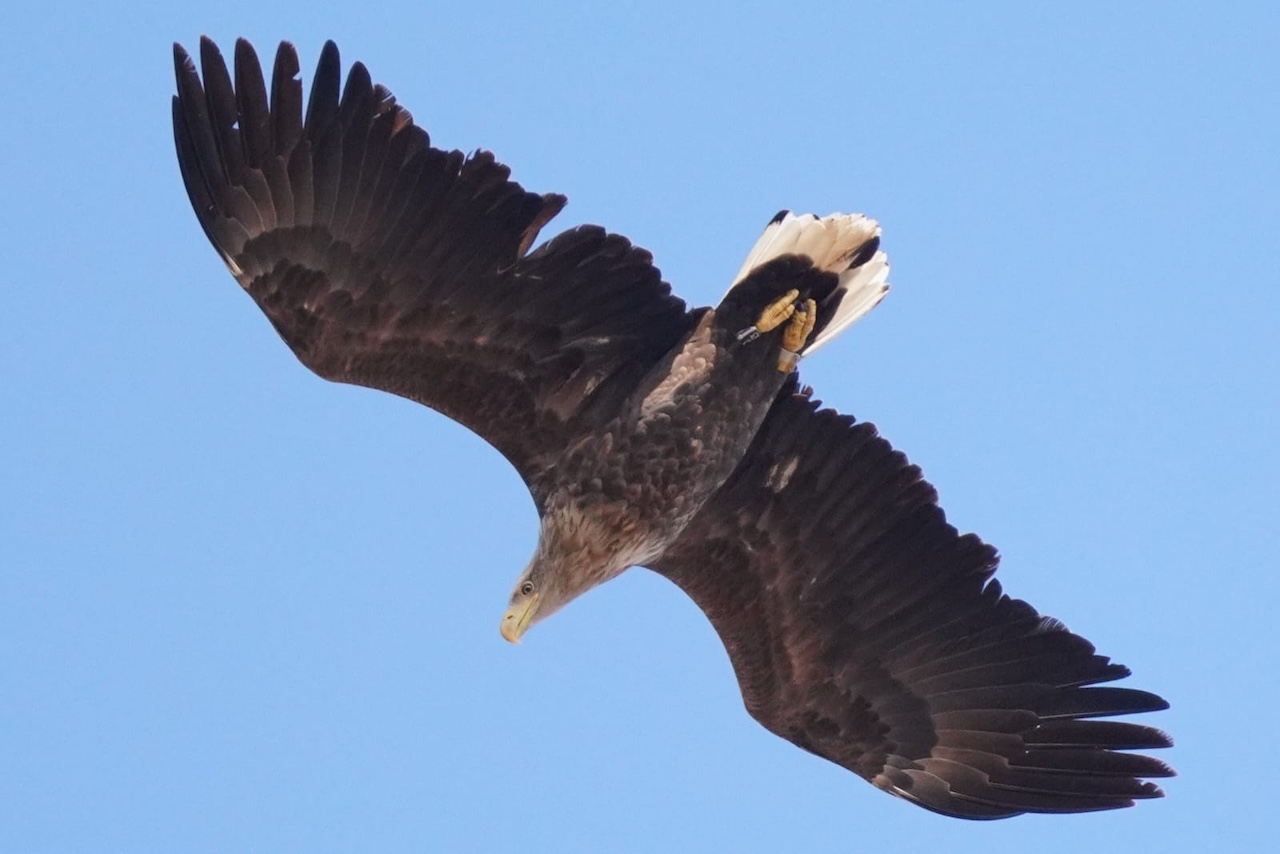 GPS-tagged White-tailed Eagle (Havørn)
In more station news, a new volunteer, Julia has arrived tonight and will stay with us for a few days and participate in our daily activities. She is Danish and currently studying. Welcome Julia!
Highlights of today:
1 Black-Winged Kite (Blå Glente)
2 Arctic Skuas (Almindelig Kjove)
1 Golden Eagle (Kongeørn)
2 Redpolls (Gråsisken)
3 Orcas (Spækhugger)
Ringing numbers (Kabeltromlen)
Musvit - 6
Gærdesmutte- 1
Rødhals - 3
Jernspurv - 1
Gråsisken - 2
Dompap - 1
Blåmejse - 6
Gransanger - 3
Total: 23
People at the station: Alvin Johansson, János Schadl, Alix Bortolussi, Julian Helbig, Dylan Daunt, Simon S. Christiansen, Julia Skytte, Knud Pedersen, Katrin, Tove, Eik and Inger.
First Treecreeper of the season
søndag 29. marts 2026
The morning began with a beautiful sunrise, starting the morning's migration count. There was considerable movement of Guillemots (Lomvie) especially in the first hour, with around 4500 birds in total. A Little Gull (Dværgmåge ) was also seen feeding, adding to the highlights. Later in the morning, two Shags (Topskarv) were spotted far out at sea.
Meanwhile, the ringing team started their morning with a Treecreeper (Træløber) and a nice Redwing (vindrossel).
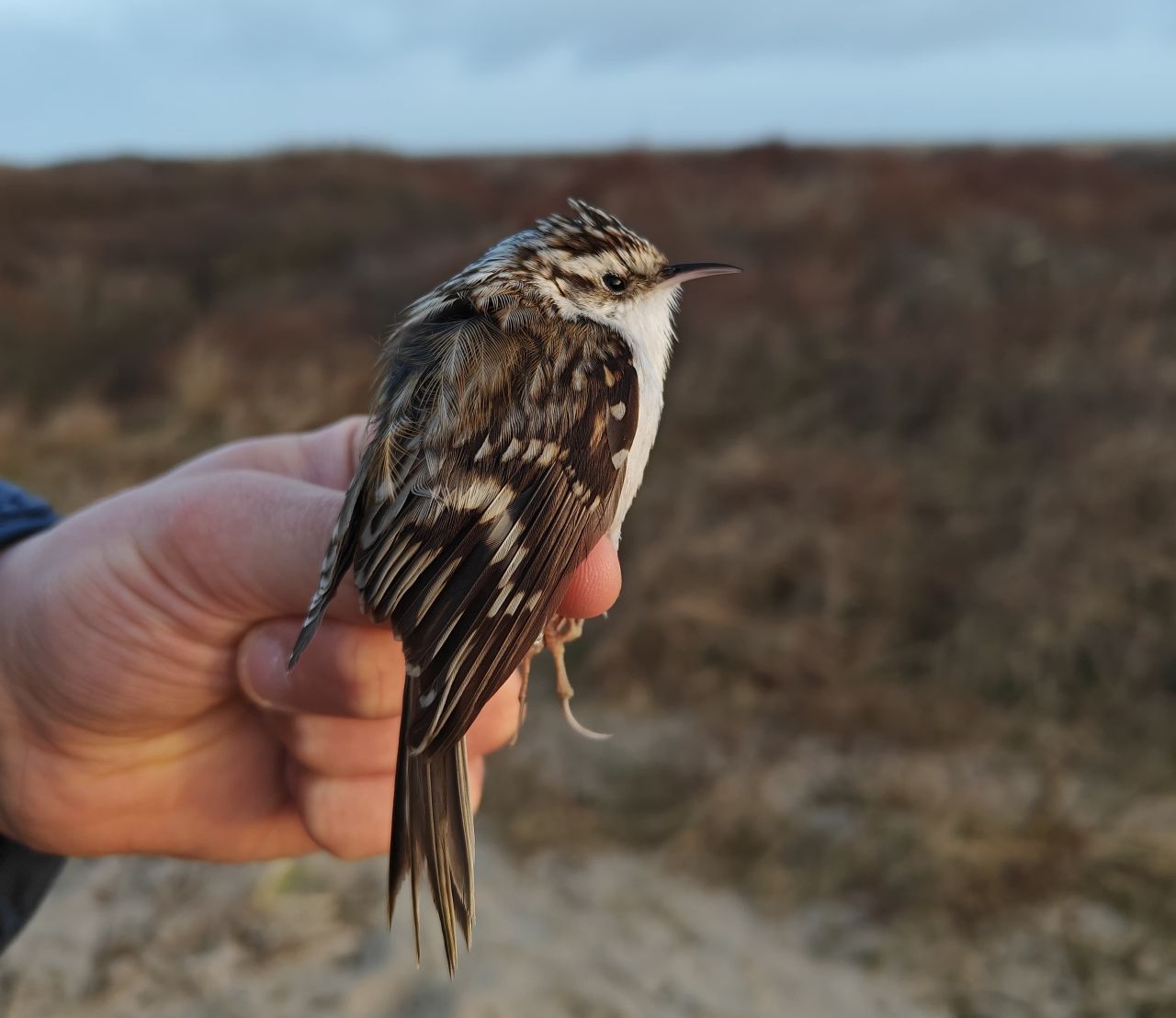 Ringed Treecreeper (Træløber)
Although the number of Blue Tits (Blåmejse) was lower than on previous days, it was still a solid 41 birds. Because the birds were spread out over the course of the morning, it gave everyone a better chance to look at them closer and appreciate each one.
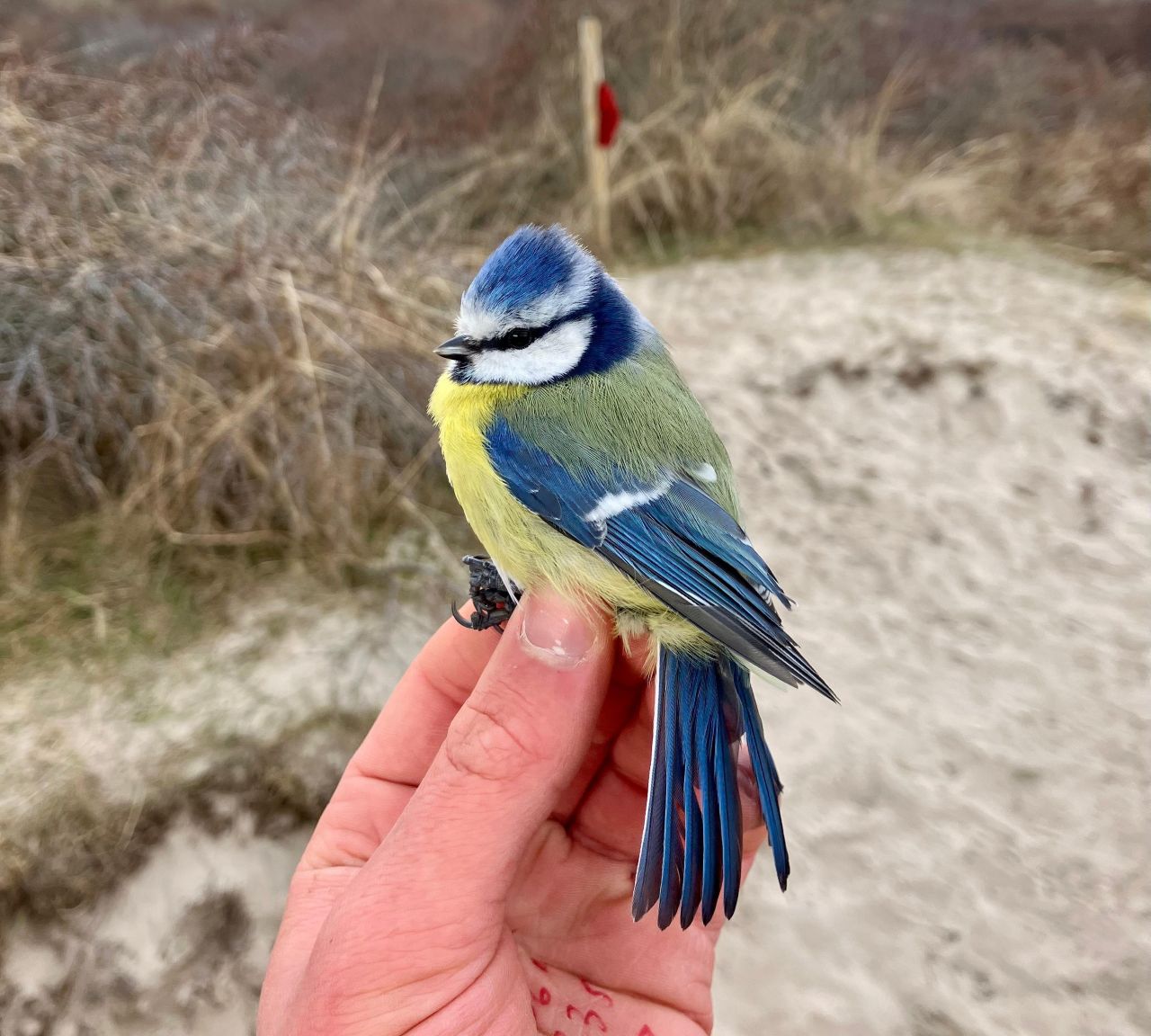 Adult male Blue Tits (Blåmejse)
Towards the end of the standard time, the ringing team also spotted a golden eagle, which they believed to be a different individual from the one seen yesterday.
After returning home, everyone enjoyed a nice lunch along with some delicious pancakes prepared by János. The rest of the day was spent on various office and data tasks, planning for the upcoming week and the arrival of new volunteers, as well as getting some well-needed rest.
Ringing (Kabeltromlen)
Wren (Gærdesmutte) - 1
Great Tit (Musvit) - 3
Blue Tit (Blåmejse) - 41
Redwing (vindrossel) - 1
Chiffchaff (Gransanger) - 5
Treecreeper (Træløber) - 1
Robin (Rødhals) - 3
Dunock (Jernspurv ) - 2
Total: 57
Highlights of today:
Little Gull (Dværgmåge ) - 1
Golden Eagle (Kungörn) - 1
Shag (Topskarv) - 2
Link to today’s observations in DOFbasen from observers in the area
Summary of today's raptor migration in DOFbasen
People: Alvin Johansson, János Schadl, Alix Bortolussi, Julian Helbig, Dylan Daunt, Simon S. Christiansen, Knud Pedersen,
Lots of ducks and Golden Eagle
lørdag 28. marts 2026
This morning János, Alvin and Lars Bo woke up at 05:15 to start today’s ringing session. The conditions were really nice which meant they were able to catch some nice birds. On the first round they had a really nice surprise in the shape of a lovely 3K+ male Sparrowhawk (Spurvehøg) that János found in the first net. The first one of hopefully a few birds that we will catch throughout the spring. Though I think this one will be hard to beat looks wise! Later in the morning they caught lots of Blue Tits (Blåmejse) again. The number of Blue Tits (Blåmejse) caught has been much higher than usual because lots of these birds passed through Skagen in the autumn and are migrating back North to their breeding grounds. Other sightings by János and Alvin were 1 2K Goshawk (Duehøg), 10 Red Kites (Rød Glente), 84 Buzzards (Musvåge) and 3 Bearded Tits (Skægmejse).
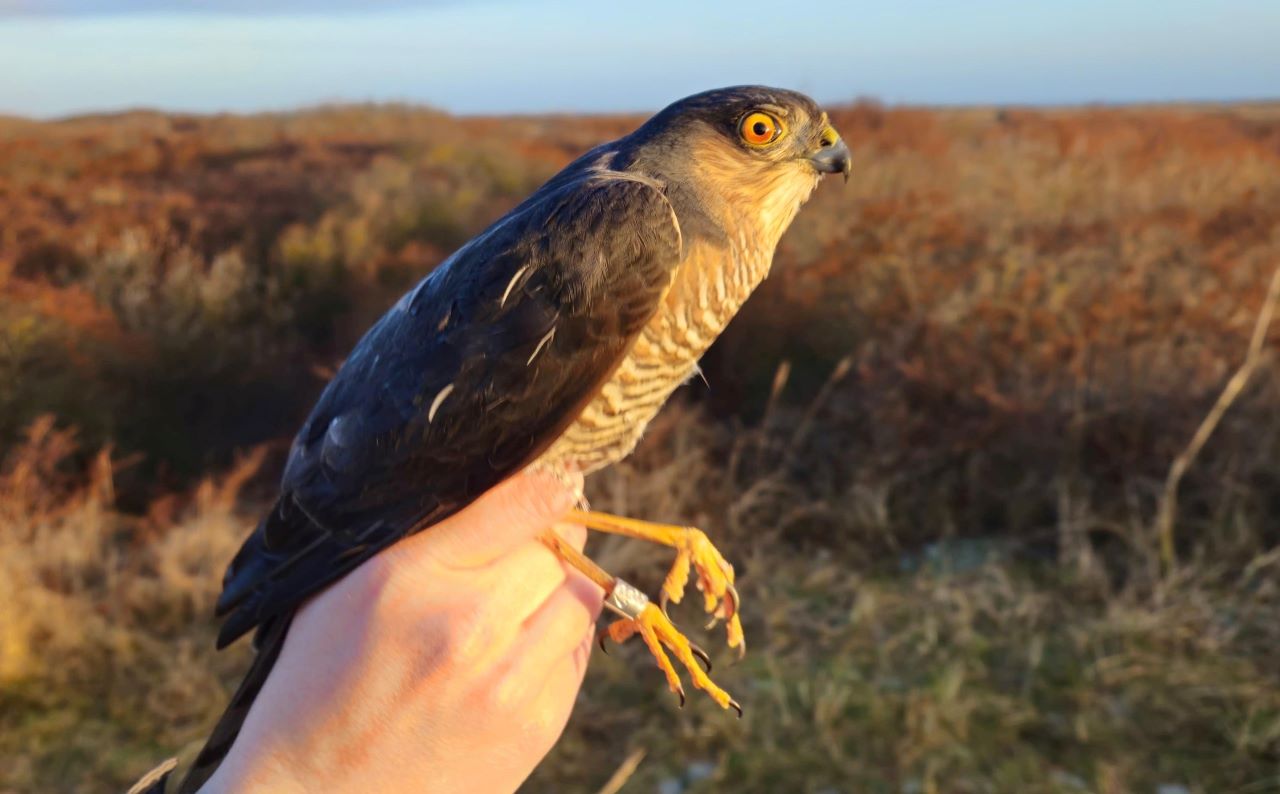
3K+ male Sparrowhawk (Spurvehøg)
Julian and I got up a bit later to do the morning migration count. It was a fairly quiet day, but we counted a very high number of Common Scoter (Sortand), a type of sea duck that passes the tip in large numbers throughout the sping. We also had some really nice views of two male Hen Harriers (Blå Kærhøg) and two Brent Geese (Knortegås). Unfortunately, some fog arrived at the tip which meant less birds were migrating, but it did mean that the view was very atmospheric. The mix of the fog, sea and sun was amazing. Sadly, Alix did not join us as she was not feeling well. So she had some extra rest to make herself stronger for the coming days.
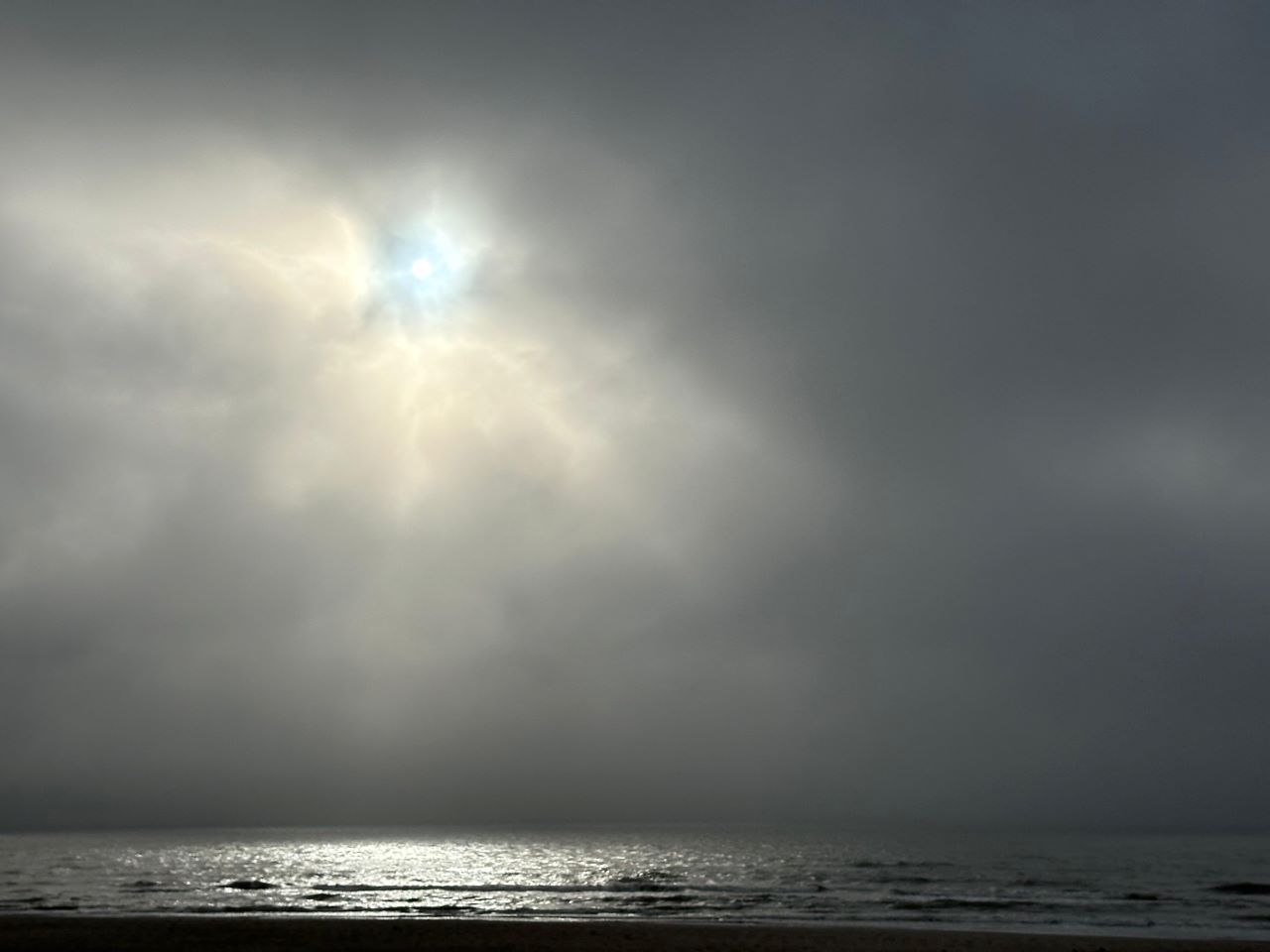
Fog and sun!
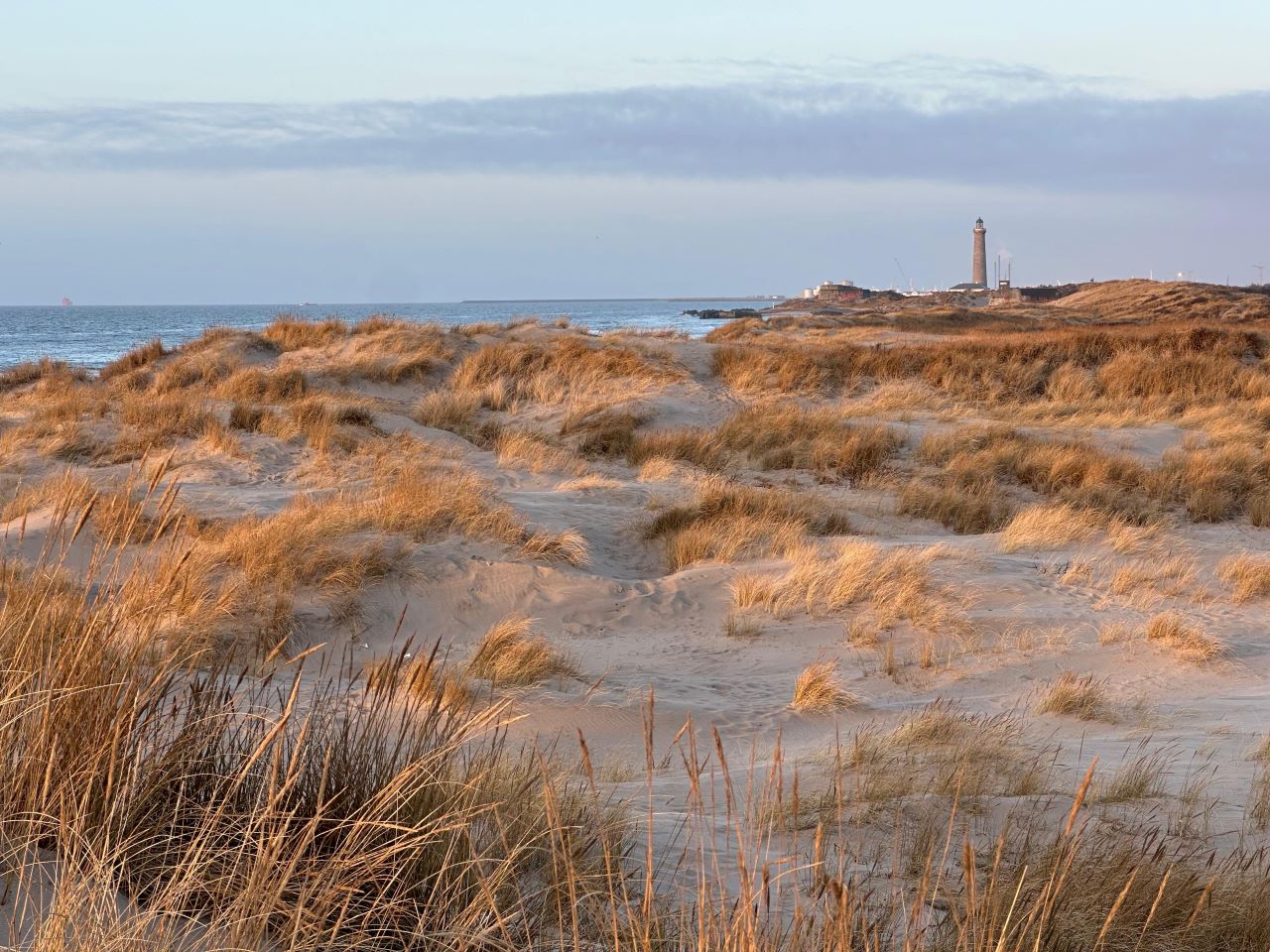
The Grey Lightouse from Grenen at sunrise
After lunch we completed the days data entry and heard news that the Golden Eagle (Kongeørn) had returned from yesterday. Given that none of us had seen the bird yesterday we were very pleased to have nice views of the bird. We were able to get some nice views of it with an immature White-tailed Eagle (Havørn). Later on, János and I saw the Glaucous Gull (Gråmåge) flying towards the harbour with other large gulls. I think it will be sticking around for a while longer so we should be able to get some more nice views of it.
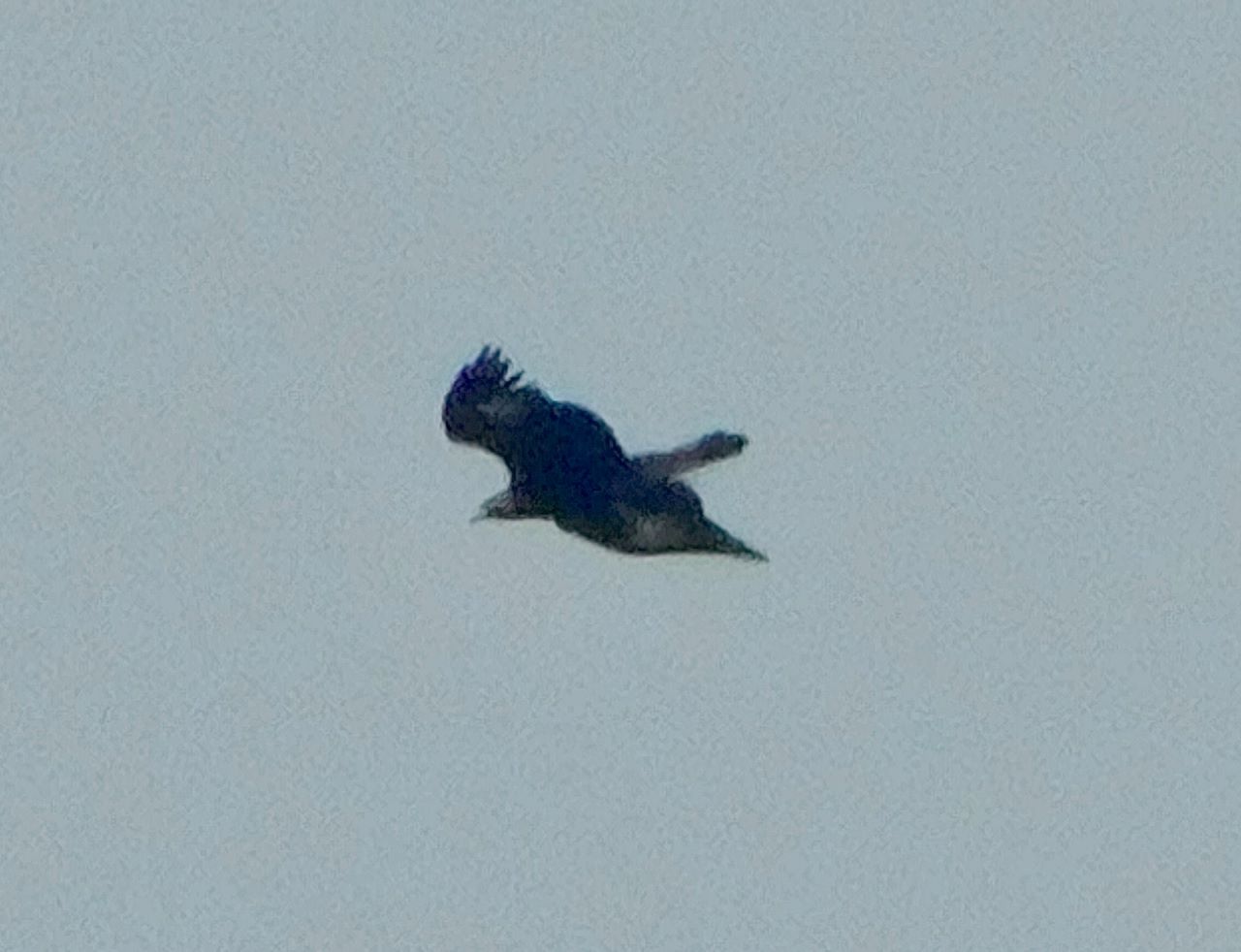
2K Golden Eagle (Kongeørn)
The weather for tomorrow looks nice so we all hope that the ringing and migration will be good. We are still waiting for our first big finch migration. Maybe tomorrow will be the day…
Ringing (Kabeltromlen)
Wren (Gærdesmutte) - 1
Great Tit (Musvit) - 3
Blue Tit (Blåmejse) - 49
Blackbird (Solsort) - 1
Chiffchaff (Gransanger) - 4
Sparrowhawk (Spurvehøg) - 1
Total: 59
Highlights from the observations:
Golden Eagle (Kongeørn) - 1
Glaucous Gull (Gråmåge) - 1
Brent Goose (Knortegås) - 2
Common Scoter (Sortand) - 5500
Link to today’s observations in DOFbasen from observers in the area
Summary of today's raptor migration in DOFbasen
People: Dylan Daunt, János Schadl, Alix Bortolussi, Alvin Johansson, Julian Helbig, Johan Thor, Lars Bo
Finally Shags again
fredag 27. marts 2026
Today Julian and I biked to the migration count, which worked fine when we had the wind in our backs in the morning, but the way back was rather exhausting. It was a morning of clear sky and warming sun, which are the perfect conditions for Shags (Topskarv) and we also saw two of them in the third hour. They were flying together with a Cormorant (Skarv) which made for a nice comparison.
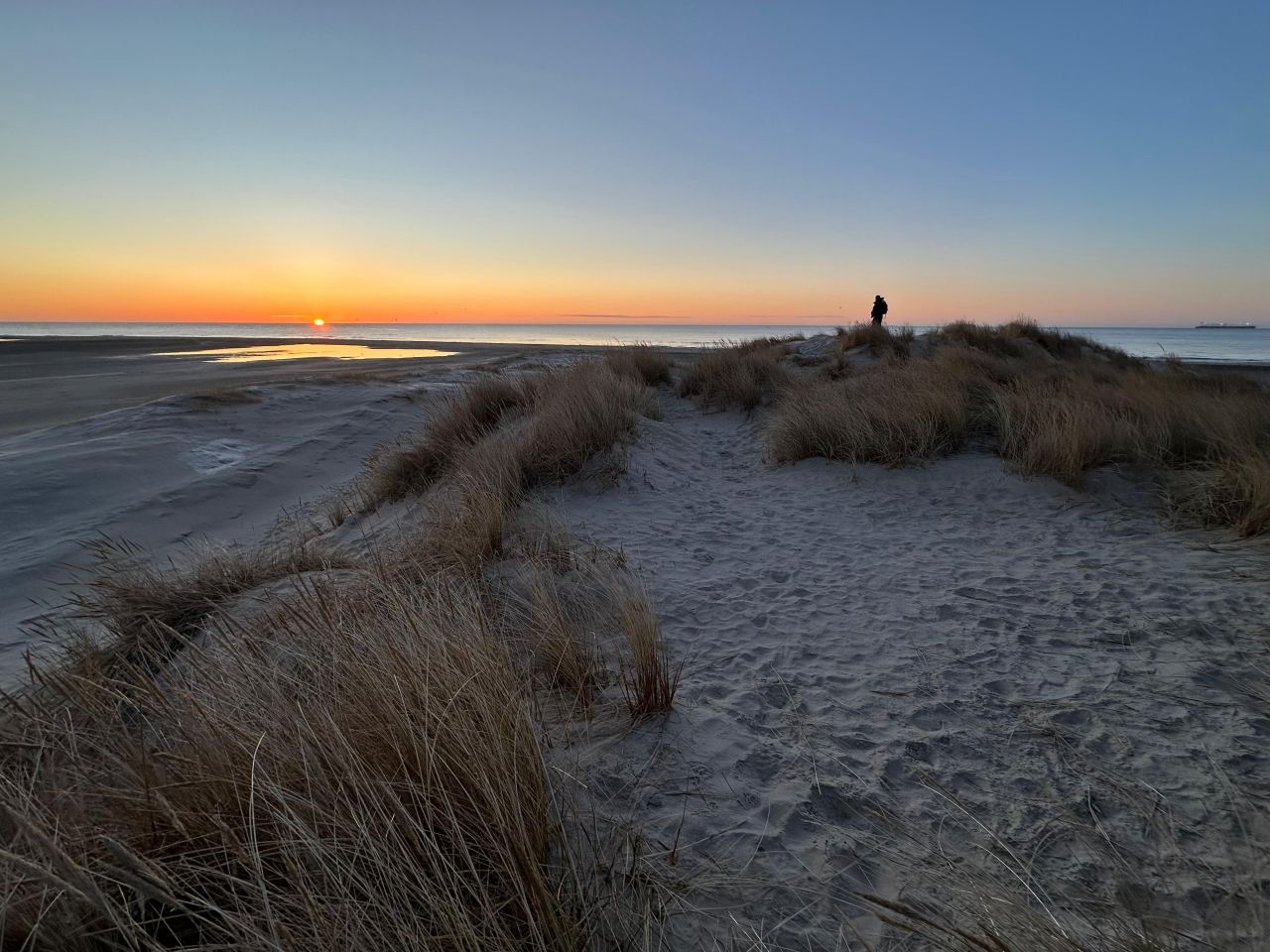
Sunrise at Grenen.
We also had good numbers of Guillemots (Lomvie) and two White-tailed Eagels (Havørn). One of them was tagged, so we can hopefully find out more about it.
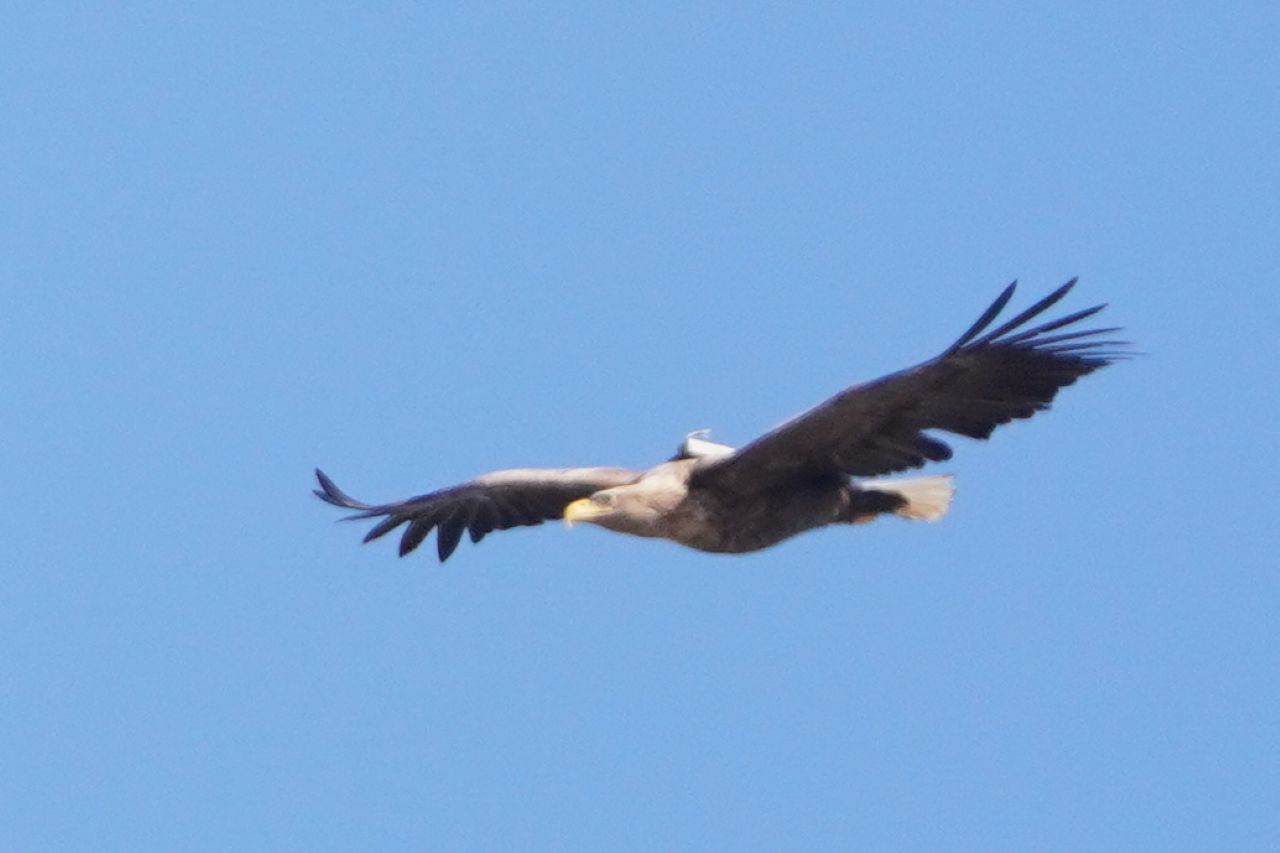
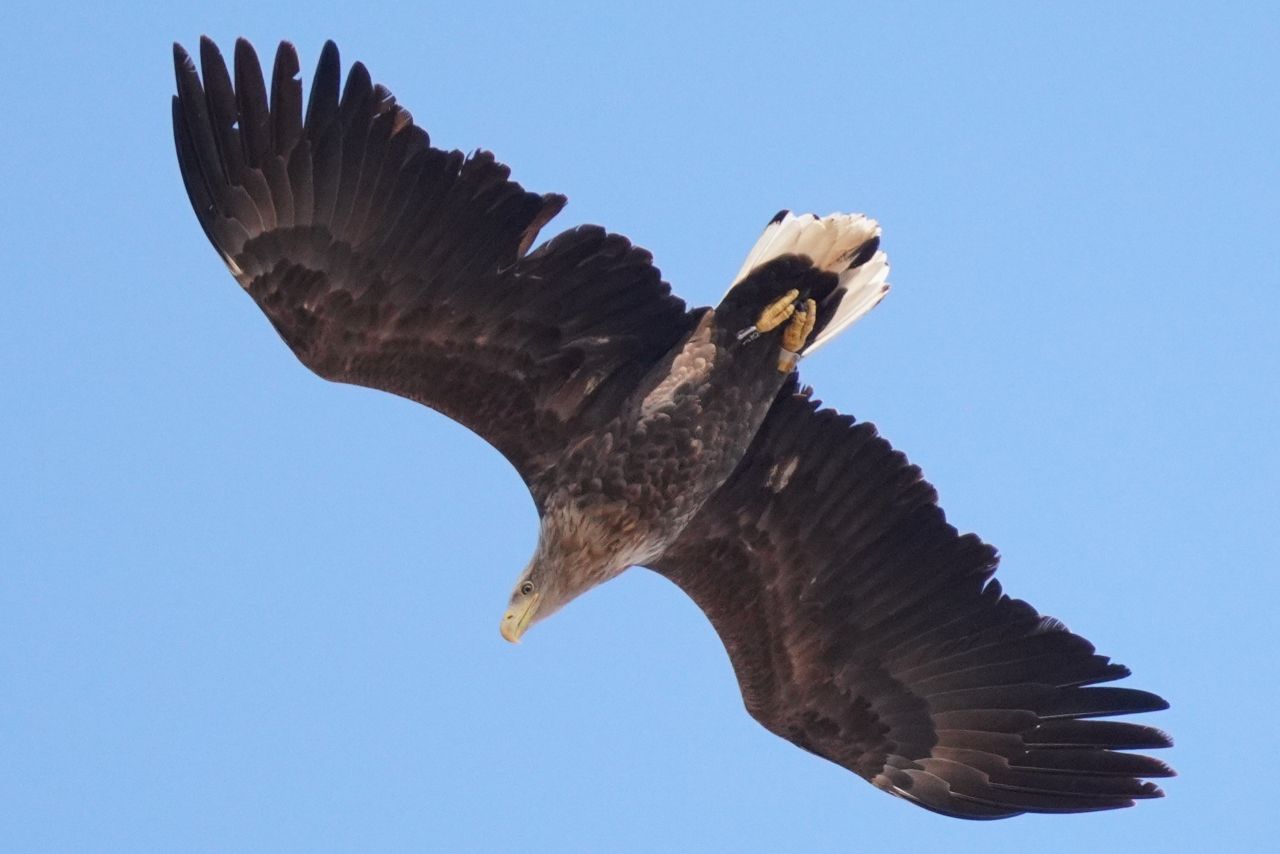
Tagged White-tailed Eagle (Havørn).
The ringing team had a busy morning ringing 55 birds. They also recaught the partially leucistic Bluetit (Blåmejse) we ringed a few days ago. As Simon is still in the Netherlands, we were joined by Oluf Lou in the ringing, so thanks again for the help!
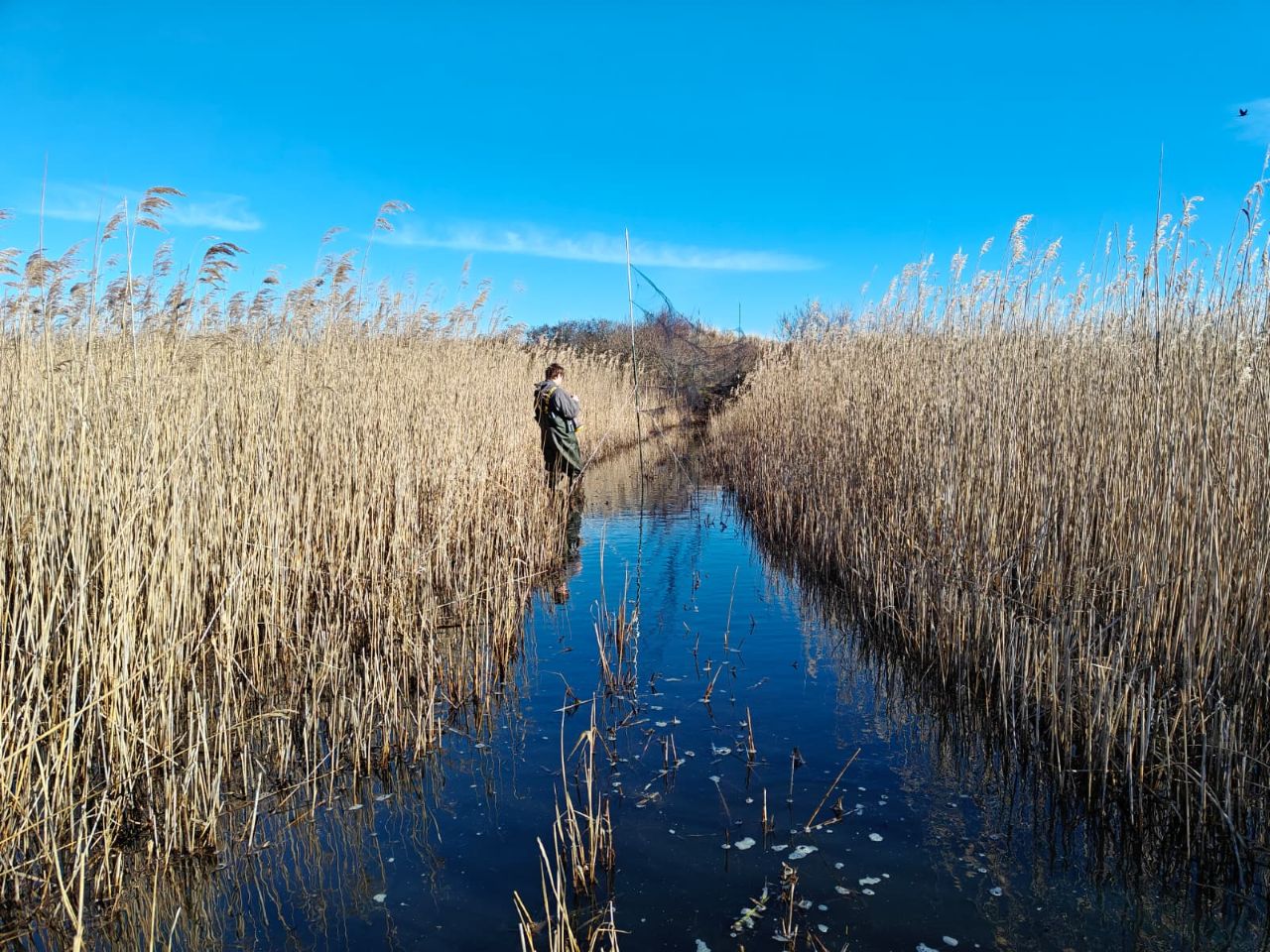
Alvin at the nets.
After a short lunch break, we headed out for a long walk to try and find the Glaucous Gull (Gråmåge) again. We walked to Grenen and over the beach to Nordstrand. On the way back we split up, and I and Julian counted the Cormorant colonie while the others went back the most direct way. They also saw a Rough-legged Buzzard (Fjeldvåge) which was a lifer for Dylan.
We arrived at the same time at the lighthouse and were pleasantly surprised by the opening ceremony of the new exhibition in the lighthouse building. We enjoyed free champagne and cake and had a look at the exhibition.
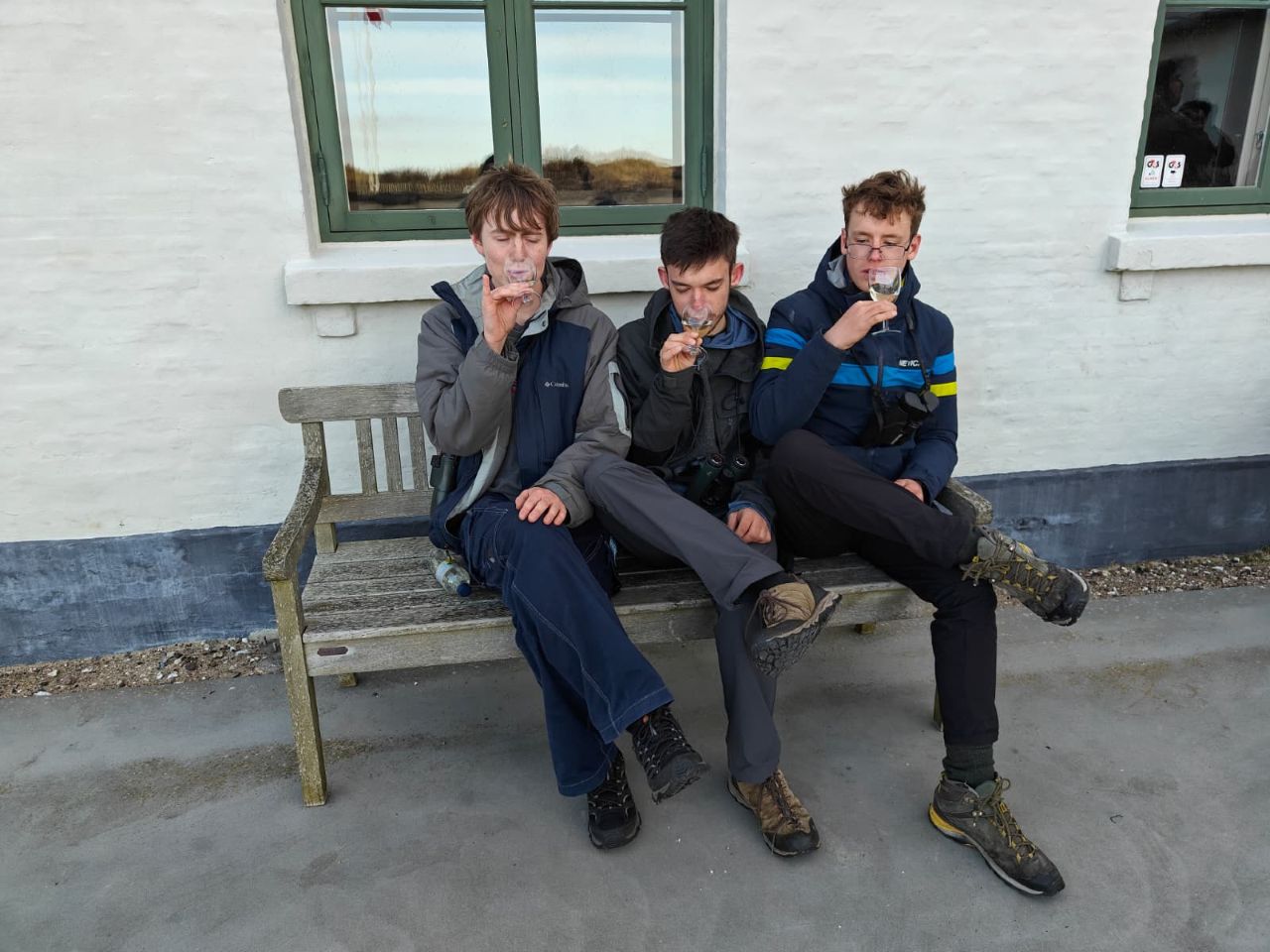
Drinking champagne in the proper way.
Highlights from the observations:
Black Guillemot (Tejst) – 1
Shag (Topskarv) – 2
Rough-legged Buzzard (Fjeldvåge) - 1
Marsh Harrier (Rørhøg) - 1
Black Guillemot (Tejst) – 1
Shag (Topskarv) – 2
Rough-legged Buzzard (Fjeldvåge) - 1
Marsh Harrier (Rørhøg) - 1
Ringing (Kabeltromlen)
Blackbird (Solsort) - 2
Great Tit (Musvit) - 5
Reed Bunting (Rørspurv) - 3
Wren (Gærdesmutte) - 3
Dunnock (Jernspurv) - 1
Robin (Rødhals) - 6
Blue Tit (Blåmejse) - 32
Blackbird (Solsort) - 2
Great Tit (Musvit) - 5
Reed Bunting (Rørspurv) - 3
Wren (Gærdesmutte) - 3
Dunnock (Jernspurv) - 1
Robin (Rødhals) - 6
Blue Tit (Blåmejse) - 32
Chaffinch (Bogfinke) - 1
Long-tailed Tit (Halemejse) - 2
Long-tailed Tit (Halemejse) - 2
Total: 55
Link to today's observations in the DOF base from observers in the area
Summary of today's raptor migration in DOFbasen
People: Alvin Johansson, János Schadl, Alix Bortolussi, Julian Helbig, Dylan Daunt, Lars Bo, Knud Pedersen
Wind and Sun (and Birds)
torsdag 26. marts 2026
Today was a windy day, too windy for ringing at Kabeltromlen. Therefore, Alix and Dylan went on a beach walk instead to report and collect dead birds, while János, Alvin and I carried out the migration count at Grenen, in a more sheltered spot than usual. It was a good start into the count with a lot of seabirds migrating. Especially the Gannet (Sule) migration was very impressive today with over 400 birds counted within the second hour and a total of 929. Despite that, we saw the Glaucous Gull (Gråmåge) again, that has been around for several days now, high numbers of migrating Kittiwakes (Ride) and Sandwich Terns (Splitterne), as well as three Caspian Gulls (Kaspisk Måge), one of them with a polish ring.
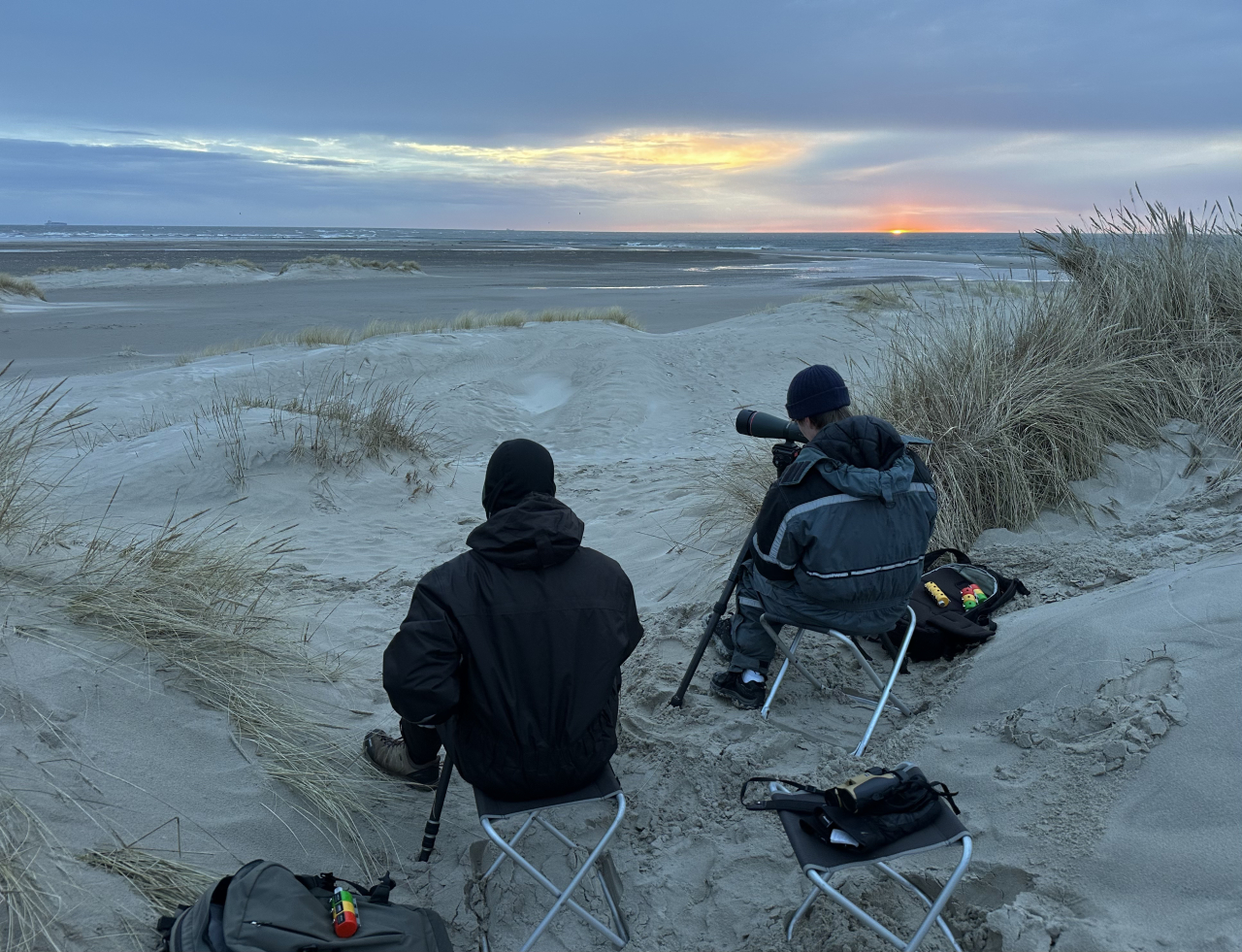
Sunrise at the migration count.
Meanwhile on the beach walk, which Alix and Dylan started from Gamle Skagen, many birds could be found and collected, even more than Alix and Dylan were prepared for. A lot of Common Guillemots (Lomvie) seemed to have died in the storms the previous days and washed up on the shore. This is of course nothing to be happy about, but for scientific research these birds can still be of high value.
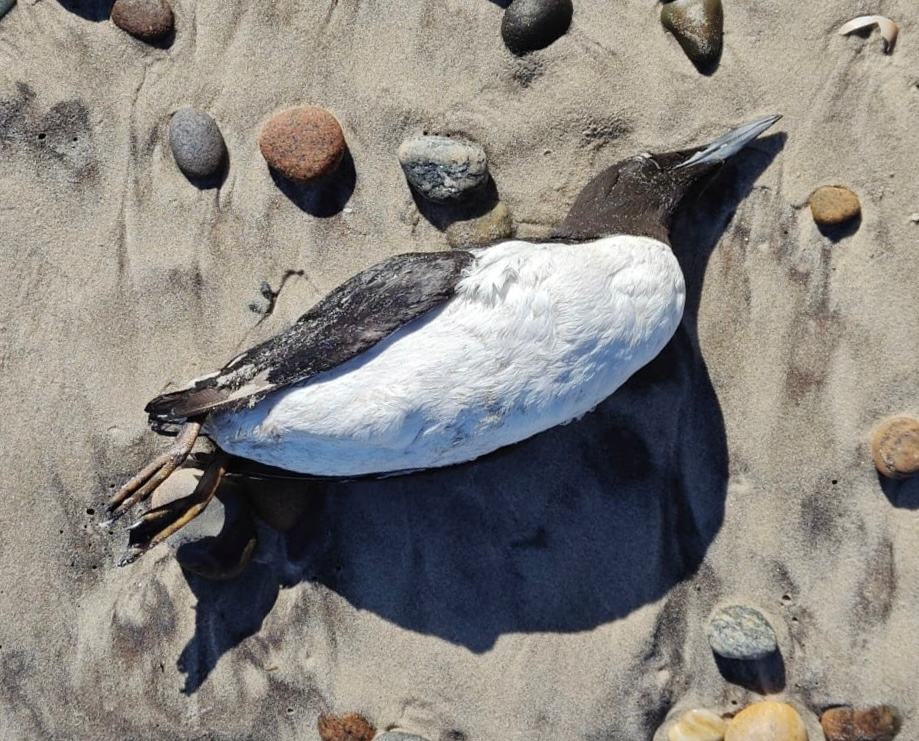
Common Guillemot (Lomvie) found dead on the beach today.
Right at the beginning, a wave hit Alix and she had to walk in wet shoes all along – poor Alix! Besides all the dead birds, there were also some great alive ones the two of them could observe very well: Common Ringed Plovers (Stor Præstekrave), Oystercatchers (Strandskade), Sanderlings (Sandløber) and Rock Pipits (Skærpiber) to name a few. They were even able to get as close as five metres to the Glaucous Gull (Gråmåge)!
In the afternoon, there weren’t as many tasks left to fulfil. We had a lunch and a little rest, entered the observation data, some went shopping. Around 3pm I realised upon looking out the window that there were large flocks of Eiders (Ederfugl) resting on the sea, and so I went out, equipped with the scope, to scan the flocks for Kingeiders (Kongeederfugl), which sometimes can be found amongst them. Today though, there weren’t any, but nevertheless I really enjoyed the good view on the more common birds, the wonderful sunlight and the fresh air. Towards the evening, János joined me out there and we continued the Eider-watching together until sunset. We used this opportunity to practise aging the female Eiders, which can be a bit tricky sometimes. You can always learn something new out in the field.
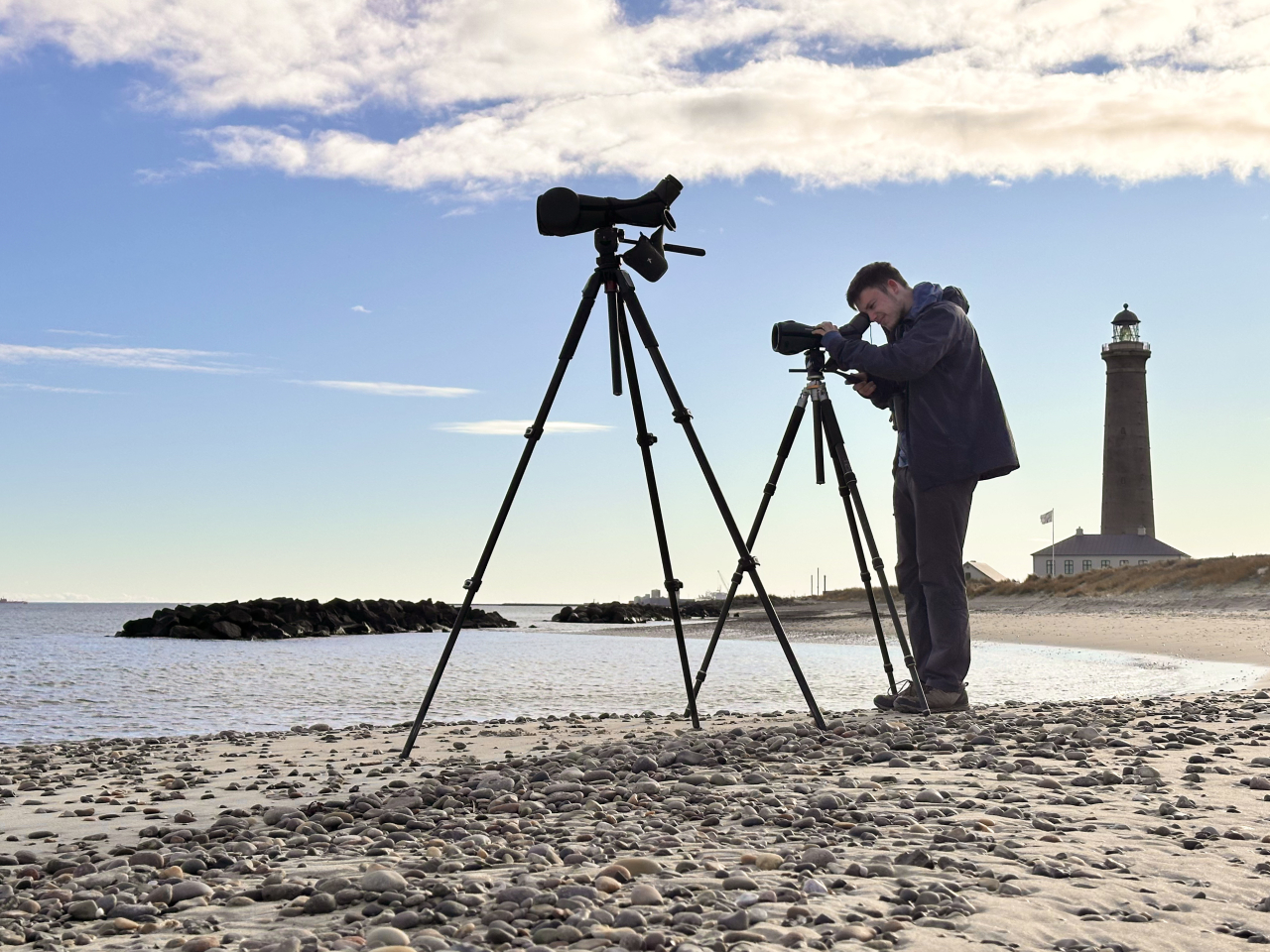
evening Eider-watching
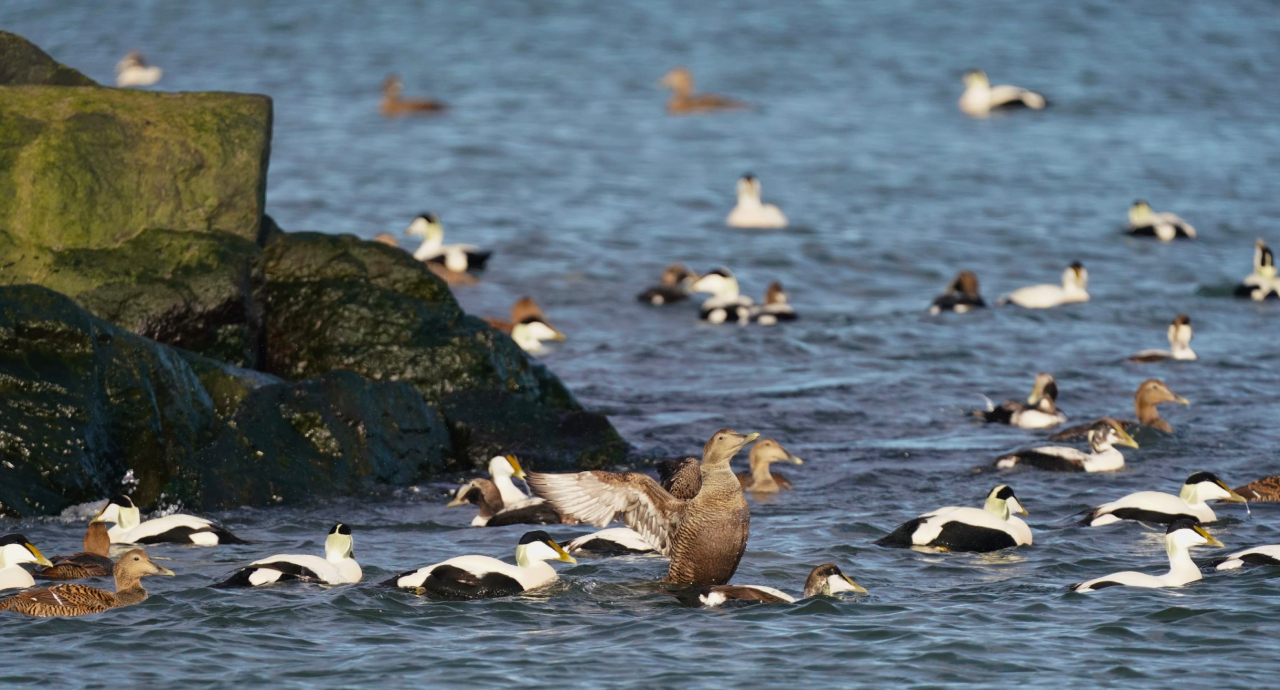
resting Eiders (Ederfugl)
Highlights from the observations:
Black Guillemot (Tejst) – 1
Gannet (Sule) – 929
Glaucous Gull (Gråmåge) – 1
Black-throated Diver (Sortstrubet Lom) – 3
Grey Plover (Strandhjejle) – 1
Black Guillemot (Tejst) – 1
Gannet (Sule) – 929
Glaucous Gull (Gråmåge) – 1
Black-throated Diver (Sortstrubet Lom) – 3
Grey Plover (Strandhjejle) – 1
Link to today's observations in the DOF base from observers in the area
Summary of today's raptor migration in DOFbasen
People: Alvin Johansson, János Schadl, Alix Bortolussi, Julian Helbig, Dylan Daunt, Lars Bo
Slow and sweet day
onsdag 25. marts 2026
This day started out rather slow and cozily because of the bad weather which was quite rainy and windy, too much to go out ringing or to the migration count. János was kind enough to make morning pancakes for everyone, and we all enjoyed them very much!
Later in the morning Simon came by the station and shared a presentation about moult strategies in passerine birds which was very informative and I'm looking forward to applying the new things I learned today in the field.
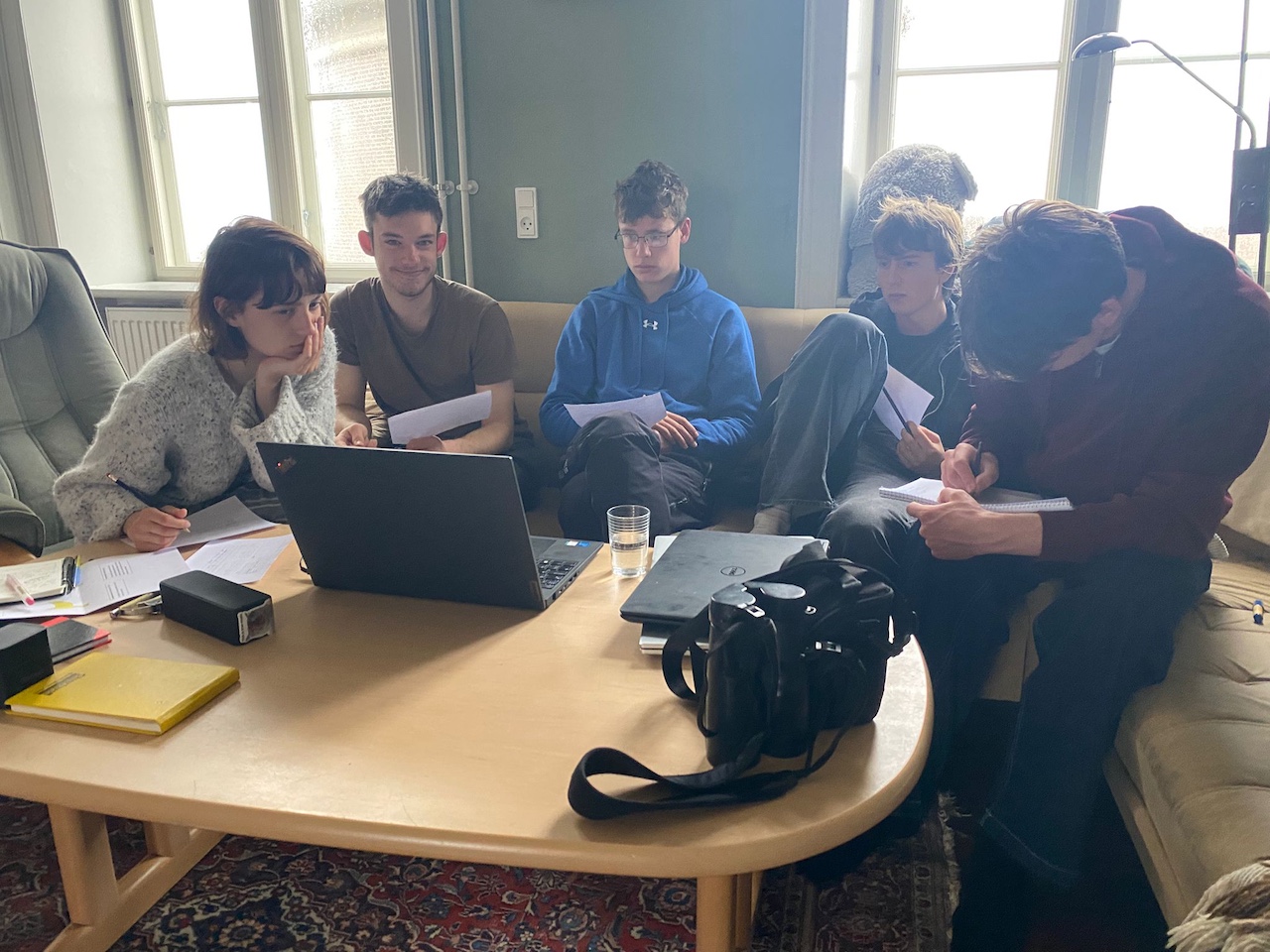 Volunteers focused on making a moult card as an exercise after the moult presentation
After some lunch, János, Alvin and Dylan went out to Grenen to do a little afternoon migration count as the weather had cleared up enough for it to be possible and even enjoyable! They enjoyed two hours of count with the sun in their backs, with some nice numbers of Auks (Alk), Black-legged Kittiwakes (Ride), some Sandwich terns (Splitterne), a Bar-tailed Godwit (Lille Kobbersneppe) and even a Little Gull (Dærgmåge) spotted by János. These strong westerly winds pushed a lot of the birds towards the land, and it was interesting to see what species would be present.
Julian spent some time working on a beautiful painting of a Glaucous Gull (Gråmage) in honor of the recently found individual at Grenen, then took a little trip to the center of Skagen and found a nice Sandwich tern (Splitterne) around the harbor.
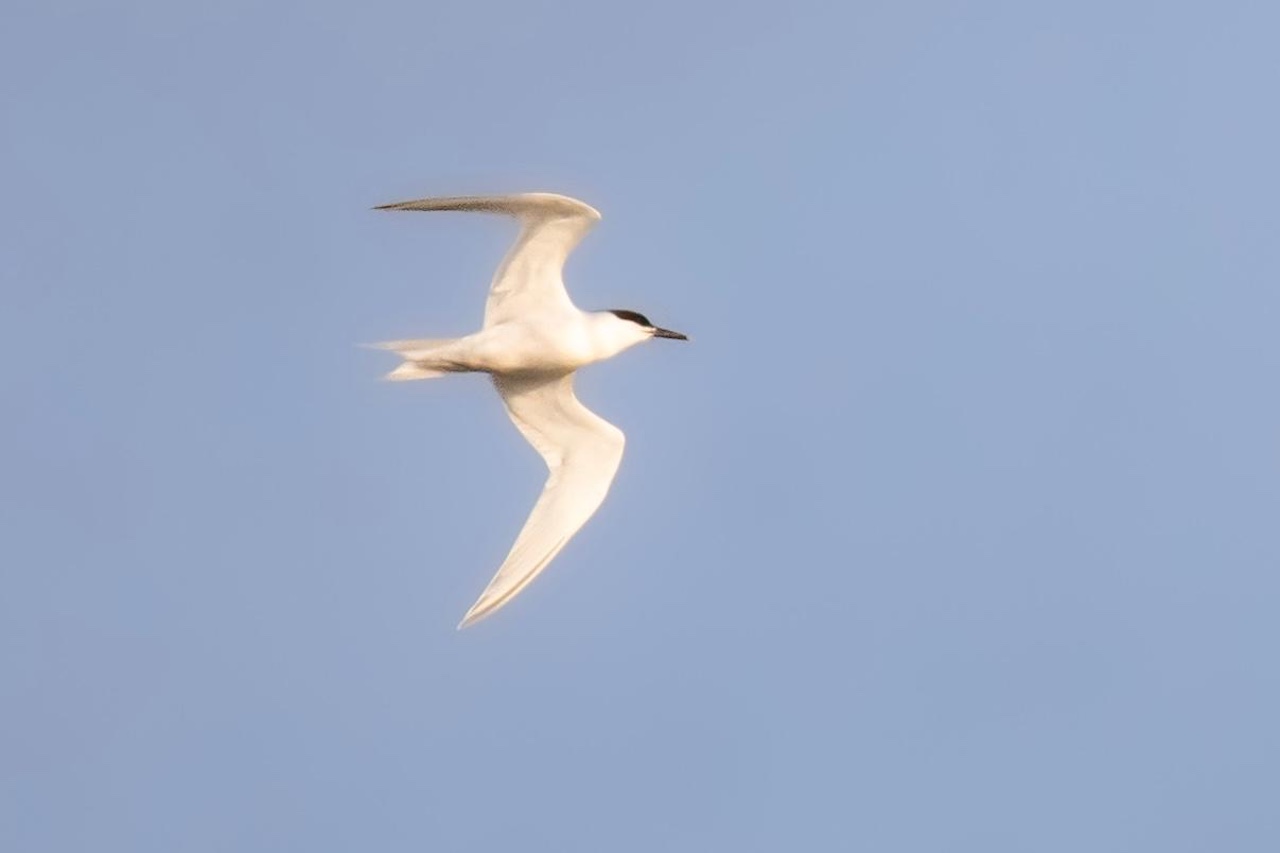 Sandwich cubes (Splitterne)
As for myself, after some lunch I decided to go on a walk around the lighthouse area with the thermal camera to try and find Jack Snipes (Enkeltbekassin), but with no luck unfortunately. The walk was beautiful and sunny nonetheless, and I even enjoyed a short nap in a sunny and sheltered little hill. On the way I had a look at the various mosses and lichens I encountered, which are quite fascinating to me because of how different the species are from the ones I get to see in the south of France where I come from.
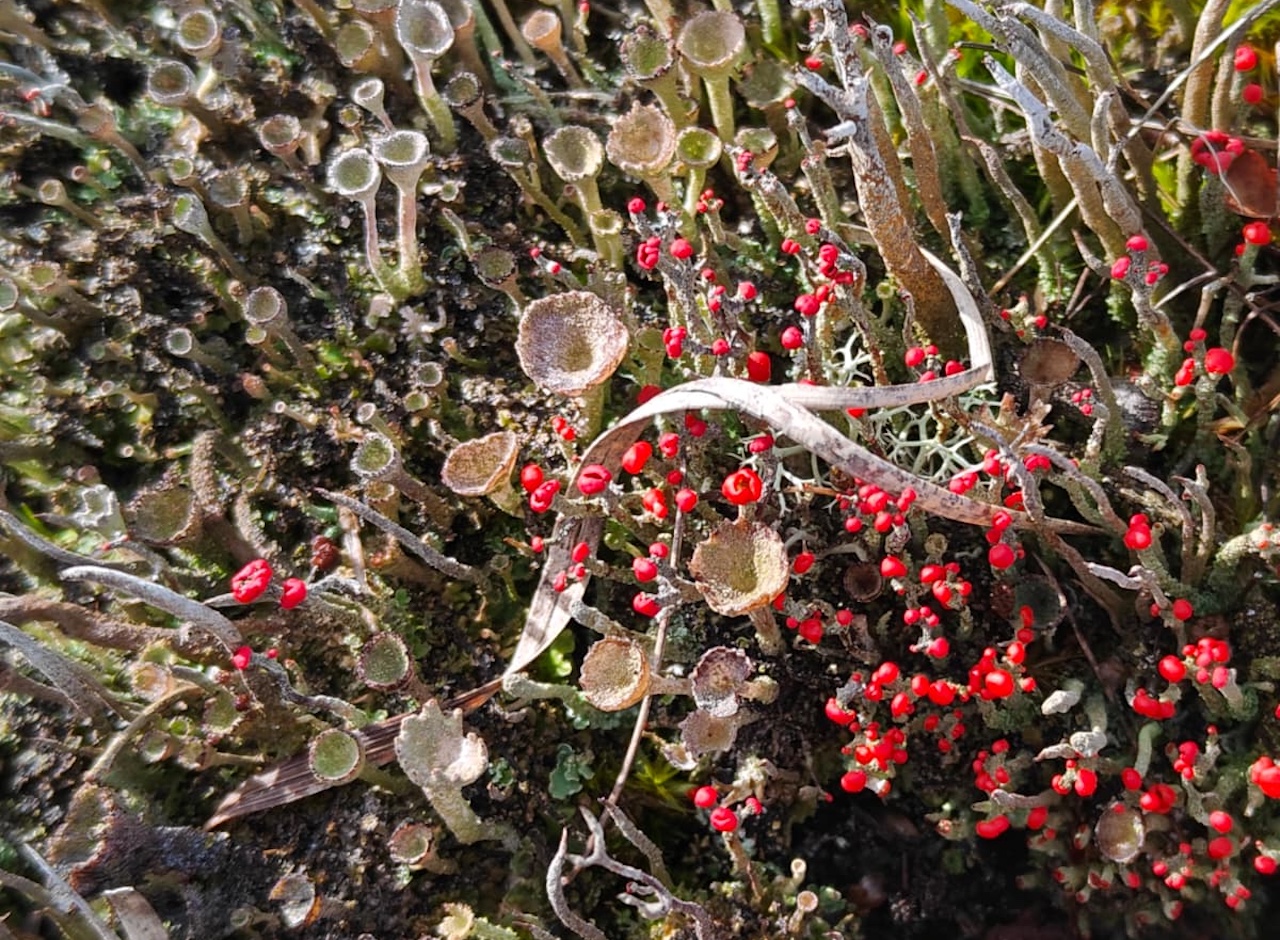 Lichen in the Cladonia genus, rather difficult to identify more specifically without further analysis
When everyone was back home Alvin made a big batch of banana bread, which will hopefully last us longer than a few hours like the normal sized banana bread usually do! We did realize we were missing butter for the recipe halfway through it though, and he had to go on a very quick and physically demanding bike trip to the nearest shop to get some. The banana bread turned out very nice in the end, so his efforts were not in vain!
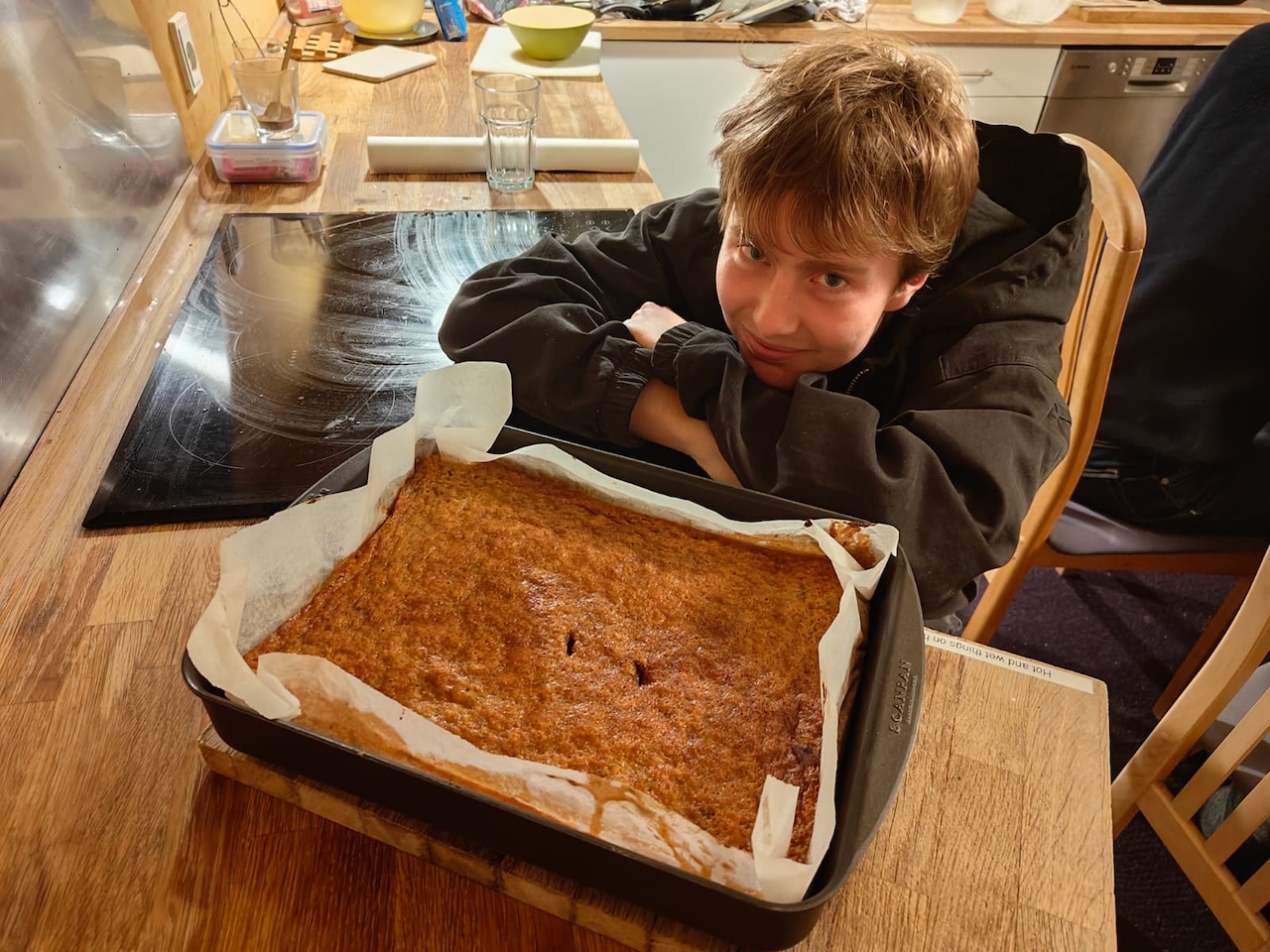 Alvin and his amazing banana bread
In the meantime Dylan went on a walk with the thermal as well and found one Jack Snipe (Enkeltbekassin) and a little Water Vole (Mosegris) around the ponds.
For dinner we enjoyed a fantastic sweet potato risotto made by Dylan, and of course some banana bread!
Highlights of today:
1 Little Gull (Dærgmåge)
1 Jack Snipe (Single-shot)
1 Bar-tailed godwit (Lille Kobbersneppe)
8 Sandwich cubes (Splitterne)
People: Alvin Johansson, János Schadl, Alix Bortolussi, Julian Helbig, Dylan Daunt, Simon S. Christiansen, Lars Bo, Oluf Lou.
Rainy Gull day
tirsdag 24. marts 2026
After waking up in the morning and checking the weather forecast, we decided not to do either the migration count or the ringing this morning due to the rain coming in. Some of us went back to sleep and others finished some tasks that needed doing. Around nine am there was a gap in the rain and Alix, Julian and I went out to do some migration counting for two hours. It turned out pretty successful. Even though we had poor visibility, there were many Guillemots (Lomvie) migrating close to the beach. Suddenly the Glaucous Gull (Gråmåge) that has been hanging around the area for some days appeared out of the fog and made a flyby along the beach and we got some nice views. We also saw Sandwich Terns (Splitterne) and a Turnstone (Stenvender) which was nice.
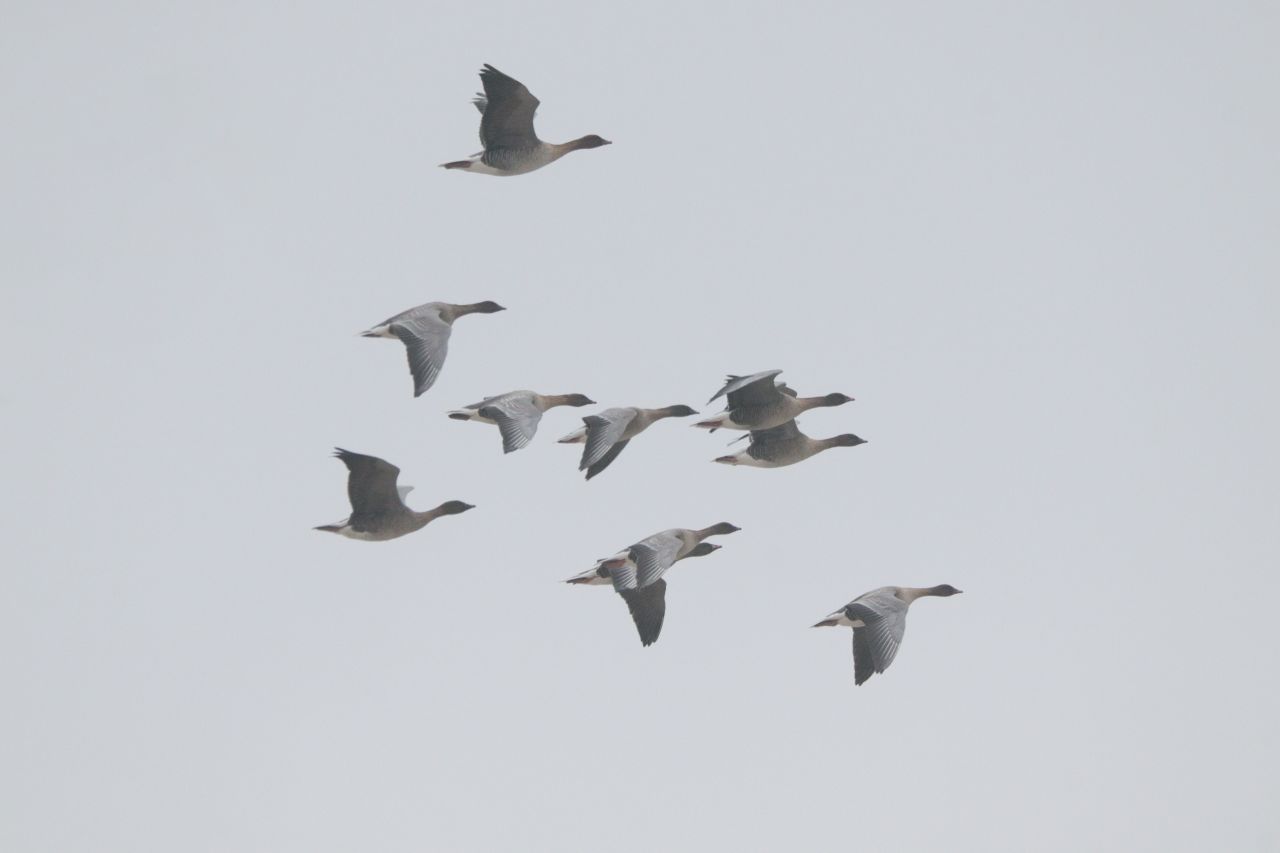 A flock of Pink-footed geese migrating
When walking back from Grenen we took a detour to try to get a better look at the Glaucous Gull (Gråmåge) further west, but the gull search only gave us a third calendar year, Caspian gull (Kaspisk Måge), which was very nice to be fair. It also started raining again, so when we got back to the lighthouse, we were pretty soaked.
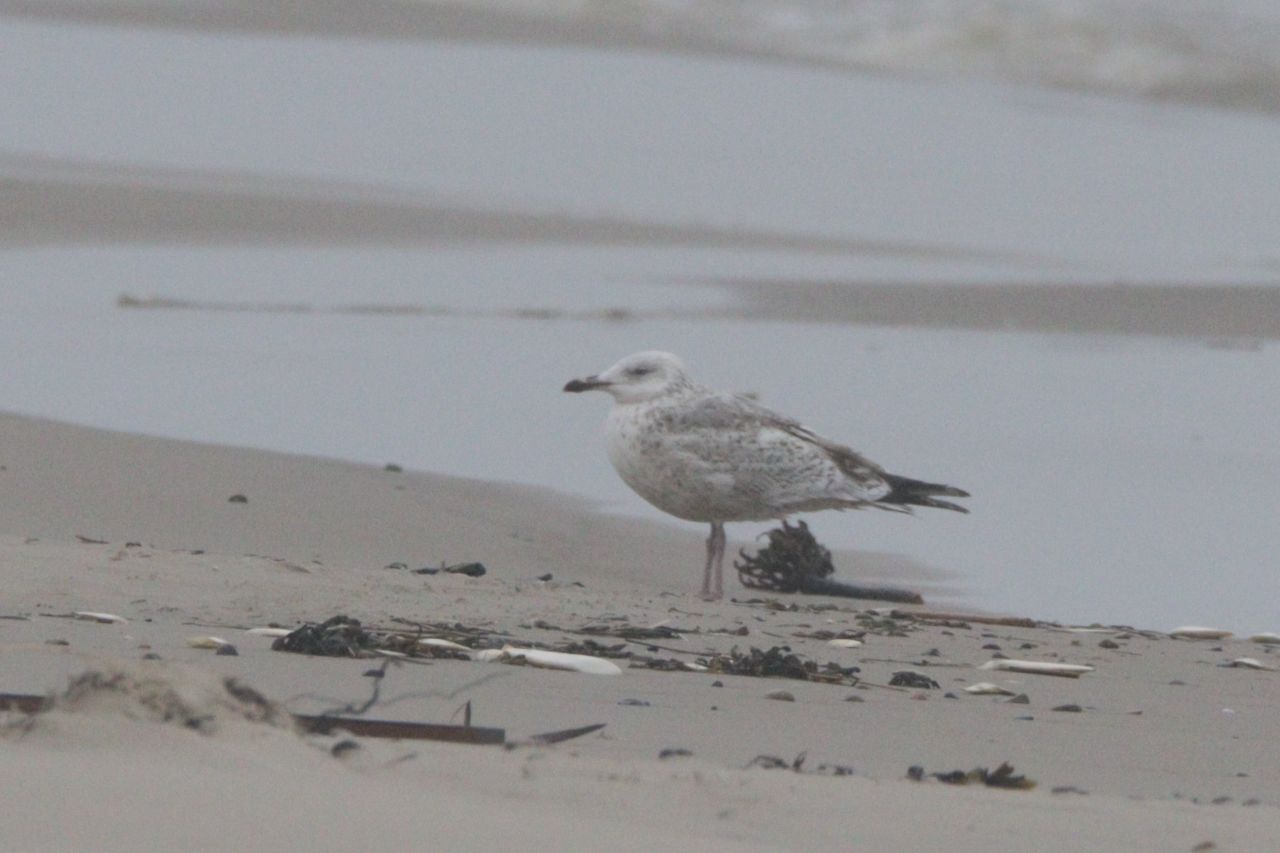 Third calendar year, Caspian Gull (Kaspisk Måge) on the beach
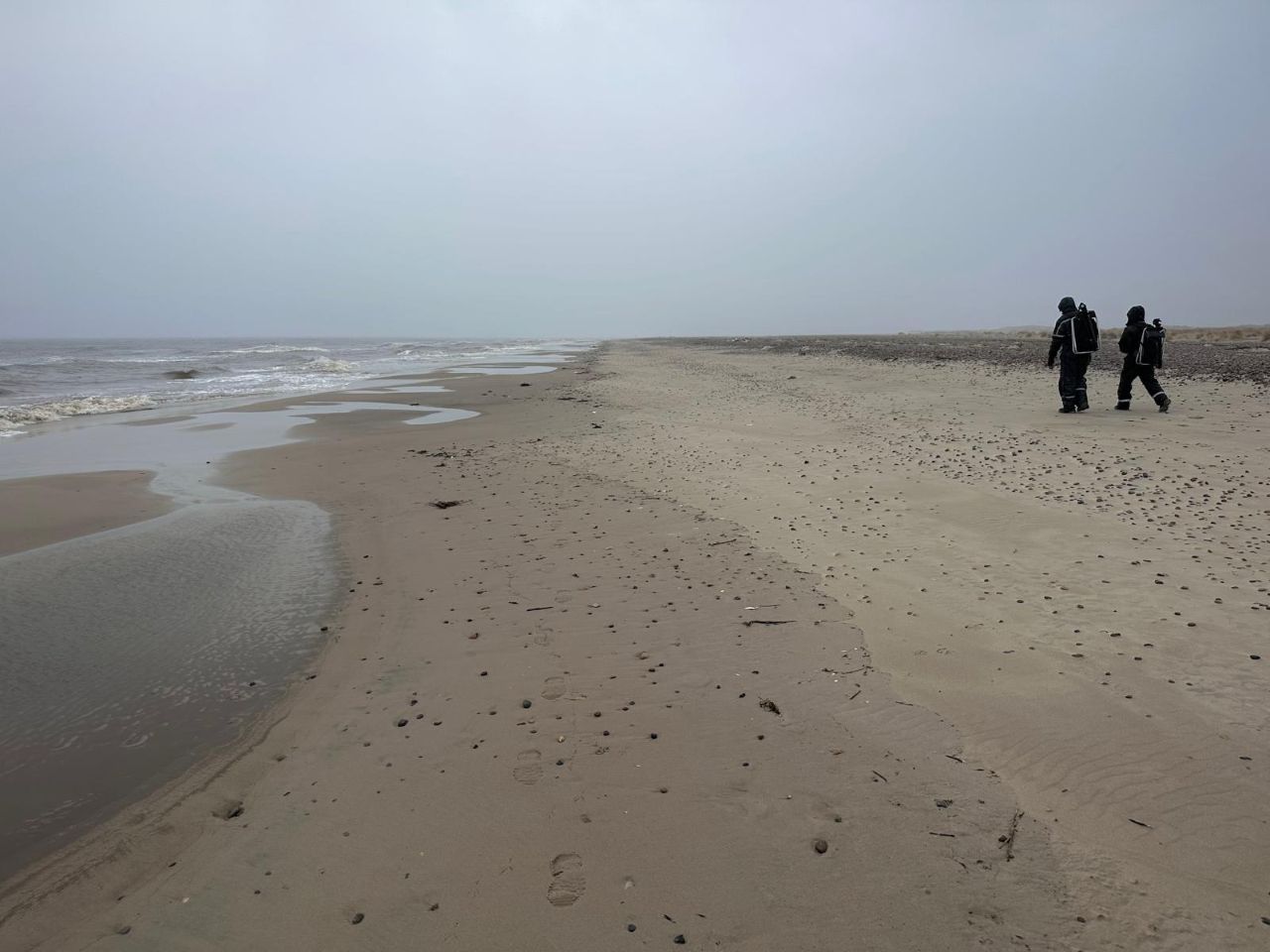 Me and Alix walking in the rain
In the afternoon János and Dylan also made an attempt to see the Glaucous Gull (Gråmåge) again but that was also unsuccessful.
Highlights of today:
Glaucous gull (Gråmåge) - 1
Caspian gull (Kaspisk Måge) - 1
Sandwich tern (splitterne) - 2
Turnstone (Stenvender) - 1
Link to today’s observations in DOFbasen from observers in the area
Summary of today's raptor migration in DOFbasen
People: Alvin Johansson, János Schadl, Alix Bortolussi, Julian Helbig, Dylan Daunt, Simon S. Christiansen
Lots of fat tits!
mandag 23. marts 2026
It was a slightly later start for János and I as we have decided to stop catching the Snow Buntings in the early morning as a lot of the birds have left to their breeding grounds. We were walking to Grenen for the migration count when János shouted "Glaucous Gull!" (Gråmåge). I was flying by itself straight over Kabeltromlem. We called Alvin and the others at the ringing so they could see it and luckily the bird flew straight over their heads. A lifer for all three of them!
Migration was nice with lots of auks passing including 2500 Guillemots (Lomvie). Not many passerines were migrating over Grenen so our main focus today was on the sea. One and a half hours into the count I spotted a winter plumage Puffin (Lunde). It flew Northwest and then landed on the sea. A similar behaviour to the previous birds in the last weeks. Is it the same bird? Then János got a call from Simon asking for help… The nets were filled to the brim with Blue Tits (Blåmejse)!
Alix, Alvin, Simon and Julian were doing the ringing this morning. They had a slow start with a few nice birds including Dunnock (Jernspurv) and some Northern Long-tailed Tits (Nordlig Halemejse). Then at 08:30 the sound of Blue Tits was everywhere. So it wasn't as huge surprise when they found lots of them in the net. Situations like this require a lot of good communication, concentration and teamwork. Everyone did a great job to keep birds under as little stress as possible and were very efficient in all the aspects of ringing. It also helped that all of the tits were very fat! Most of the tits were in the fat score range between 4 and 6 which means they are ready to migrate and are very strong and healthy. This was really nice to see, and it showed us that the birds were all doing very well. These Blue Tits (Blåmejse) come from places like Norway and Sweden which was proven by a couple of really nice recaptures. In the morning we caught one Swedish ringed bird and two Norwegian ringed birds. It has been very enjoyable for me to witness tit migration as it is something that never happens in the UK. It was really cool thinking that these birds will be in Northern Scandinavia very soon!
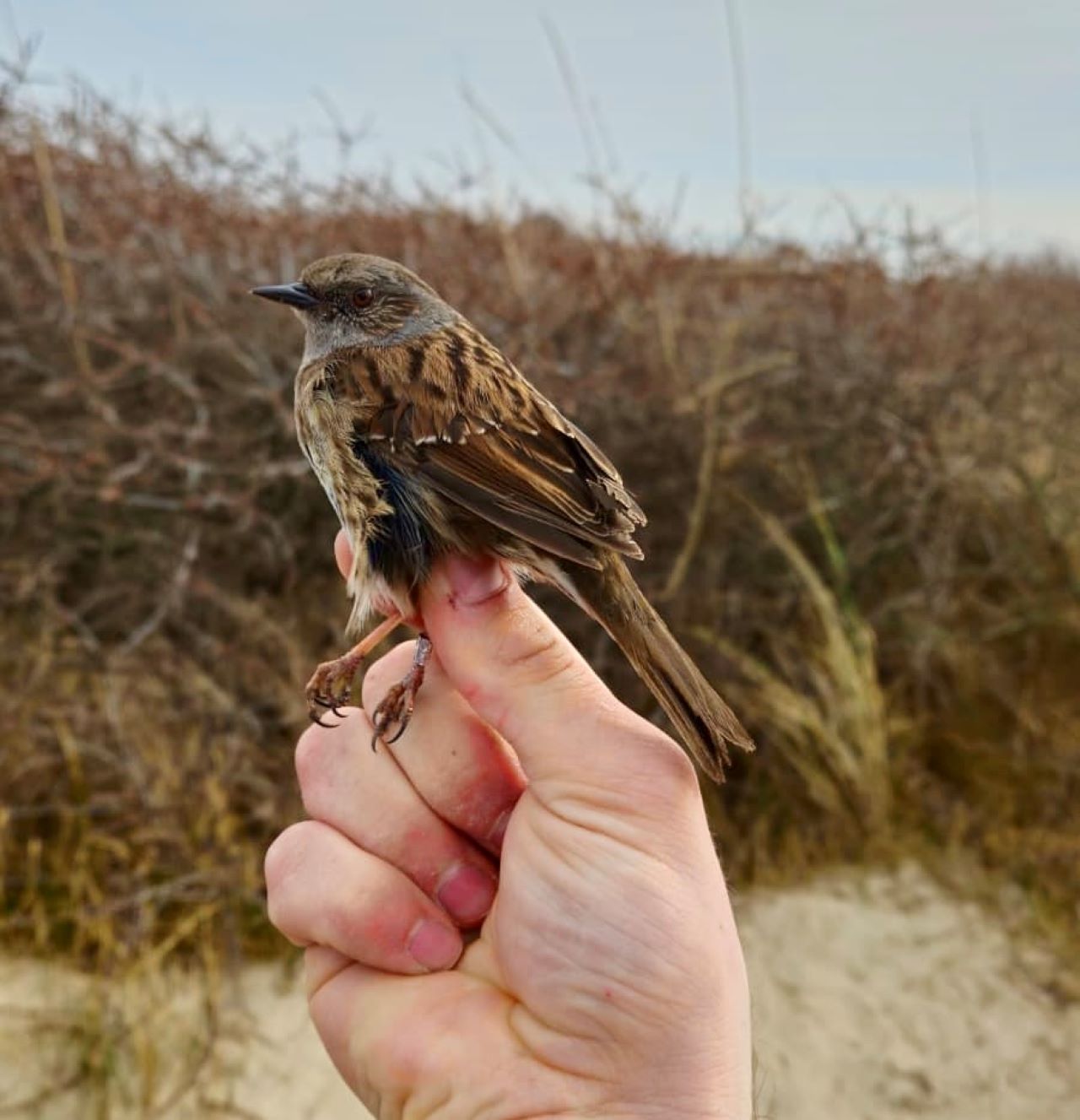
Dunnock (Jernspuv)
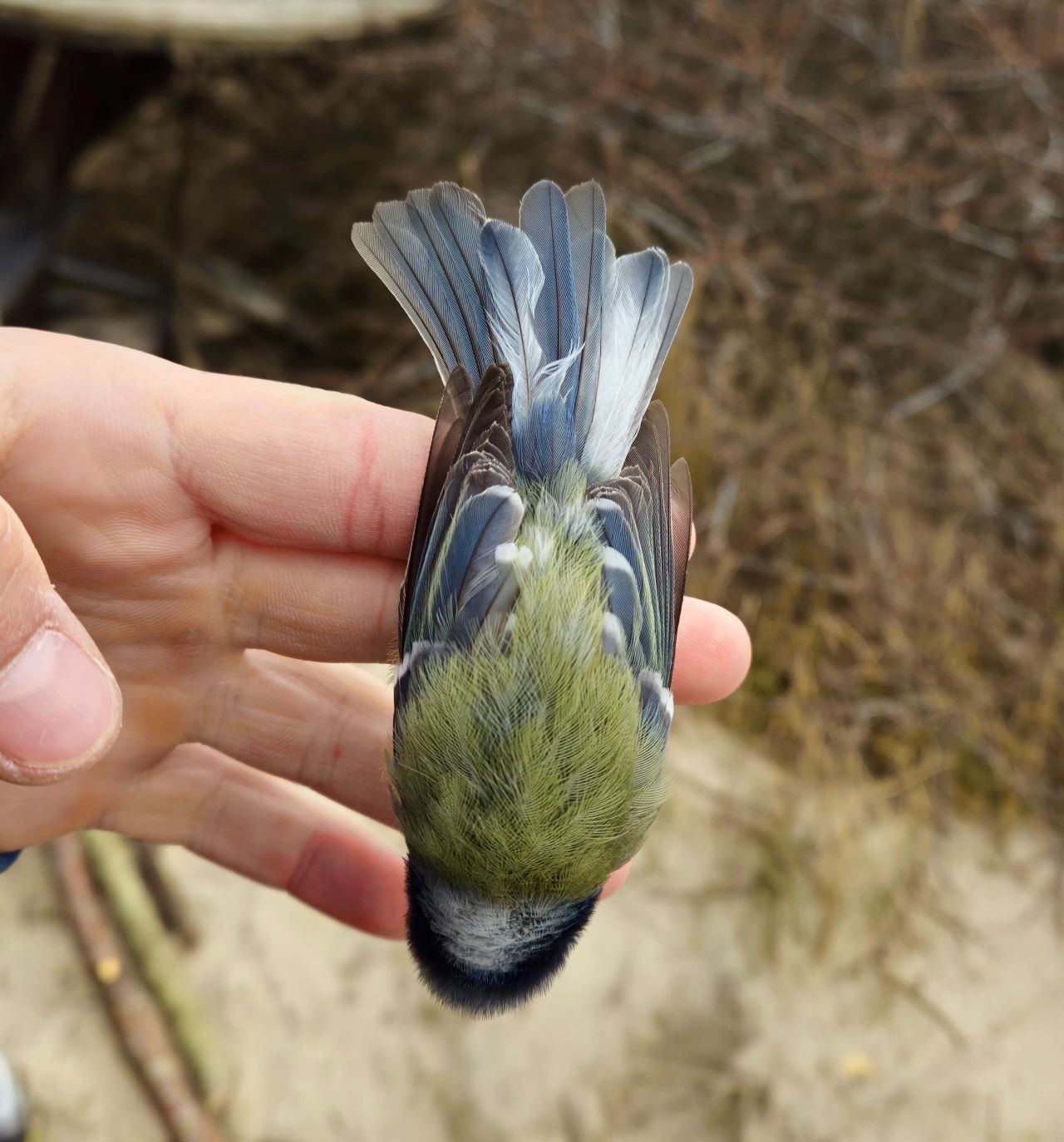
Blue Tit (Blåmejse) white a partly white tail
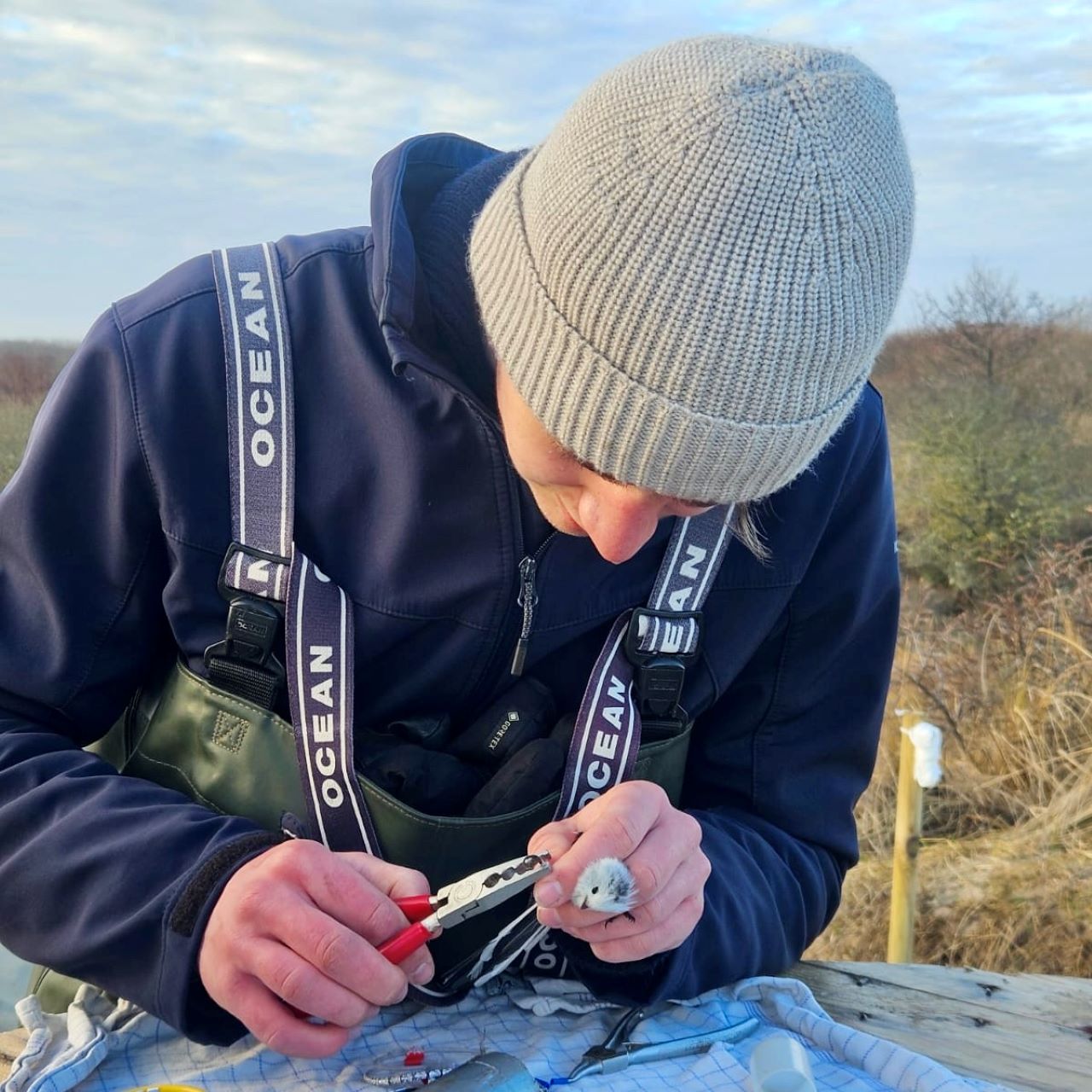
Julian ringing a Long-tailed Tit (Halemejse)
János had to leave me by myself to do the rest of the migration count to help out with the tits. It definitely made me realise that it is always nice to have someone with you in the field. Especially if the migration is quiet. Luckily for me, there were still some nice birds for me to see like a winter plumage Grey Plover (Strandhjejle), a female Scaup (Bjergand) with Common Scoters (Sortand) and lots more Guillemots (Lomvie).
After the very busy morning we all needed a bit of a break. We came back to the lighthouse and had some lunch and put in the migration data for DOF Basen. Later in the afternoon Simon gave all of us a nice talk about the Ethics of ringing which came at a great time given todays events. It also helped us reflect on how well we did this morning, and we have all learnt how to be even better for the next time something like this happens.
In the evening János and I tried to catch some Moorhen (Rørhøne) at a local pond. We think that we will be able to catch them in the coming days as we were able to get very close to them. After, we came home to a very nice and warm curry that Julian made which was very tasty. Tomorrow the weather doesn’t look the best but we still hope that we will be able to go out counting and ringing.
Ringing (Kabeltromlen)
Blackbird (Solsort) - 2
Song Thrush (Sangdrossel) - 1
Great Tit (Musvit) - 15
Reed Bunting (Rørspurv) - 1
Wren (Gærdesmutte) - 1
Dunnock (Jernspurv) - 4
Goldcrest (Fuglekonge) - 1
Robin (Rødhals) - 1
Blue Tit (Blåmejse) - 128
Long-tailed Tit (Halemejse) - 20
Total: 174
Ringing (Nordstjernevej):
Yellowhammer (Gulspurv) - 1
Blue Tit (Blåmejse) - 5
Great Tit (Musvit) - 5
Total: 11
Highlights from the observations:
Puffin (Lunde) - 1
Black-throated Diver (Sortstrubet Lom) - 2
Marsh Harrier (Rørhøg) - 1
Goshawk (Duehøg) - 1
Scaup (Bjergand) - 1
Grey Plover (Strandhjejle) - 1
Glaucous Gull (Gråmåge) -1
Link to today’s observations in DOFbasen from observers in the area
Summary of today's raptor migration in DOFbasen
People: Dylan Daunt, János Schadl, Alix Bortolussi, Alvin Johansson, Julian Helbig, Simon S. Christiansen, Michael Ancher
Finally lasagna!
søndag 22. marts 2026
It was an early morning again, as I and Dylan prepared to leave for the migration count. We wanted to try a different approach to catch more of the wintering Snowbuntings (Snespurv) and Twites (Bjergirisk) at Grenen. After the past few days, the birds had gotten more and more used to the mist net, and with a bit stronger wind, we decided to bring two walk-in traps with us. We placed the traps on the beach and added some seeds before we climbed the dunes and waited for the start of the migration count. Even though we had an overall slow morning, we still had some nice highlights, like the first Marsh Harrier (Rørhøg) of the spring, a Goshawk (…), Little Gull (Dværgmåge) and a very good number for Black-throated Divers (Sortstrubet Lom) with 11 birds, and more than ten thousand Chaffinches (Bogfinke). We barely saw any Snowbuntings (Snespurv) and Twites (Bjergirisk) though, so no luck with the ringing. In the last hour of the count Erik joined us, which was nice.
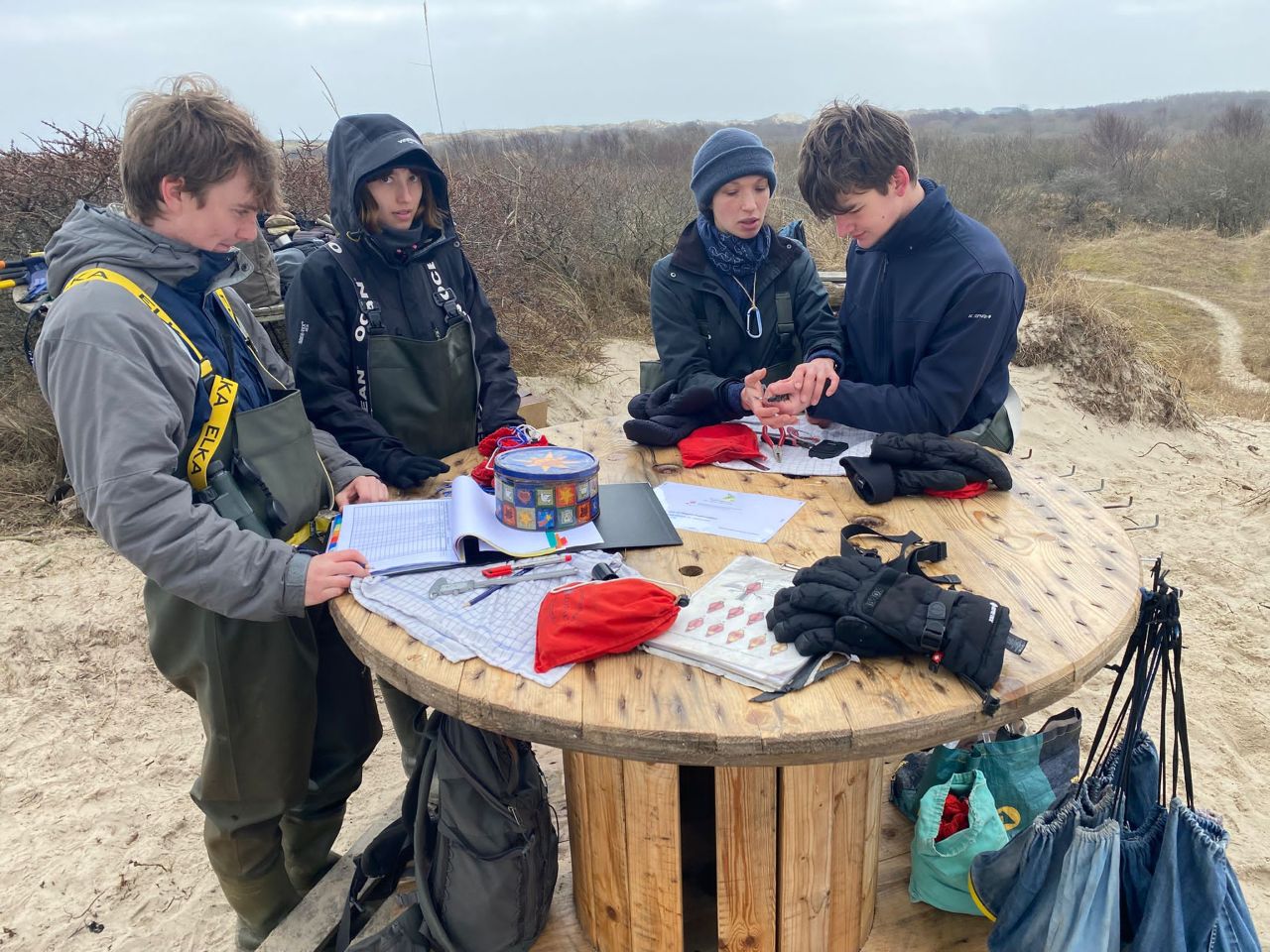
Ringing
We walked back over Kabeltromlen to pick up Joey Christiensen and his parents. He will come back in April for four days and had spent the day at the ringing. We had lunch together and showed them the apartment. We are very much looking forward to his visit in April at the station.
The ringing had been quite slow today, with only 8 birds ringed. After the end of the standardized ringing, Julian, Alix and Alvin stayed a bit longer to cut a new net lane. So hopefully this will produce some nice birds this spring.
We all had a quick nap before I and Dylan went out to Nordstrand to finish the Waterbird count. After counting over 180 resting Divers (Lom), we were happy to see the Glaucous Gull (Gråmåge) landing on the beach. It was not very shy, so we could get nice and close views of the bird. We also counted the Cormorant colony. With 48 nests, we had quite an increase from our last visit a week ago.
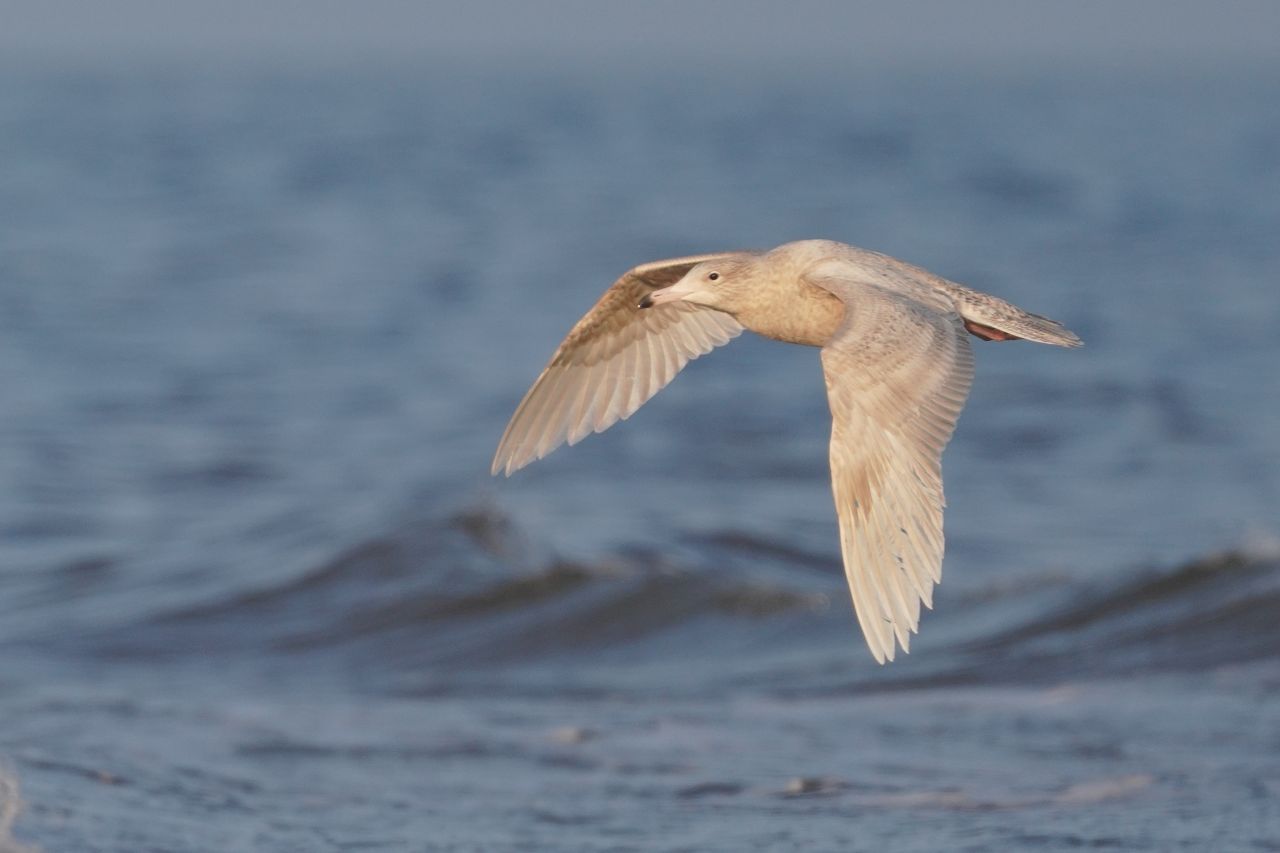
Glaucous Gull (Gråmåge) at Nordstrand
Julian went for a walk and had a call with some friends, and we ended the day with a very appreciated lasagna by Alix.
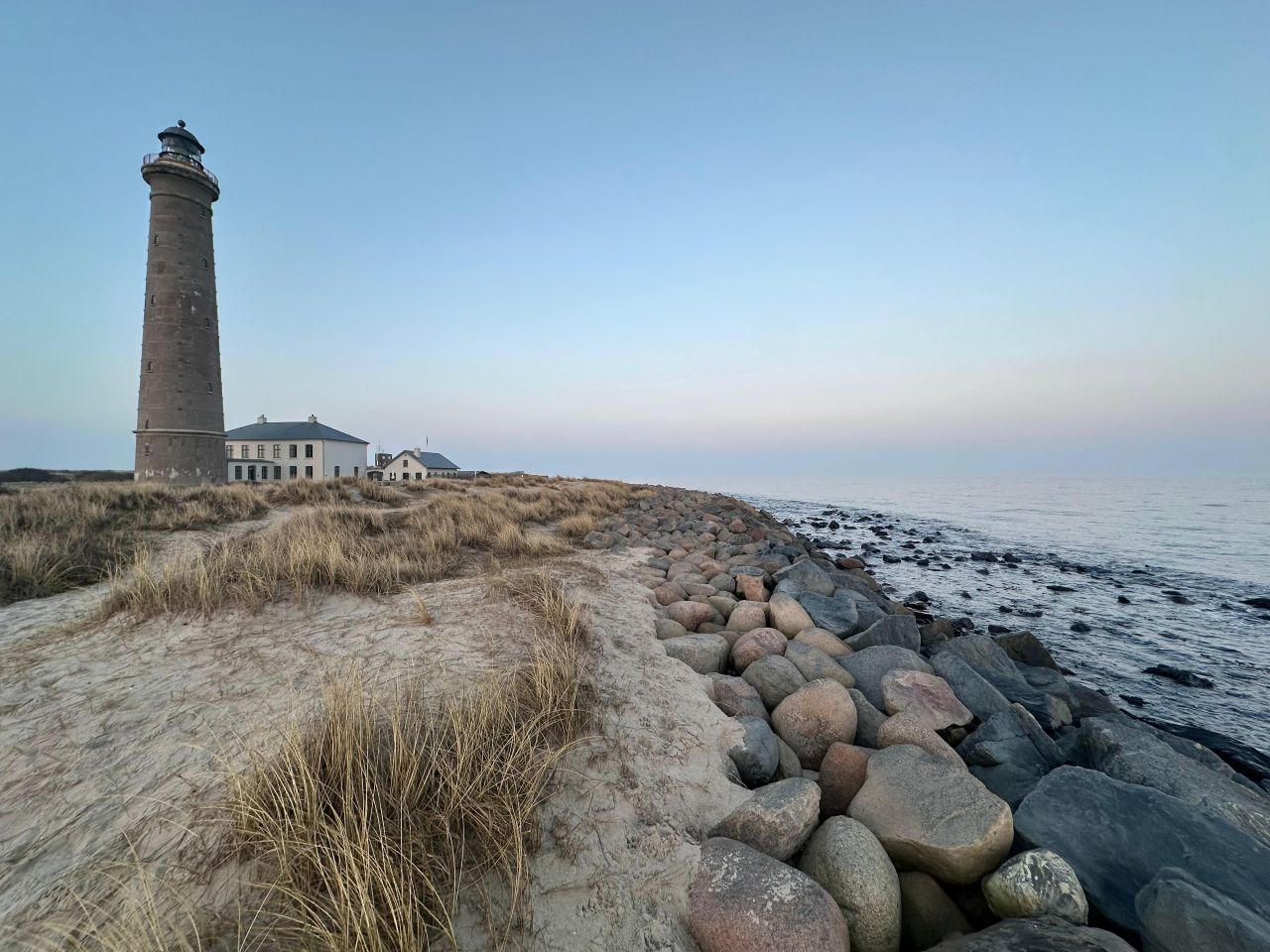
Evening view of the lighthouse
Ringing (Kabeltromlen)
Gærdesmutte - 2
Musvit - 1
Fuglekonge - 1
Gransanger - 3
Total: 7
Ringing (Nordstjernevej)
Blåmejse - 7
Bogfinke - 3
Grønirisk 1
Jernspurv 1
Total: 12
Highlights from the observations:
Black-throated Diver (Sortstrubet Lom) - 11
Marsh Harrier (Rørhøg) - 1
Pochard (Taffelant) - 1
Long-tailed Duck (Havlit) - 2
Little Gull (Dværgmåge) - 1
Glaucous Gull (Gråmåge) -1
Link to today’s observations in DOFbasen from observers in the area
Summary of today's raptor migration in DOFbasen
People: Dylan Daunt, János Schadl, Alix Bortolussi, Alvin Johansson, Julian Helbig, Simon S. Christiansen, Joey Christiensen, Lisa Vergin