
Her på Skagen Fuglestations blog bringes korte nyheder i dagbogsformat om hændelser på fuglestationen.
-
FORSIDE

- Blog
Se indlæg fra måned: jan. (23)feb. (8)mar. (31)apr. (30)maj (31)juni (29)juli (31)aug. (31)sept. (30)okt. (10)
2 kings and 1 queen
lørdag 10. oktober 2026
I am currently writing in the living room, tucked in my blanket and curled up on the couch. When did it get so cold?? As soon as the flocks of thrushes (Drossel) arrived, it got chilly. Birds like the redwing (Vindrossel) really bring out the Autumn feeling in my opinion.
I went ringing with Luis and Jule today, but this was by far the shortest ringing day I’ve experienced here. The weather got too poorly and the nets were getting stuck onto branches. Despite that, we still managed to ring a few lovely birds. While Luis and Jule were opening the nets they already caught an adult redwing! And when me and Jule started closing while Luis had joined the observers, we got a sweet little redpoll! (Gråsisken).
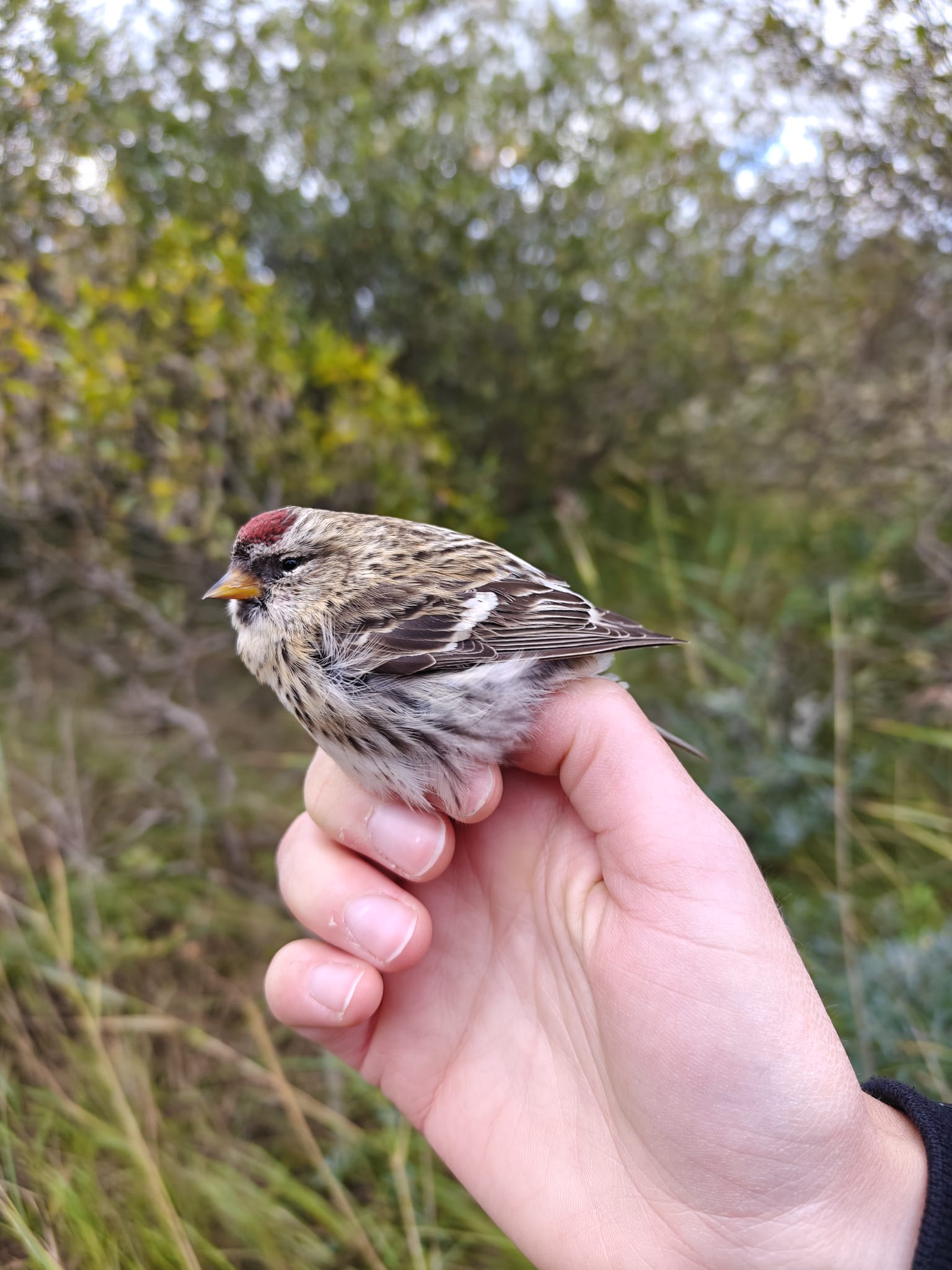
Lovely little Mealy redpoll! (Stor Gråsisken) Photo by Laura Tamminen
Sarah and Mio went observing and were also joined by Knud! It is great having you back. They had quite a nice day, seeing two black guillemots (Tejst), a few golden eyes (Hvinand) alongside the usual migrators. The horned larks (Bjerglærke), Lapland bunting (Lapværling) and snow bunting (Snespurv) were also visible.
The highlights of today are definitely the two sooty shearwaters (Sodfarvet Skråpe) and an adult Arctic tern! (Havterne) The tern is special because this time of year is quite late for an adult bird! These two species also inspired today’s title. We refer to the sooty shearwater as the King of Migration which is from a song! Me and Luis previously argued that the true king of migration should be the Arctic tern because they take the longest yearly migration of any animal on Earth! Can you guess how much? They travel about 40,000 to 80,000 km annually! That is more than enough to crown them as Kings.
To settle the small debate, we decided that the terns could be the Queens of Migration. Everyone’s happy then haha.
After coming back a bit earlier than usual, I already started preparing for my dinner tomorrow. I really hope it will turn out great because I have a special idea for it! We also had an early meeting today, then cleaned our station and did shopping.
We said goodbye to our lovely guests, Jesper and Karen. It was so nice having you at the station. Hopefully you will visit again!
As the last activity for today i decided to go up the lighthouse with Jule and Sarah. Fun fact i am horrified of heights! I gripped onto the wall for dear life. Luckily there was no wind so that made the experience a bit easier.
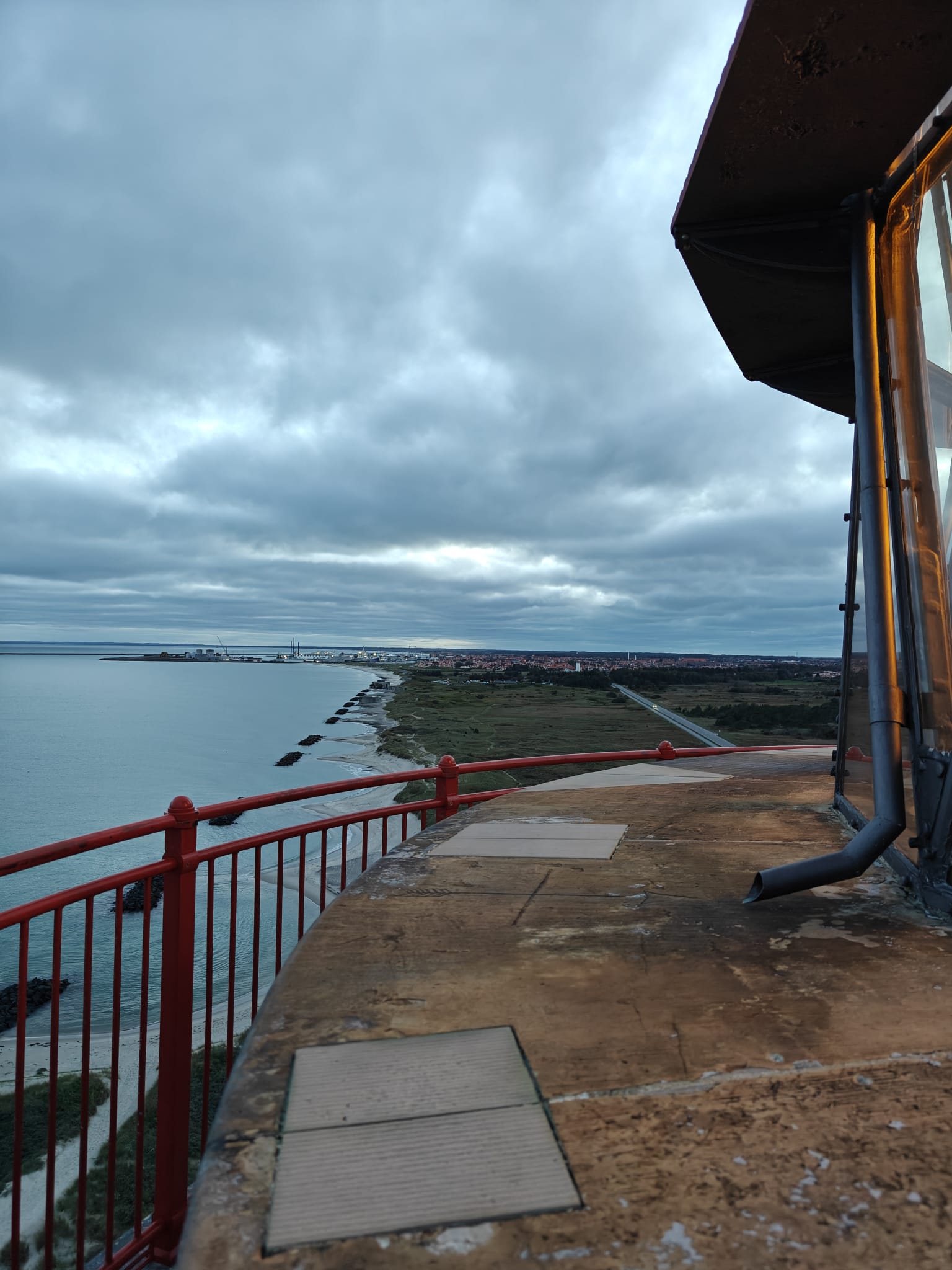
A quick photo i snapped from the lighthouse.
An interesting art exhibition has opened in Det Grå Fyr, so if you are into art, come check it out!
Highlights from the observations:
Havterne adult – 1
Sodfarvet Skråpe – 2
Lapværling – 1
Bjerglærke – 14
Ringing (Kabeltromlen):
Gærdesmutte – 1
Rødhals – 1
Sangdrossel – 1
Vindrossel – 1
Stor Gråsisken – 1
Total: 5
Link to todays observations in the Dofbasen from observers in the area.
People: Jule Tappe, Mio Brix, Laura Tamminen, Luis Q. Langfeld, Sarah Partridge, Simon S. Christiansen, Jesper and Karen Marie Olesen, Knud Pedersen, Erik Christophersen
"Many regrets. Mostly bird related."
fredag 9. oktober 2026
Another sunrise, another day at SKAF. Today, Mio and Luis were at World’s End 3 for the observations and had a real autumn count. With over four hundreds of Auks (Lomvie/Alk), several Geese flocks including Brent Geese (Knortegås) in the air, they were busy. The perfect autumn songbird quartet was also enjoyed by them: Resting on the beach, they saw Twites (Bjergirisk), Lapland Bunting (Lapværling), Snow Bunting (Snespurv) and Horned Larks (Bjerglærke).
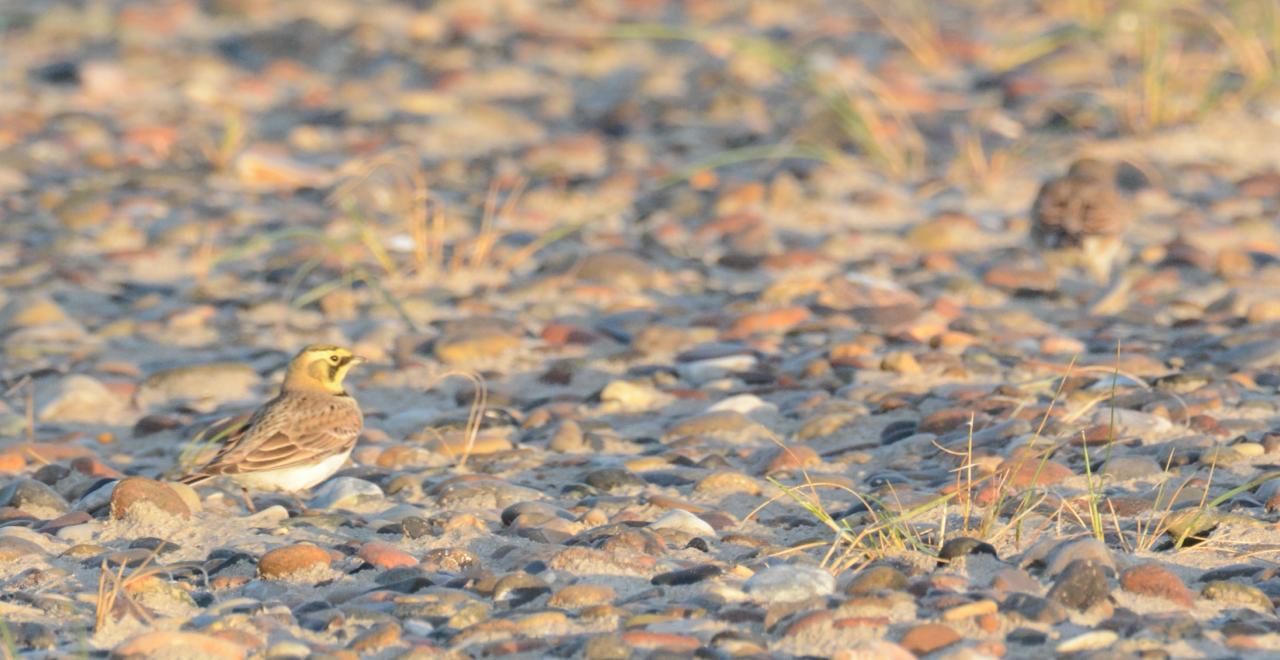 Horned Larks (Bjerglærke) on the beach (very cute). Foto: Luis Q. Langfeld.
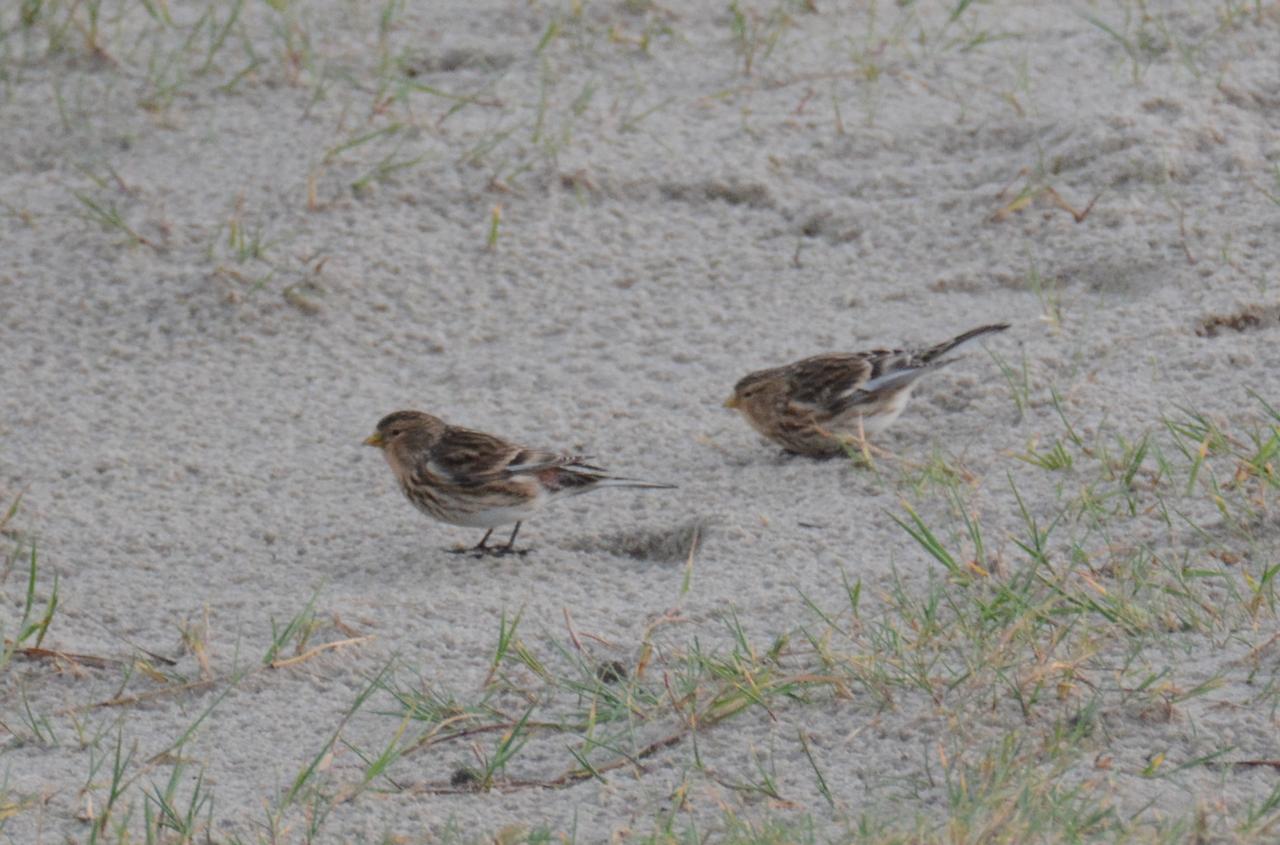 Twites (Bjergirisk) on the beach (also very cute). Foto: Luis Q. Langfeld.
In the ringing, Simon was busy trying to get an overview of all the thrushes in the air. Several hundreds of Redwings (Vindrossel) had finally reached Skagen, with several Fieldfares (Sjaggers) and even a Ring Ouzel (Ringdrossel). There was also a calling Lapland Bunting (Lapværling) for us and of course, also some birds in the net: Two Redwings (Vindrossel), several Siskins (Grønsisken) and a Goldcrest (Fuglekonge) kept us busy, among the usual species we catch like Wrens (Gærdesmutte) or Blackcaps (Munk).
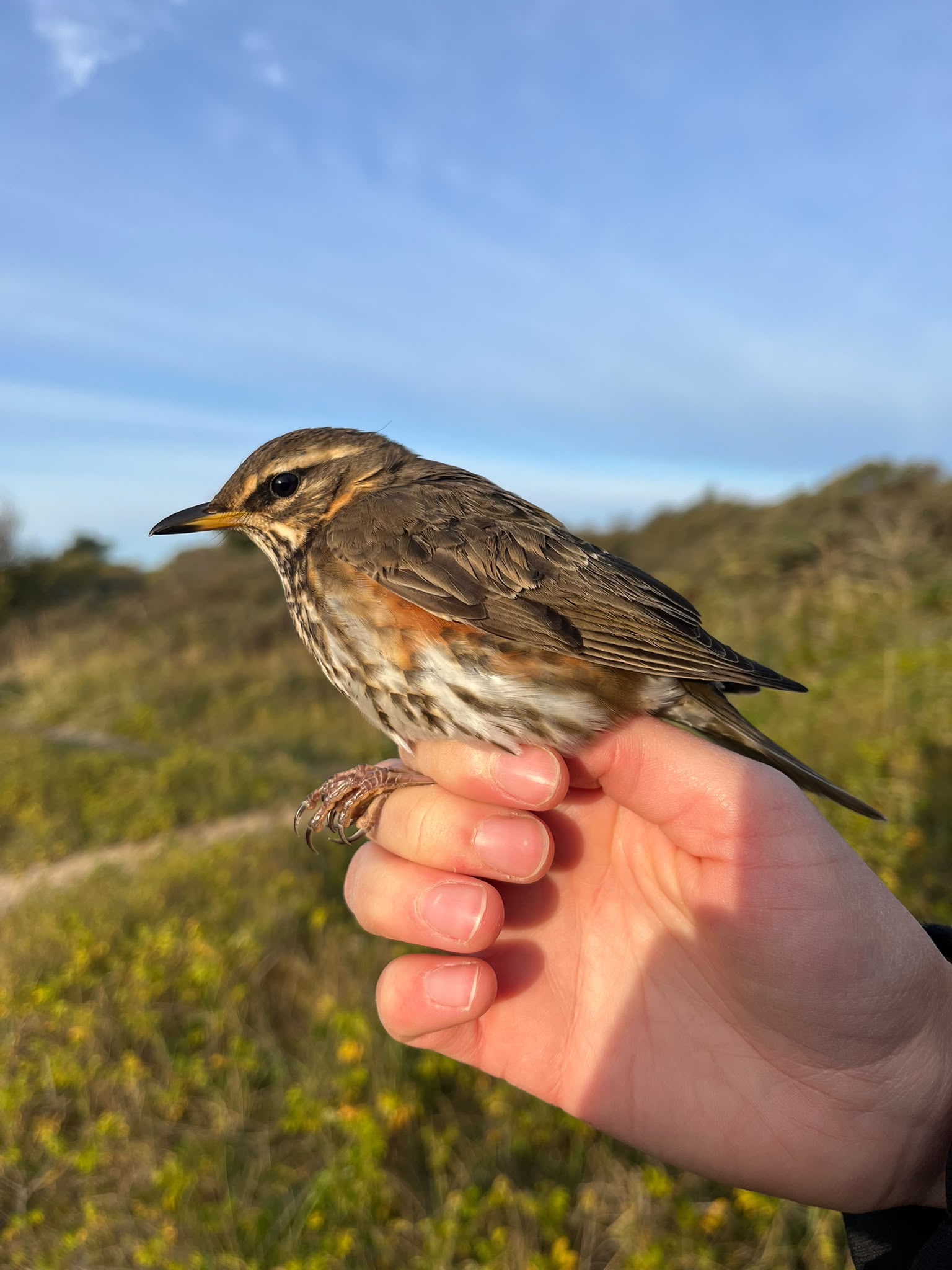 One of the beautiful Redwings (Vindrossel) we caught today.
Back at the station, everyone had a quick lunch and entered data. Jeppe brought a dead Fulmar (Mallemuk) to the station which will be added to the „Seabirds under pressure (SUPRE)“ project that you can read more about on the blog from Sunday. After the lunchbreak, we cycled into town to go to the brewery. There, local birdwatcher Karsten Klausen hold a concert with his friend and while enjoying beer and other nice drinks, we listened to their music and had nice talks. Something that birdwatchers can always talk about, are birds they would like to see or catch someday. Of course, in birdwatching, you also sometimes have regrets. This is where today’s title comes from. That’s life, though. The concert was great and it was a nice atmosphere. We especially enjoyed the „Flagbakken Blues“ that talked about birdwatching at Flagbakken. Because I had been in town before the concert already, Mio took me on the back of his bike. That was quite an adventure!
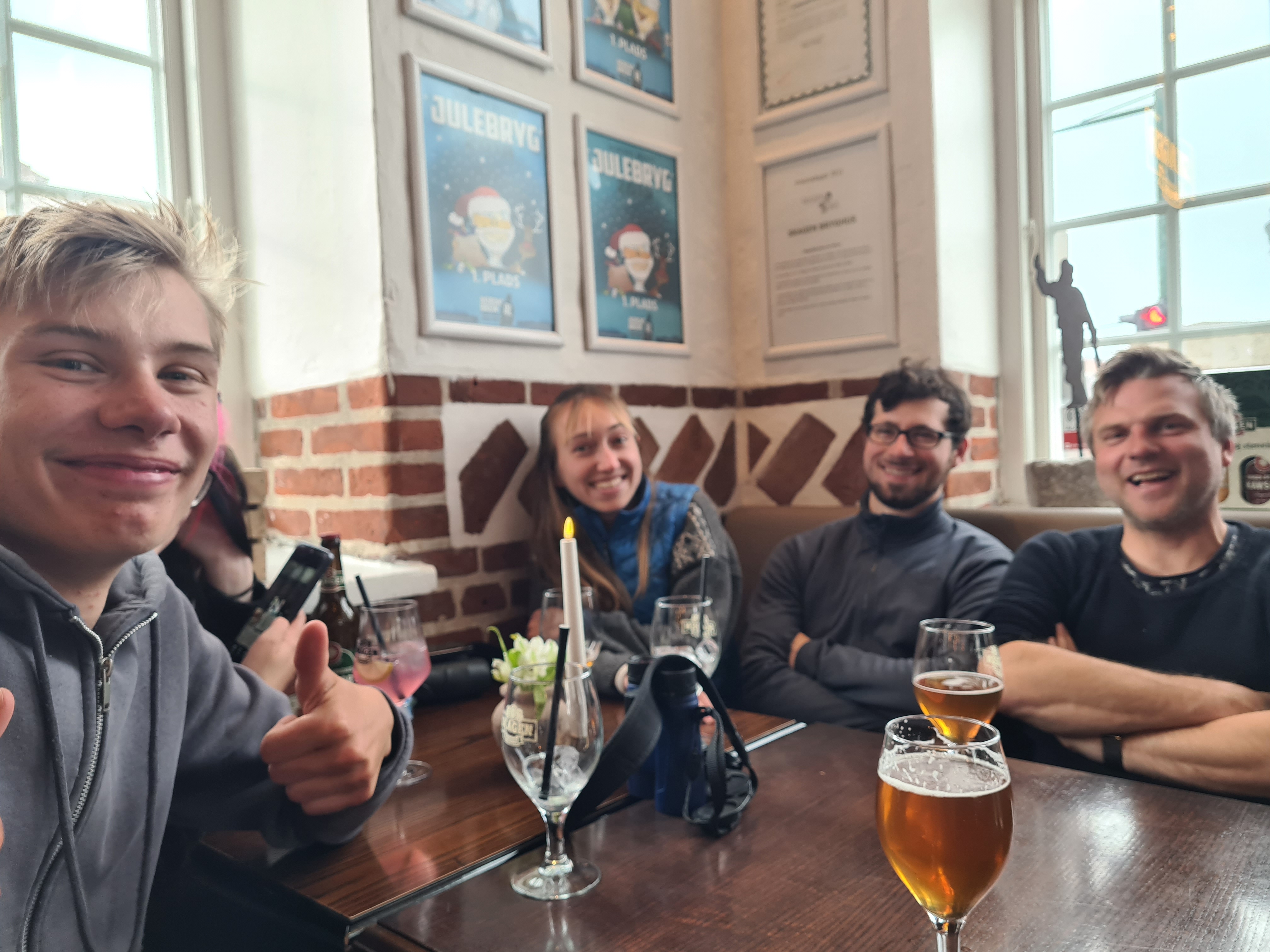 At the brewery (Laura is hiding behind Mio). Foto: Jule Tappe.
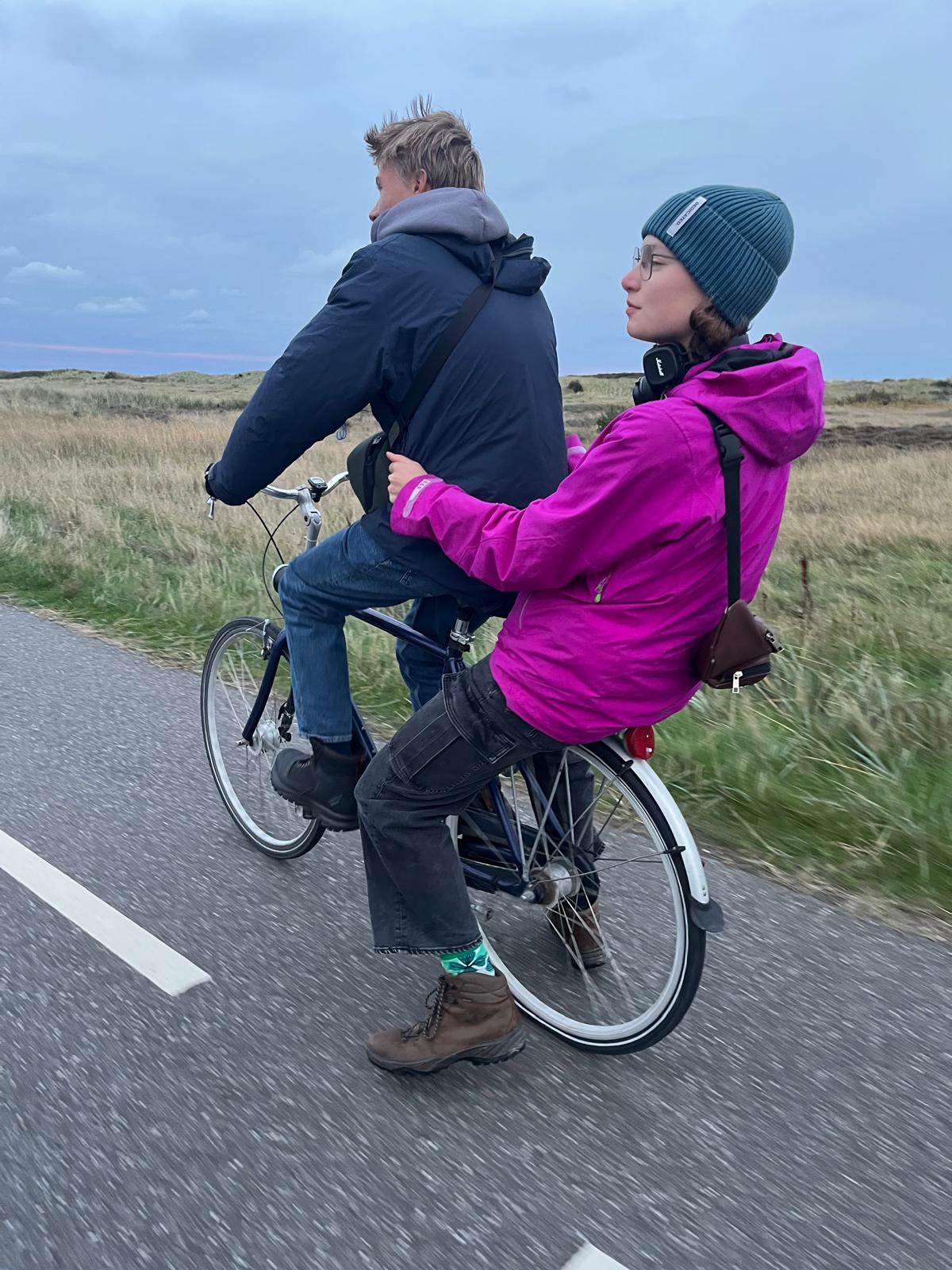 Mio and I on the bike. Foto: Sarah Partridge.
In the lighthouse, a nice dinner awaited us, cooked by Jesper and Karen Marie, which was very delicious, so thank you! After this long day, there was one last event awaiting us. Luis held a presentation about his stay at Long Point Bird Observatory last year and we were all very amazed by the North American way of „Banding“ and all the warblers.
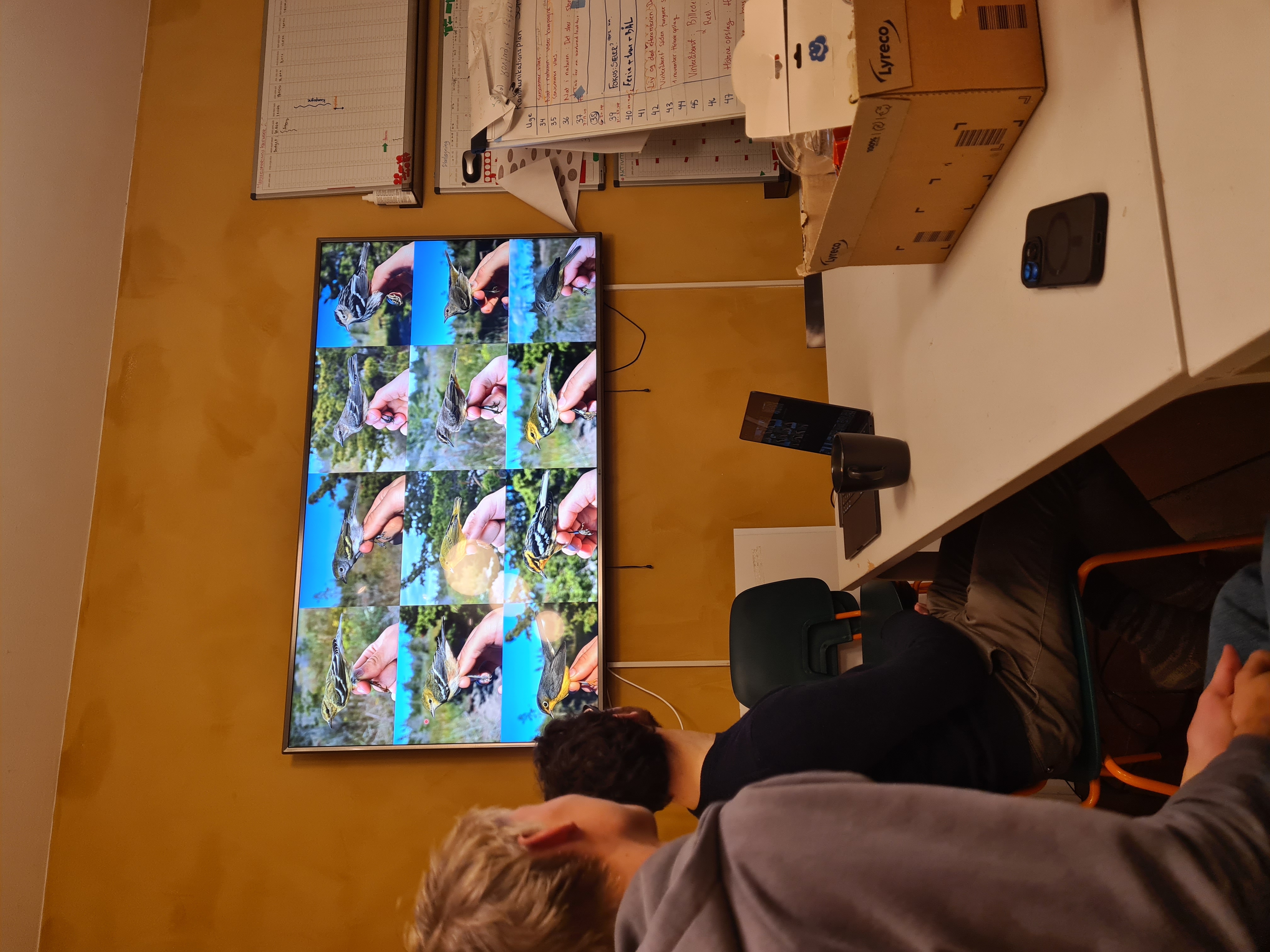 Warblers, warblers and more warblers in the presentation about Luis's stay at Long Point Bird Observatory.
Now, I am sitting in the living room and Mio and Luis are still typing in data from the count. Busy birdwatchers, as always. At least, there are no regrets about today.
Highlights from the observations:
Ring Ouzel (Ringdrossel) – 1
Horned Lark (Bjerglærke) – 17
Lapland Bunting (Lapværling) – 2
Ringing (Kabeltromlen):
Gærdesmutte – 9
Rødhals – 4
Vindrossel – 2
Munk – 3
Gransanger – 1
Fuglekonge – 1
Blåmejse – 3
Grønsisken – 4
Total: 27
People: Jule Tappe, Mio Brix, Laura Tamminen, Luis Q. Langfeld, Sarah Partridge, Simon S. Christiansen, Jesper and Karen Marie Olesen, Jørgen Kabel, Jeppe Madsen, Karsten Klausen
Rainy Day means indoor birding day?
torsdag 8. oktober 2026
As we got up this morning, we checked the weather forecast and, as we had already seen yesterday, there was still too much rain to go out for observations or ringing. So, we could all sleep in! Our day started later with a very nice and delicious pancake breakfast prepared by Sarah. We continued the morning by doing some data work, going to the top of the lighthouse, checking audio recordings, or reading books. After a while, we decided to play a round of our beloved board game, Wingspan! For Jule, it was her first time playing it, so at first, she (and also Sarah, who hadn't played the game for a long time) was maybe a bit confused by all the rules the game has. But with time, you get the hang of it and then it's a lot of fun to play!
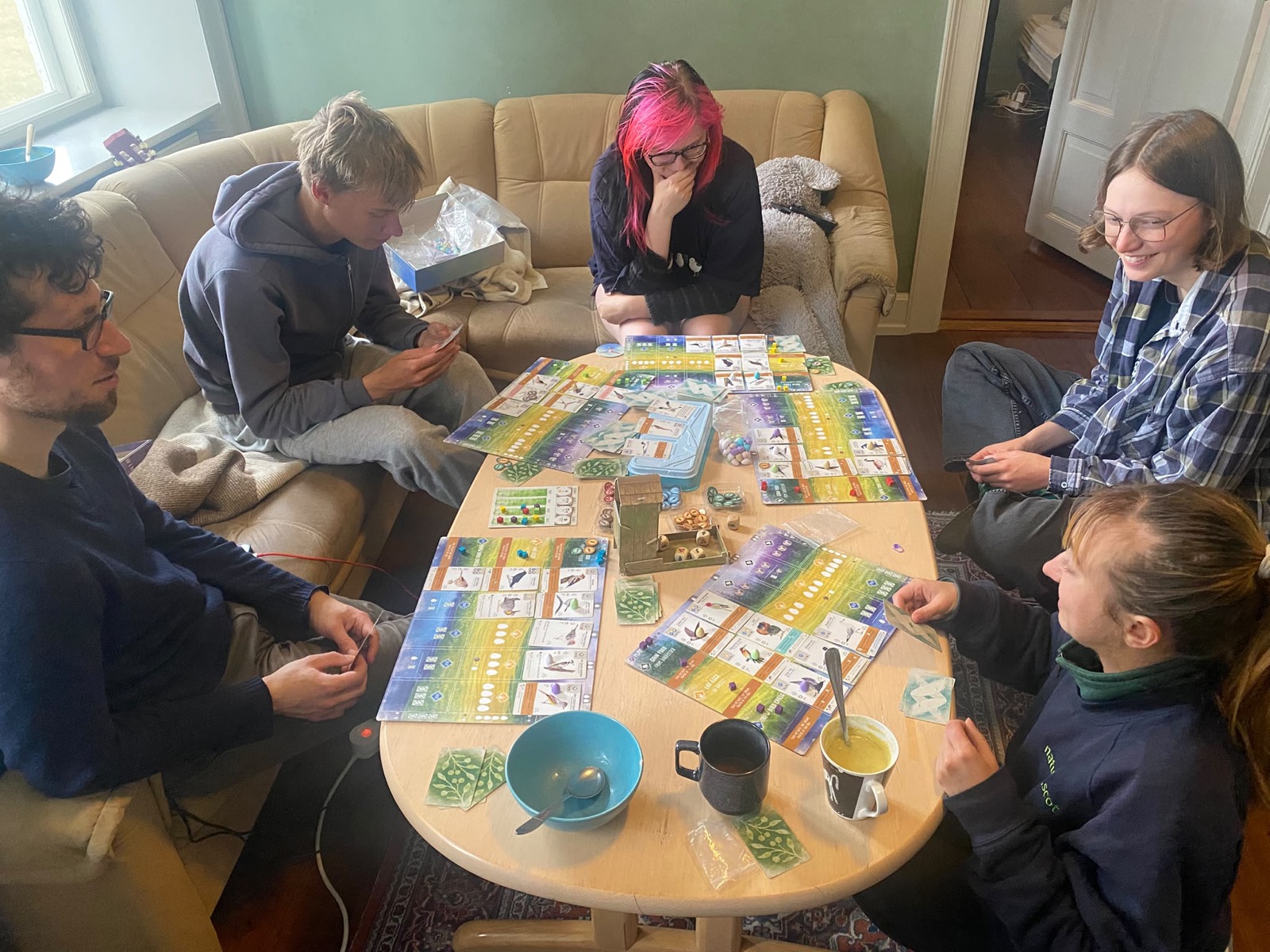 Playing Wingspan. Photo by Simon S. Christiansen
In the morning, we also received a very interesting recapture letter! Normally, we get these letters for passerines we have ringed, but today it was a Turnstone (Stenvender) that had been read with a scope in the Netherlands! We caught and ringed it here in late August in the storm-petrel net.
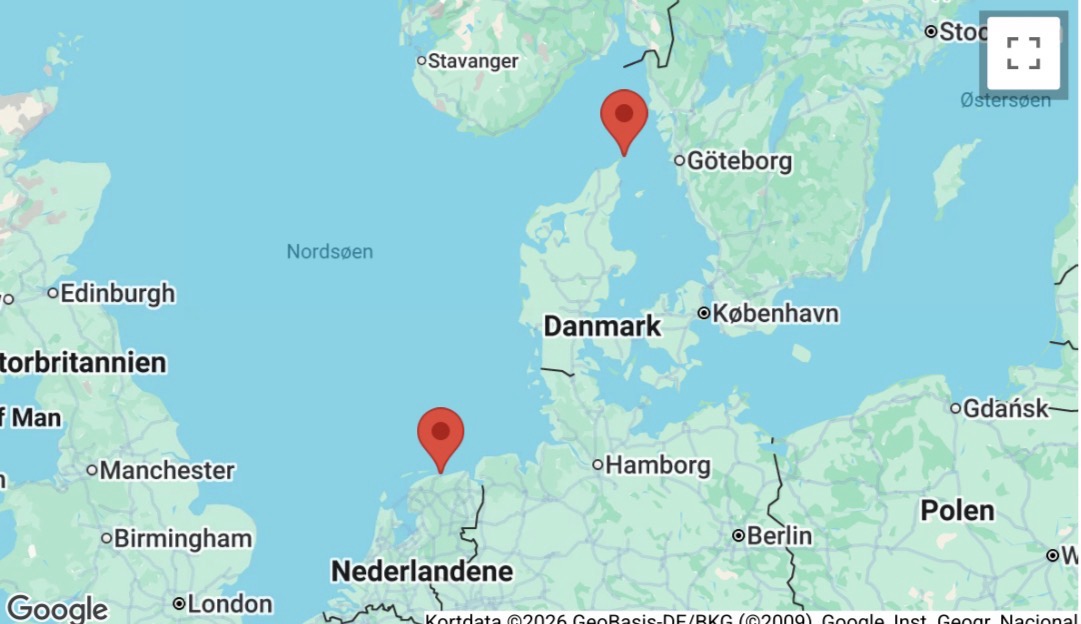 Map of the ringed Turnstone (Stenvender) from Skagen down to the Netherlands
After we finished our game of Wingspan, the weather looked okay for going out for a bit. We all spread out in different directions. Luis and I did a quick seawatch session from World's End 1, where we saw a Great Skua (Storkjove) and a Merlin (Dværgfalk), which Jule also saw later.
In the evening, we enjoyed the dinner that our guests had prepared. Later, Jule and I went out into the night and tried to catch Jack Snipes (Enkeltbekkasin), but unfortunately, the spot was too dry, so we didn't succeed. However, we saw a sleeping Mealy Redpoll (Stor Gråsiskin).
With that, our rather different day here came to an end. Let's see what the next day will bring!
Highlights from the observations:
Great Skua (Storkjove)-1
Merlin (Dværgfalk)-1
No ringing today due to rain
Link to today’s observations in the Dofbasen from observers in the area.
People: Jule Tappe, Mio Brix, Laura Tamminen, Luis Q. Langfeld, Sarah Partridge, Simon S. Christiansen, Jesper and Karen Marie Olesen
Skagen Mountaineer Club
onsdag 7. oktober 2026
A morning without wind and clear sky brought a calm experience to Skagen Fuglestation. With great view, the observation team got to see rather low activity on the sea. Even more surprisingly, there were three Sooty Shearwaters (Sodfarvet Skråpe) passing by showing an unusual flappy flight style without stronger wind. There was also some migration of Jackdaws (Allike) and geese.
Ringing yielded an unsteady session with a busy first round with several Eurasian Wrens (Gærdesmutte) and later a flock of Eurasian Blue Tit (Blåmejse), but otherwise calmer rounds. During the ringing, we could watch a Siberian Nutcracker (Tyndnæbbet Nøddekrige) migrating high over towards Grenen.
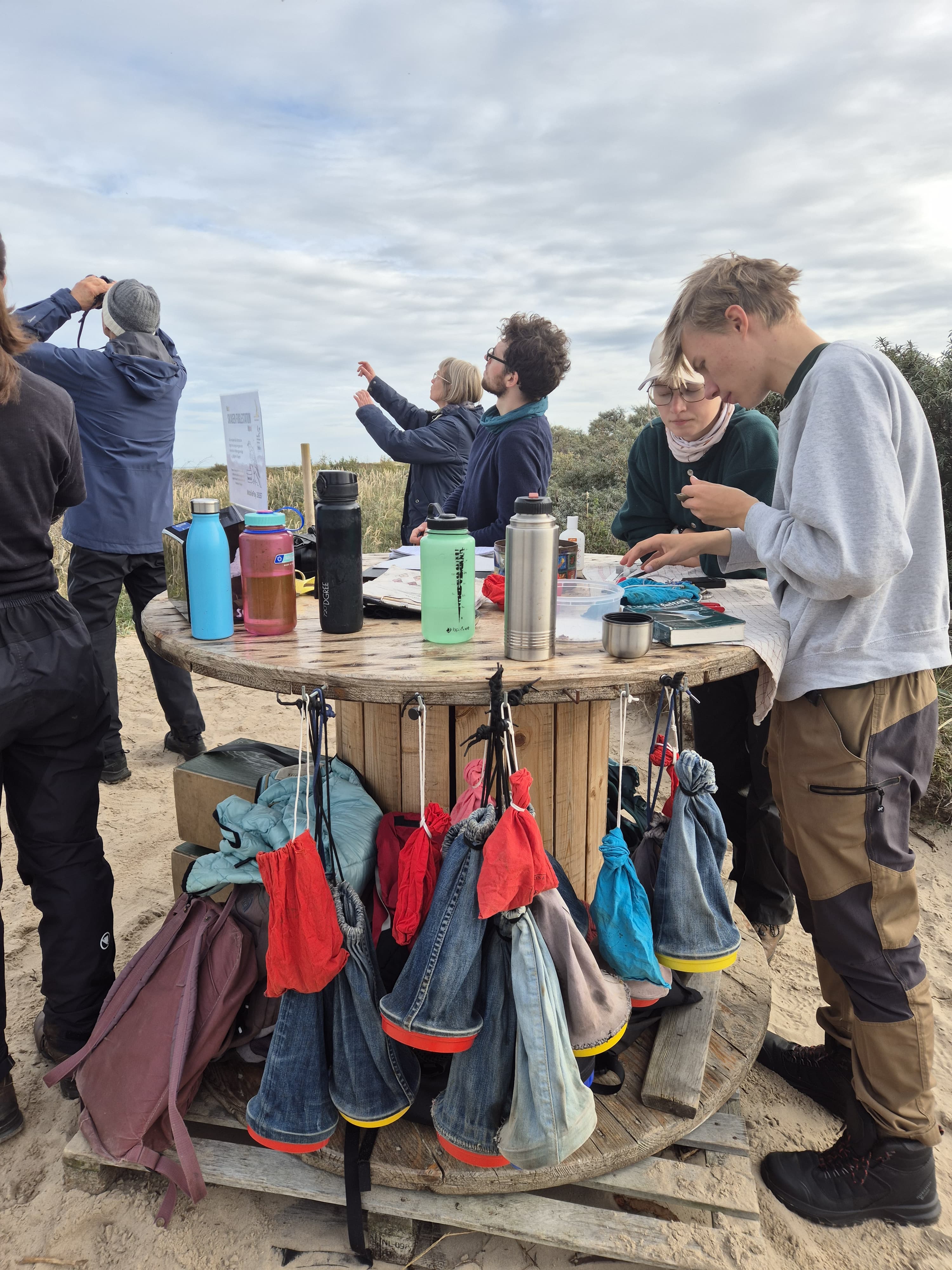
Busy with ringing and observing birds at Kabeltromlen (photo: Páll Veng Kjærbo)
We also got a notice about the recovery of an Eurasian Blue Tit (Blåmejse) ringed at Skagen Fuglestation on 23/03/2026. It was refound at the Hanko Bird Observatory in Finland 188 days later in September and 741 km away to east/northeast.
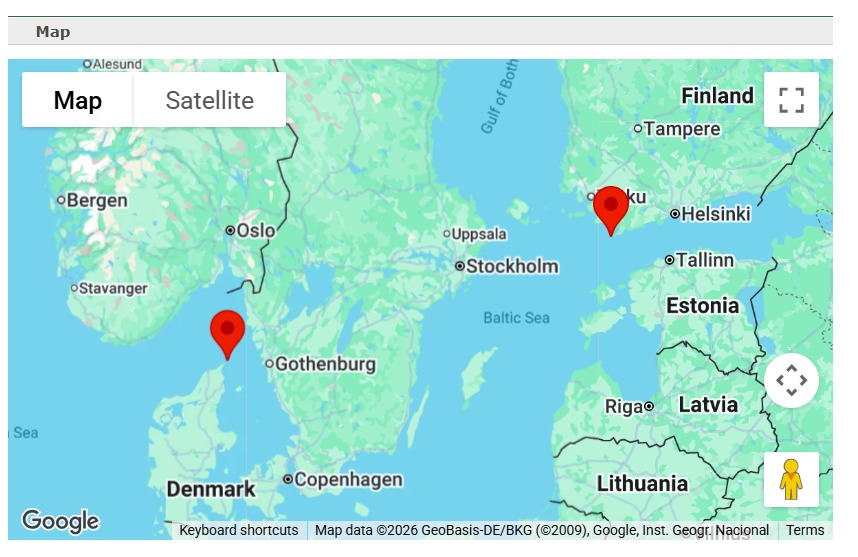
Locations of the ringing and the recovery site of the Eurasian Blue Tit (Blåmejse)
In the afternoon, we did a trip to Råbjerg Mile, the largest moving dune in Danmark. It was a very fascinating view from high above and surrounded by a landscape shaped by sand! We were very surprised to find a putative Giant House Spider (Eratigena atrica) on top of the dune. This species is normally associated with human buildings. But it seemed as keen to climb the dune as we were!
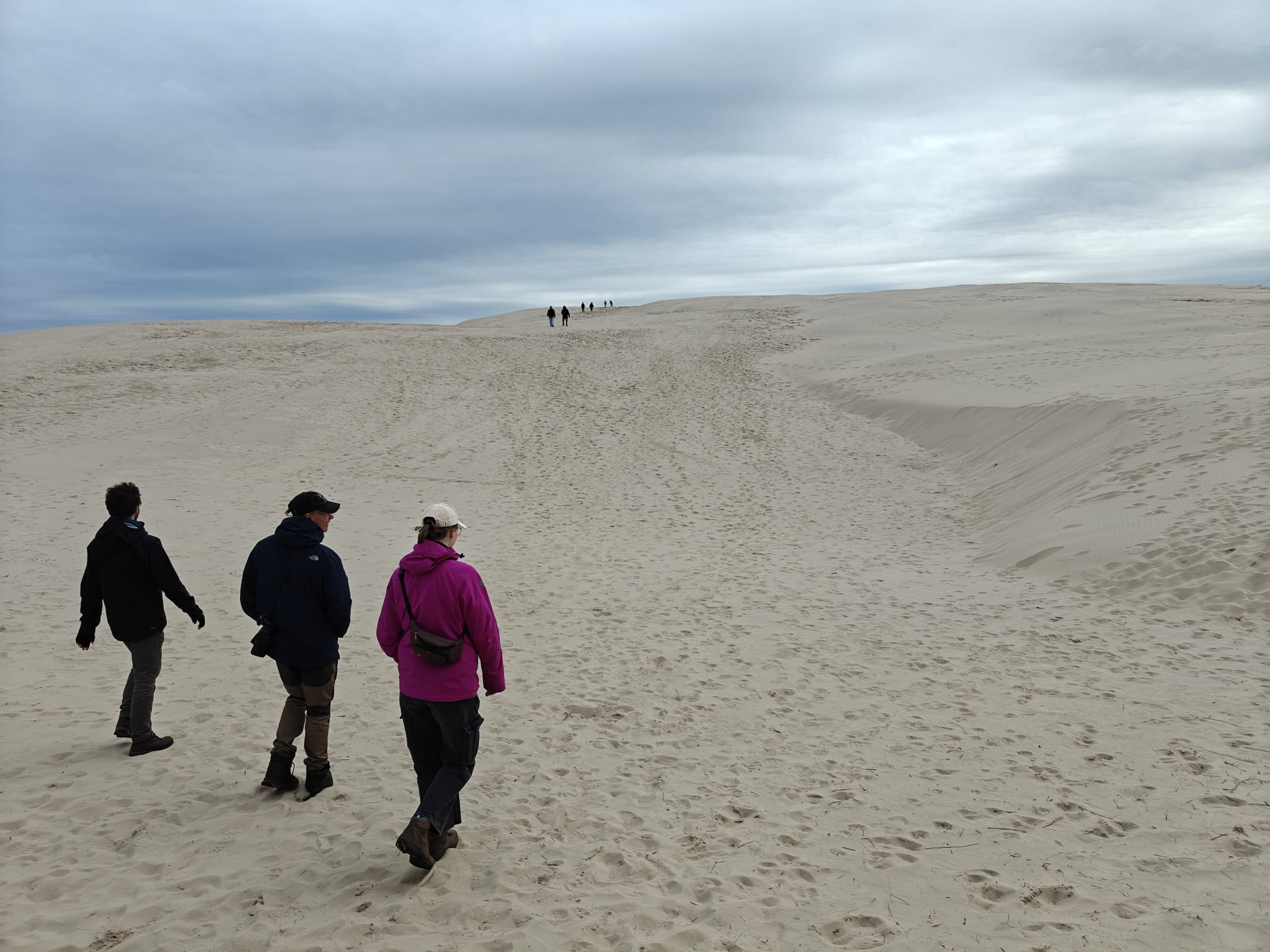
Hiking up Råbjerg Mile (photo: Laura Tamminen)
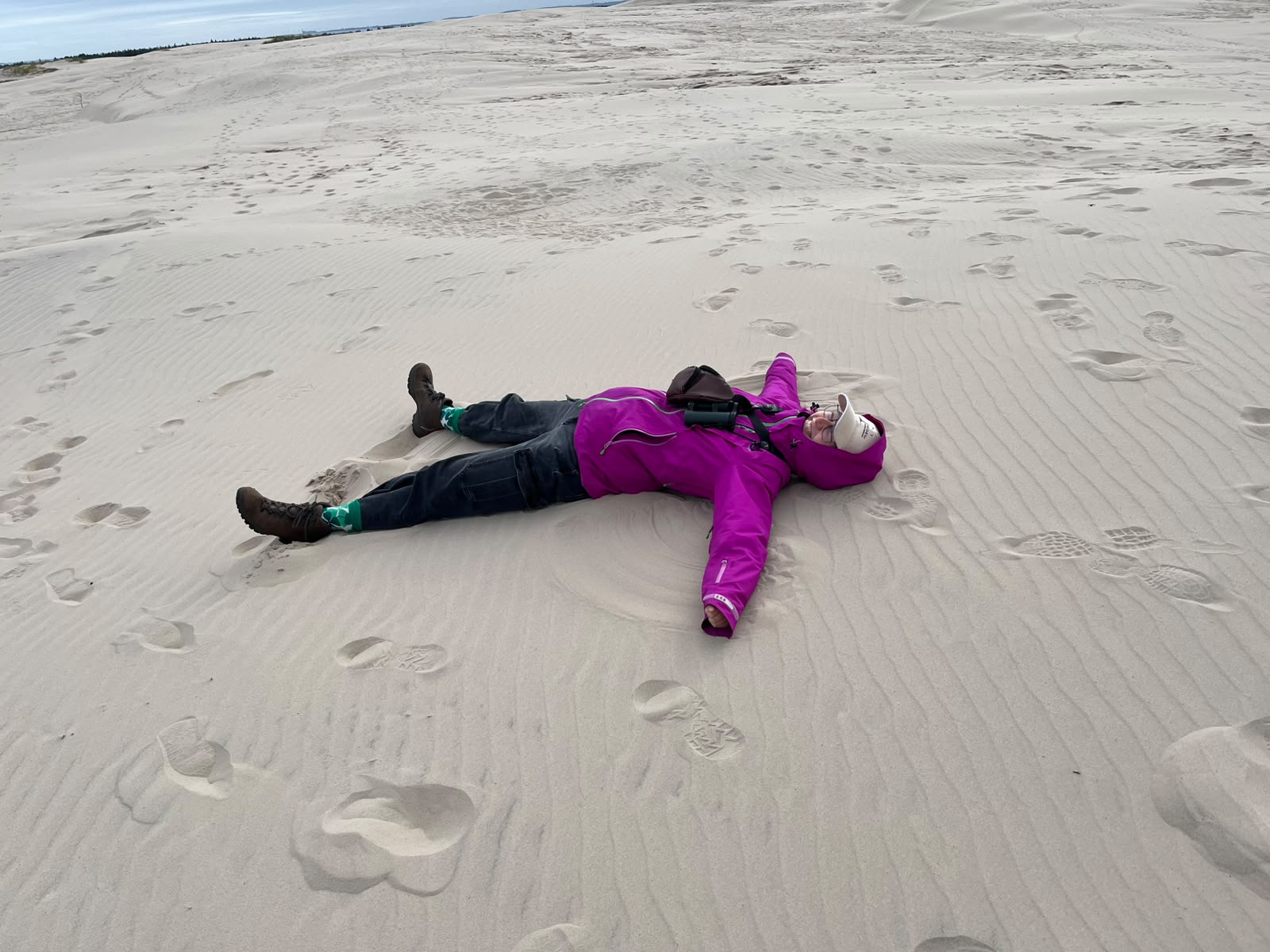
Jule making a sand angel (photo: Sarah Partridge)
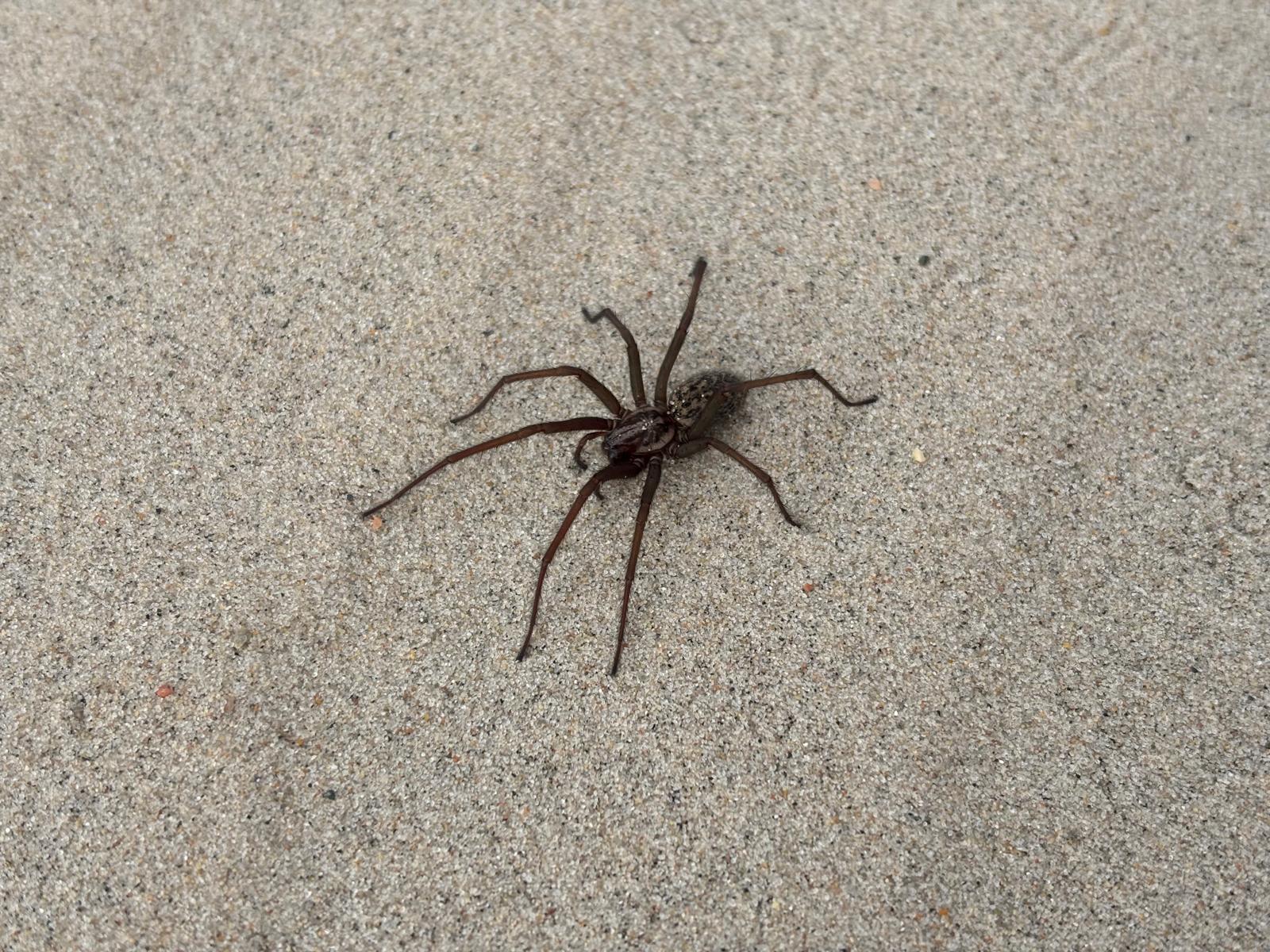
A house spider far away from the next house on top of a moving dune (photo: Luis Q. Langfeld)
As we were already in mountain mood, we continued our summit scouting with climbing up to Flagbakken with a wonderful view over Klitplanagen and seeding Broad-leaved Helleborine (Skovhullæbe), a kind of orchid, next to the path. Up there, we saw several Eurasian Jays (Skovskrige), a flock of Red Crossbills (Lille Korsnæbb) and to our delight another Nutcracker (Nøddekrige) flying north!
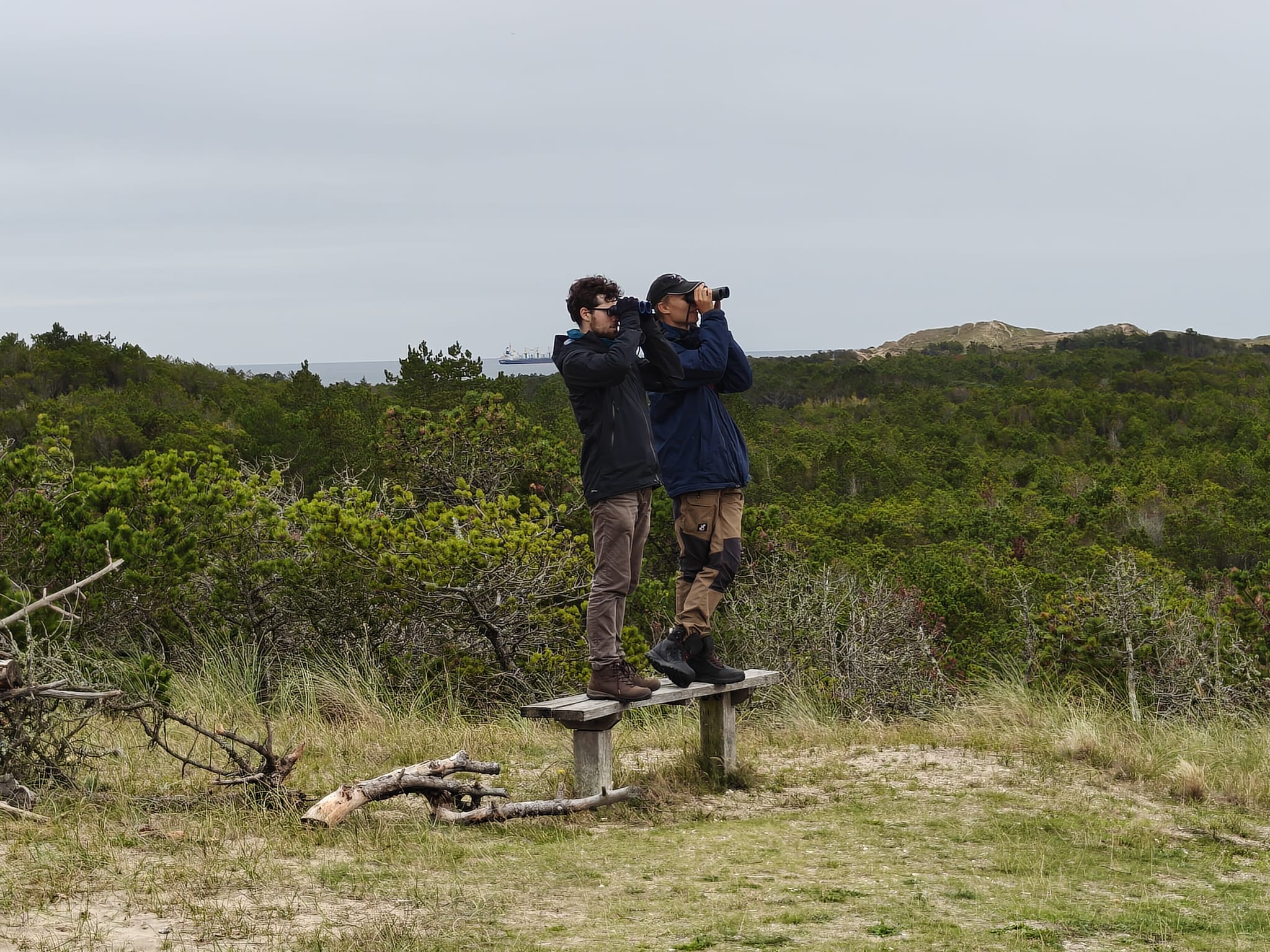
Watching for the Nutcracker (Nøddekrige) at Flagbakken (photo: Laura Tamminen)
As last station of our hill hopping journey, we finally climbed the highest point of the Skagen area, the dune of Stokmilen. While it started raining, we still enjoyed the view over the city and port of Skagen.
Ringing – Kabeltromlen
Eurasian Wren (Gærdesmutte) – 13
European Robin (Rødhals) – 4
Eurasian Bullfinch (Dompap) – 2
Common Chiffchaff (Gransanger) – 7
Common Reed Bunting (Rørspurv) – 1
Eurasian Blackbird (Solsort) – 1
Eurasian Blackcap (Munk) – 4
Common Chaffinch (Bogfinke) – 1
Great Tit (Musvit) – 1
Eurasian Blue Tit (Blåmejse) – 12
Total: 46
Observation Highlights:
Long-tailed Skua (Lille Kjove) – 1
Sooty Shearwater (Sodfarvet Skråpe) – 3
Siberian Nutcracker (Tyndnæbbet Nøddekrige) – 2
Link to today’s observations in the Dofbasen from observers in the area.
People: Jule Tappe, Mio Brix, Laura Tamminen, Luis Q. Langfeld, Sarah Partridge, Simon S. Christiansen, Páll Vang Kjærbo, Sophie Booker, Jesper and Karen Marie Olesen, Manuel Tacke, Jørgen Kabel, Hanne and Jens Eriksen, Jeppe Madsen,
“I kind of had a good day actually”
tirsdag 6. oktober 2026
Good afternoon readers! This is my first blog of the season on my second day at the station. It is so nice to back here again with new people and always good people.
This morning I went to Kabeltromlen with Jule to open the nets, and then Laura joined us for the first round. It was quite windy so we only opened 11 of the 26 nets. Although there were few birds, there were some in every round, and different species in every round. This was good for me to remember the moult patterns of the common species. Simon also joined us for some of the morning, as did our guests. We also got to say hello to Jeppe, Jørgen, and Igor. Our highlights from the ringing were the Lille Gråsisken (Redpoll) and Grønsisken (siskin), the cutest of the bunch, and the very ugly looking teenage Dompap (bullfinch) who was ringed as a juvenile this autumn and is now starting to grow his adult feathers. Today was the one-year anniversary of our record-breaking 742 birds day (happy anniversary to my dear friends Amira, Miles, Gabriel, and Florian), although today was a bit less eventful, and no one got bird poop in the eyeballs.
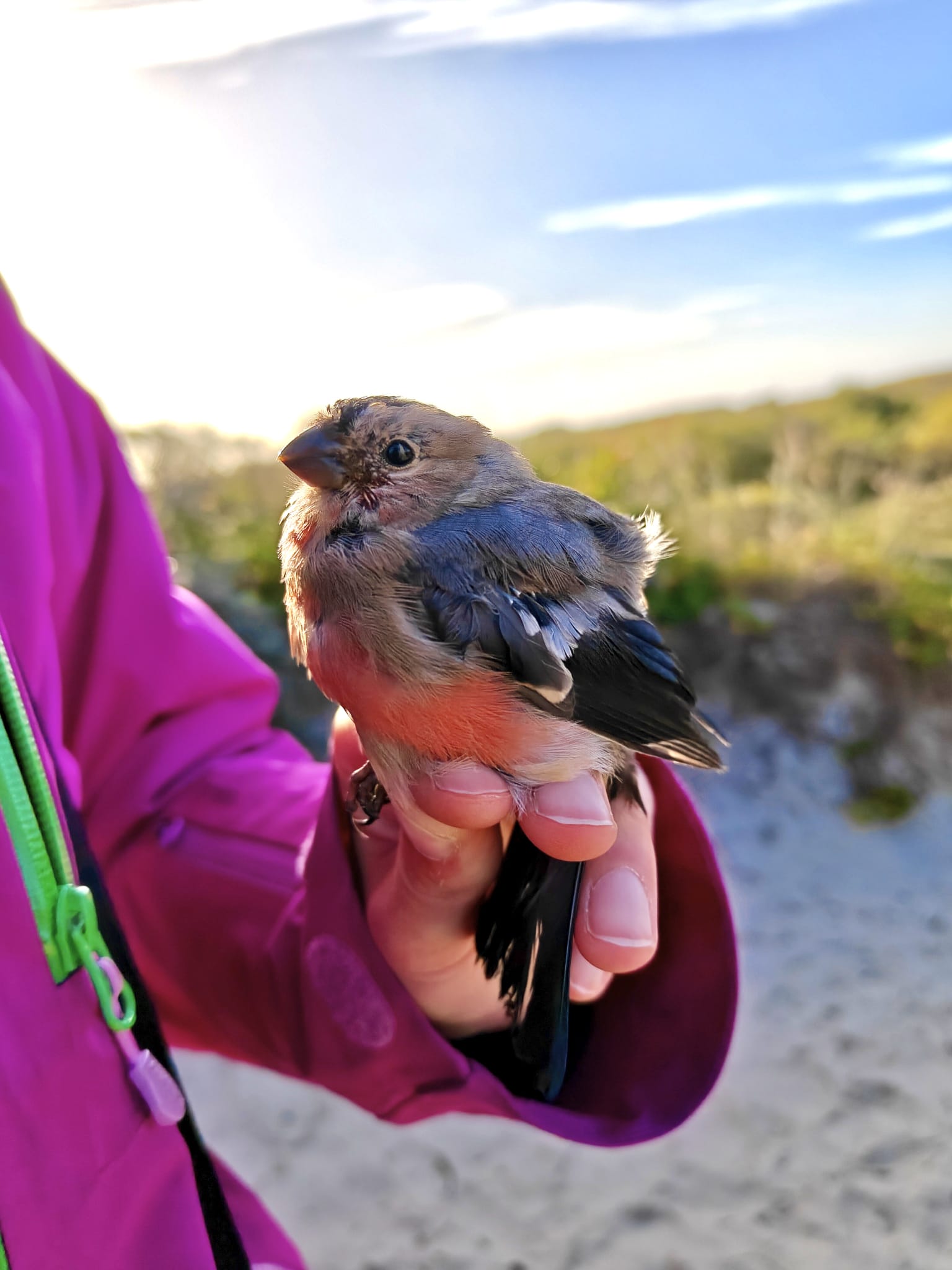
This scrappy looking teenage dompap made Laura very happy
Meanwhile, Luis, Mio and Manuel went to World’s End III for observations. There they saw a lille kjove (long-tailed skua) and two stor kjover (great skua/Bonxie), among many migrating auks (alkefugle) and kittiwakes (ride). They were also excited to see a “white-winged gull,” what turned out to be a very handsome adult Mediterranean gull (Sorthovedet Måge) with pure white wings. Later in the morning, when Simon was on a work call at World’s End III, he startled his colleagues by shouting “NØDDEKRIGE!!” He said where it was over Zello so I was able to see it through the scope from Kabeltromlen—my first Nutcracker! Although it was far away, there was no mistaking it because of their distinct shape, but I hope I can see one closer tomorrow. The observers were also very pleased to see a Lapland bunting (lapværling) and a purple sandpiper (sortgrå ryle) during the count.
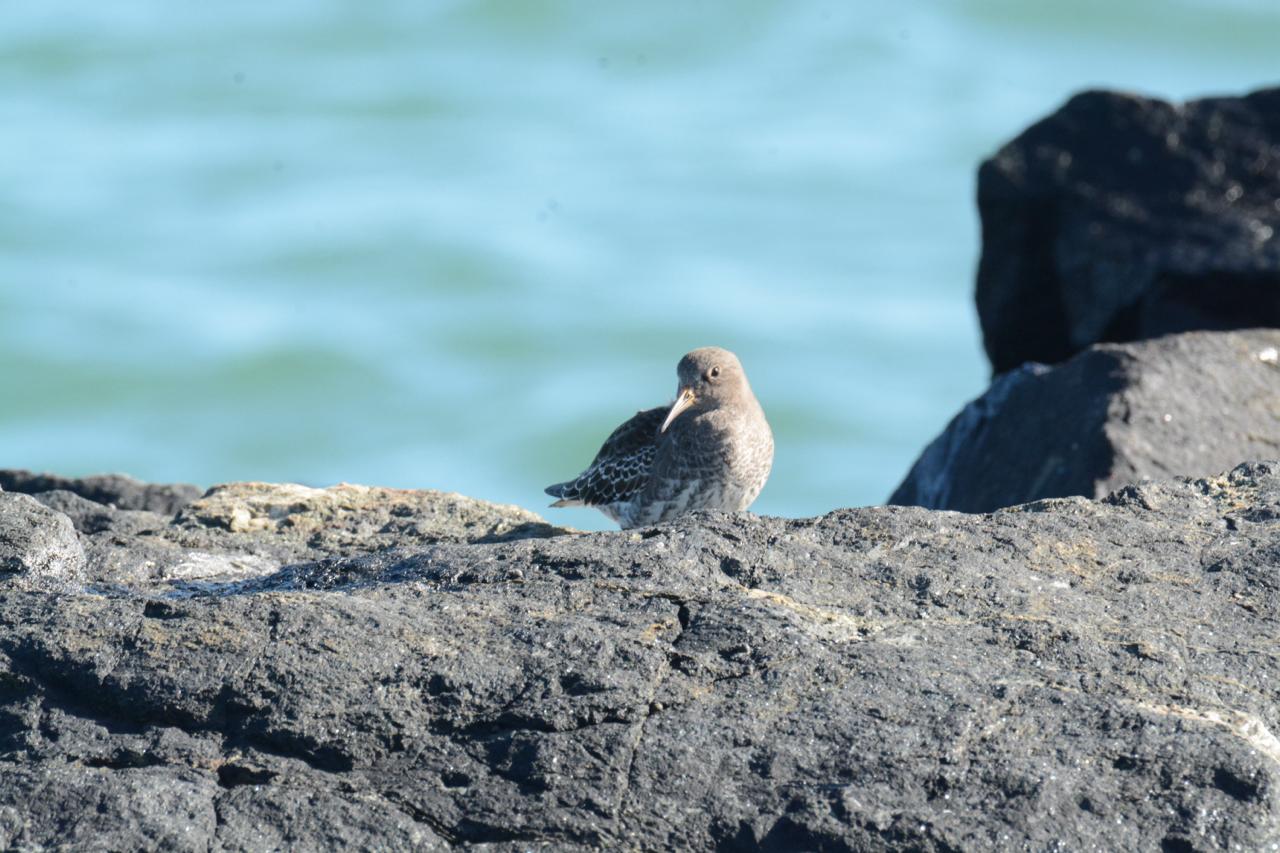
Sortgrå Ryle
After that, we all had lunch together at the lighthouse and then scattered on our separate birdwatching paths. Lucky Luis, he spotted a Pallid harrier (steppehøg), only a few minutes after I separated from him in Ellekrattet. But, I did not see it and neither did the rest of us (yet). Luis was also very happy to see a guillemot (lomvie) fishing close to the shore, chasing shoals of fish so they would jump out of the water.
One of the deepest-diving birds in the world, Guillemots dive for fish by using their wings to swim underwater like penguins, typically diving 30-60m, but capable of reaching depths of 180m. Their comparatively small wings are ideal for swimming, but make them rather inefficient flyers. This is why auks have the unusual moult strategy of losing all the flight feathers at once during the winter, entering a short and stressful flightless period. Each feather on those tiny wings carries so much weight that they cannot afford to lose one at a time.
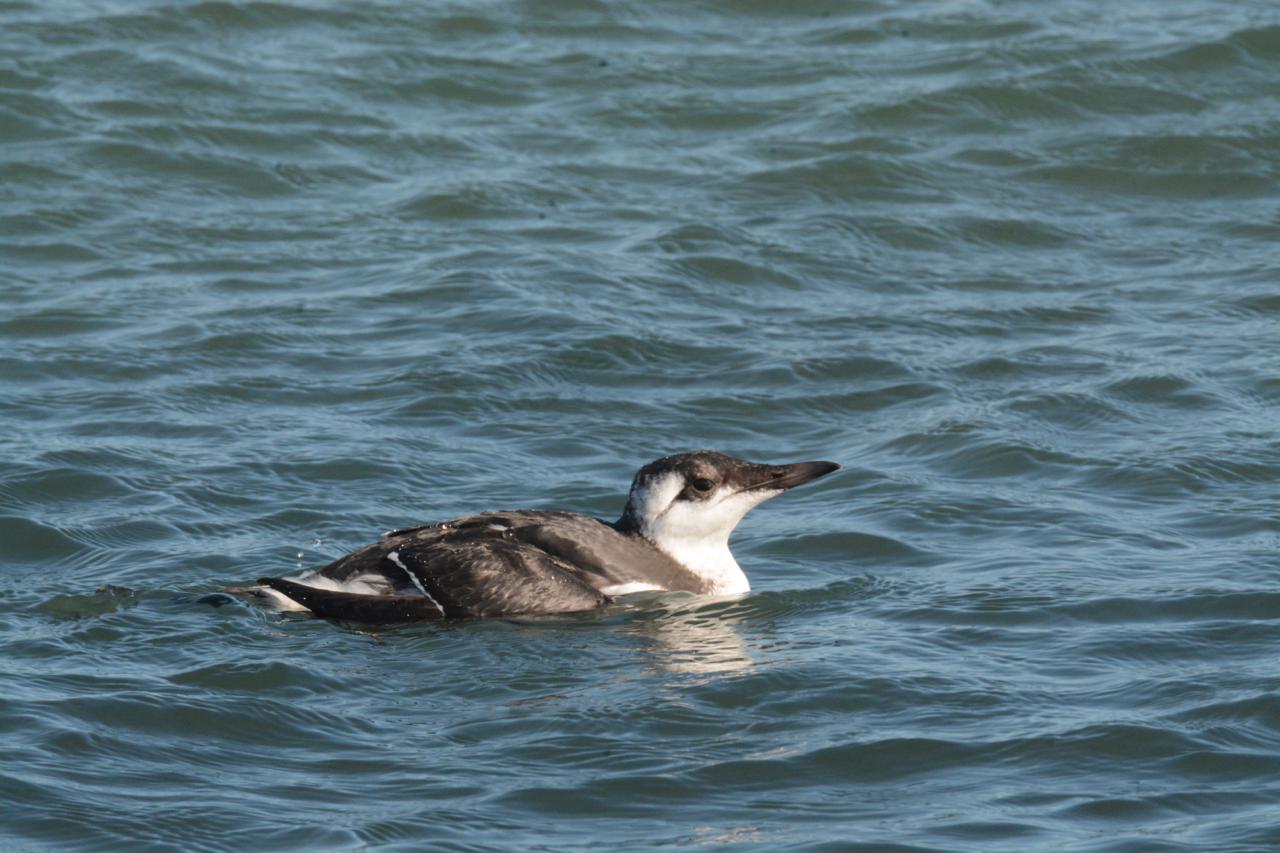
Luis's Lomvie swimming
After a pleasant afternoon of data entry and some Danish lessons from Simon, we enjoyed a tasty chilli sin carne for dinner cooked by Jule. How lovely to be back in the cozy grå fyr!
Note: All blog titles by Sarah are quotes from Simon
Ringing – Kabeltromlen
Musvit - 1
Gærdesmutte - 3
Rødhals - 1
Lille gråsisken - 1
Grønsisken - 1
Kvækerfinke – 2
Munk – 1
Bogfinke – 1
Blåmejse – 1
Gransanger – 1
Highlights from World’s End III
Nøddekrige
Lapværling
Lille Kjove
Stor Kjove
Sortovedet måge
Link to today’s observations in the Dofbasen from observers in the area.
People: Jule Tappe, Mio Brix, Laura Tamminen, Luis Q. Langfeld, Simon S. Christiansen, Sarah Partridge, Jesper and Karen Marie Olesen, Manuel Tacke
Filling the gaps with facts
mandag 5. oktober 2026
The day started with Me, Jule and Sarah opening nets over at Kabeltromlen. Unfortunately, the weather did not look very promising due to stronger wind and light rain. During the first round we got to strengthen our extracting skills by taking out some wrens (Gærdesmutte). Those pinecones with legs really love to get all tangled up and poke through all the holes. We were also joined by Simon, Odin and our guests. Jesper and Karen got to see how we age the wrens by taking a look at their greater coverts.
Overall, it was quite a slow and quiet day. We got to ring a beautiful male reed bunting (Rørspurv) during our last round. In Estonian, their name is “rootsiitsitaja” which also means reed bunting, or reed tweeter but if you cut the word near the middle, “Rootsi itsitaja” the meaning changes to Sweden’s giggler!
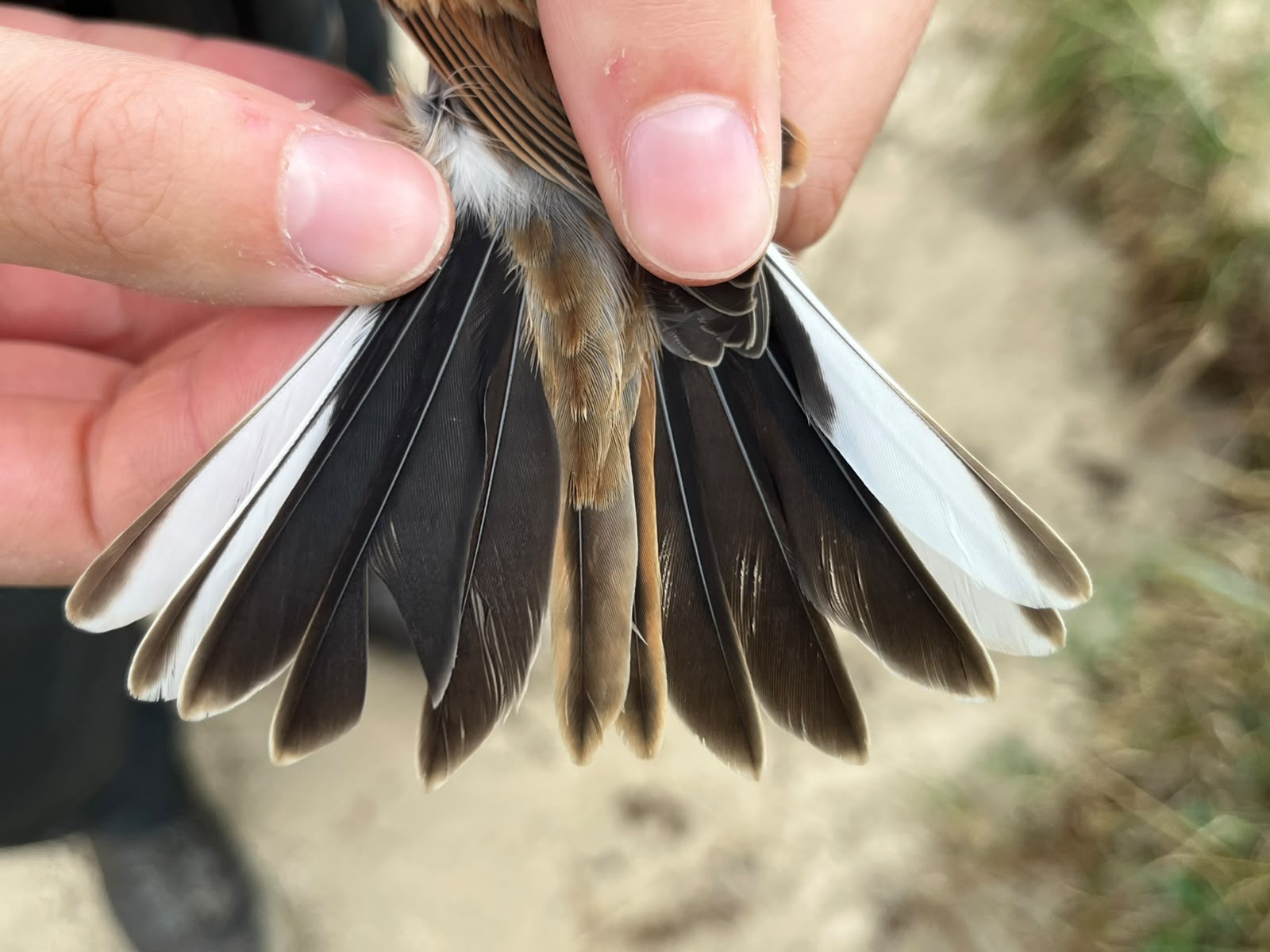
A closer look at the reed buntings (Rørspurv) or "Swedens gigglers" tail. Photo by Jule Tappe
Over at Worlds End 3, Luis and Mio observed loads of resting and migrating gannets (Sule) and scoters (Sortand), as per usual. They also saw an Arctic skua (Almindelig kjove) and a few smaller raptors. Did you know Arctic skuas (alongside other skua species) are huge kleptoparasites? That means they will often attempt to steal food from other birds, like terns (terne) or gulls (måge). We often see that during our observation aswell!
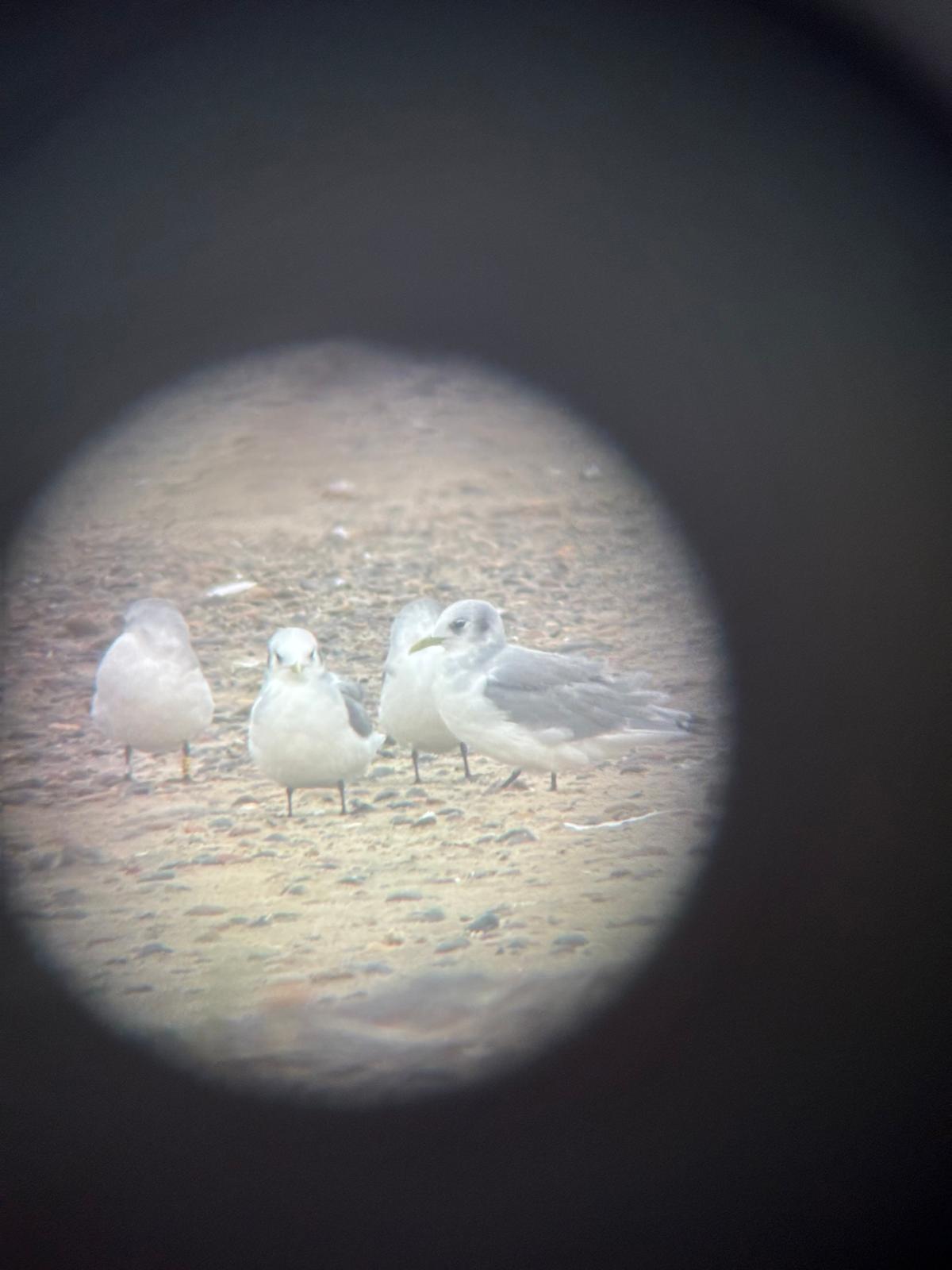
A kittiwake (Ride) with a colored ring, located on the left. This bird was ringed in Sweden! Photo by Luis Q. Langfeld
Afterwards we ate a lovely lunch of fried and seasoned potatoes with some mushrooms and egg by Sarah. I decided to take a longer nap today, I’ve been feeling very tired as of last week haha. Sarah and Jule went shopping with Jesper and Karen and then went to check out our bikes to see if any could be repaired. As it turned out, one of the bikes had the wrong size tire on! That will be sorted very soon.
Observation highlights:
Mosehornugle – 1
Ringing at Nordstjernevej:
Musvit – 1
Ringing at Jenne sø:
Lille gråsisken – 4
Musvit – 1
Gærdesmutte – 2
Total: 7
Ringing at Kabeltromlen:
Gærdesmutte – 6
Gransanger – 3
Rødhals – 1
Blåmejse – 1
Rørspurv – 1
Total: 12
Link to today’s observations in the Dofbasen from observers in the area.
People: Jule Tappe, Mio Brix, Laura Tamminen, Luis Q. Langfeld, Simon S. Christiansen, Odin, Sarah Partridge, Jesper and Karen Marie Olesen, Manuel Tacke, Michael Ancher
Captain Simon and the search for the white bird
søndag 4. oktober 2026
Another sunrise, another day full of birds for us people here at Skagen Fuglestation. In the morning, Sophie and Páll opened nets at Kabeltromlen and were joined by Simon, Luis and me for the first round. The first half of ringing was quite good and many birds kept us busy, including many Wrens (Gærdesmutte) and Blackcaps (Munk) but in the second half of the morning, the stronger west winds showed their effect and it died down a little. There was great highlight though, with a foreign recapture from Norway: A first-year Dunnock (Jernspurv).
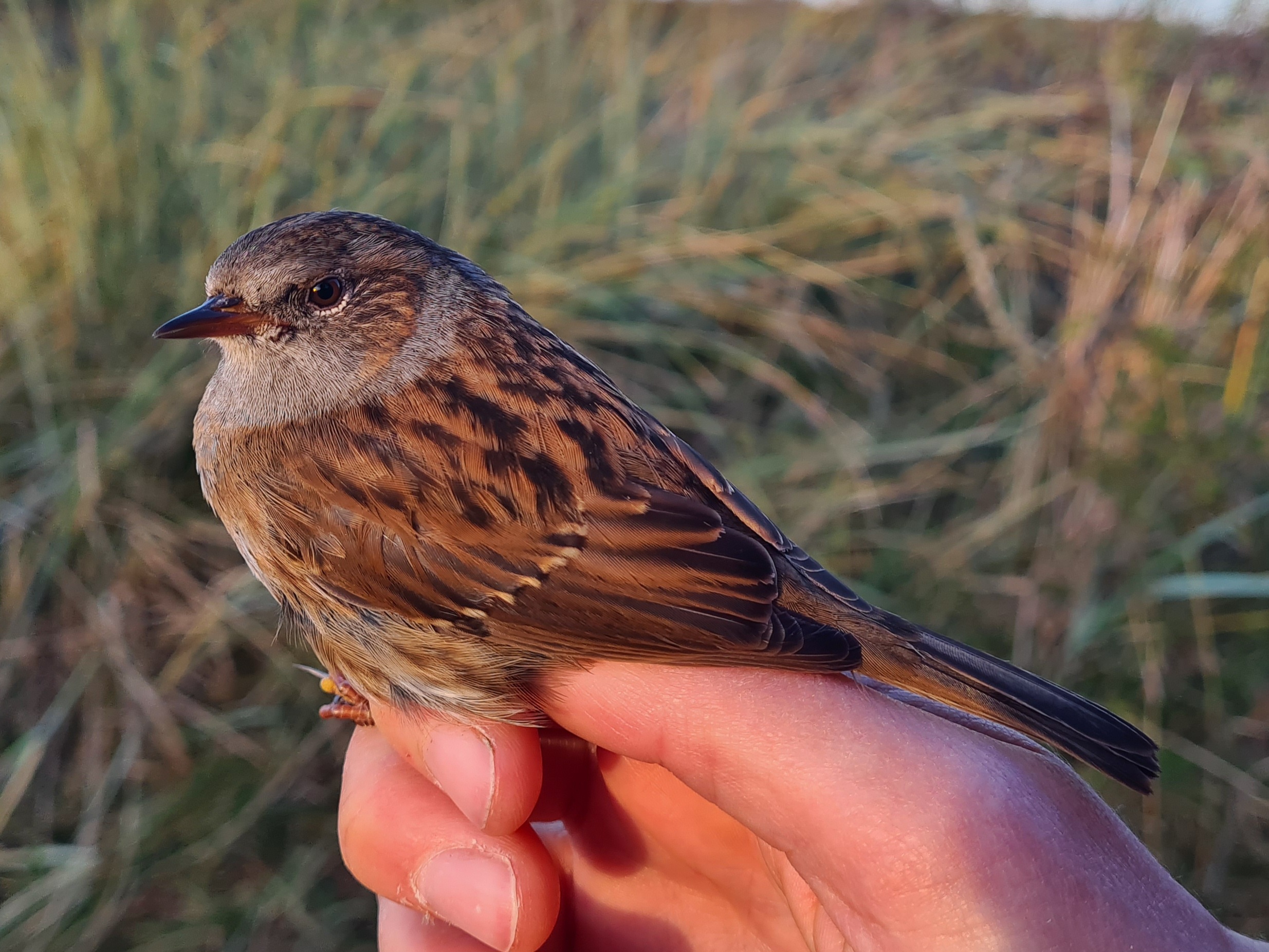 A beautiful Dunnock (Jernspurv) from Norway.
During the morning, we also heard and got another glimpse of the magnificent Nutcracker (Nøddekrige).
Meanwhile at World’s End 3, Mio and Laura got to really enjoy the stronger winds with finally a lot more action on the sea than on the previous days. Just like before, there was a Lapland Bunting (Lapværling) on the beach, but with almost 2000 Gannets (Sule), the sea was busy! There were also Long-tailed Skuas (Lille Kjove) around again and a Merlin (Dværgfalk) coming in from the sea. So all together, a very nice count after the calm before.
After lunch and data entry, Simon drove us to Gammel Skagen, about 10 km south of the lighthouse. From there, Laura, Luis and I did our regular beach survey as a part of the project „Seabirds under pressure (SUPRE)“. We collect a range of dead seabirds that are in decent condition to be transported and investigated. Fulmars (Mallemuk) are especially interesting, which is why I chose today’s title. However, we only found two Guillemots (Lomvie) today. There was also a dead porpoise (Marsvin) that we were quite impressed by. When it comes to living birds, we especially enjoyed two resting Mediterranean Gulls (Sorthovedet Måge) a migrating Barnacle Goose (Bramgås).
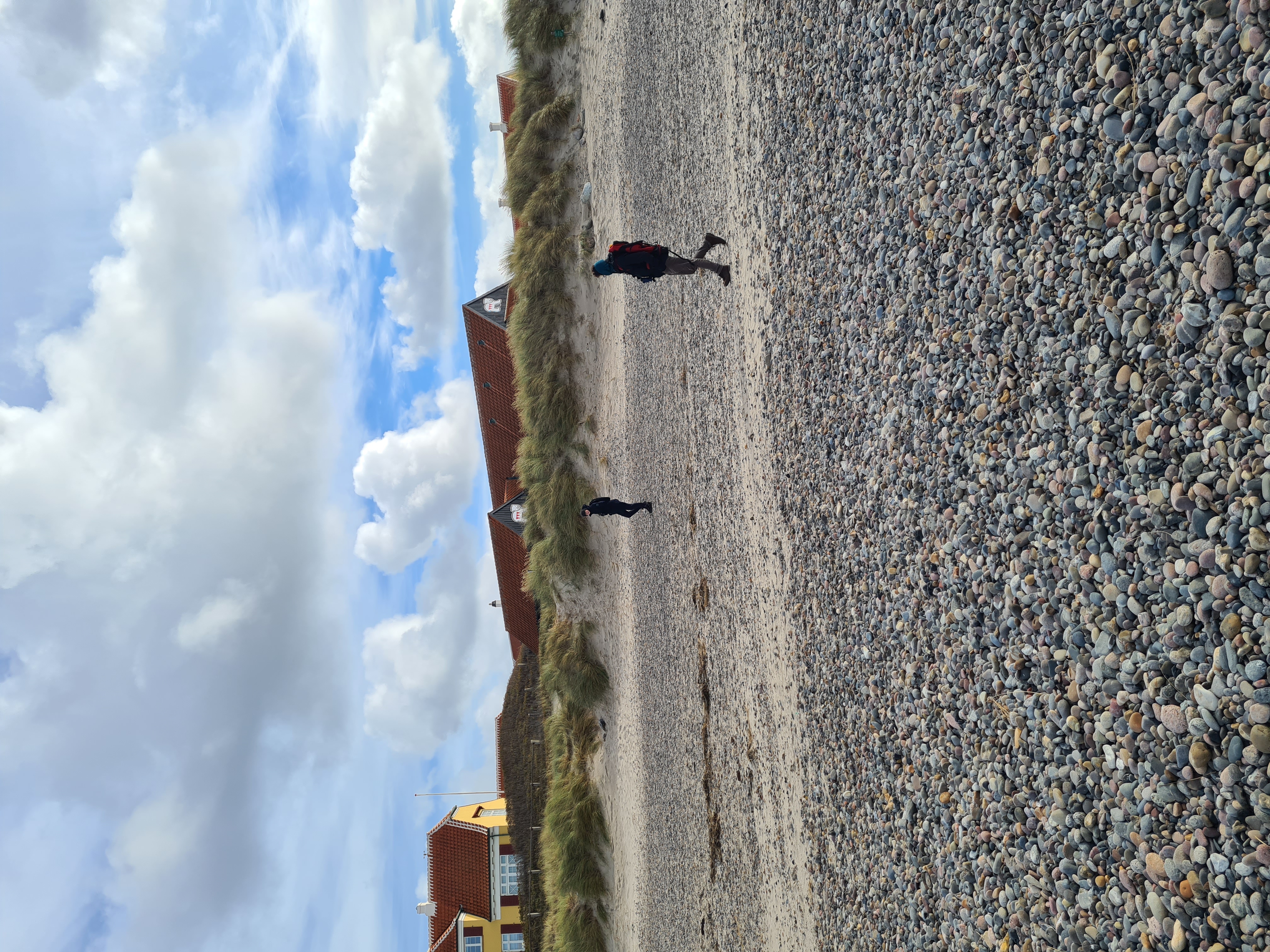 Walking the beaches looking for dead birds.
In the meantime, Mio was occupied with data entry, picture archive and quality assurance – classic computer tasks at the birds obs. He also welcomed our new guests, Jesper and Karen Marie, after we had to say goodbye to Anders and Dorthe in the morning.
After all this walking, we enjoyed a nice and quick dinner by Luis and are about to welcome Sarah to our team. She has been a volunteer here before and will be a part of the SKAF family again for the coming months.
Tomorrow, the wind will be even stronger than today. Let’s see what birds this will bring!
Highlights of the observations:
Long-tailed Skua (Lille Kjove) – 3
Nutcracker (Nøddekrige) – 1
Merlin (Dværgfalk) – 1
Lapland Bunting (Lapværling) – 1
Mediterranean Gulls (Sorthovedet Måge) - 2
Ringing at Nordstjernevej:
Bogfinke – 1
Topmejse – 1
Blåmejse – 1
Lille Gråsisken – 1
Total: 4
Ringing at Jennes SO:
Lille Gråsisken – 45
Stor Gråsisken – 2
Rødhals – 5
Gransanger – 4
Blåmejse – 5
Gærdesmutte – 3
Fuglekonge – 1
Munk – 1
Jernspurv – 1
Total: 67
Ringing at KAB:
Rødhals – 4
Gærdesmutte – 6
Sangdrossel – 2
Munk – 7
Gransanger – 5
Blåmejse – 1
Bogfinke – 1
Lille Dompap – 1
Lille Gråsisken – 1
Rørspurv – 1
Total: 29
Link to todays observations in the Dofbasen from observers in the area.
People: Jule Tappe, Mio Brix, Laura Tamminen, Luis Q. Langfeld, Dorthe and Anders Østerby, Simon S. Christiansen, Páll Vang Kjærbo, Sophie Booker, Jørgen Kabel, Sarah Partridge, Jesper and Karen Marie, Michael Ancher
European Birdwatching (and Pipit) Day
lørdag 3. oktober 2026
Every morning (or sometimes already a few days in advance), we check the weather forecast, not only to know whether we can go out, but also to somehow guess which birds might turn up. Before we checked the forecast again, we sadly had to say goodbye to Pauline, who left back to Berlin. We will miss you, it was such a great time with you here!
So, the weather today was almost the same as yesterday, with less wind and some sunshine. From the forecast, it was somehow clear that there wouldn’t be that much going on over the sea, but, as yesterday, it looked quite promising for good passerines again. And that was exactly what happened:
As Luis and I walked to Worlds End 3 today, we already got to hear one Lapland Bunting (Lapværling). For today’s count, we chose a dune that was around two dunes west of Worlds End 3 and a bit higher, giving us better views over the inland area behind us.
In that inland area, also Kabeltromlen is located, where Jule, Páll, Sophie, Simon, and Laura went out ringing today. Already in the first round, they caught a young Yellow-browed Warbler (Hvidbrynet Løvsanger). To see this beautiful bird, some locals and I also went to Kabeltromlen.
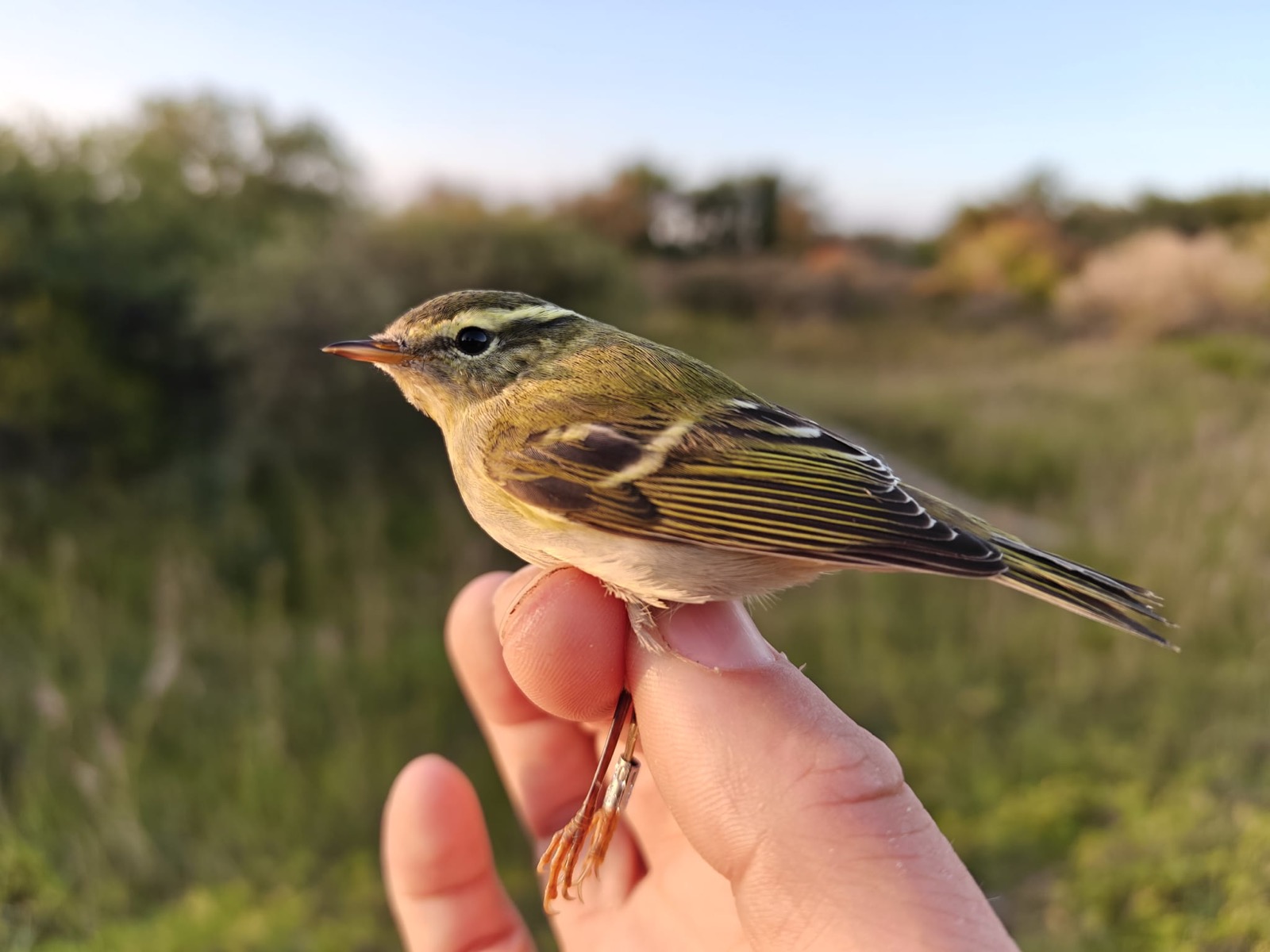 First good bird of the day: young Yellow-browed Warbler (Hvidbrynet Løvsanger). Photo by Laura Tamminen
After my quick walk to Kabeltromlen, I headed back to Worlds End 3, where Luis kept everything under control. Today, we paid particular attention to counting many of the resting Gulls (Måger) and Gannets (Suler), because it was European Birdwatching Day, when we compare numbers and observations from different places all over Europe!
While counting the Gannets, we received the message that the ringers had caught a Red Crossbill (Lille Korsnæb). How exciting!
And just some time later, Luis and I heard a “tsiip” call over the dune while counting. Unfortunately, we only heard that one call without seeing the bird, so it was impossible to say anything for sure at that point. But (!), I had a recorder running right next to me (I suggest to everyone that you always have a recording running while you are out birding ;-) and we checked the recording later. There, we could clearly see that the call we had heard was the call of an Olive-backed Pipit (Tajgapiber):
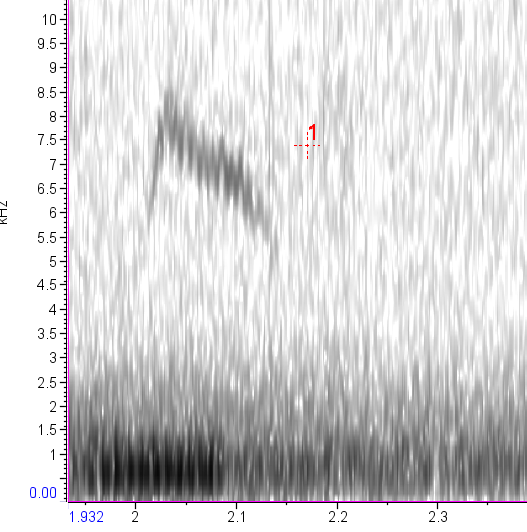
Spectrogram of today’s Olive-backed Pipit (Tajgapiber). Those calls are very similar to the calls of Tree Pipits (Skovpiber), but the calls of Olive-backed Pipits are generally higher-pitched, less modulated, and more downslurred. Sound file of the call here! Spectrogram and sound recording by Mio Brix
After the second counting hour, I switched with Jule, so she went to the count with Luis at Worlds End 3, while I went to Kabeltromlen for the last rounds. As I arrived there, we all got a decent look at a resting adult Hobby (Lærkefalk) which was sitting on top of the Sort Sommerhus!
While we were ringing a late Garden Warbler (Havesanger), Luis and Jule spotted a Great Skua (Storkjove) over the sea, and a bit later, there was a Great Grey Shrike (Stor Tornskade) sitting just a bit north of Kabeltromlen.
After Jule and Luis ended the count with two Rough-legged Buzzards (Fjeldvåge), Laura, Hendrik, Páll, Sophie, and I started closing the nets at Kabeltromlen. As we were closing the last net, we heard three very loud and beautiful “pssiii” calls from a Red-throated Pipit (Rødstrubet Piber), which was just flying abouve us! What a great end to the morning!
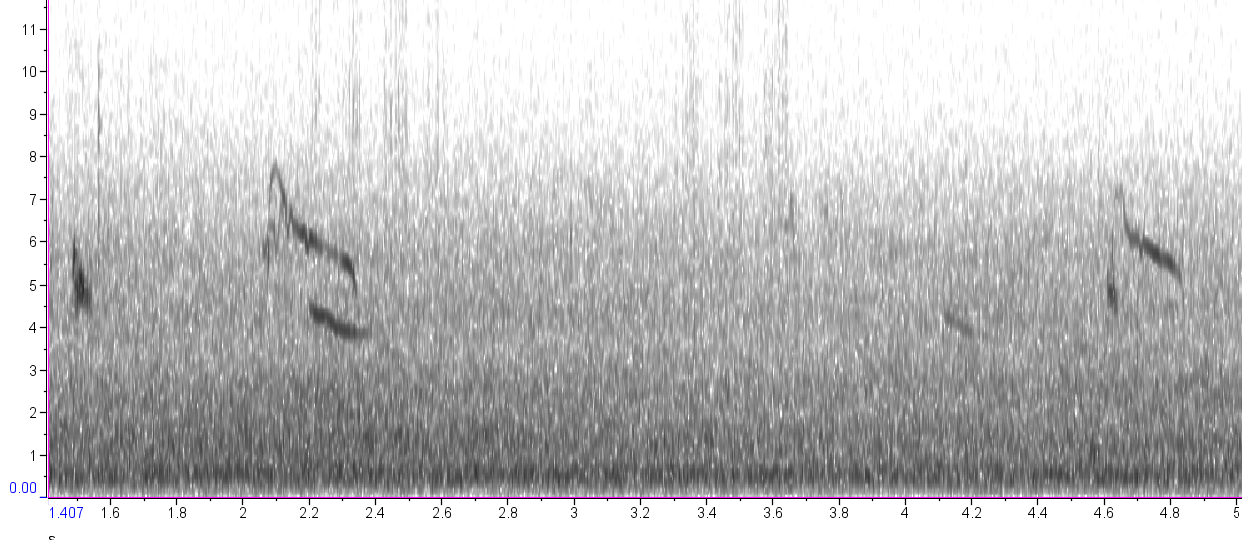 Spectrogram of two calls of the Red-throated Pipit (Rødstrubet Piber).They look a bit like a water slide. Listen to its call up here! Spectrogram and sound recording by Mio Brix
After we headed back to the station, there wasn’t any time to rest. It was time to clean the station and then go to Skagen town for ice cream to celebrate yesterday’s Nutcracker (Nøddekrige) observation.
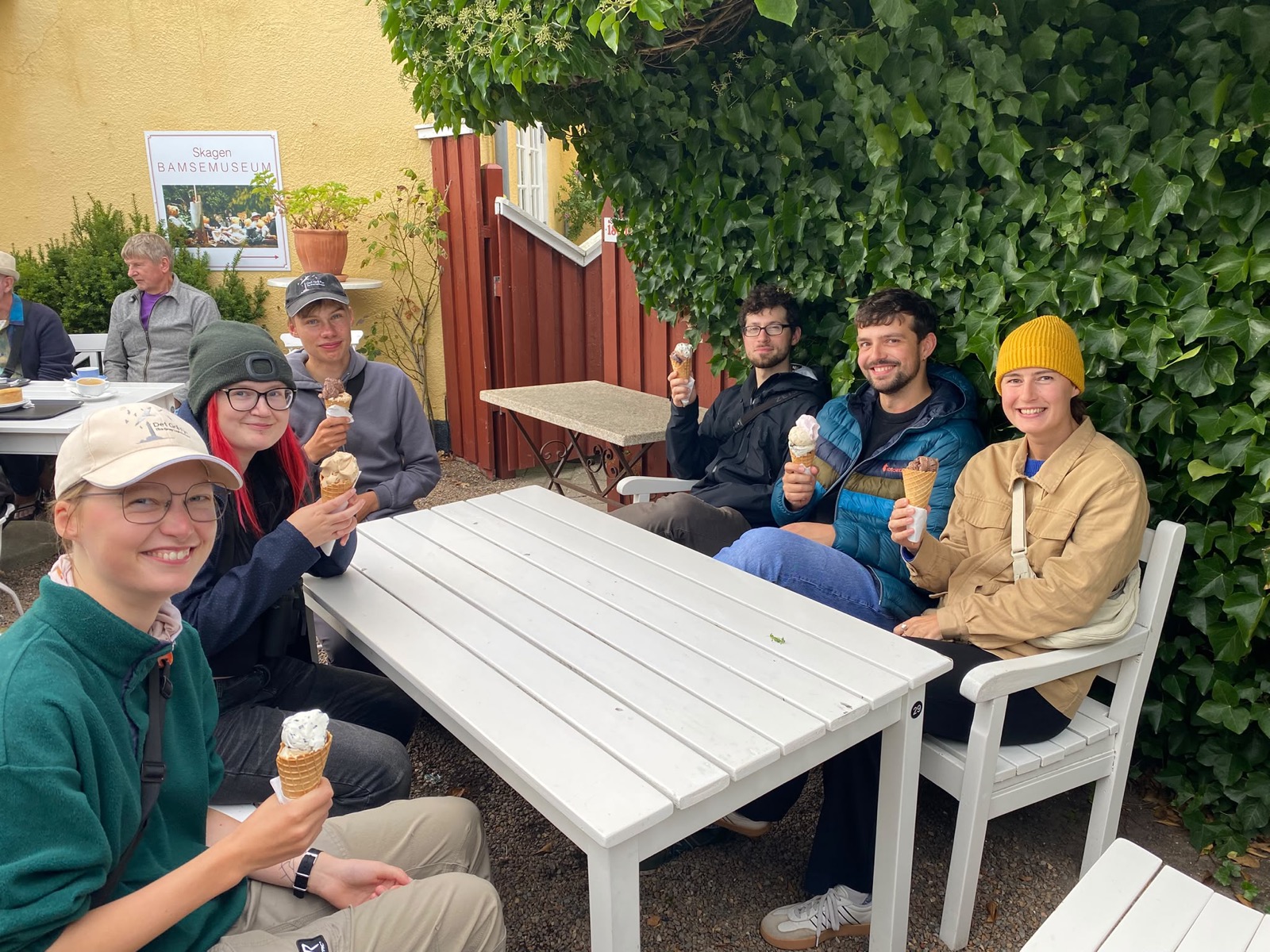 Celebrating the Nutcracker observation with ice cream. Photo by Simon S. Christiansen
To round up our day, our guests Anders and Dorthe made a wonderful dinner for us, and Lisa and Simon also joined us.
I could write down a lot more things about the day, but then this blog wouldn’t come to an end...
Highlights from the observation:
Olive-backed Pipit (Tajgapiber)-1
Red-throated Pipit ( )-1
Great Skua (Storkjove)-1
Lapland Bunting (Lapværling)-1
Hobby (Lærkefalk)-1
Link to todays observations in the Dofbasen from observers in the area.
Ringing Kabeltromlen:
| Coal Tit (Sortmejse) | 1 |
| 1 | |
| Chiffchaff (Gransanger) | 4 |
| Garden Warbler (Havesanger) | 1 |
| Blackcap (Munk) | 6 |
| Wren (Gærdesmutte) | 24 |
| Song Thrush (Sangdrossel) | 1 |
| Robin (Rødhals) | 6 |
| Dunnock (Jernspurv) | 2 |
| Red Crossbill (Lille Korsnæb) | 1 |
| Reed Bunting (Rørspurv) | 3 |
Total: 50
People: Jule Tappe, Pauline Nähring, Mio Brix, Laura Tamminen, Luis Q. Langfeld, Dorthe and Anders Østerby, Simon S. Christiansen, Páll Vang Kjærbo, Sophie Booker, Lisa Vergin, Jørgen Kabel
Ornithological Headdive into October
fredag 2. oktober 2026
Yesterday evening, we already checked the weather forecast and wondered if today might be the headstart into a exciting October at Skagen Fuglestation.
Actually, the day started slow. Ringing started a bit later due to rain and observation was also hindered at first by misty conditions. Taken on its own, both were more average. Observation yielded some more Black Guillemots (Tejst) and dabbling ducks, only one Arctic Skua (Almindelig Kjove).
Ringing numbers weren't too high, but this gave everyone involved more time for enjoying the wonderful bird encounters that were about to unfold. At one of the rounds, Jule was lucky to discover two Siberian Nutcrackers (Tyndnæbbet Nøddekrige)! Fortunately, they stayed in the area around Kabeltromlen for a while, so that many other observers could watch them feeding on berries. Recording of the Nutcrackers can heard on this link to DOFbasen.
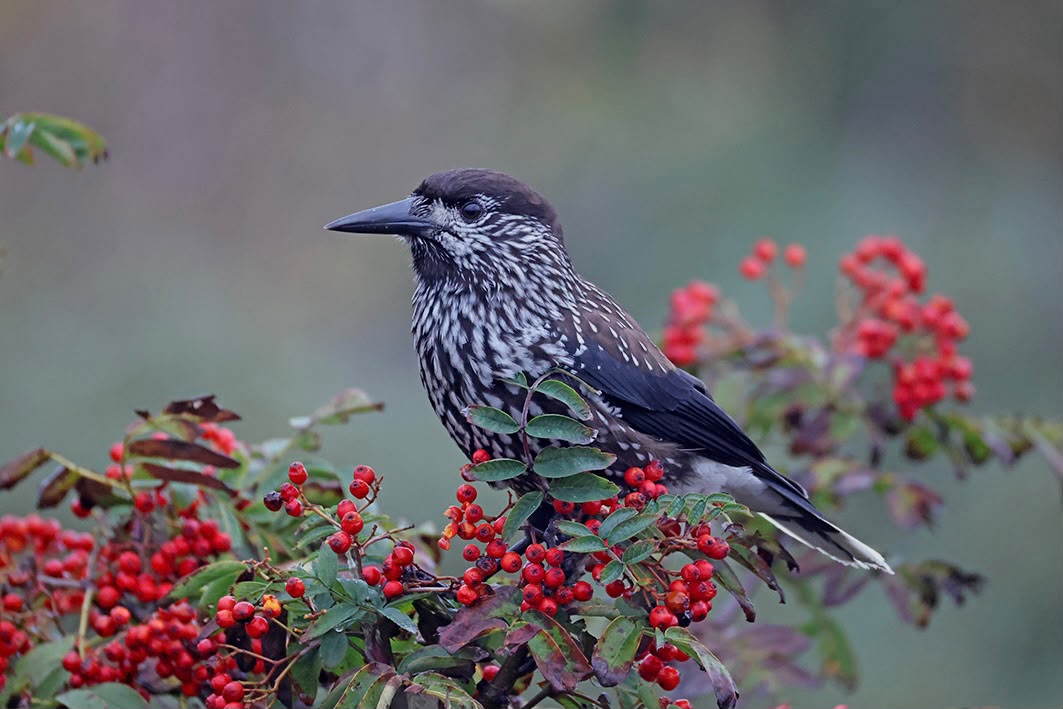
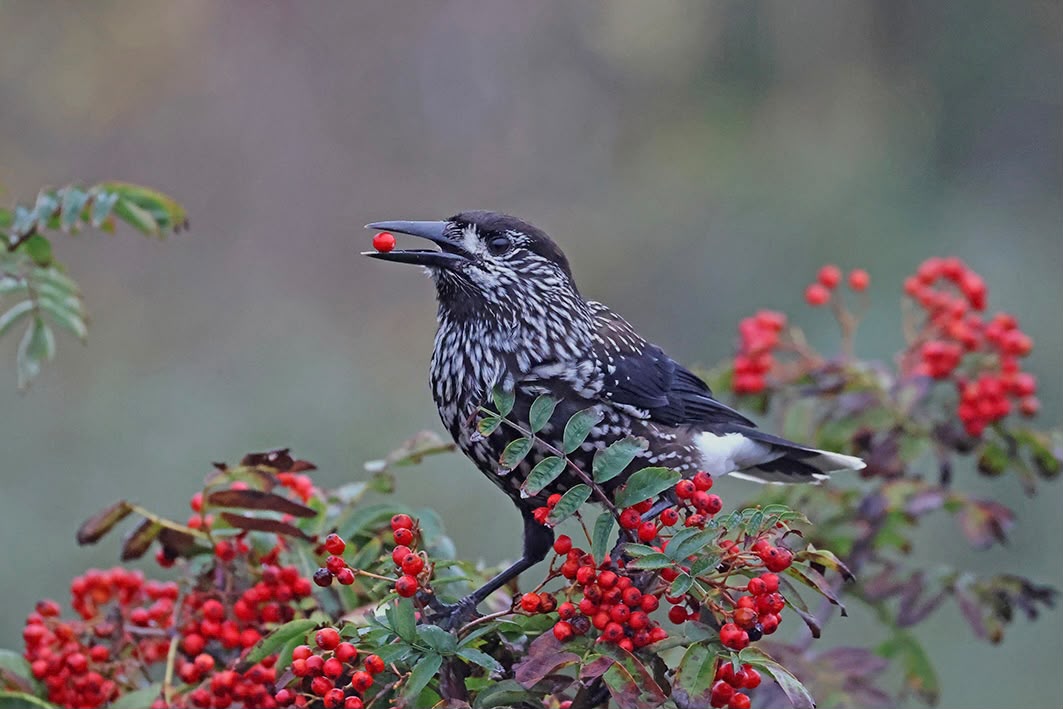
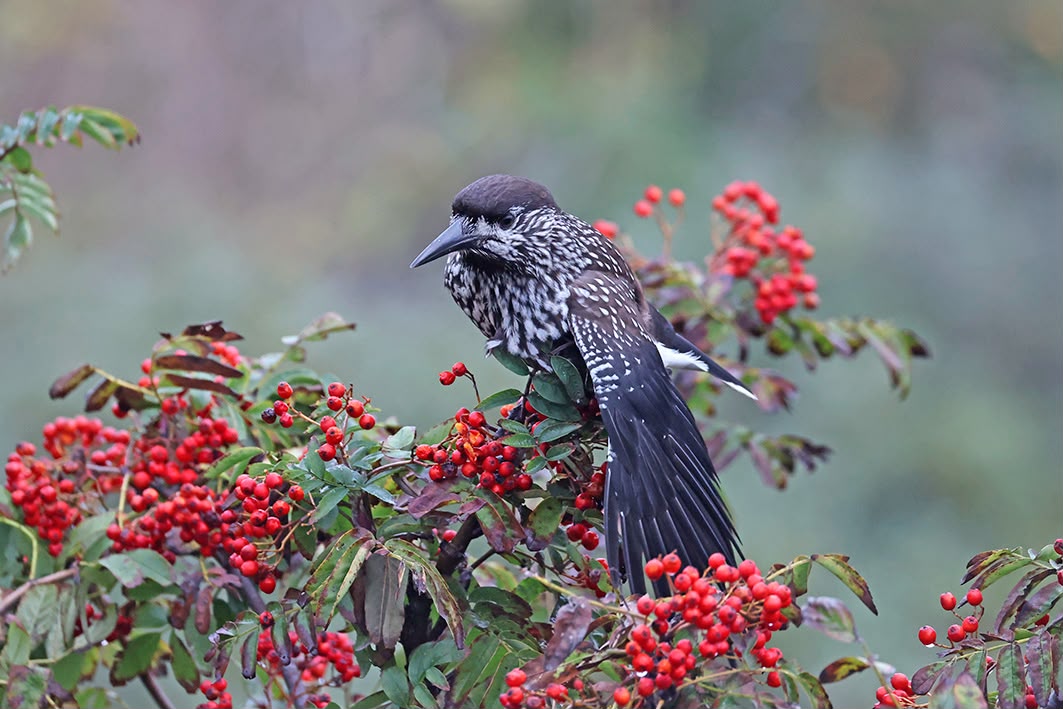
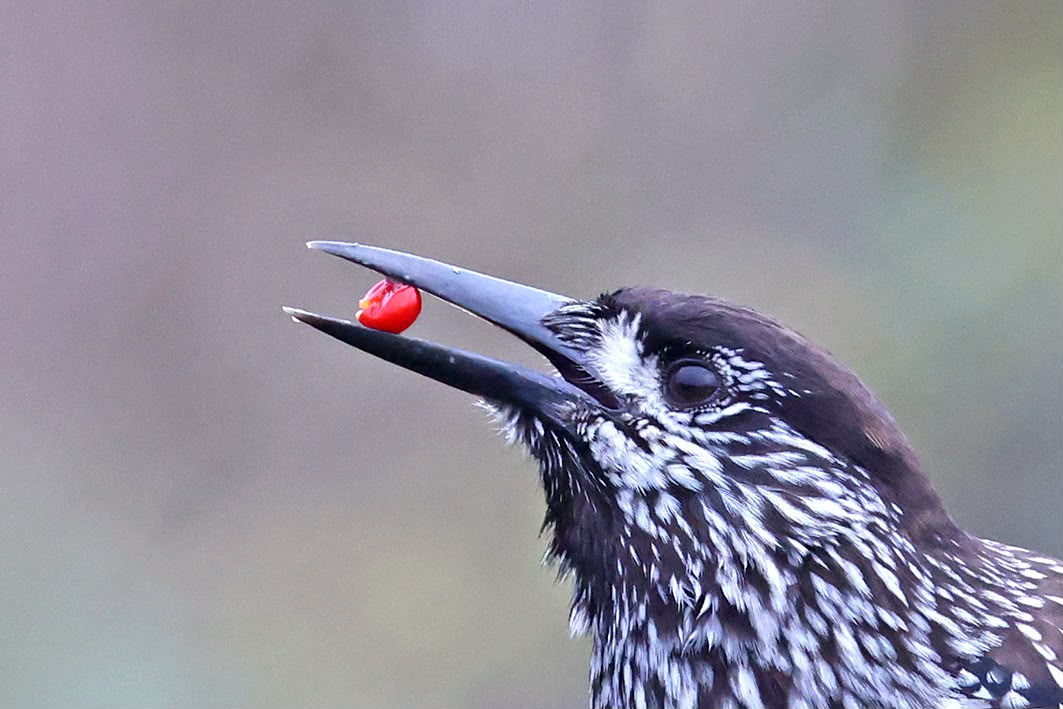
Siberian Nutcracker (ssp. macrorhychus) (Tyndnæbbet Nøddekrige) (photos by Jens Eriksen)
During this wonderful encounter, a pipit calling peculiarly flew over. First analysis of sound recordings point to Olive-backed Pipit (Tajgapiber), another visitor from Siberia. Here our recording on DOFbasen
And to put a cherry on top of this, there was also a calling and subsinging Yellow-browed Warbler (Hvidbrynet Løvsanger) seen around the netting area!
Later on the day, the wind peaked up again, so birding got calmer. We instead listened to an inspiring talk of Dorthe and Anders about their recent journey to Ecuador and the Galapagos islands presenting us a dizzingly colourful different environment as well as reunions with well-known friends, e.g. Sanderling (Sandløber) and Common Terns (Fjordterne), at the other end of the world.
The day ended with well-deserved dinner by Laura and amazing cinnamon buns by Pauline, who will sadly leave us tomorrow.
Ringing (Kabeltromlen):
Gærdesmutte – 16
Jernspurv – 1
Rødhals – 4
Sangdrossel – 3
Munk – 2
Gransanger – 2
Lille Gråsisken – 2
Kvækerfinke – 5
Rørspurv – 3
Subtotal: 38
Ringing (Nordstjernevej):
Musvit – 1
Munk – 1
Gransanger – 1
Subtotal: 3
Ringing (Jenne sø):
Rødhals – 8
Gærdesmutte – 1
Gransanger – 3
Lille Gråsisken – 24
Stor Gråsisken – 1
Sangdrossel – 2
Blåmejse – 1
Subtotal: 40
Grand total: 81
People: Jule Tappe, Pauline Nähring, Mio Brix, Laura Tamminen, Luis Q. Langfeld, Dorthe and Anders Østerby, Simon S. Christiansen, Páll Vang Kjærbo, Lisa Vergin, Hanne and Jens Eriksen, Jørgen Kabel, Micahel Ancher.
Low expectations = great results
torsdag 1. oktober 2026
I do not know where to start to be honest. So much happened today, I just want to write all about it in one sentence. The morning did not give us high hopes because the wind was crazy. Me and Jule decided to still open half of the nets, noting that if it got worse, we would close the rest. We were joined by Pauline and our guests.
We came back from the first round in an elated mood. Minus all the wrens (Gærdesmutte) we had to extract haha. There were about 12 bags with a bird inside and among them were 3 yellowhammers (Gulspurv) and a brambling! (Kvækerfinke). They aren’t rare birds, but they are lovely to get in the nets. Their colors are striking and they give me the warm feeling of autumn’s fast approach.
In the middle of one of our rounds, Jule approached me and Pauline, yelling “We have a Cello bird!”. It was a firecrest (Rødtoppet Fuglekonge)! Our excitement was through the roof. Alongside goldcrests (Fuglekonge) they are the smallest birds in Europe! The one we caught weighed just 5,4 grams. This bird was a first for Pauline and the guests!
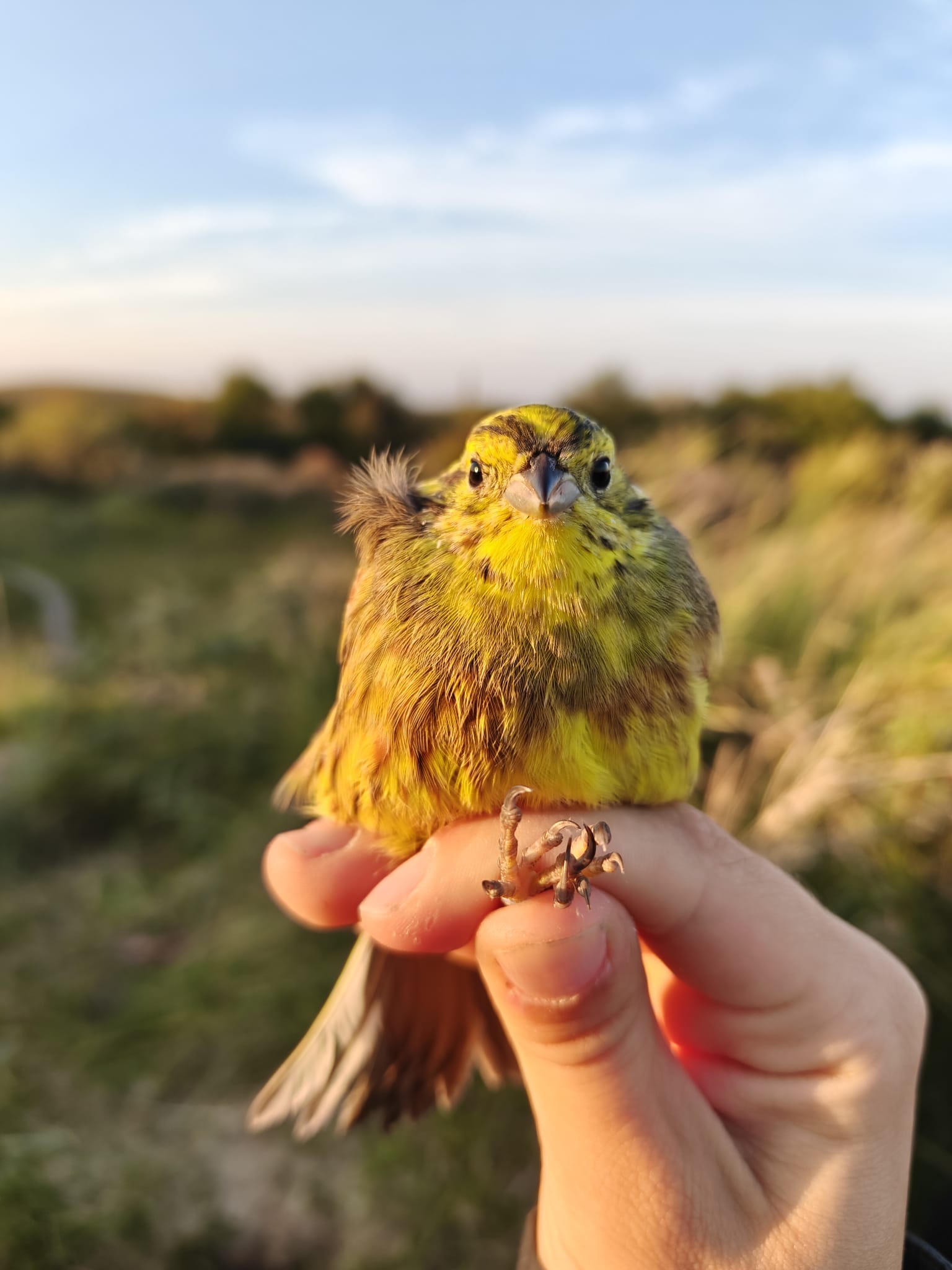
Puffed up male yellowhammer (Gulspurv). Photo by Laura Tamminen
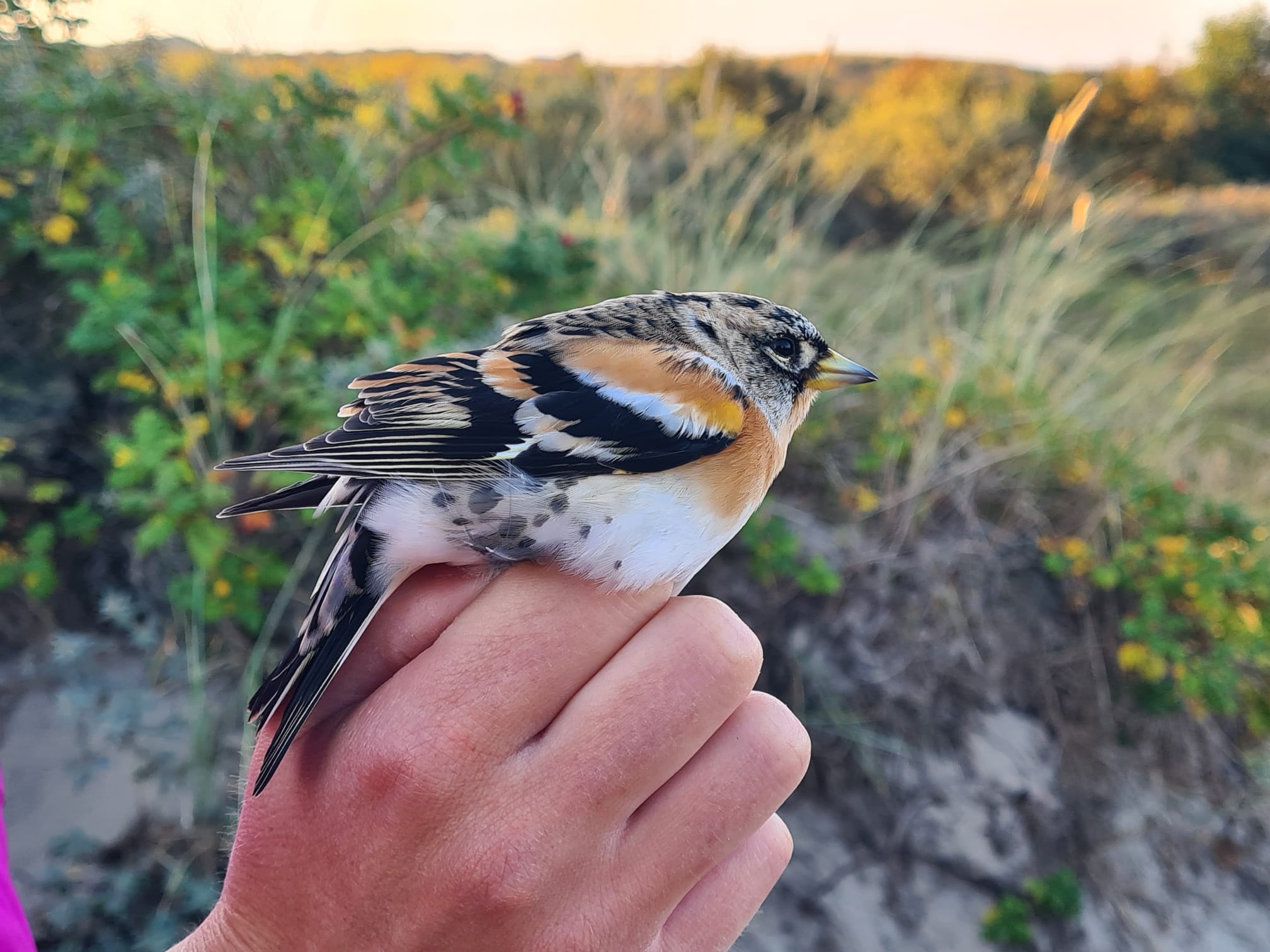
Lovely male brambling (Kvækerfinke). Photo by Jule Tappe
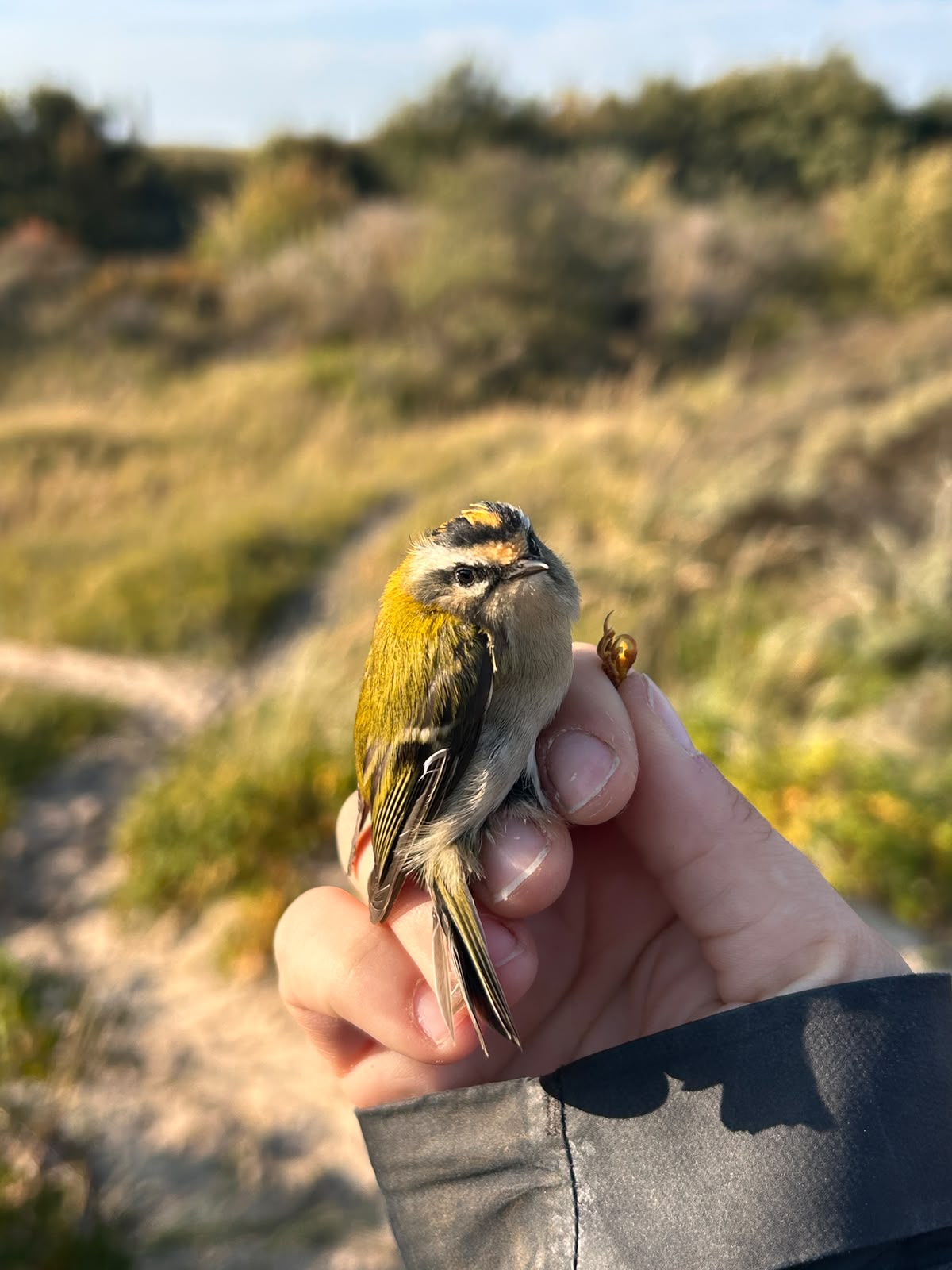
Our special catch of today, a male firecrest (Rødtoppet fuglekonge). Photo by Pauline Nähring
Other notable birds we caught today were a song thrush (Sangdrossel) and a male blackbird (Solsort). Around us we had a flock of red crossbills (lille korsnæb), we have really been hoping to catch some, but so far, we’ve had no luck. A hen harrier (Blå Kærhøg) and a goshawk (Duehøg) also flew past.
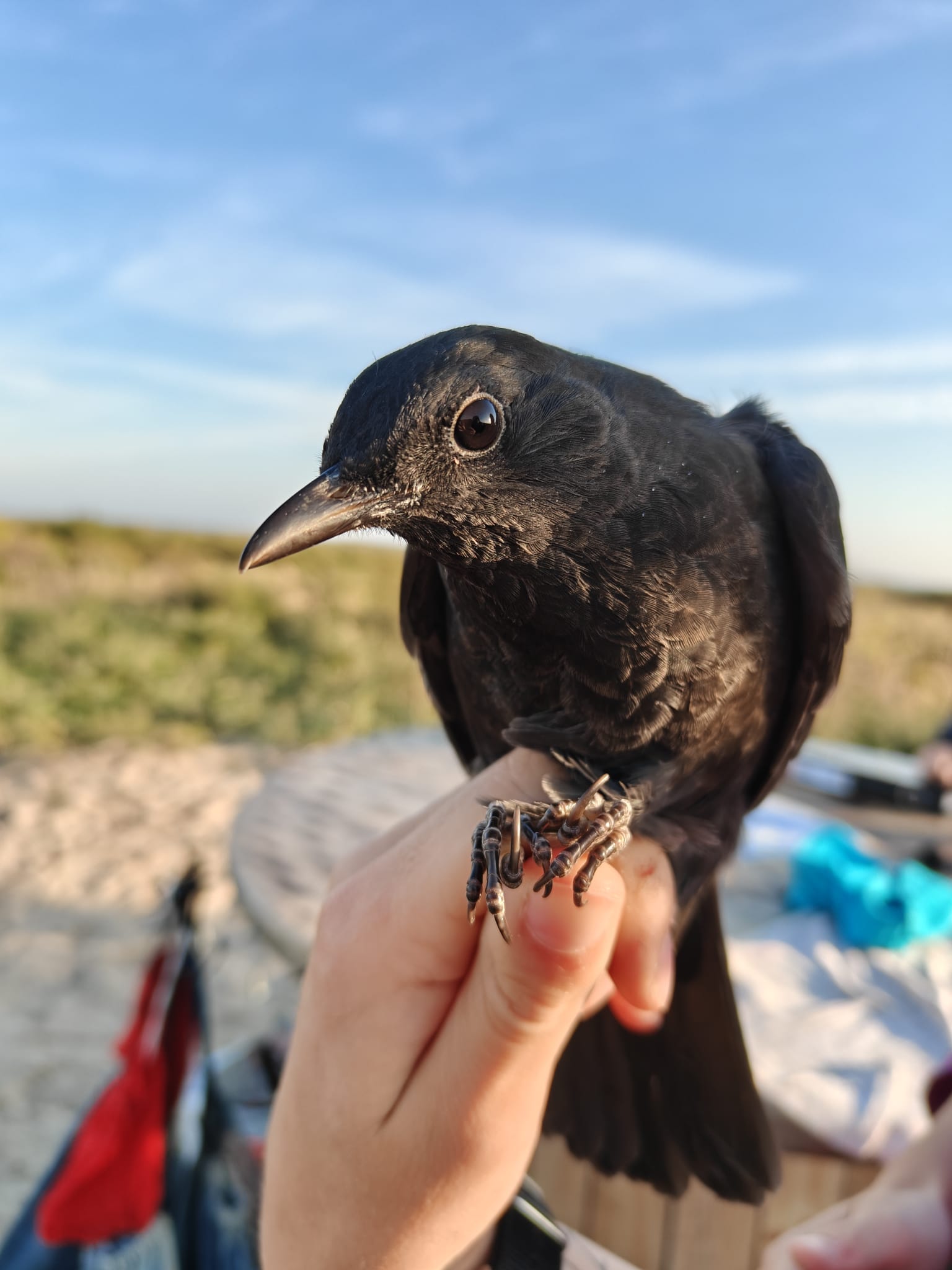
Doesnt it look quite goth? Male blackbird (Solsort). Photo by Laura Tamminen
I would also want to mention that a Siberian nutcracker (Sibirisk Nøddekrige) was spotted by Mio during the evening in Jennes So, so keep your eyes open for a potential lifer! They are lesser-known corvids whose plumage might remind you of a starling, except they’re way bigger and have a thicker beak. Their population here is scarce so this is a very special visitor for Skagen.
Mio and Luis had spent their morning on obs, but unfortunately it was quite slow and inactive. A pallid harrier (Steppehøg) was spotted, but sadly they missed it. They noted some Canada and pink-footed geese (Canadagåsen og Kortnæbbet gåsen) flying past.
After we came back, we had our usual breakfast and nap, which some of us really needed. I kept looking at the clock, waiting for it to hit 16:00. We had some very exciting birds waiting at the rescue center. So exciting that a dozen people came to admire and photograph it. One of them was a lovely tawny owl (Natugle) and right after it a magnificent Eurasian eagle-owl (Stor Hornugle). I was caught off guard by the size of the eagle-owl. It weighed 2,2 kg, they are one of the biggest species of owl after all... I am extremely lucky to be able to see an eagle-owl up close, their population is declining in Estonia and they are very rare, also in Denmark.
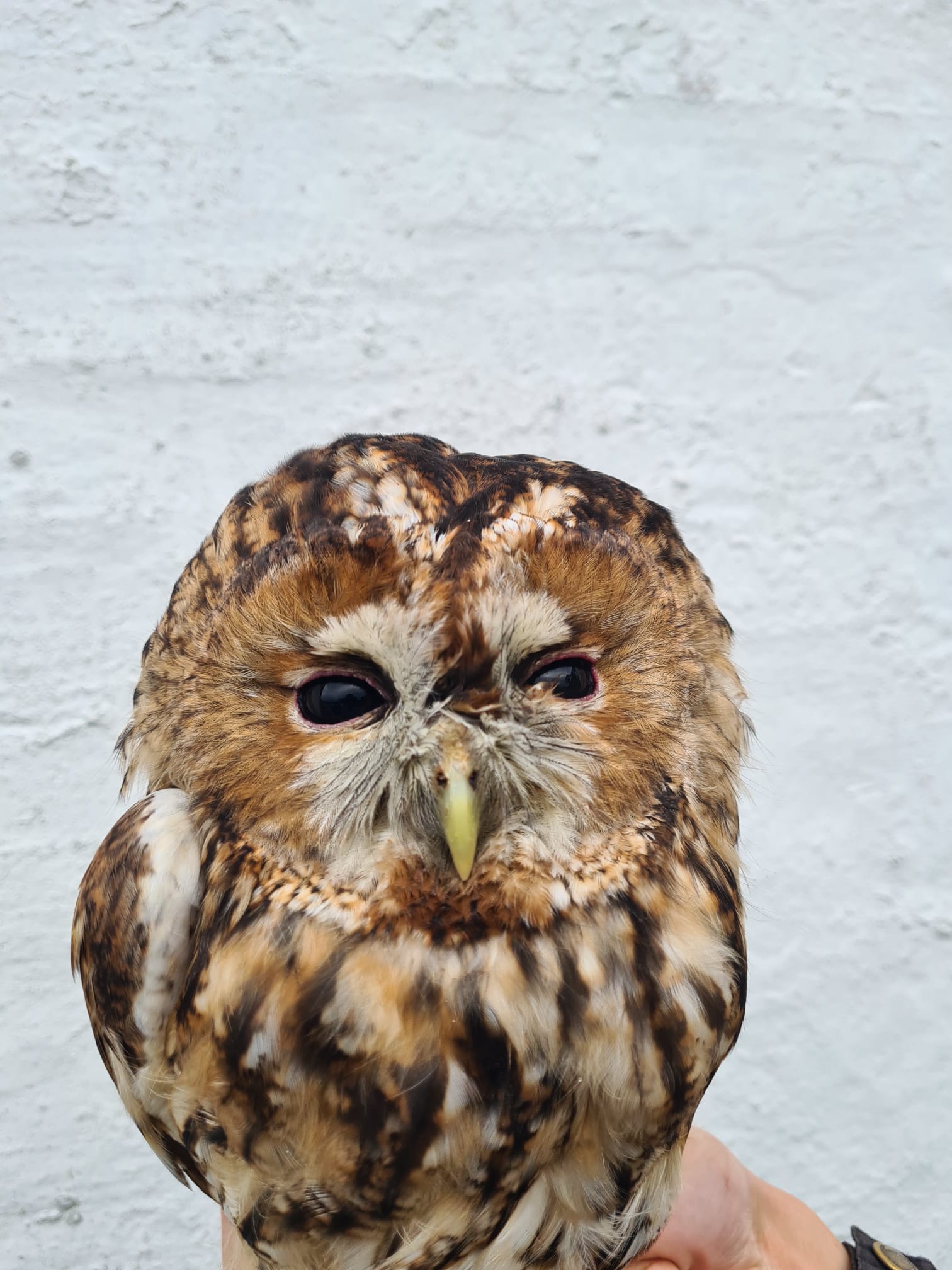
3+ tawny owl (Natugle), very calm in the hand. Photo by Jule Tappe
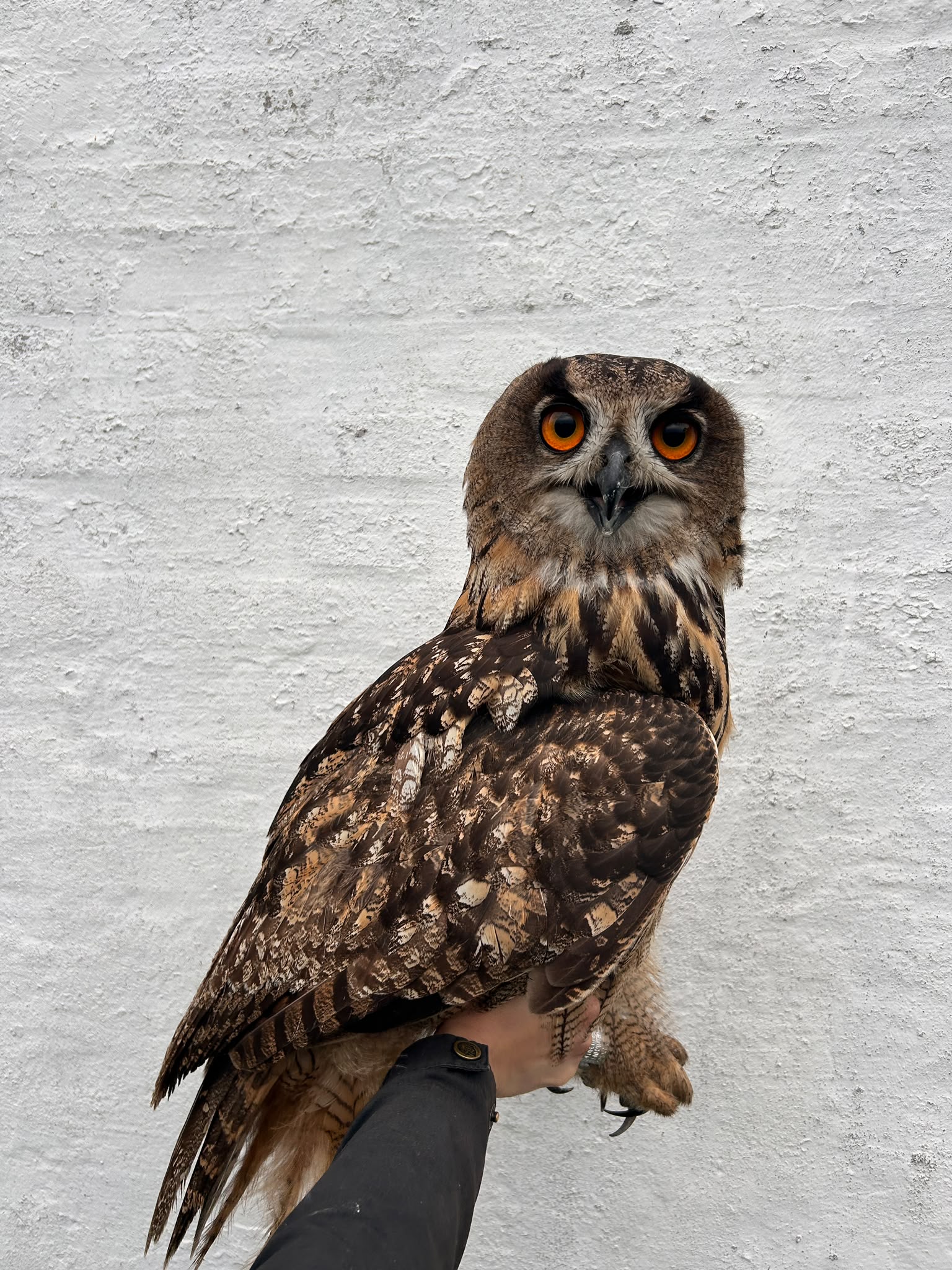 Juvenile and very unpleased eagle-owl. Photo by Pauline Nähring
We arrived back to the station, but Luis and Jule decided to immediately head off to Jennes So to hopefully spot the nutcracker, no luck this time. Let’s hope the bird will stay here for a while.
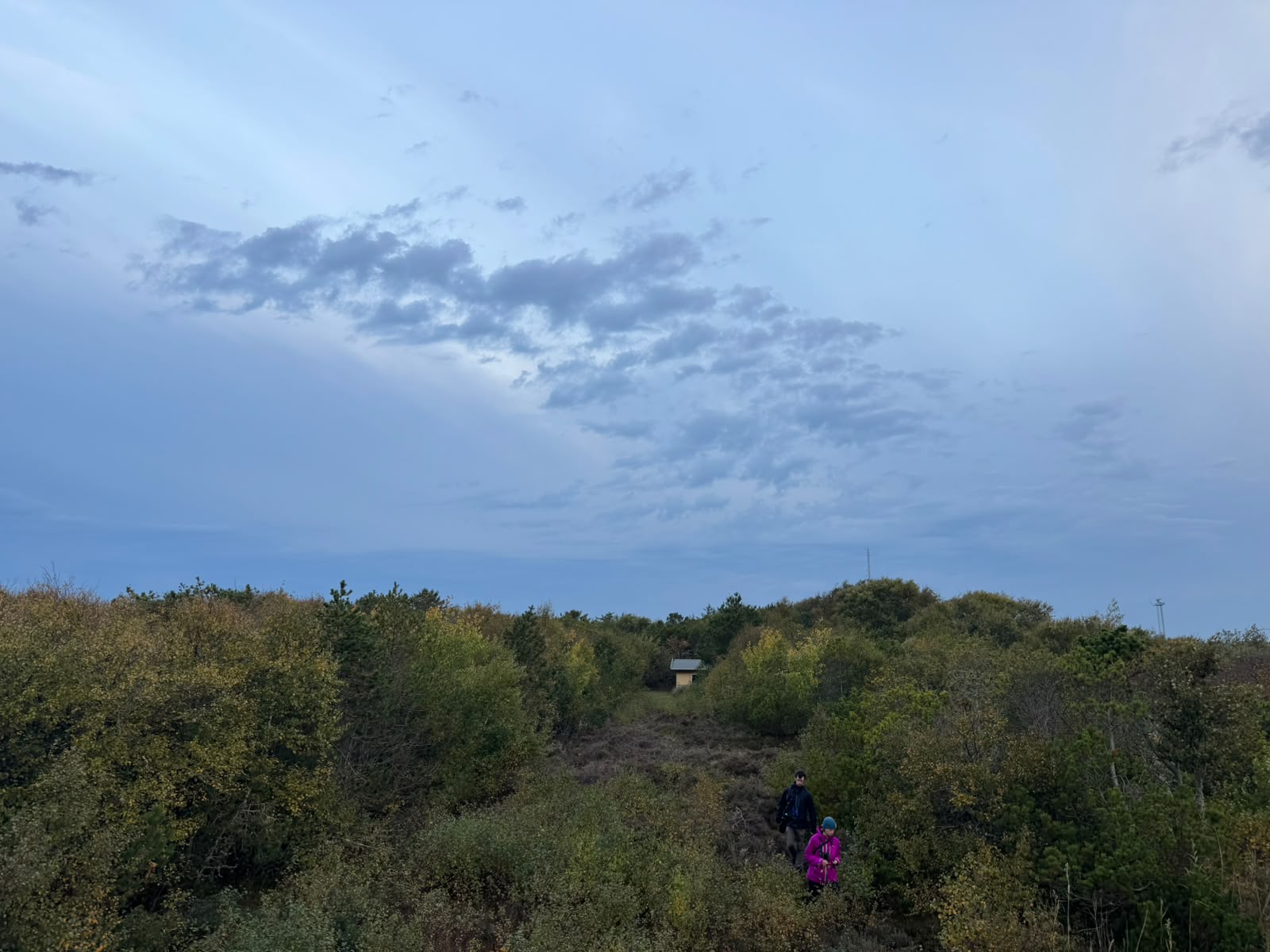
Jule and Luis on the lookout for a nutcracker (Nøddekrige). Photo by Mio Brix
Ringing (Kabeltromlen):
Gærdesmutte – 10
Rødhals – 1
Solsort – 1
Sangdrossel – 1
Munk – 1
Gransanger – 1
Rødtoppet fuglekonge – 1
Kvækerfinke – 1
Gulspurv – 3
Rørspurv – 2
Total: 22
Link to todays observations in the Dofbasen from observers in the area.
People: Jule Tappe, Pauline Nähring, Mio Brix, Laura Tamminen, Luis Q. Langfeld, Dorthe and Anders Østerby, Simon S. Christiansen, Jeppe Madsen, Sophie Booker, Lisa Vergin, Henrik Christiansen, Hanne and Jens Eriksen, Jørgen Kabel.